
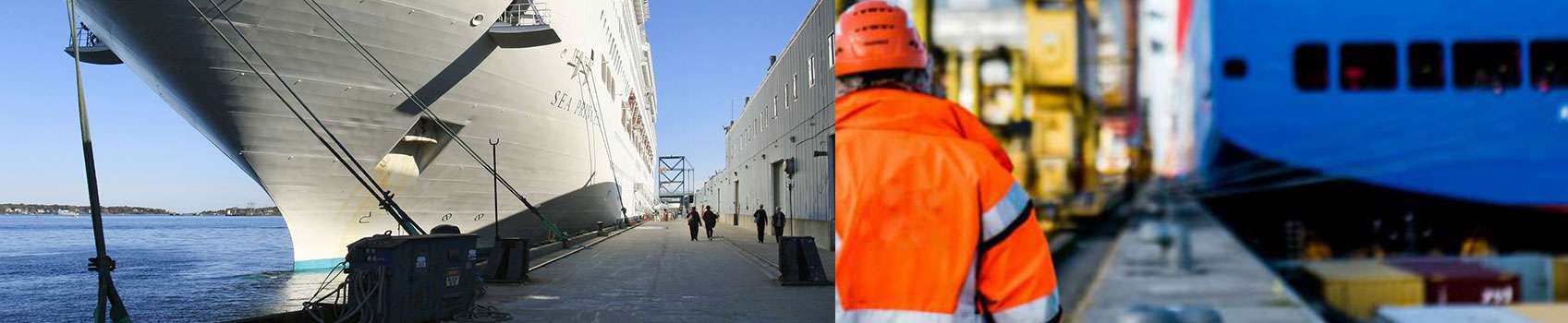
How to Choose Rubber Fenders for Different Vessel Types
Rubber fenders help shield ships and port assets during docking and mooring. They take up part of the hit energy and reduce the pushback that a vessel puts onto the quay or dock. This can reduce harm to the hull, as well as to docks, piers, and other marine facilities. However, every vessel does not ask for the same setup. Differences in vessel size, displacement, hull design, berthing speed, and operating environment mean that choosing the right rubber fender requires careful consideration.
For example, large container vessels and bulk carriers often need systems built for strong energy capture. Smaller fishing vessels and tugboats usually do better with flexible and durable fenders that can withstand frequent contact. Oil tankers and offshore support vessels may need specialized fenders for ship-to-ship transfer work and rougher sea conditions.
Getting to the right selection starts with knowing the characteristics of different vessel types. This article looks at how to choose rubber fenders for different vessels and the key factors that influence their performance.
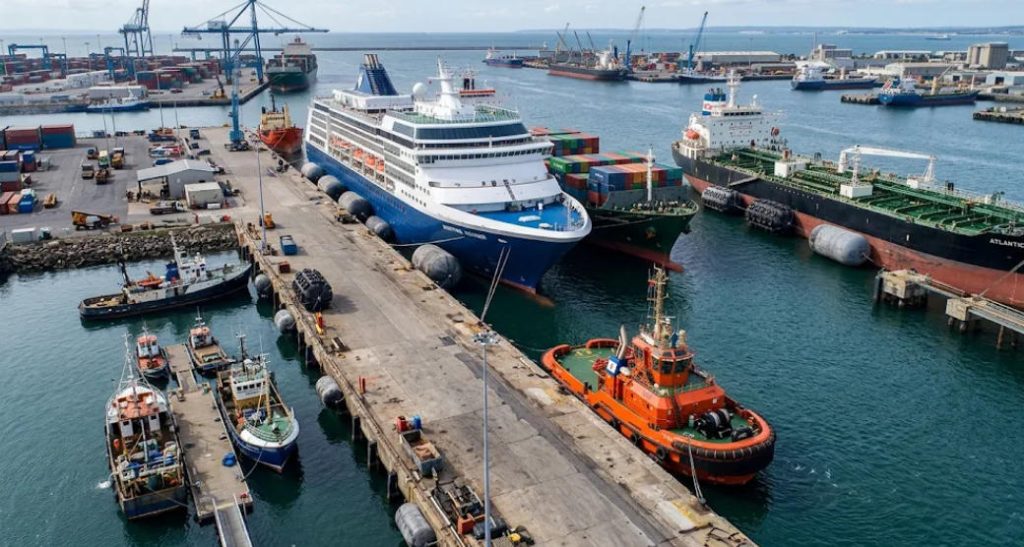
Table of Contents
Understand the Basic Requirements of Different Vessels
Before you choose rubber fenders, you should map the vessel’s working profile. Vessel classes can create different berthing energy loads due to displacement, approach speed, hull geometry, and how many times they dock.
For instance, large container ships and bulk carriers often call for fenders with higher energy absorption. Smaller fishing boats and workboats may need a more compact and flexible option that also stays practical on cost.
Check these vessel traits before you decide:
- Vessel size and displacement: Bigger, heavier ships usually bring more berthing energy. That points to higher capacity fenders.
- Berthing speed: Higher approach speed means higher impact force at contact.
- Hull shape: Flat sides, rounded hulls, and different freeboard levels can change what fender layout fits best.
- Berthing frequency: Ships that berth often need fenders that resist repeated compression.
- Operating environment: Tide range, wave action, currents, and weather can shift fender behavior.
- Installation location: Quays, floating docks, offshore rigs, and ship-to-ship transfer zones can require different fit and setup.
Different Vessel Requirements for Selecting Rubber Fenders
Different vessels require different levels of impact protection. Selecting the appropriate rubber fender type can improve berthing safety, extend equipment service life, and reduce maintenance expenses.
1. Container Ships
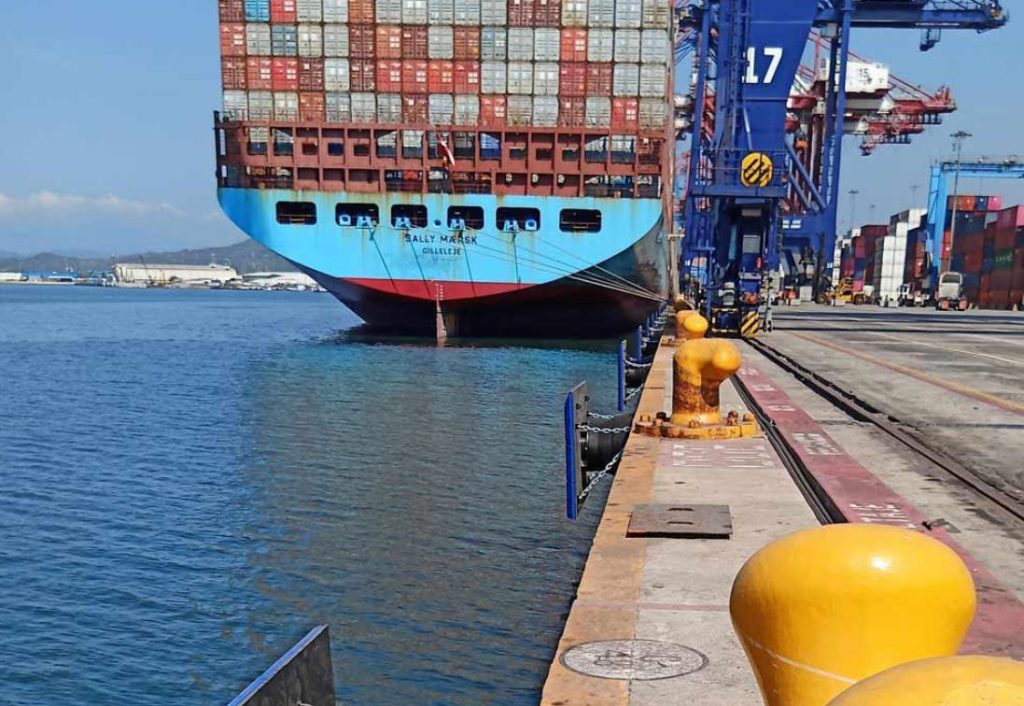
Container ships are among the largest commercial vessels operating in modern ports. Their heavy displacement and wide hull shapes mean docking creates large berthing forces. This gets more noticeable at high-capacity terminals where ships come in with consistent schedules.
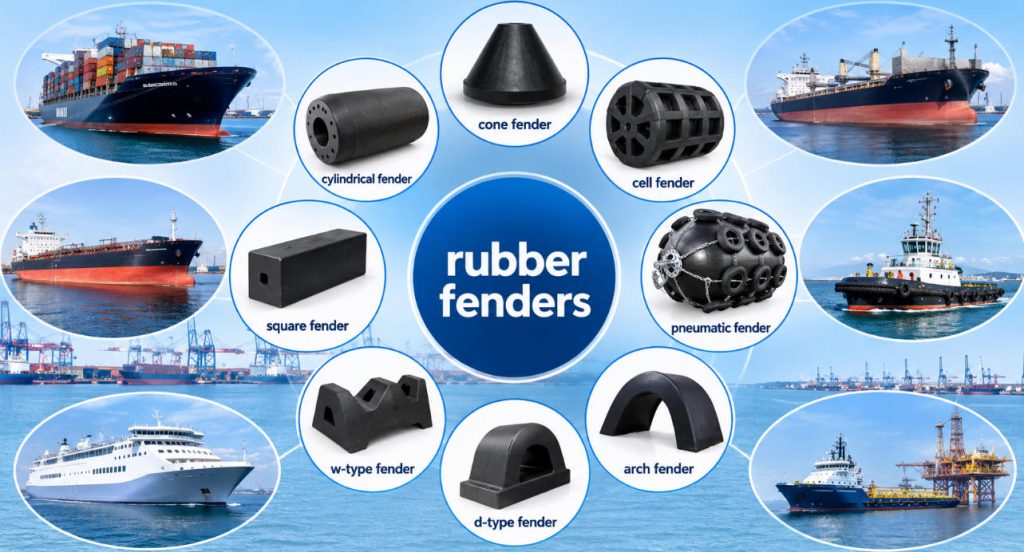
Rubber fenders used for container ships often include cone types, cell types, and super cell types. Cone fenders are known for strong energy absorption for their overall size. They also tend to keep reaction forces lower than many other styles. Cell fenders are picked for tough duties. Their structure is built to handle heavy compression without losing performance.
For container ship projects, the key point is the trade-off between energy absorption and reaction force. The fender set should take in the berthing energy from the vessel. At the same time, it must stay within limits for hull loading and quay structure loading. Fender height and placement also matter. They have to fit different vessel sizes and shifts in tide level.
2. Bulk Carriers
Bulk carriers transport large quantities of dry cargo, including coal, grain, iron ore, and cement. Their heavy displacement and substantial hull dimensions make reliable berthing protection particularly important.
For bulk carrier terminals, people often use cell rubber fenders, cone rubber fenders, and arch rubber fenders. Cell and cone types are common on larger vessels. They can store a lot of energy during impact. Arch fenders use a simpler approach. They are a good fit where the impact needs are within their design range.
The selection should start with the worst case. Ports should check maximum vessel displacement, berthing speed, hull contact pressure, and dock structural strength. For ports that serve multiple sizes of bulk carriers, the fender layout should work across varied berthing cases.
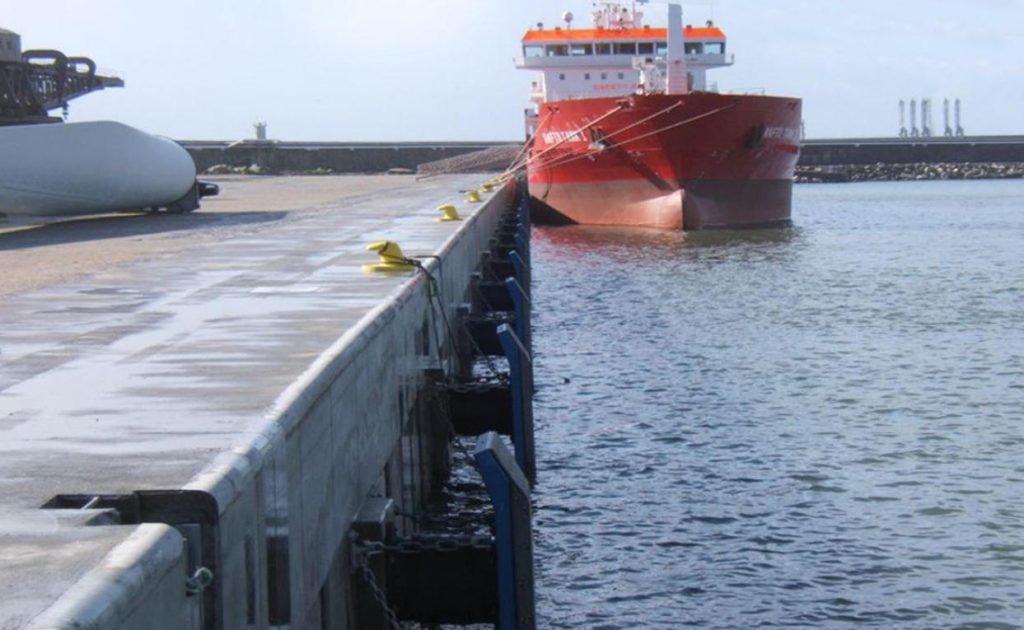
3. Oil Tankers and Chemical Tankers
Oil tankers and chemical tankers need steady berthing protection. Their cargo can be hazardous, and safety rules are strict. Some ships work at dedicated terminals. Others also take part in ship-to-ship transfer.
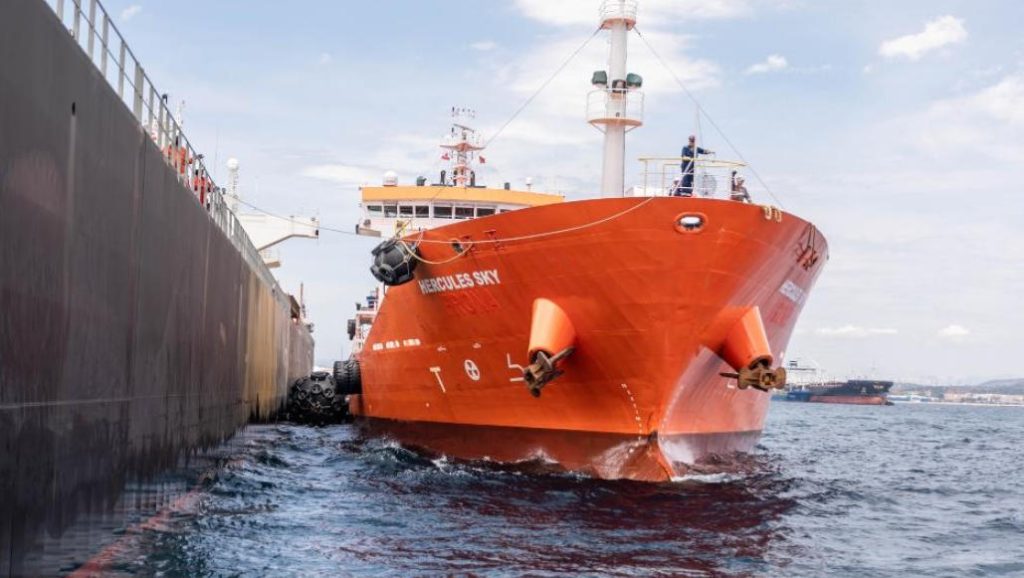
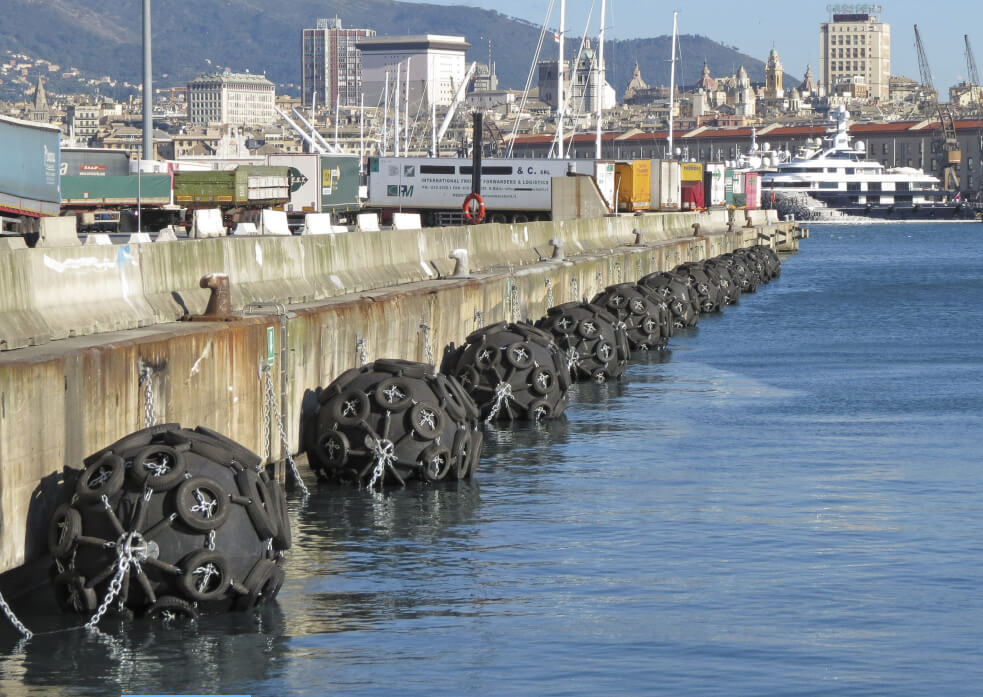
Pneumatic rubber fenders are useful when vessels transfer cargo at sea. The air-filled design gives cushioning. It also helps with relative motion between two ships. For fixed terminals, cone and cell rubber fenders are often used. They can support strong energy absorption and more predictable reaction loads.
When choosing fenders for these vessels, buyers should evaluate energy absorption, reaction force, hull contact pressure, and resistance to the surrounding environment. The rubber compound and protective construction should be appropriate for the expected exposure conditions. In addition, the complete fender system should comply with applicable marine safety requirements.
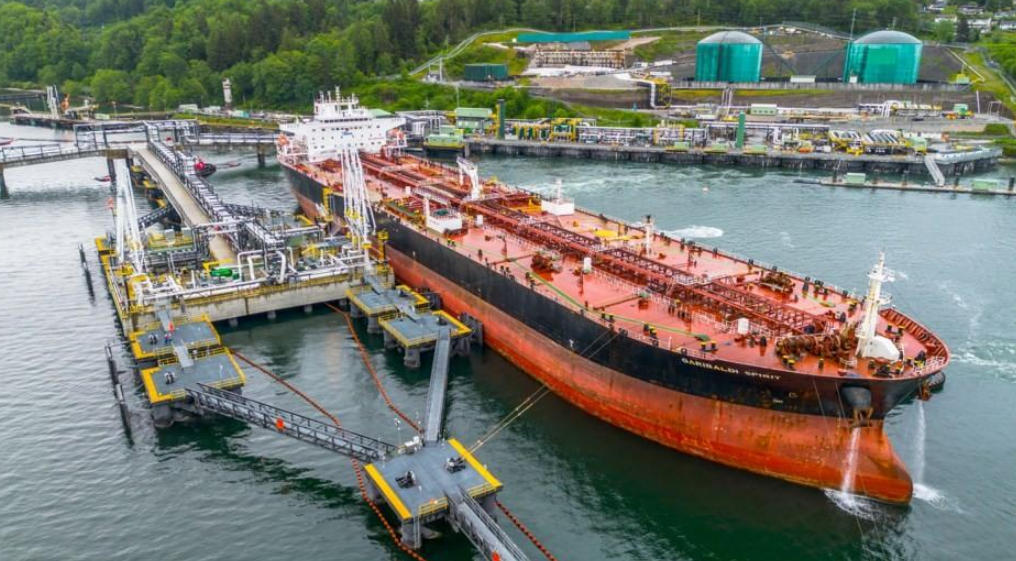
4. Ro-Ro Ships and Ferries
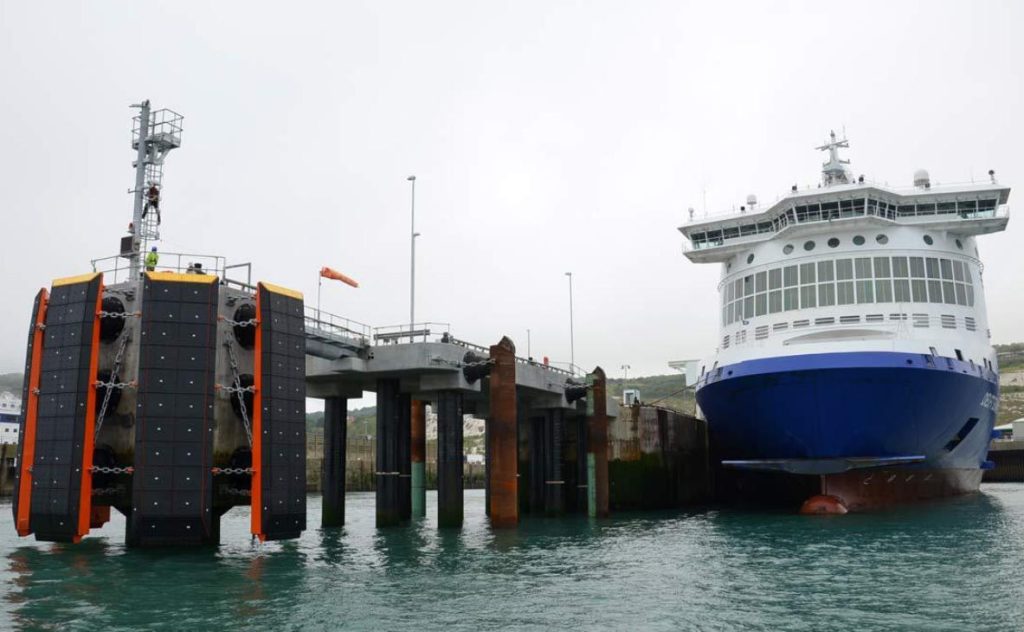
Roll-on and roll-off ships and ferries often run on fixed timetables. They can dock many times in one day. Each docking event causes the fender to press and absorb impacts again and again.
Common choices include D-type rubber fenders, arch rubber fenders, and cylindrical rubber fenders. D-type fenders fit places where space is tight and mounting is meant to stay simple. Arch fenders handle impacts well. Cylindrical fenders can work in more than one contact layout.
The most important selection considerations include repeated compression resistance, fender positioning, vessel freeboard, and tidal variations. For passenger ferries, the fender arrangement should also help maintain safe clearance between the vessel and the dock during boarding and disembarking operations.
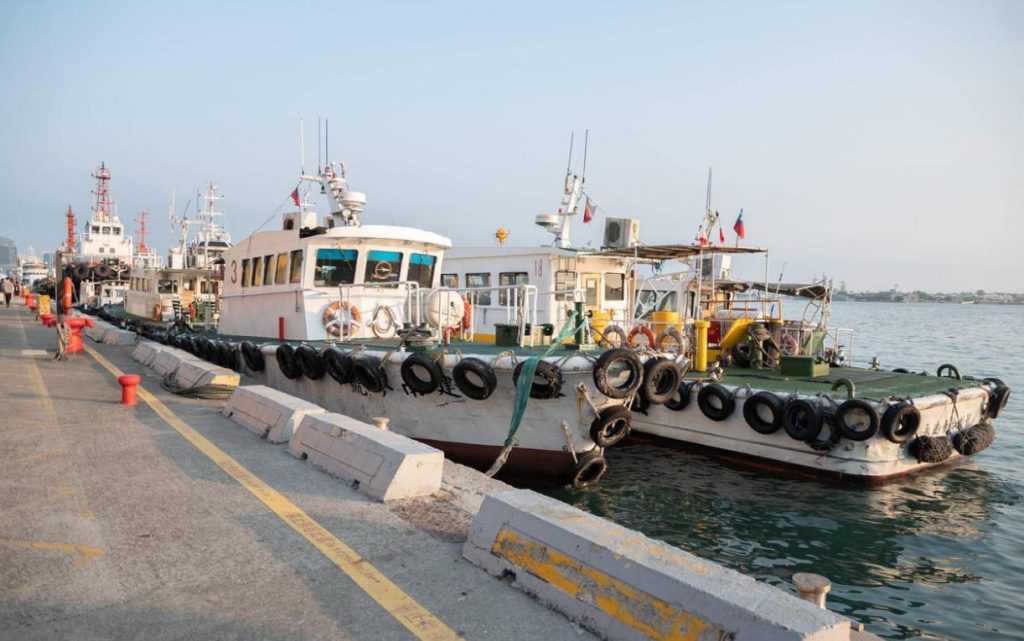
5. Tugboats and Workboats
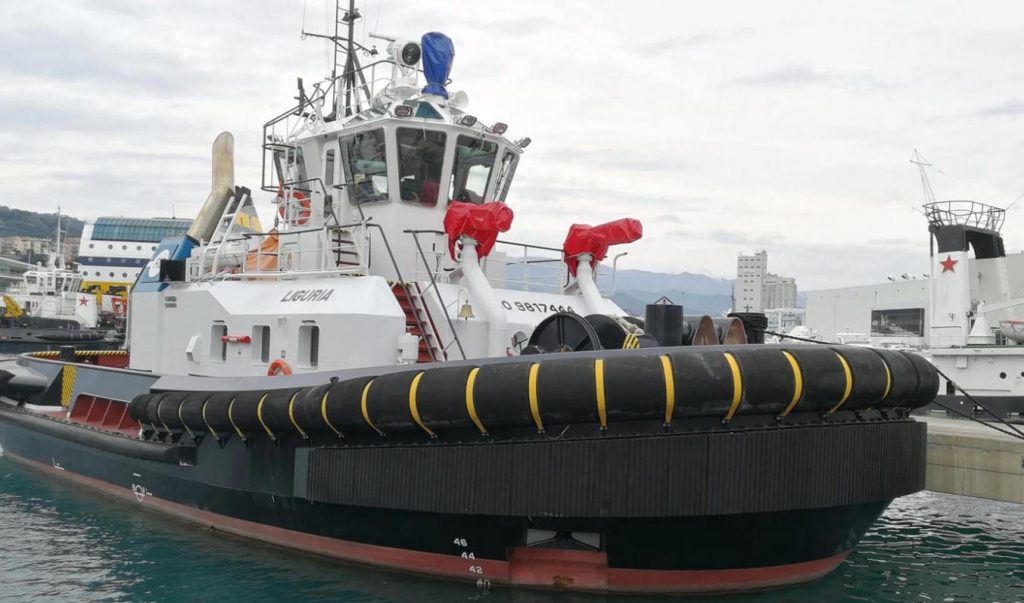
Tugboats and workboats do towing, pushing, harbor aid, and offshore support. They deal with constant ship traffic. They also make contact with other vessels and marine parts often during normal work.
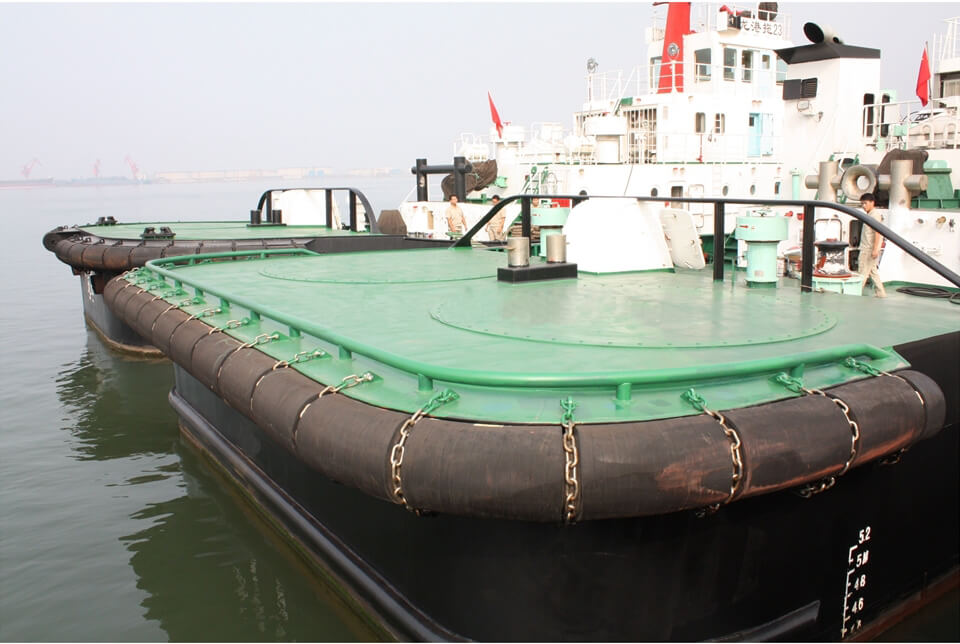
W-type rubber fenders, D-type rubber fenders, and cylindrical rubber fenders are used on tugboats. W-type fenders are often chosen for bow protection. Their form helps during pushing. D-type and cylindrical fenders can be placed along the sides. That helps when the tug maneuvers and docks for mooring.
When selecting fenders, buyers should focus on abrasion strength. Compression behavior counts as well. Structural life is important, too. Fit during installation should be checked early. Tugboats rub against surfaces more often. They also bend and deform the rubber often, so the rubber blend should resist wear and repeated flexing.
6. Fishing Vessels
Fishing vessels usually work in smaller harbors and coastal ports. They also use fishing terminals. Their sizes differ, and so do the berthing needs. Still, many owners look for fenders that are practical and cost-friendly.
D-type rubber fenders, square rubber fenders, and cylindrical rubber fenders are often considered. Their design is not overly complex. That makes them a workable match for smaller vessel berths.
For fishing vessels, buyers should check vessel size. They should also look at where the hull touches the dock. Berthing rate matters. Local sea behavior matters as well. The chosen fender should protect during impacts but not lead to extra setup work or high upkeep costs.
7. Offshore Support Vessels
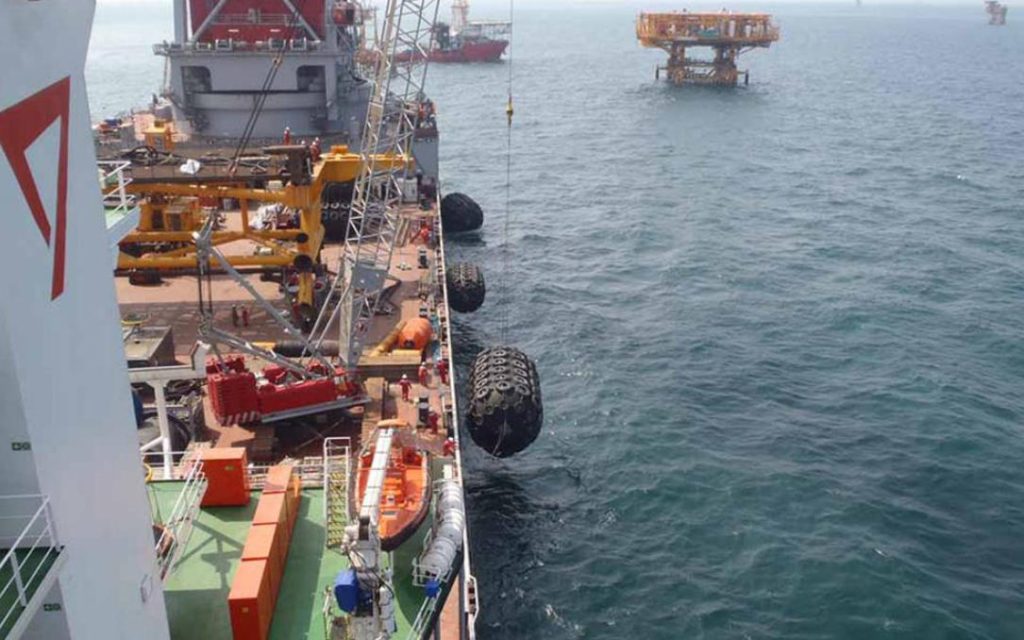
Offshore support vessels work in tough ocean settings. They often approach offshore platforms, floating production units, and other ships. Docking can change fast there. Waves, strong currents, wind, and motion between floating units all play a role.
Pneumatic rubber fenders are often used in offshore ship-to-ship and ship-to-platform work. They can flex well and handle relative motion between vessels and structures. In some cases, cylindrical or arch rubber fenders also fit better, especially for fixed locations or equipment that stays on a vessel.
For offshore fender selection, buyers should look at impact performance under real motion, how much energy the fender can take, resistance to harsh weather, and how long it holds up over time. The overall fender layout should also consider shifting sea levels and how the vessels move during operations.
Comparison of Rubber Fenders for Different Vessel Types
The following chart summarizes common vessel types, recommended fender options, and their main selection requirements.
| Vessel Type | Recommended Fender Types | Main Functions | Key Selection Considerations |
| Container Ships | Cone Rubber Fenders, Cell Rubber Fenders, Super Cell Rubber Fenders | Absorb high berthing energy and protect large vessel hulls | High energy absorption, low reaction force, large impact capacity |
| Bulk Carriers | Cell Rubber Fenders, Cone Rubber Fenders, Arch Rubber Fenders | Reduce impact forces during heavy-vessel berthing | Durability, impact resistance, hull contact pressure |
| Oil Tankers | Pneumatic Rubber Fenders, Cone Rubber Fenders, Cell Rubber Fenders | Protect vessels during terminal berthing and ship-to-ship operations | Energy absorption, low reaction force, oil resistance |
| Chemical Tankers | Pneumatic Rubber Fenders, Cone Rubber Fenders, Cell Rubber Fenders | Provide reliable impact protection during cargo operations | Chemical compatibility, durability, operational safety |
| Ro-Ro Ships | D-Type Rubber Fenders, Arch Rubber Fenders, Cylindrical Rubber Fenders | Protect hulls during frequent docking and vehicle-loading operations | Repeated compression resistance, installation flexibility |
| Ferries | D-Type Rubber Fenders, Cylindrical Rubber Fenders, Arch Rubber Fenders | Reduce berthing impacts during frequent passenger transport operations | Wear resistance, flexible installation, tidal adaptability |
| Tugboats | W-Type Rubber Fenders, D-Type Rubber Fenders, Cylindrical Rubber Fenders | Protect bows and sides during pushing, towing, and vessel contact | Abrasion resistance, high compression resistance, flexibility |
| Fishing Vessels | D-Type Rubber Fenders, Square Rubber Fenders, Cylindrical Rubber Fenders | Provide basic hull protection in fishing ports and small harbors | Cost-effectiveness, easy installation, weather resistance |
| Offshore Support Vessels | Pneumatic Rubber Fenders, Cylindrical Rubber Fenders, Arch Rubber Fenders | Absorb impacts during offshore platform and ship-to-ship operations | Dynamic impact protection, flexibility, weather resistance |
| General Cargo Ships | Cell Rubber Fenders, Cone Rubber Fenders, Arch Rubber Fenders | Protect vessels and dock structures during cargo-handling operations | Energy absorption, structural compatibility, durability |
Key Factors to Consider for Choosing Rubber Fenders
Choosing a rubber fender based only on vessel type may lead to insufficient protection or unnecessary costs. A proper selection process should also evaluate several technical performance requirements.
1. Energy Absorption Capacity
Energy absorption capacity is the energy a rubber fender can absorb while it compresses during berthing. It is one of the key signs of fender performance.
What you need depends on vessel displacement, approach speed, added mass, berthing angle, and other correction factors. Big cargo ships typically call for fenders with higher capacity. Smaller workboats and fishing vessels can often use smaller, lower-capacity options.
You want a fender that absorbs the expected berthing energy and still leaves a reasonable safety margin.
2. Reaction Force and Hull Pressure
Reaction force is the load the fender produces as it compresses. Even if high energy absorption is useful, too much reaction force can hurt the vessel side or the dock structure.
Hull contact pressure matters too. This is even more relevant when a vessel has structural limits or certain areas that must not be overloaded. Buyers should compare the fender reaction force and contact pressure to the allowable limits of both the vessel structure and the supporting dock.
3. Fender Dimensions and Installation Requirements
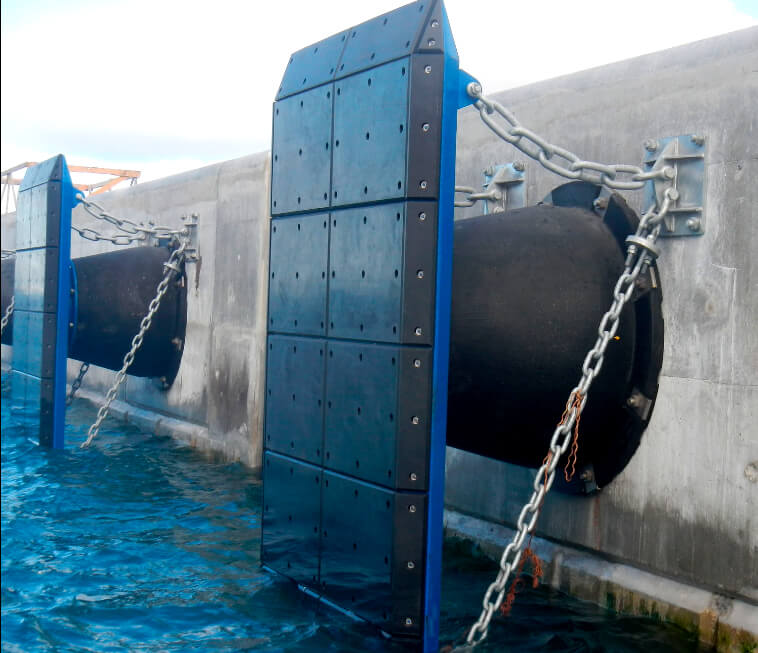
Fender size affects whether it will fit the installation and how well it covers the contact zone. The height, width, and length should match the available mounting space. The compression allowance also needs to fit the expected contact area.
For ports with significant tidal variations, fender positioning should be carefully planned to ensure that the vessel remains protected at different water levels. Mounting accessories and supporting structures should also be suitable for the selected fender type.
4. Rubber Material and Environmental Resistance
Marine rubber fenders live with seawater, sun exposure, temperature swings, and repeated mechanical loading. Over time, these factors can reduce elasticity and weaken the structure.
So, rubber quality matters when buying fenders. The rubber mix should resist aging, resist tearing, resist abrasion, and hold up in weather exposure.
For specialized applications, such as chemical terminals or offshore facilities, the material should also be selected according to the specific environmental exposure requirements.
5. Maintenance and Service Life
Maintenance needs shift a lot by fender design. Fixed rubber fenders call for routine checks. Look for cracks, sagging or shape change, surface wear, and problems at the fixing points. Pneumatic rubber fenders need more attention inside. Check the pressure, the outer rubber layer, and the linked parts.
A good fender system should stay steady for its full working span. When buying, it helps to think about how easy inspections are, how fast parts can be changed, and what upkeep will cost over time. This can cut expenses after the purchase.
How to Avoid Common Mistakes When Choosing Rubber Fenders
Incorrect fender selection can increase maintenance costs and create unnecessary risks during berthing operations.
| Common Mistakes | Potential Problems | How to Avoid Them |
| Choosing Fenders Based Only on Vessel Size | Insufficient energy absorption or unsuitable fender performance | Consider vessel displacement, berthing velocity, berthing angle, and operating conditions |
| Ignoring Energy Absorption Capacity | Fenders may not absorb sufficient impact energy during berthing | Calculate the required berthing energy and select fenders with adequate energy absorption capacity |
| Overlooking Reaction Force | Excessive force may damage vessel hulls or dock structures | Check the fender’s reaction force and ensure it remains within allowable structural limits |
| Neglecting Hull Contact Pressure | Excessive pressure may cause localized hull damage | Evaluate the contact area and select fenders with suitable pressure distribution |
| Selecting Incorrect Fender Types | The fender may not match the vessel’s berthing or operating requirements | Choose suitable types, such as cone, cell, D-type, W-type, arch, or pneumatic rubber fenders |
| Ignoring Tidal Variations | Vessels may not receive adequate protection at different water levels | Consider the local tidal range and adjust fender height, positioning, and arrangement |
| Choosing Low-Quality Rubber Materials | Premature aging, cracking, tearing, and reduced service life | Select high-quality rubber compounds with good weather, seawater, and abrasion resistance |
| Overlooking Installation Requirements | Incorrect mounting may reduce protection performance or cause installation failures | Check mounting dimensions, supporting structures, fixing accessories, and installation procedures |
| Ignoring Berthing Frequency | Repeated compression may accelerate fender fatigue and wear | Select durable fenders designed for the expected frequency and intensity of berthing operations |
| Neglecting Maintenance Requirements | Undetected damage may lead to performance deterioration and higher replacement costs | Establish regular inspection, cleaning, and maintenance schedules |
| Choosing Based Only on Initial Price | Lower upfront costs may result in higher long-term maintenance and replacement expenses | Compare product quality, expected service life, maintenance costs, and overall lifecycle value |
| Working with an Unqualified Supplier | Inaccurate specifications, inconsistent quality, and insufficient technical support | Choose an experienced rubber fender manufacturer with reliable testing, technical documentation, and after-sales service |
How to Select a Reliable Rubber Fender Manufacturer
Choosing a experienced rubber fender manufacturer can speed up the decision. It also helps buyers get items that fit the vessel’s use.
A dependable manufacturer should carry a wide set of options. This includes D-type, W-type, cylindrical, arch, cone, cell, and pneumatic rubber fenders. With more choices, buyers can compare designs and pick the best match for each vessel job.
Technical help matters too. A strong supplier can share key performance details. This includes energy absorption data and reaction force, plus guidance on fender size and how to set it up.
If the marine project is not standard, customization may be needed. Buyers might ask for special dimensions, rubber mix, paint or color, and different mounting layouts. Other product points may also be adjusted based on the case.
Also check how quality is handled from start to finish. Review raw material checks, watch the production steps, test the final goods, and request the right records. These steps support stable performance across orders.
Working with a manufacturer that gives clear technical support and solid after-sales service can help shipowners, shipyards, port teams, and marine engineering groups run their fender systems with fewer issues.
YSmarines is a rubber fender manufacturer known for tough, high-output marine fender products for many vessel types and port uses. YSmarines aims at steady build quality, safe impact protection, and flexible product options. Its rubber fenders are made to take in berthing energy, lower impact loads, and help guard both vessels and quay parts. For container ships, bulk carriers, tugboats, and offshore units, YSmarines focuses on practical protection that fits different buyer needs.
Summary
Choosing rubber fenders for different vessel types requires a comprehensive understanding of vessel characteristics, berthing conditions, and fender performance. Container ships and bulk carriers usually call for high-capacity cone or cell fenders. Smaller craft, like tugboats and many fishing vessels, often do better with W-type, D-type, or cylindrical fenders. For ship-to-ship work, especially with tankers and offshore support vessels, pneumatic fenders are often the right choice.
Beyond vessel type, you should consider energy absorption capacity, reaction force, hull pressure, rubber material, installation dimensions, and maintenance requirements.
When you weigh all of that and work with an experienced rubber fender manufacturer, you can pick a suitable marine protection system that helps reduce berthing risk, protect vessel hulls and support more dependable operations over time.