

Types of Lifeboat Davits: Choosing the Right Solution
Lifeboat davits are shipboard safety tools used to launch and retrieve lifeboats. You will see them on ships, offshore platforms, and other marine sites. In an emergency, they help the crew move a lifeboat from its stowed place to the water in a controlled way. These davits are part of life-saving equipment. They are built to work in rough sea weather. The goal is steady handling and fast evacuation for the people on board.
Different types of lifeboat davits are available. The best choice depends on the ship layout, the lifeboat model, how it must be launched, and the conditions where it will be used. When operators match the davit to the vessel, they improve safety, daily efficiency, and compliance with maritime regulations.
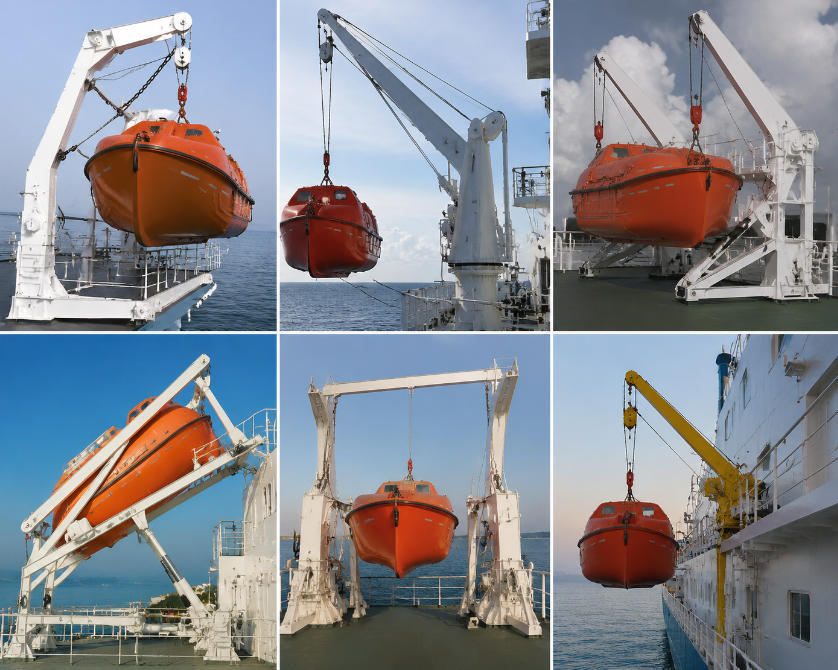
Table of Contents
Understanding the Basics of a Lifeboat Davit
A lifeboat davit is a mechanical unit that lowers a lifeboat from storage down into the water. It holds the load of the lifeboat when it is fully manned. It also lets the crew lower and raise the boat with controlled motion during launch, boarding, and recovery work.
A common lifeboat davit system includes:
- Davit arms or other support parts
- Winch unit
- Wire ropes and falls
- Hydraulic, electric, or mechanical power
- Release parts
- Limit switches and other safety gear
- Control panels
Modern davits follow safety regulations set for sea service. SOLAS is one key set of requirements. These rules aim for dependable operation when an emergency happens.
Different Types of Lifeboat Davits
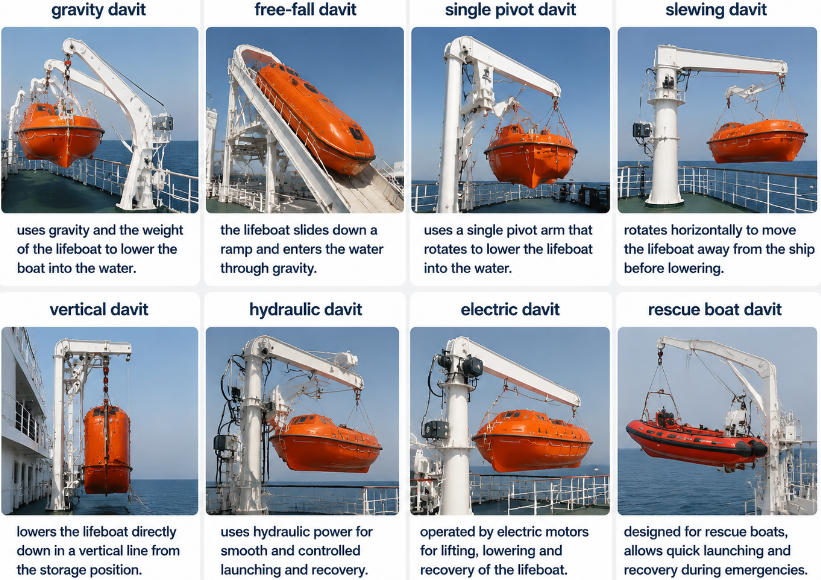
1. Gravity Lifeboat Davits
Gravity lifeboat davits are used a lot in the maritime world. They rely on gravity and the lifeboat’s own weight. After the securing system is released, the davit arms swing outward. Then the lifeboat can be lowered to the water in a controlled way.
A key benefit is the straightforward design. There is no need for heavy power systems to move the boat into the launch position. That helps make the system dependable when time is short. You commonly find gravity davits on cargo ships, passenger vessels, merchant fleets, and offshore sites. They are also valued for their durability and simple use.
2. Free-fall Lifeboat Davits
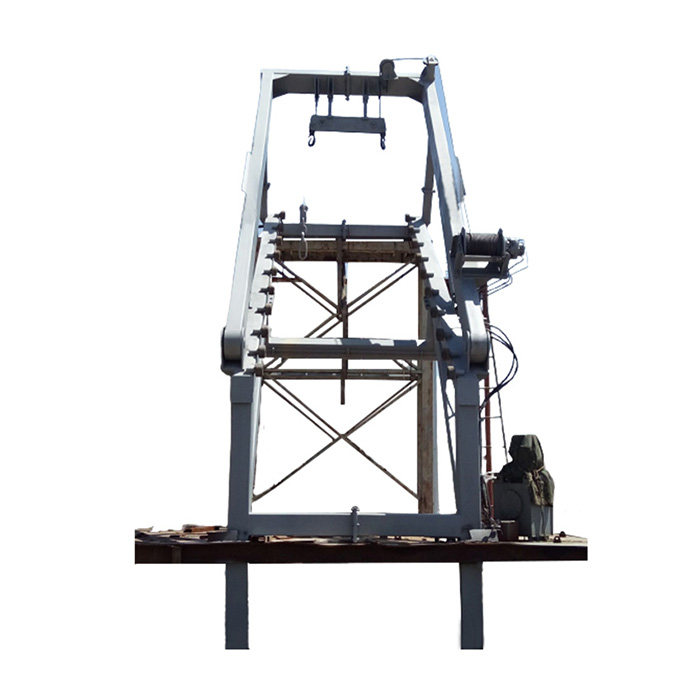
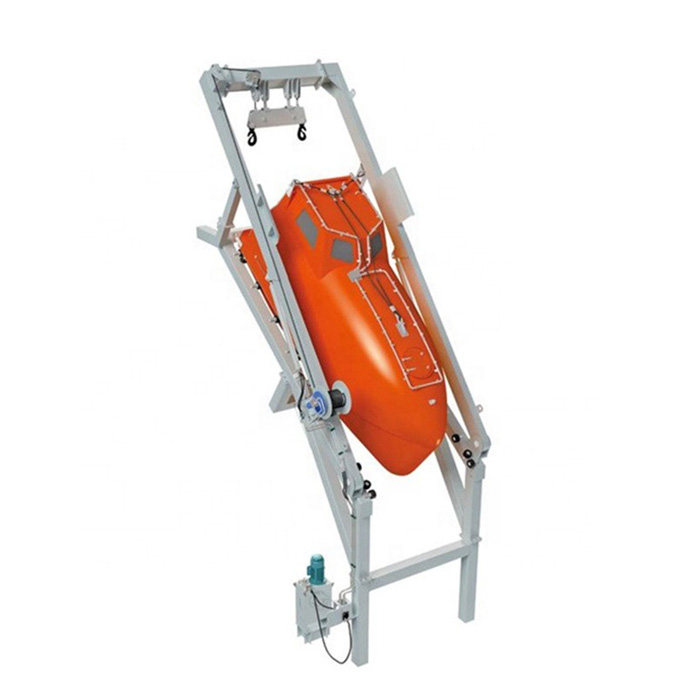
Free-fall lifeboat davits launch the lifeboat by letting it slide straight into the sea. Instead of a slow lowering with cables, the lifeboat rides down a ramp. Then it enters the water under gravity.
This approach can speed up evacuation. The crew can release the boat fast, without running a long lowering sequence. Because of that, it fits vessels that may face higher risk during incidents. Free-fall lifeboat davit systems are often used on offshore platforms, oil tankers, and bigger ships where quick response matters most.
Another benefit for free-fall lifeboat davits is how well they work when the sea is rough. The enclosed lifeboat body, and the fast release process, helps keep people safer during an emergency drop.
3. Single Pivot Lifeboat Davits
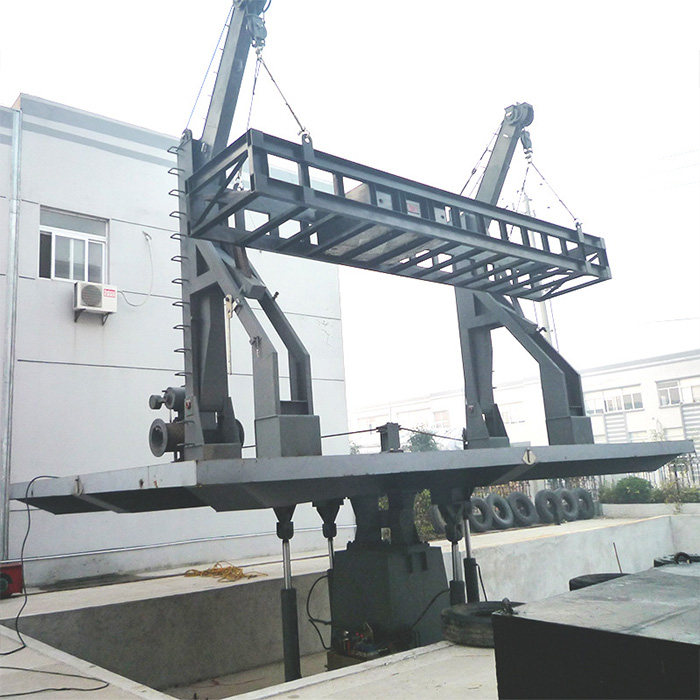
Single pivot lifeboat davits use a swinging arm. First, the arm shifts the lifeboat out of its docked position. Then it lowers the boat to the water. The arm turns around a fixed point, so the launch process stays simple.
These units are liked because they take up less room on deck. They also tend to be easier to run day to day. They fit well on ships with tight deck space, as long as a dependable launch system is still needed. Compared with bigger davit setups, single pivot models usually need fewer parts. That can mean easier service.
You will often see single pivot davits on small ships, workboats, and other marine craft. On these boats, fitting space matters. So does steady operation.
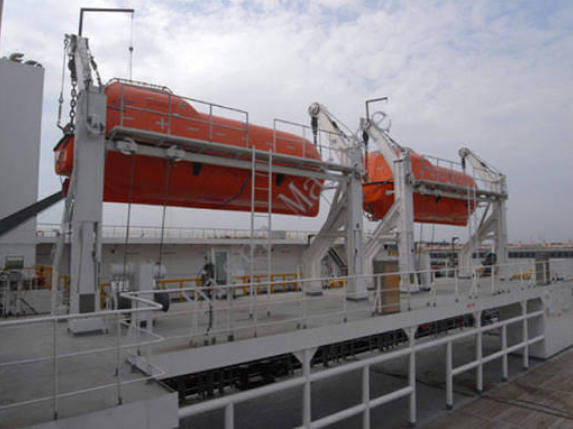
4. Slewing Lifeboat Davits
Slewing lifeboat davits use a turn action. The lifeboat moves sideways off the ship first. After that, the system lowers it into the water. This approach gives more room to choose where the lifeboat ends up during launch.
A key benefit is layout flexibility. A slewing unit can be placed where a straight outward davit would be hard to use. The moving path helps with rescue boats and smaller lifeboats that need to be set in the right spot.
They can also help when boarding or launch conditions are not ideal. The boat can be shifted to a more convenient position before release.
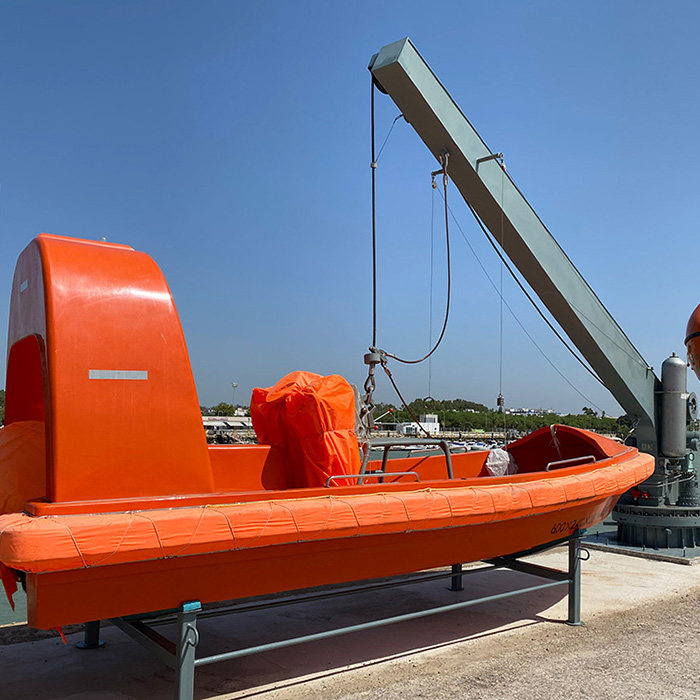
5. Vertical Lifeboat Davits
Vertical lifeboat davits are made to send the lifeboat down straight from its stored spot. They do not rely on a long swing out over the deck. Instead, they focus on saving deck area and keeping the setup simpler.
These davits work well on ships with small deck zones. The compact frame lets ship builders use available space better. At the same time, the system still supports emergency launching.
Even with the direct down path, the unit must be planned with care. It needs to handle different sea states in a safe way. Good installation and regular checks are required for steady use.
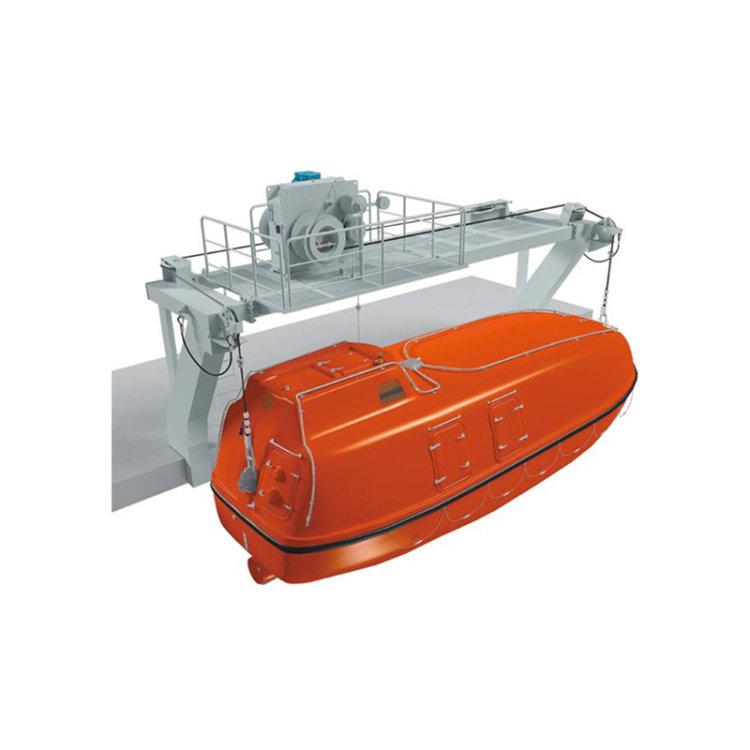
6. Hydraulic Lifeboat Davits
Hydraulic lifeboat davits run on hydraulic power. This power helps move the lifeboat during both launching and recovery. The design can lift heavy loads and give accurate control. Because of that, it fits larger ships that carry heavier lifeboats.
With hydraulics, the motion can be smooth and steady. That helps when the load is significant. It also lowers the amount of physical work crews must do during launch tasks.
Many ships now use hydraulic davits. People like them because they give steady control, help day to day work run faster, and stay dependable in rough sea conditions. You can find them on big merchant ships, offshore units, and other specialty marine sites.
7. Electric Lifeboat Davits
Electric lifeboat davits rely on electric motors. Those motors power the winch parts and the launch setup. As more marine gear became automated, electric units got chosen more often. They tend to fit with newer onboard control systems and can run with good energy use.
These davits make operation simpler for crews. They can also link with checks, alerts, and safety tools. In many cases, electric setups have fewer moving mechanical parts than some hydraulic options. That can mean less work for upkeep crews.
Electric lifeboat davits are a common pick on modern ships. They are chosen when operators want steady running, good energy performance, and control features that are easy to manage.
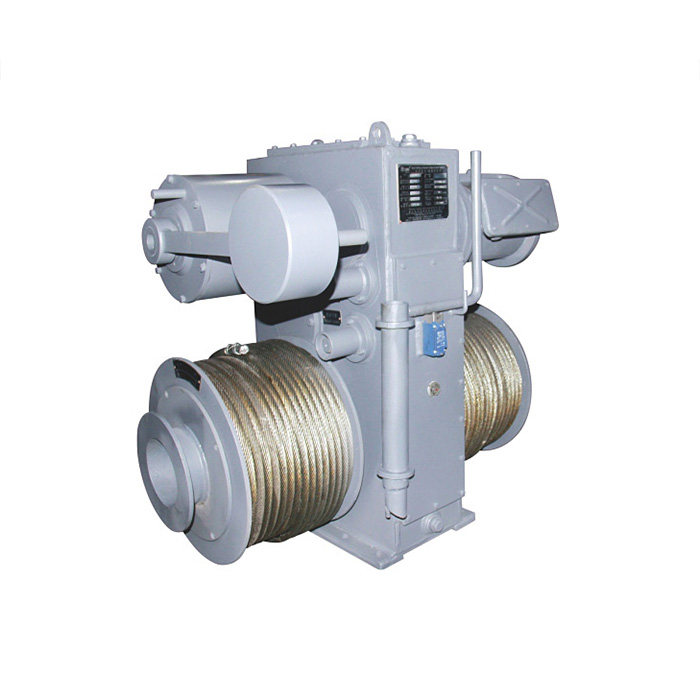
8. Rescue Boat Davits
Rescue boat davits are made for rescue boats, not for standard lifeboats. Rescue boats are often needed during urgent situations. So the davit system is meant for quick use and repeated launches.
These davits are built to handle many launch cycles. They also need to bring the boat back fast and safely after each rescue. You will see them on passenger ships, offshore facilities, and vessels that must keep rescue capability ready.
The layout of rescue boat davits leans toward speed and dependability. It also aims for simple handling, so response teams can act quickly when emergencies happen.
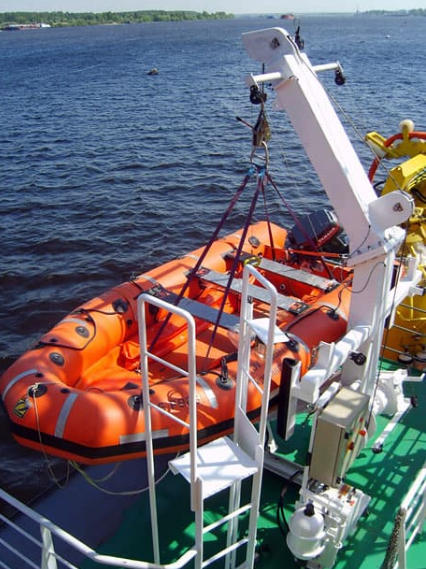
Comparison of Different Lifeboat Davit Types
| Type of Lifeboat Davit | Main Working Principle | Advantages | Common Applications |
| Gravity Davit | Uses gravity-assisted movement | Reliable and simple | Cargo ships, tankers, passenger vessels |
| Free-Fall Davit | Free-fall lifeboat slides into water by gravity | Fast emergency launching | Offshore platforms, large ships |
| Single Pivot Davit | Rotating arm mechanism | Compact design | Small and medium vessels |
| Slewing Davit | Horizontal rotation before lowering | Flexible operation | Rescue boats, marine vessels |
| Vertical Davit | Direct downward lowering | Saves deck space | Ships with limited space |
| Hydraulic Davit | Hydraulic-powered operation | Strong lifting capability | Large vessels |
| Electric Davit | Motor-driven system | Automated operation | Modern ships |
| Rescue Davit | Handle repeated launching cycles | Quick and safe recovery | passenger vessels, offshore installations |
Key Factors to Consider for Choosing the Right Lifeboat Davit
| Key Factor | Description | Why It Important |
| Vessel Type and Size | Consider the ship type, vessel dimensions, and operational environment before selecting a lifeboat davit system. | Ensures the davit is suitable for the vessel’s structure, safety requirements, and emergency evacuation needs. |
| Lifeboat Weight and Capacity | Evaluate the total weight of the lifeboat, including passengers, equipment, fuel, and emergency supplies. | The davit must have sufficient lifting capacity to safely support and launch the fully loaded lifeboat. |
| Launching Method | Choose between gravity launching, free-fall launching, hydraulic operation, or electric-powered systems. | The correct launching method improves evacuation speed, operational reliability, and crew safety. |
| Available Deck Space | Analyze the installation area, storage position, and movement space available on the vessel. | Compact davit designs may be required for ships with limited deck space or complex layouts. |
| Operating Environment | Consider sea conditions, weather exposure, temperature changes, and corrosive marine environments. | A suitable davit system provides reliable performance under harsh offshore and marine conditions. |
| Safety and Certification Requirements | Ensure the davit complies with international maritime regulations and safety standards such as SOLAS requirements. | Compliance guarantees that the equipment meets required safety and performance standards. |
| Material Quality and Corrosion Resistance | Select davits manufactured with durable materials and protective coatings suitable for marine use. | Helps prevent corrosion, extends service life, and reduces maintenance needs. |
| Ease of Operation | Consider how easily crew members can operate the launching and recovery system during emergencies. | Simple and reliable operation reduces response time and minimizes human error. |
| Maintenance Requirements | Evaluate inspection procedures, spare parts availability, and servicing requirements. | Regular and convenient maintenance ensures long-term reliability and operational readiness. |
| Recovery Capability | Check the davit’s ability to safely recover lifeboats or rescue boats after launching. | Reliable recovery systems improve operational efficiency and support repeated use. |
| Power System Availability | Consider whether the vessel supports hydraulic, electric, or manual operating systems. | Ensures compatibility with the ship’s existing power and control systems. |
| Installation and Integration | Review compatibility with existing ship structures and lifesaving equipment. | Proper integration improves safety, reduces installation difficulties, and ensures stable operation. |
| Load Handling Performance | Assess the davit’s stability, braking system, and control accuracy under different loads. | Provides smooth launching and prevents accidents caused by uncontrolled movement. |
| Space for Inspection and Testing | Ensure there is enough room for regular drills, testing, and equipment inspections. | Allows crews to maintain readiness and identify potential issues early. |
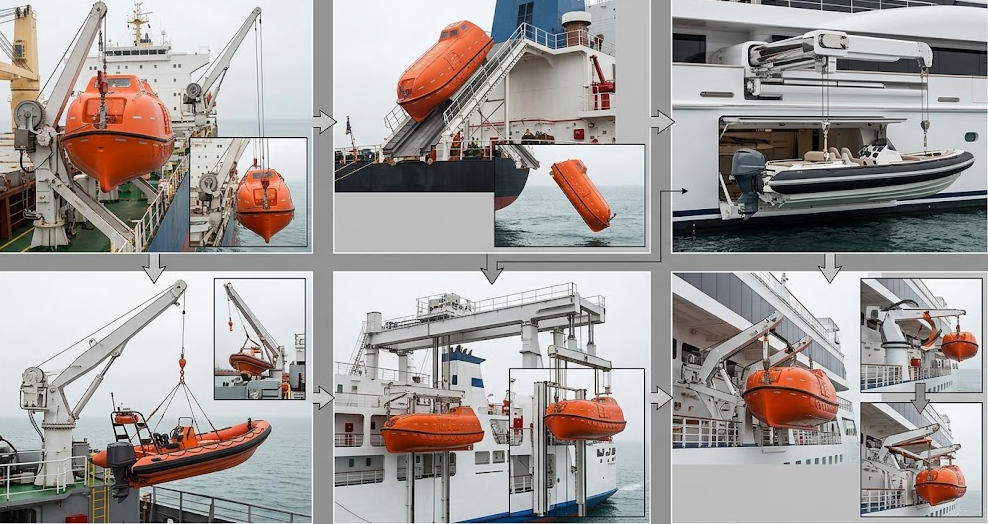
Importance of Regular Lifeboat Davit Maintenance
Lifeboat davits are emergency life safety gear. Because of that, routine checks and servicing matter a lot.
Maintenance work usually includes:
- Looking for wear on wire ropes
- Checking hydraulic components
- Testing winches and brake action
- Greasing or lubricating moving parts
- Confirming release mechanisms
- Doing operational checks and tests
With regular maintenance, the davit system is more likely to work as intended when it is needed most.
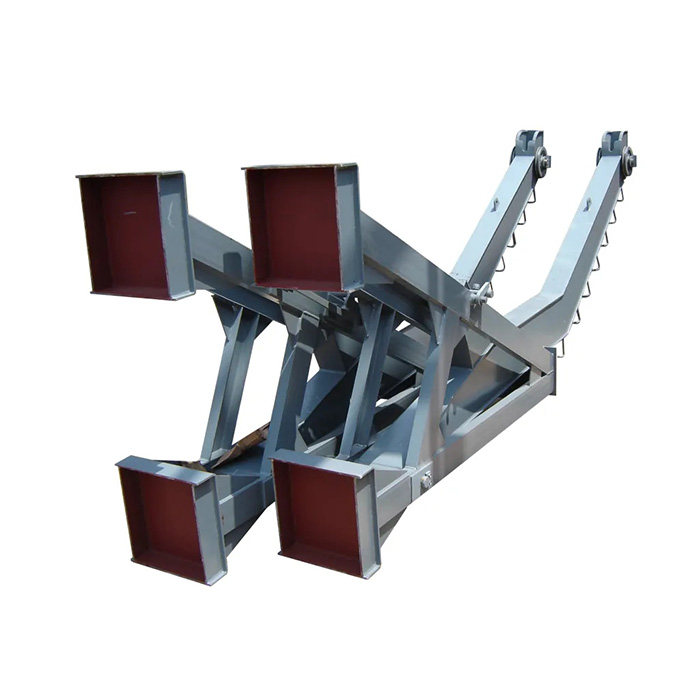
Final Words
Lifeboat davits support maritime safety. They help with launching and recovery for both lifeboats and rescue boats. You may see gravity davits, free-fall systems, and hydraulic or electric designs. Each type has its own strengths for different vessel requirements.
Choosing the right lifeboat davit depends on the vessel design, lifeboat specifications, operating conditions and safety needs. If the system is selected well, installed properly, and maintained on schedule, it can strengthen emergency readiness and help protect crew members during critical situations.