

How to Design Marine Doors for Subsea and Underwater Structures
Marine doors offer secure entry, protection, and a level of environmental separation even when the marine setting gets harsh. Subsea setups, offshore platforms, underwater habitats, research centers, and even specialized marine craft depend on high-performance marine doors to keep structural soundness and daily operational safety in check. In practice, these doors are designed using improved materials, refined sealing methods, and pressure-tolerant construction, so performance stays consistent under demanding underwater conditions.
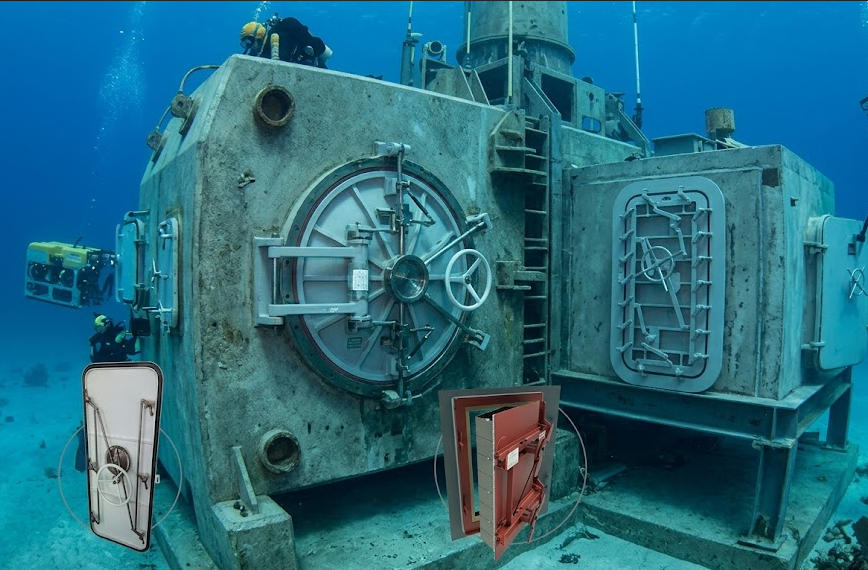
Table of Contents
The Importance of Marine Doors in Subsea Applications
In subsea and underwater structures, the surroundings are unforgiving. When an access point fails, it can create serious hazards for safety, plus damage for equipment. Marine doors handle several essential roles, like keeping seawater from entering, supporting internal pressure stability, and enabling controlled passage for people and apparatus during operations.
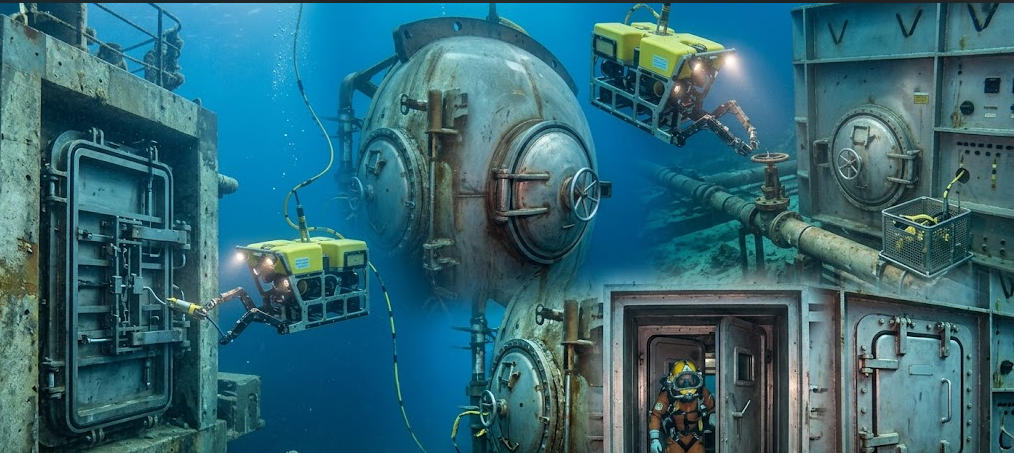
In underwater habitats and subsea laboratories, marine doors help create a controlled livable or working space, they separate pressurized inside areas from the surrounding ocean, you know. For offshore energy facilities, these doors give entry to equipment compartments while shielding delicate systems from seawater contact, and that is important. Marine doors are also put in place in underwater tunnels, submarine structures, remotely operated vehicle (ROV) stations, and underwater construction projects. Their capacity to provide secure, watertight access means they are an indispensable part of modern marine engineering.
Key Design Requirements of Marine Doors for Underwater Structures
Pressure Resistance
For marine doors used in subsea applications one of the most important requirements is that they can handle high external water pressure, I mean the kind that really builds up. As the depth goes up, the pressure on underwater structures climbs too, a lot. Because of that, these marine doors need reinforced frames, sturdy hinges, and locking mechanisms that are rated for pressure so they do not warp, or allow leakage.
In deepwater work, you often need doors that are specially engineered, the type that keeps functioning well at hundreds or even thousands of meters below sea level. To confirm reliability, advanced structural analysis is performed along with pressure testing, and that part is pretty common.
Watertight and Airtight Sealing
Good sealing matters because it helps stop water from getting into underwater structures. Usually marine doors rely on several layers of high-performance gaskets, compression seals, and coordinated locking systems to set up watertight boundaries.
In pressurized settings, like underwater habitats or submarine rooms, doors should also manage airtight sealing, so the inside atmosphere stays steady. The sealing materials are chosen with an eye on resistance to saltwater, temperature swings, and long term wear.
Corrosion Resistance
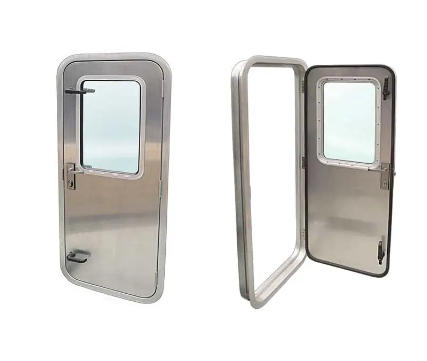
Seawater tends to attack materials because of its salt content and its chemical makeup. So corrosion-resistant construction is needed, for example, marine-grade stainless steel doors, aluminum alloys doors, titanium alloys doors, or metal doors with special coatings.
On top of that, protective coatings and surface treatments are commonly used to stretch the service life and cut down maintenance visits. These corrosion-resistant designs matter a lot for fixed subsea installations, where regular checks and repairs are hard to schedule.
Types of Marine Doors Used in Subsea and Underwater Structures
| Type of Marine Door | Main Features | Key Advantages |
| Watertight Marine Doors | Equipped with high-performance gaskets, compression seals, and secure locking systems to prevent seawater intrusion | Provides reliable water isolation and protects internal compartments from flooding |
| Pressure-Resistant Marine Doors | Reinforced frames, heavy-duty structures, and pressure-rated sealing systems designed for deepwater environments | Withstands extreme external water pressure and maintains structural integrity |
| Sliding Marine Doors | Operated by sliding mechanisms, often using hydraulic, electric, or pneumatic systems | Saves space, enables smooth operation, and supports automated access control |
| Hinged Marine Doors | Traditional door design with heavy-duty hinges and locking mechanisms | Simple design, reliable performance, and easy maintenance |
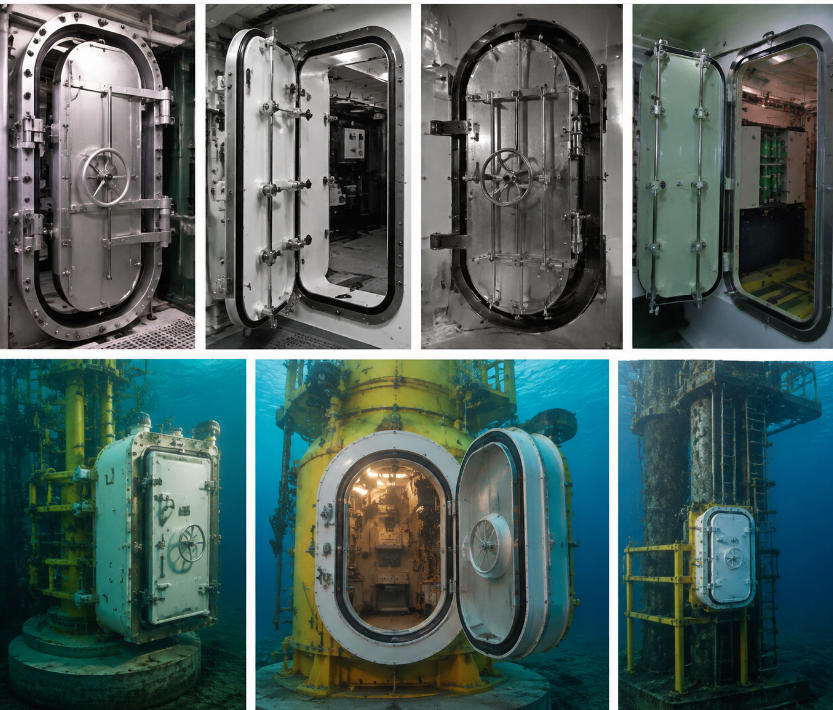
| Subsea Access Doors | Designed for underwater entry points with advanced sealing and corrosion-resistant materials | Allows safe access for inspection, repair, and equipment installation |
| Airtight Marine Doors | Uses specialized sealing technology to prevent air leakage and maintain internal pressure | Maintains controlled internal environments and improves occupant safety |
| Emergency Escape Marine Doors | Designed for rapid opening and emergency evacuation under marine conditions | Provides safe emergency exits during critical situations |
| Hydraulic Marine Doors | Powered by hydraulic systems for controlled and high-force operation | Handles large door sizes and high-pressure operating environments |
| Fire-Rated Marine Doors | Built with fire-resistant materials and insulation systems | Provides fire protection and compartment safety |
| ROV-Compatible Marine Doors | Designed for operation or inspection using remotely operated vehicles | Enables remote access and reduces human exposure to hazardous environments |
Advanced Technologies in Designing Marine Doors for Subsea and Underwater Structures
Advanced technologies in materials, sealing systems, automation, monitoring, and digital engineering are transforming the design and operation of marine doors, enabling safer and more efficient underwater activities.
1. Advanced Materials
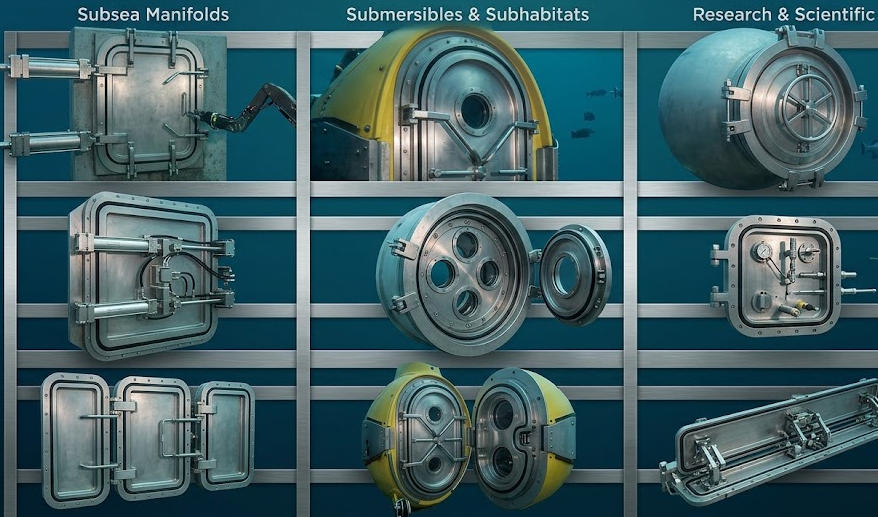
Material innovation is key for the progress of modern marine doors, because seawater creates a very corrosive setting, so older material choices can degrade after long time periods. Nowadays, many marine door designs rely on corrosion resistant alloys along with high performance composite materials to boost the service life and overall reliability.
Marine grade stainless steel is still one of the most commonly used options, mainly because it shows strong saltwater corrosion resistance together with solid mechanical strength. For deeper underwater use cases, titanium alloys are often preferred, they deliver outstanding performance, with high strength and lightweight traits, and also excellent resistance to seawater as well as chemical corrosion. With these choices, marine doors can keep their structural stability even when extreme pressure conditions are present.
Composite materials are also getting a lot of focus in marine engineering; honestly, they are starting to show up more and more. Fiber-reinforced composites can deliver strong performance, while reducing weight quite a bit when you compare them with classic metals. Lightweight marine doors are especially useful for underwater vehicles, autonomous systems, and offshore structures, because shaving overall mass can help operational efficiency, and also cut down structural loads a bit.
2. Advanced Sealing Technologies
Sealing performance for marine doors is among the top factors that affect the safety of subsea structures. A tiny sealing failure can still let seawater creep into protected zones, and that can trigger equipment damage, plus operational dangers. For that reason, modern marine doors rely on advanced sealing technologies that are meant to keep water tight performance for a long time.
Multi-layered sealing systems have become kind of a normal thing in advanced marine door design. they typically bring together several gasket layers, compression seals, and a few specially designed sealing surfaces, so you can get a dependable barrier against water getting in. Using high performance elastomers, plus improved sealing materials, helps these marine doors stay flexible and keep sealing effectiveness when the pressure conditions change, even a little.
Smart sealing technologies are showing up more and more in underwater uses too. If sensors are integrated into the sealing system, operators can track seal pressure, deformation, and likely leakage conditions in real time. That means issues can be spotted early, and predictive maintenance becomes easier, so the chance of unexpected failures drops, especially in hard to reach underwater environments.
3. Intelligent Automation and Remote Operation Technologies
Automation is now a crucial path in marine door design, especially for deep sea and offshore use. The old manually operated doors are often hard to manage in rough underwater conditions , mainly when you have high pressure, heavy frames, or limited access. In those situations, even basic opening and closing can become a real hassle, you know.
More and more marine doors now rely on hydraulic, electric, and pneumatic drive systems, to keep the motion smooth and steady. Hydraulic actuation is especially good for large and heavy doors, because it can deliver strong pushing power while still keeping movement under controlled handling. Electric actuator setups give accurate placement, less routine upkeep, and better energy efficiency overall.
Remote operation technology keeps getting better, it helps raise safety levels by letting marine doors be controlled from a distance which is, honestly, a big deal. In subsea production areas, underwater research stations, and ROV setups, remote-controlled marine doors reduce the need for people stepping in to handle things directly in risky locations. With this capability, underwater tasks become safer, and deep-sea uses gain better access.
4. Smart Monitoring Systems and Data-Based Maintenance
Bringing together intelligent monitoring systems is changing the way marine doors are looked after across their entire service life. Newer designs can include sensors and digital monitoring tools to gather data on door health, such as pressure levels, structural strain, corrosion condition, sealing efficiency, and how many open and close cycles have happened.
Real-time data collection lets engineers check the state of marine doors without having to do frequent in person inspections. That matters a lot when the subsea structures are in deep waters, because maintenance activities there are complicated , and also costly.
The combination of sensor technology and data analysis supports predictive maintenance strategies. Instead of replacing components based only on fixed schedules, operators can identify early signs of wear and perform maintenance when necessary. This reduces downtime, lowers operational costs, and extends the service life of marine door systems.
5. Digital Design and Simulation Technologies
Digital engineering now plays a major role in modern marine door development. Computer aided design CAD along with structural simulation and digital modeling lets engineers assess how well a marine door will perform before any manufacturing starts.
With advanced simulation tools designers can look at how marine doors act under outside pressure, mechanical impacts, and environmental stress. Using finite element analysis, people can spot possible weak spots in the door body, so engineers can tweak the design and end up with better strength and dependability.
Digital twin work is also getting more useful in marine engineering. A digital twin makes a virtual copy, not just of the door, but of the whole marine door system, and it can be refreshed from real time operating data. Engineers then use these digital models to watch how it performs, run what if scenarios for operating conditions, and refine the maintenance schedule across the full service lifespan.
6. Advanced Manufacturing Technologies
Modern production methods are raising both accuracy and overall quality in marine door making. CNC machining, robotic welding, plus automated fabrication steps let manufacturers produce intricate marine door parts with better precision, and more consistent results.
Precision manufacturing is especially important for underwater doors, because even small dimensional errors can mess with sealing performance and mechanical operation. Advanced production methods help make sure that door frames, the locking system and sealing faces sit together correctly, without weird gaps.
Additive manufacturing technology is also bringing new options for marine door development. Even if it is still maturing for big marine structures, 3D printing can back the making of customized components, detailed shapes, and lighter parts. In the future, this approach could lead to quicker prototyping and more adaptable marine door designs.
7. Energy-Efficient and Environmentally Friendly Solutions
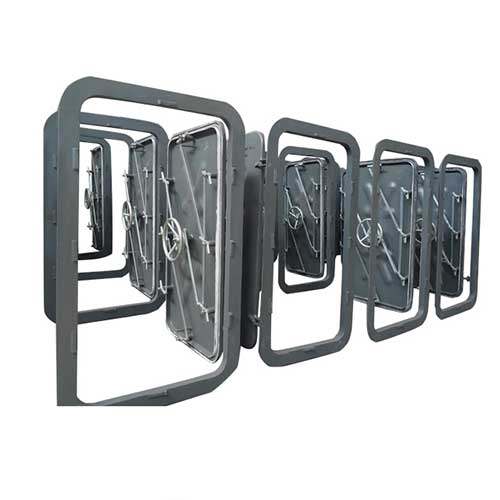
Energy efficiency is getting more important in subsea engineering, because underwater systems need to keep running reliably, with limited energy resources, so there is less room for waste. In response, new marine doors are being developed with more efficient actuation systems, mechanical frameworks that are fine tuned, and better control technologies, all aimed at lowering power demand.
Another direction in marine door development is the use of sustainable materials. Companies are looking at materials and surface treatments that can extend service life, while also cutting the environmental footprint. Longer duration corrosion protection and recyclable components can reduce the need for frequent servicing, and back more sustainable marine use.
Subsea and Underwater Applications of Marine Doors
| Application Area | Role of Marine Doors | Typical Locations |
| Subsea Oil and Gas Facilities | Provide secure access to underwater equipment areas, control rooms, and maintenance compartments while preventing seawater intrusion | Subsea production systems, offshore platforms, underwater processing units |
| Underwater Research Stations | Allow researchers to safely enter and exit underwater habitats while maintaining controlled internal environments | Deep-sea laboratories, oceanographic research bases, underwater habitats |
| Submarines and Underwater Vehicles | Enable crew access, equipment loading, inspection, and emergency evacuation while maintaining hull integrity | Military submarines, research submarines, autonomous underwater vehicles (AUVs) |
| Offshore Wind Energy Structures | Provide access to submerged and partially submerged sections for inspection and maintenance | Offshore wind turbine foundations, transition pieces, service platforms |
| Underwater Tunnels and Infrastructure | Isolate tunnel sections and provide controlled access points for maintenance and safety operations | Subsea tunnels, underwater transportation systems, marine infrastructure projects |
| ROV and Subsea Equipment Stations | Allow remote inspection, equipment replacement, and operational access in deepwater environments | ROV docking stations, subsea control units, intervention systems |
| Offshore Construction Platforms | Support personnel movement and equipment transfer between protected compartments and external marine areas | Floating platforms, construction vessels, offshore support structures |
| Marine Renewable Energy Systems | Protect internal components and provide maintenance access in submerged energy equipment | Tidal energy converters, wave energy devices, underwater power systems |
| Aquaculture and Marine Facilities | Provide access to underwater tanks, inspection chambers, and service areas | Offshore fish farms, marine research facilities, underwater enclosures |
| Deep-Sea Exploration Systems | Enable access to scientific equipment and pressure-controlled compartments | Deep-sea exploration vehicles, manned submersibles, seabed research platforms |
Final Words
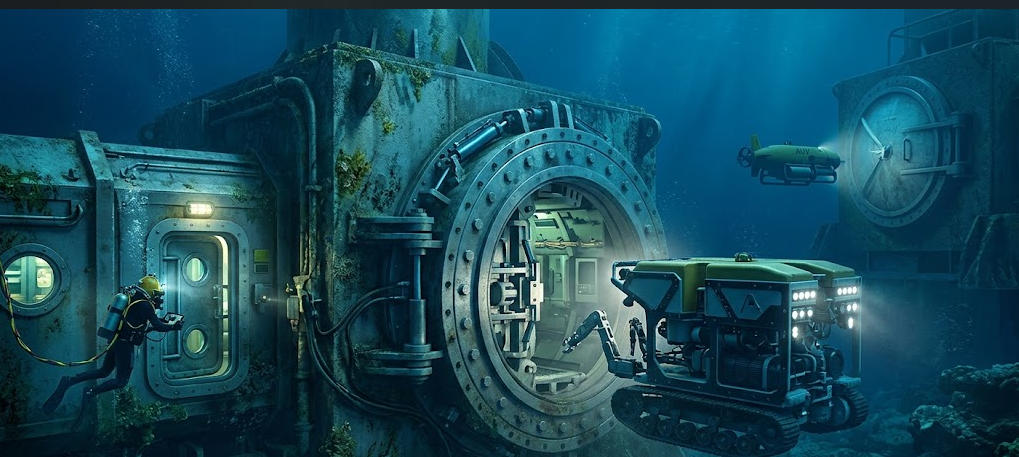
Marine doors for subsea and underwater structures are critical safety and access components designed to perform under extreme marine conditions. Their capacity to resist pressure, stop water ingress, and endure corrosion is what makes them vital across many kinds of underwater usage.
With advanced materials, upgraded gasket systems, automation features, and smart surveillance solutions, today’s marine doors keep shifting forward to handle deeper, more demanding waters.