

9 Key Categories of Equipment Inside a Lifeboat
A lifeboat is one of the most important parts of life-saving equipment on a ship. It is designed to protect crew and passengers during emergencies like ship abandonment, fire, collision, or sinking, and it has to be fitted with dependable survival tools and emergency supplies. Every lifeboat equipment has a specific purpose; from ensuring communication and navigation to providing food, water, and medical support.
The equipment that goes inside a lifeboat is regulated by international maritime safety rules, mostly the standards tied to the International Convention for the Safety of Life at Sea (SOLAS). These regulations make sure a lifeboat is ready to sustain survivors until help shows up. When you look at the key equipment inside a lifeboat, you can see how these safety craft work in harsh ocean situations.
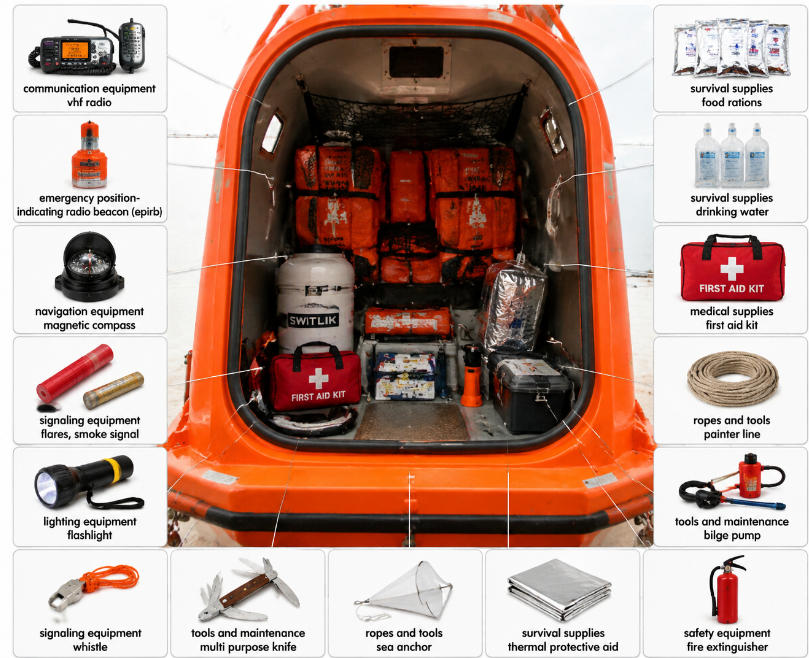
Table of Contents
Common Categories of Lifeboat Equipment
1. Survival Supplies
One of the most important categories of lifeboat equipment is survival supplies. After people abandon a vessel, they might have to stay afloat for hours, or even several days, before rescue arrives. Because of that, lifeboats are loaded with essentials that cover basic human needs during the whole waiting time.
| Survival Supply | Description | Purpose |
| Drinking Water | Sealed freshwater containers or emergency water packets stored in protected packaging | Provides safe hydration for survivors when fresh water sources are unavailable |
| Emergency Food Rations | High-energy, long-lasting food supplies designed for marine survival conditions | Provides essential calories and nutrition while waiting for rescue |
| Thermal Protective Aids | Protective blankets, immersion suits, or heat-retaining materials | Helps prevent hypothermia by reducing body heat loss in cold environments |
| First Aid Kit | Medical supplies including bandages, antiseptics, medicines, and basic treatment tools | Allows survivors to treat injuries and manage minor medical emergencies |
| Seasickness Medication | Motion sickness tablets or related medical supplies | Helps reduce nausea and discomfort caused by prolonged exposure to waves |
| Emergency Blankets | Lightweight reflective blankets designed to retain body heat | Provides additional warmth and protection against cold weather conditions |
| Survival Instructions and Manuals | Printed guides explaining emergency procedures and equipment operation | Helps occupants correctly use lifeboat equipment and follow survival practices |
| Fishing Equipment | Basic fishing tools such as hooks and lines in some survival kits | Provides a possible additional food source during extended survival periods |
| Water Collection Equipment | Containers or tools for collecting rainwater or emergency water supplies | Supports additional freshwater collection when survival time is extended |
| Sun Protection Equipment | Sunscreen, sunglasses, or protective coverings where provided | Helps reduce exposure risks from strong sunlight and UV radiation |
| Personal Protective Equipment | Protective clothing and gear designed for harsh marine environments | Helps protect occupants from wind, cold, seawater, and environmental hazards |
| Storage Containers | Waterproof bags, sealed boxes, or protective compartments | Keeps food, water, and survival tools safe from moisture and seawater damage |
2. Communication and Signaling Equipment
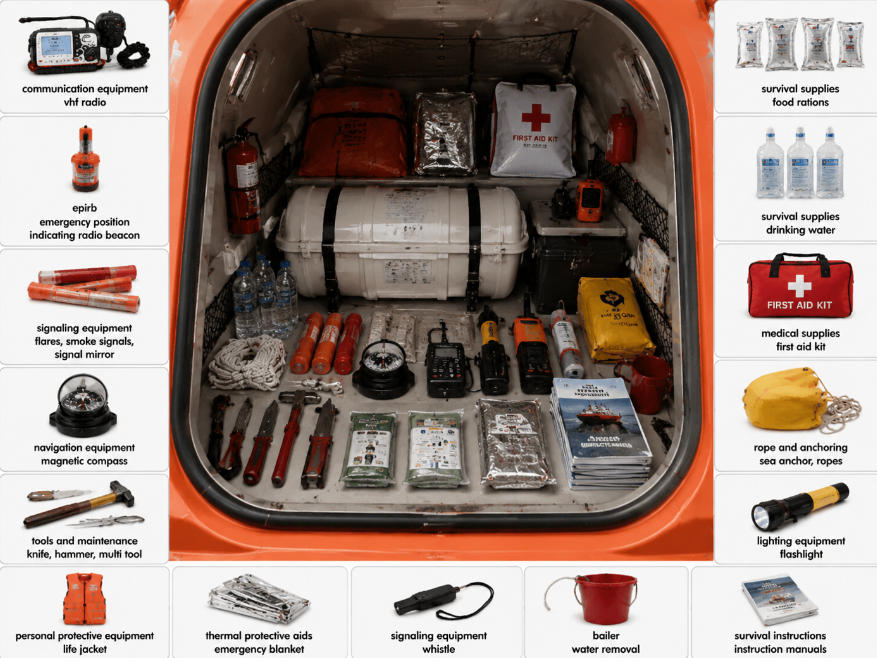
During maritime emergencies, effective communication is essential because rescue speed really depends on how quickly survivors can be seen and tracked. Lifeboats are fitted with a range of signaling devices that work to draw attention and pass emergency information along.
Portable marine radios give the crew a way to talk with nearby vessels, rescue personnel, or coastal authorities. Emergency position-indicating radio beacons, EPIRBs, can send distress signals along with location details, so search and rescue teams can pinpoint where the lifeboat is.
There is also visual signaling equipment, which plays a big role in lifeboat safety. Flares, signal mirrors, and whistles help survivors catch the eye of ships, helicopters or aircraft. In low-visibility scenarios, like nighttime, thick fog, or heavy storms, these tools become even more valuable.
3. Navigation Tools
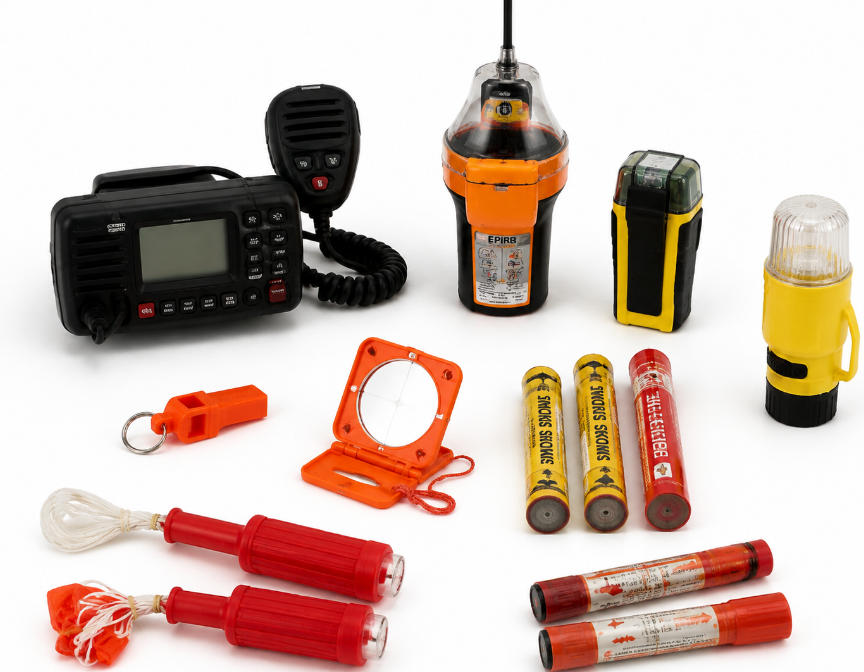
Even though lifeboats are mostly built to help people survive, not really for long-distance journeys, navigation equipment is still needed, especially when something goes wrong. People who remain onboard may need to guess where they are, keep an eye on the weather, or figure out the most secure heading while they are waiting for rescue.
You will often find a magnetic compass installed, because it gives basic directional cues. Navigation charts and written instructions let the crew understand nearby waters and likely hazards. Radar reflectors can also be added, to improve how easily the lifeboat shows up on other vessels radar systems.
All these tools, together they support better decisions and help survivors avoid extra danger while the lifeboat is adrift.
4. Fire Protection and Safety Equipment
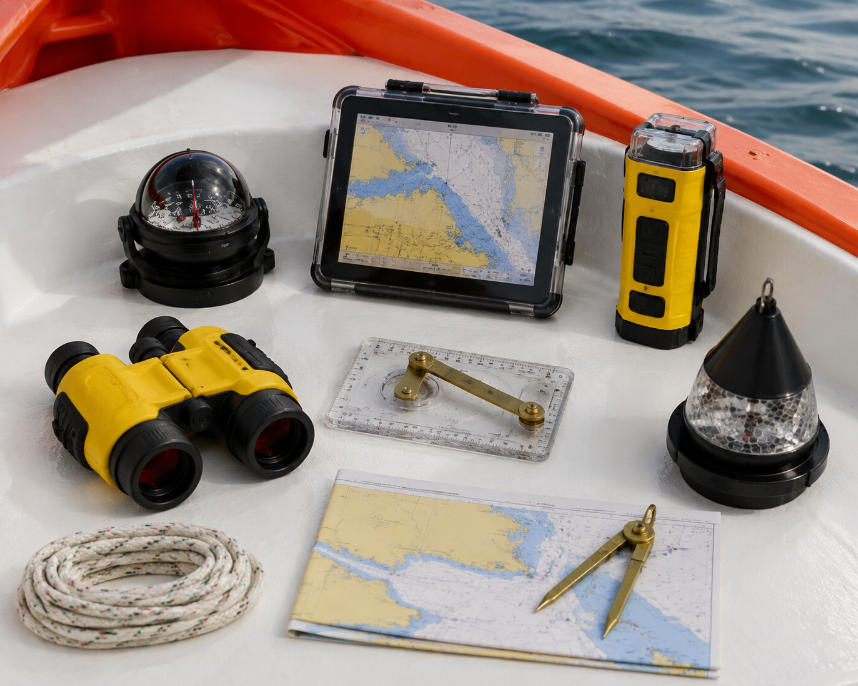
Fire is one of the most dangerous, emergencies on board a vessel, and lifeboats are designed to give protection against this threat. Many life boats, especially enclosed ones, have fire-resistant structures, that protect the people inside from external flames smoke and heat, even when it gets severe.
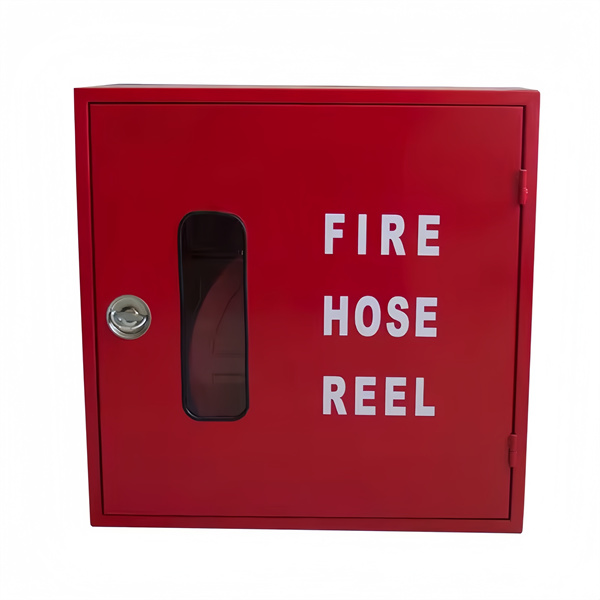
Fire extinguishing equipment is kept in the lifeboat, so small fires can be dealt with after evacuation. The materials chosen for lifeboat construction are based on durability and resistance to harsh marine conditions, so the craft stays safe even in extreme situations.
These fire protection measures are even more critical for ships working in zones where fuel spills, explosions, or onboard fires may happen.
5. Medical Equipment
Medical emergencies can arise during evacuation or while survivors are waiting for rescue. A lifeboat equipped properly, includes basic medical supplies to treat injuries and help maintain passenger well-being.
First aid materials like bandages, antiseptic products, and emergency medicines lets occupants handle small injuries and typical issues. Seasickness medication is often added too, because long exposure to waves can bring discomfort and dehydration.
Even if lifeboat medical equipment cannot replace proper medical treatment, it still offers essential support until rescue personnel are there.
6. Tools and Equipment
Lifeboats contain different tools that help occupants keep the craft running and deal with survival situations. The design is meant to stay simple, durable, and helpful in several emergency contexts.
A bailer helps remove water that enters the lifeboat, while a multipurpose knife can assist with cutting ropes, opening packages, and doing necessary repair work. Buckets, repair materials, and other basic tools also play a part in keeping the lifeboat in good condition during extended time at sea.
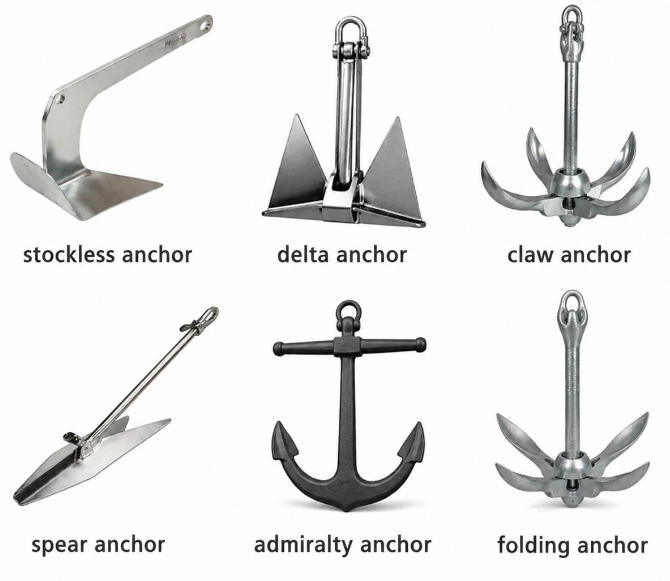
A marine anchor is another really important piece of gear. it reduces drifting speed, and helps stabilize the lifeboat in rough water,, improving safety and comfort for the people inside.
7. Ropes and Rescue Assistance Equipment
Rope-related equipment is essential for securing and controlling a lifeboat. Strong painter lines connect the lifeboat to the launching systems or to a rescue vessel, and extra ropes can aid rescue work and emergency tie-ins.
These simple but reliable components make a meaningful difference for the survival craft overall safety and stability.
8. Lighting and Visibility Equipment
Finding survivors fast, is like the main goal in maritime rescue situations. Because of this, life boats come with lighting and visibility equipment, so rescue teams can spot people earlier, even from a distance.
Flashlights are used for inside illumination, they help during nighttime tasks, and also make it easier to move around safely. Spare batteries matter too, since they keep the lighting devices ready, when they’re required most. External lights, reflective materials, and signaling equipment work together to raise the odds that passing vessels or aircraft will notice the lifeboat.
In urgent cases, better sightlines can be the deciding factor between rescue that takes longer, and a successful recovery.
9. Ventilation and Environmental Protection Systems
Keeping the lifeboat’s interior in a safe condition is essential, especially when the trip lasts a long time. Enclosed lifeboats are equipped with ventilation systems that circulate fresh air, while still shielding occupants from external dangers and environmental risks .
Drainage systems help pull away unwanted water from the inside and insulated structures give protection against harsh weather. Because of these things, lifeboats can keep a steadier setting even when the sea conditions change, and that matters a lot.
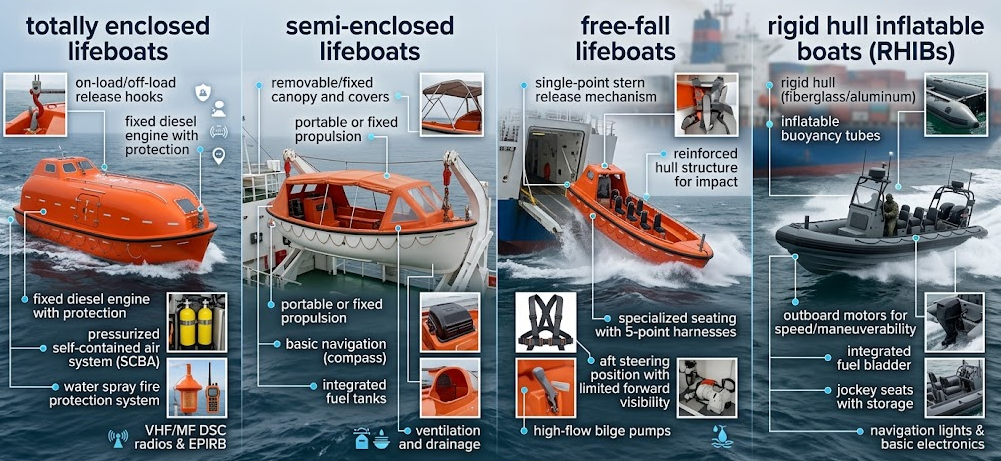
Specialized Equipment for Different Lifeboat Types
Different lifeboat designs may require additional equipment depending on their operating environment.
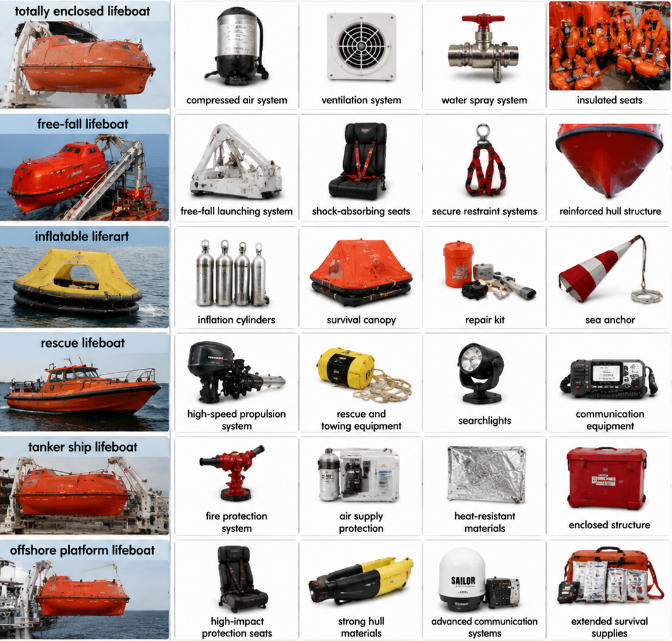
| Lifeboat Type | Specialized Equipment | Purpose and Function |
| Totally Enclosed Lifeboat | Fire-resistant enclosure, compressed air system, internal ventilation system, water spray system (for certain models), insulated seating | Protects occupants from fire, smoke, extreme weather, and hazardous conditions while maintaining a safer internal environment |
| Free-Fall Lifeboat | Reinforced hull structure, free-fall launching system, shock-absorbing seats, secure restraint systems | Allows the lifeboat to be launched quickly by sliding down a ramp and protects occupants from high-impact forces during water entry |
| Open Lifeboat | Manual propulsion equipment, oars, basic navigation tools, protective covers, emergency signaling devices | Provides basic survival capability and allows occupants to maneuver the boat in calm conditions |
| Partially Enclosed Lifeboat | Folding canopy, protective covers, ventilation openings, manual water removal tools | Provides partial protection from wind, waves, and weather while allowing easier access and operation |
| Inflatable Liferaft | Inflation cylinders, buoyancy chambers, repair kits, survival canopy, sea anchor | Provides rapid deployment and flotation support while protecting survivors from exposure after ship abandonment |
| Rescue Lifeboat | High-speed propulsion system, towing equipment, rescue lines, searchlights, communication equipment | Designed for recovering people from the water and assisting rescue operations during emergencies |
| Cargo Ship Lifeboat | Larger fuel capacity, heavy-duty construction, additional survival supplies, cargo securing features | Supports larger crews and longer survival periods during cargo vessel emergencies |
| Passenger Ship Lifeboat | Increased seating capacity, improved ventilation, emergency lighting, passenger support equipment | Designed to safely evacuate and protect a large number of passengers during emergencies |
| Tanker Ship Lifeboat | Fire protection systems, enclosed structure, heat-resistant materials, air supply protection | Provides additional protection against fuel fires, toxic gases, and hazardous cargo-related risks |
| Offshore Platform Lifeboat | High-impact protection, strong hull materials, advanced communication systems, extended survival supplies | Designed to withstand offshore hazards such as rough seas, storms, and platform evacuation scenarios |
Importance of Regular Lifeboat Equipment Inspection
Having the right equipment in a lifeboat only works if everything is still functional, not just present. Ships have to do regular inspections, scheduled maintenance and drills too, so supplies are actually ready for emergency situations.
Routine checks often cover things like:
- Checking expiration dates for food, water, and medical supplies
- Testing communication units and signaling equipment
- Inspecting ropes, tools, and safety devices
- Reviewing launching mechanisms and the lifeboat condition
- Running crew emergency practice training
Proper maintenance of lifeboats ensures that the equipment can perform their life-saving role when needed most.
Summary
A lifeboat is not only a small vessel made for staying alive, but it is also a carefully equipped emergency system meant to guard human life at sea. Inside, you can find communication devices, navigation tools, rations, medical kits, and safety equipment too. Each piece of equipment in that place has a crucial function.
Routine inspection, proper storage habits, and trained crew practices keep lifeboats reliable when maritime problems happen. With the right gear, along with preparation that is done ahead of time, lifeboats give passengers and crew members the most favorable chance of survival until rescue teams show up.