

Offshore vs. Near-shore Life Jackets: What are the Key Differences
Selecting the right life jacket is critical for water safety, especially if you’re boating, fishing, sailing, or just working around the sea. Not every life jacket is designed for the same situations. Offshore and near-shore life jackets are two popular kinds; they give different levels of protection depending on how far you are from shore, the local water conditions, and how likely it is that someone can reach you in time. When you understand the differences, it becomes easier to choose a suitable personal flotation device (PFD) for the kind of trip you’re doing.
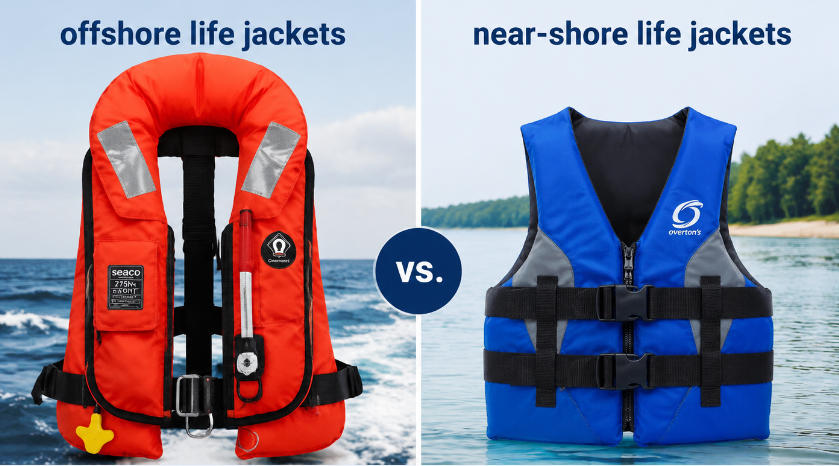
Table of Contents
Overview of Offshore Life Jackets
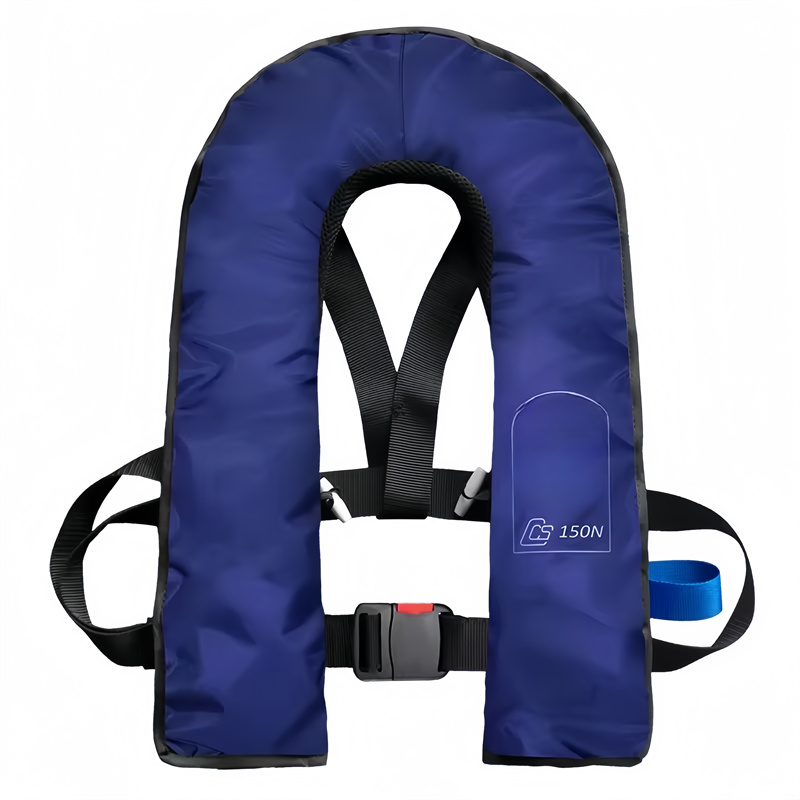
Offshore life jackets are made for open water spaces, where rescue might take longer, and weather can shift fast. You’ll typically see them used for ocean sailing, offshore fishing, commercial marine work, and long-distance boating activities.
These types of life jackets give more buoyancy and are made to help keep an unconscious person’s face above the water, like fully up and clear. A lot of offshore models come with a turning function that supports rotating someone from a face-down situation to a face-up situation; this can improve survival chances during emergencies.
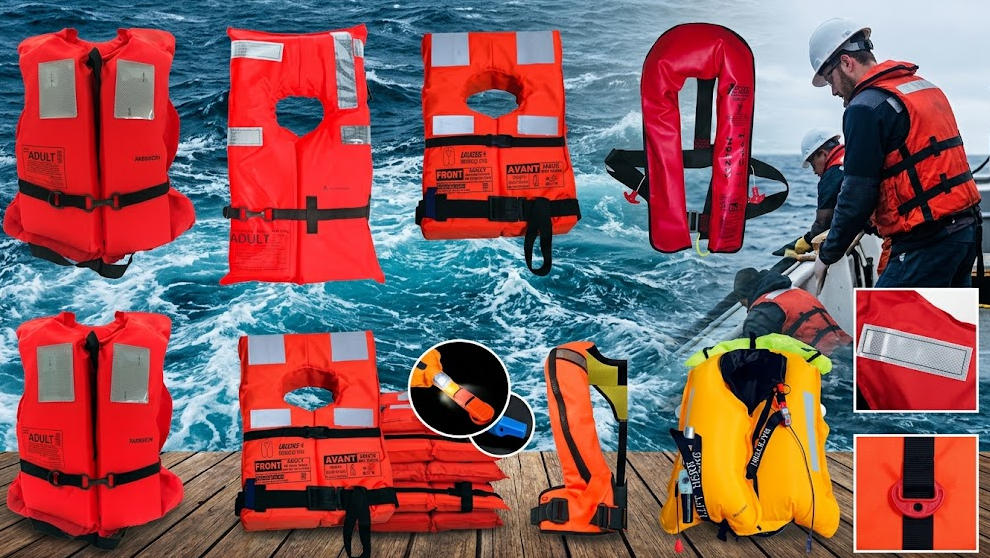
Offshore life jackets are usually made using strong materials, vivid colors, reflective bands and extra safety features. The whole idea is better visibility in rough water, and in dim, low light conditions where it’s harder to spot a person.
Overview of Near-shore Life Jackets
Near–shore life jackets are made for calmer waters where rescue is expected to arrive quicker. They fit activities like lake boating, river outings, recreational fishing, kayaking, plus coastal activities not too far from shore.
These life jackets provide reliable flotation, but they tend to offer less buoyancy and fewer advanced safety features compared with offshore models. They’re generally lighter, more comfortable, and allow better freedom of movement, which makes them a good fit for everyday recreational use.
Near-shore life jackets feel right when users stay within a relatively short distance of rescue support, and they’re operating in more predictable water conditions.
Key Differences Between Offshore and Near-shore Life Jackets
1. Design Purpose and Intended Use
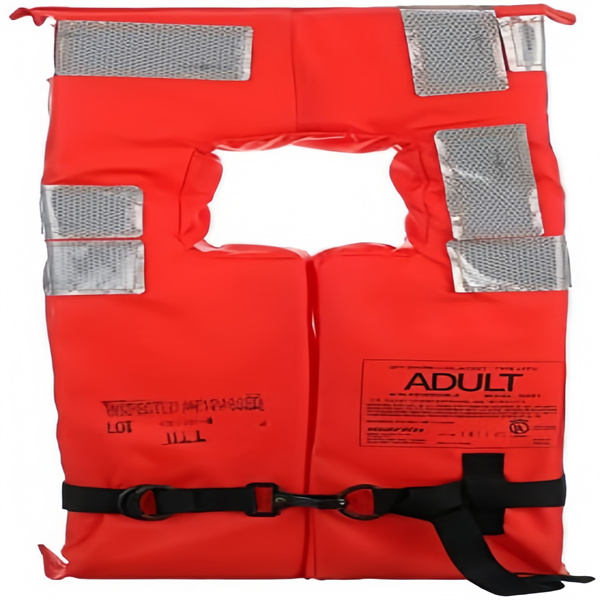
The main aim of an offshore life jacket is to deliver maximum protection in difficult marine environments. These life jackets are made for ocean voyages, offshore fishing, commercial marine work, and sailing activities far from land. Because the user may meet strong waves, shifting weather, and longer rescue windows, offshore models focus on survival and sustained flotation.
Near-shore life jackets are meant for when you’re closer to the shore, like for recreational boating, lake fishing, kayaking, and water sports in general. They are made to give solid flotation while still focusing on comfort, plus free movement. Since rescue is often easier when you’re in near-shore waters, these life jackets usually do not include as many advanced emergency components.
2. Buoyancy Performance
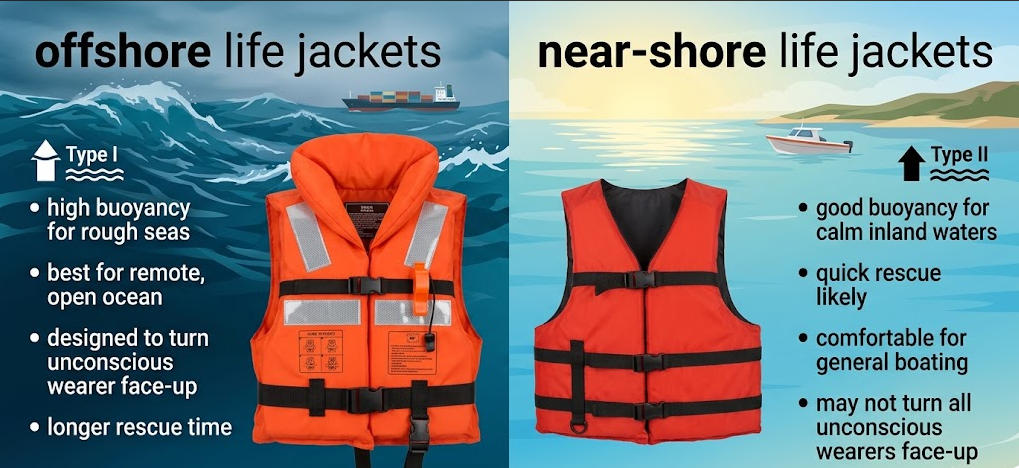
Buoyancy is probably one of the main differences between offshore and near-shore life jackets. Offshore models usually deliver more flotation capacity, because someone could be in the water longer without immediate help. More buoyancy can help the body stay supported, lessen tiredness, and increase survival odds when conditions get rough. A lot of offshore life jackets are engineered so that an unconscious person’s face remains out of the water, which is extra important when there’s a serious emergency.
Near-shore life jackets usually deliver enough buoyancy for those shorter rescue moments, and they’re made so the user stays afloat while still having comfort plus freer movement during recreational stuff.
3. Water Condition Adaptability
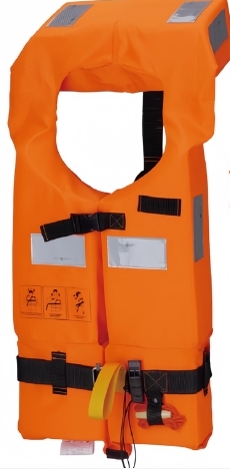
Offshore life jackets are engineered to manage unstable and demanding situations. Open ocean areas can bring strong currents, big swells, storms, and reduced visibility. Because of that, offshore models tend to use tough materials, better flotation systems, and extra safety elements.
Near-shore life jackets aim for environments that feel more managed. In lakes, rivers, and sheltered coastal stretches, the water is commonly calmer, so these jackets can prioritize flexible wear and easy adjustment.
Choosing a life jacket that matches the water environment really matters, because different conditions create different safety risks.
4. Turning Ability and Emergency Protection
One big advantage with many offshore life jackets is that they can help flip an unconscious wearer into a face-up position. That little feature, makes a real difference because it lowers the chance of drowning if the person can no longer move during a crisis.
Near-shore life jackets might not always give the same turning power. They are made for close coastal areas where help is expected soon, so the emphasis is usually on simple buoyancy, and everyday comfort.
For sea-based tasks where recovery might take longer, stronger emergency safety can matter quite a lot.
5. Visibility and Rescue Features
Visibility is another clear difference between the two kinds of life jackets. Out on offshore waters, finding someone in the water can become challenging, due to waves, distance, and changing weather.
Offshore life jackets often use bright colors, reflective strips, whistles, lifting handles, and other related items that improve how quickly someone can be spotted, and how fast they can be helped.
Near-shore life jackets might have a few visibility features here and there, but most times they have easier designs. Since people are usually nearer to shore, there may be fewer urgent or emergency features that are truly needed, depending on the trip.
6. Comfort and Mobility
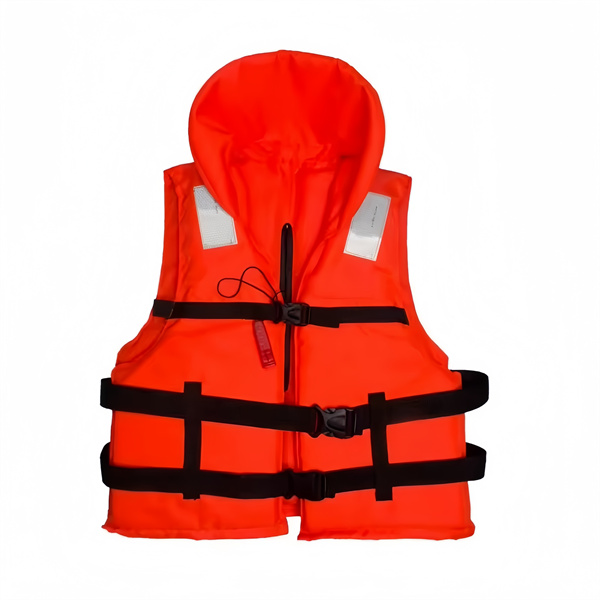
Comfort and mobility are big upsides for near-shore life jackets. In practice, these models are often light in weight and made for activities where you are moving more often, like kayaking, swimming, or recreational boating.
Offshore life jackets usually feel bulkier. That is because they carry extra flotation and additional protective features. Even if that makes movement a little less free, the extra safeguard is still worth it in higher-risk waters and situations.
When you choose one, users should weigh comfort against safety expectations too.
7. Material Durability and Construction
Offshore life jackets are generally made using tougher materials meant for rough marine use. They are expected to resist saltwater corrosion, UV exposure, scuffing and abrasion, and regular wear over time.
Near-shore life jackets still need a tough buildup, but they are usually made for lighter recreational use. The fabrics and components tend to lean toward comfort, good breathability and flexibility, so everything feels easier when you move.
Good materials in each version help stretch the usable life of the item and keep the flotation working in a dependable way.
Summary Comparison Chart
| Feature | Offshore Life Jackets | Near-Shore Life Jackets |
| Primary Use | Designed for open oceans, offshore sailing, commercial marine operations, and long-distance boating | Designed for lakes, rivers, protected coastal waters, and recreational boating |
| Operating Environment | Suitable for rough seas, strong winds, unpredictable weather, and deep water conditions | Suitable for calm or moderate water conditions where help is nearby |
| Buoyancy Level | Provides higher buoyancy to support users for longer periods in the water | Provides standard buoyancy for shorter rescue situations |
| Turning Ability | Often designed to turn an unconscious person face-up to improve survival chances | May provide limited turning ability depending on the design |
| Rescue Time Expectation | Built for situations where rescue may take hours or longer | Intended for situations where rescue can usually arrive quickly |
| Visibility Features | Commonly includes bright colors, reflective strips, and emergency visibility features | Usually includes basic visibility features for recreational safety |
| Design Structure | More robust construction with additional safety components | Simpler design focused on comfort and everyday use |
| Materials | Uses highly durable materials that withstand saltwater, UV exposure, and harsh marine environments | Uses lightweight materials suitable for regular recreational use |
| Comfort Level | May feel bulkier due to increased flotation and protective features | Generally lighter and more comfortable for extended wear |
| Mobility | Provides more protection but may restrict movement slightly | Allows greater freedom of movement for swimming and water activities |
| Typical Users | Offshore fishermen, sailors, yacht crews, commercial marine workers | Recreational boaters, anglers, kayakers, and coastal activity users |
| Safety Performance | Designed for maximum protection in high-risk marine conditions | Designed for reliable protection in lower-risk environments |
How to Choose Between Offshore and Near-shore Life Jackets
The right choice depends on several factors, including location, weather conditions, activity type, rescue availability, and user experience.
If you are going far offshore, you should go for a life jacket designed for long survival, and pretty severe conditions too. Those offshore types often bring extra buoyancy, better visibility accents, and solid emergency coverage, so when things turn life-threatening that extra help can be the difference.
If you are staying in protected waters near shore, a near-shore life jacket usually gives the needed safety, while still feeling easier to move in, and less restrictive.
No matter which type you pick, you should always select a properly fitted, certified life jacket and wear it the right way, every time you are on the water.
Common Applications
| Application | Recommended Life Jacket Type |
| Offshore sailing | Offshore life jacket |
| Deep-sea fishing | Offshore life jacket |
| Commercial marine operations | Offshore life jacket |
| Ocean voyages | Offshore life jacket |
| Coastal boating close to shore | Near-shore life jacket |
| Lake fishing | Near-shore life jacket |
| Kayaking and paddle sports | Near-shore life jacket |
| Recreational boating | Near-shore life jacket |
Offshore Life Jackets
Final Words
Offshore and near-shore life jackets serve different purposes, and they are designed for different water environments. Offshore life jackets are made to give maximum protection in unpredictable open water situations, while near-shore life jackets are meant to be more comfortable and workable for activities closer to places where help is usually available.
Selecting the right life jacket type depending on the environment, activity, and safety requirements, can greatly improve survival chances if something goes wrong. Whether the jacket is used for professional marine operations or for recreational boating, wearing a properly selected and well-maintained life jacket is one of the most important steps for staying safe around water.