
How to Choose the Right Size of Life Raft for Your Vessel
Selecting the right size for a life raft is one of the most important safety decisions for any vessel. No matter if you’re running a commercial ship, an offshore unit, a fishing boat, a yacht, or a passenger craft, that life raft has to handle enough seats, real steadiness, and real cover for everybody onboard, especially when you suddenly have to evacuate. If the life raft is the wrong size, it can set off nasty safety problems like people being packed too tightly, less flotation than expected, and awkward deployment. Basically, it doesn’t go as planned.
To choose the correct life raft size, you really need to think through the vessel category, how many people are on board, the actual operating environment, applicable regulations, what the emergency might look like, etc. When you understand those things, the life raft is much more likely to do what it should, right when it is needed most.
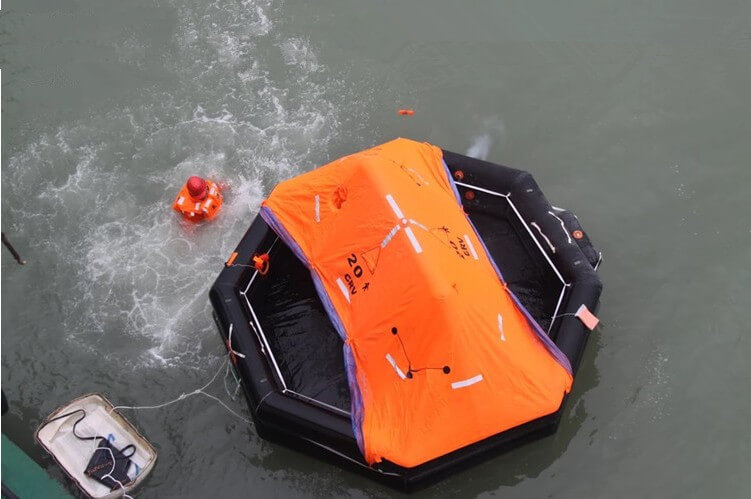
Table of Contents
Sizes and Capacity of Life Rafts
| Life Raft Size Category | Capacity Range | Main Characteristics |
| Small Life Rafts | Approximately 4–10 persons | Compact design, lightweight structure, easy storage, and quick deployment for limited crews. |
| Medium Life Rafts | Approximately 10–25 persons | Provides a balance between capacity, storage requirements, and operational flexibility. |
| Large Life Rafts | Approximately 25–50 persons | Designed for larger crews with increased stability, stronger construction, and more survival space. |
| Extra-Large Life Rafts | More than 50 persons | High-capacity systems designed for large-scale evacuation and strict maritime safety requirements. |
| Inflatable Rescue Rafts | Usually small to medium capacity | Focus on rapid deployment, portability, and quick access during rescue operations. |
| Containerized Life Rafts | Available in various capacities | Stored in rigid containers for better protection and easier deployment using release systems. |
| Throw-Overboard Life Rafts | Available in small to large capacities | Designed for manual launching over the side of the vessel during emergencies. |
| Davit-Launched Life Rafts | Commonly medium to large capacities | Installed with launching equipment for controlled evacuation and safer boarding. |
| Custom-Capacity Life Rafts | Designed according to vessel requirements | Customized solutions that match specific capacity, space, and regulatory needs. |
Key Factors to Consider for Choosing the Right Size of a Life Raft
1. Understanding Life Raft Capacity Requirements
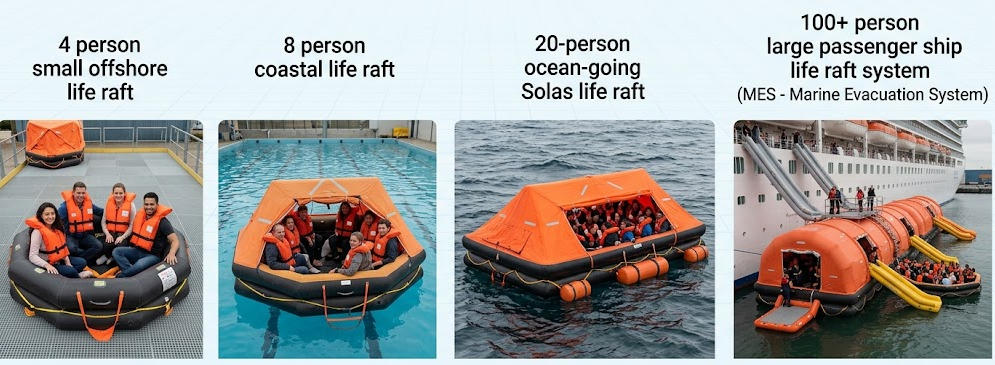
The main thing when selecting a life raft size is how many people the raft has to hold. Life rafts are built and certified based on their maximum approved capacity, meaning the total occupants they can safely carry during emergency situations.
A vessel really should always keep a life raft on board that has enough capacity for everyone onboard. Often operators also pick a raft with a bit higher capacity than the actual passenger count. That extra margin gives better comfort, strengthens safety boundaries, and helps occupants get aboard more easily while wearing protective clothing, or when they already have life jackets on.
For instance, a vessel that normally carries six people might choose an eight-person life raft, rather than staying with the six-person model. With that extra room there is less crowding, plus more space for emergency gear, body movement, and the usual survival steps.
2. Selecting Life Raft Size Based on Vessel Type
Different vessels face different safety challenges, which directly influence the ideal life raft size.
| Vessel Type | Life Raft Size Considerations | Key Selection Factors |
| Recreational Boats and Yachts | Compact life rafts with smaller capacities are commonly suitable for limited crews and passengers. | Available storage space, quick deployment, lightweight design, and passenger numbers. |
| Fishing Vessels | Medium to large-capacity life rafts may be required depending on crew size and operating range. | Crew capacity, durability, rough-sea performance, and protection from harsh marine conditions. |
| Cargo Ships | Larger-capacity life rafts or multiple rafts are typically needed to accommodate all crew members. | Compliance with maritime regulations, emergency evacuation plans, and long-term survival capability. |
| Offshore Supply Vessels | High-capacity, robust life rafts are often selected to support crews during remote operations. | Weather resistance, stability in rough seas, offshore certification, and rapid deployment. |
| Passenger Vessels and Ferries | Large-capacity life raft systems or multiple units are required to provide adequate evacuation capacity. | Total passenger capacity, evacuation speed, accessibility, and regulatory compliance. |
| Commercial Workboats | Life raft capacity should match crew numbers while considering operational hazards. | Vessel layout, working environment, crew safety requirements, and equipment accessibility. |
| Offshore Research and Survey Vessels | Medium to large life rafts may be needed due to long operating periods away from support facilities. | Extended survival needs, equipment storage, environmental conditions, and crew size. |
| Military and Patrol Vessels | Specialized life raft systems with suitable capacity for onboard personnel are required. | Mission requirements, durability, deployment speed, and extreme-condition performance. |
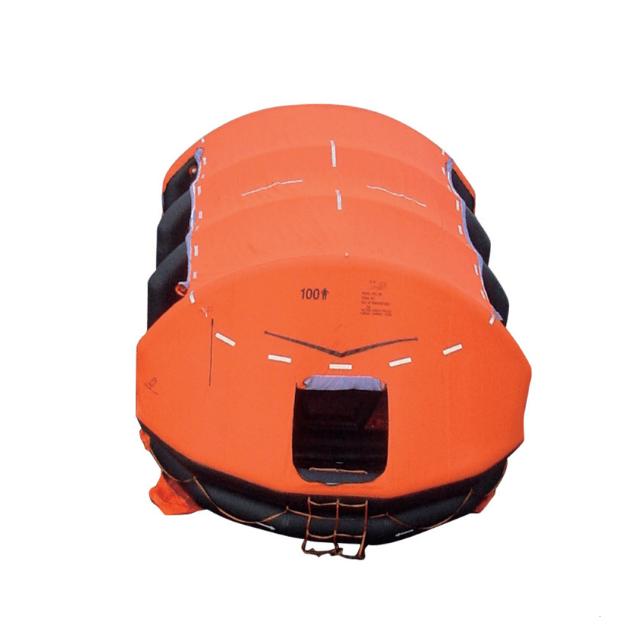
3. Considering Available Storage and Deployment Space
The physical size of a life raft needs to match the vessel’s available storage area, if it does not then problems show up later. Bigger capacity rafts tend to demand more deck space, stronger mounting systems, and deployment arrangements for the life raft that really fit how the ship is laid out.
Before selecting a life raft, vessel operators should check if the raft can be placed in a location that is easy to access, where it can be launched quickly during an emergency. A raft that is hard to reach, or blocked by other equipment, may slow down evacuation and make the whole solution less effective.
Storage conditions matter too, because life rafts must stay shielded from excessive heat, seawater exposure, and mechanical damage. The chosen raft size should fit the vessel layout, and also leave room for proper inspection and maintenance access.
4. The Influence of Operating Environment on Life Raft Selection
The place where a vessel runs affects the life raft size that gets required in the first place. Ships that work in coastal zones might see rescue actions happen faster and the overall conditions can be less intense compared to offshore vessels operating in faraway waters.
Offshore vessels usually need bigger life rafts, because people might have to stay inside for longer intervals before someone can get to them. Extra room can help with occupant comfort and it also makes emergency gear easier to arrange. In addition, larger rafts tend to keep better stability when the sea gets rough, when strong winds push in, and when heavy swells keep coming.
Cold-water work deserves special care, since occupants can face hazards from hypothermia along with harsh weather. If the life raft is sized correctly, and has enough internal space plus protective features, it can improve survival conditions during extended emergencies.
5. Balancing Life Raft Size With Safety Regulations
Maritime safety regulations for life rafts play a key role in figuring out the correct size for a vessel, though it can get confusing in practice. International and national authorities set out requirements about life raft capacity, construction standards, equipment, and the inspection procedures that come along with them.
For commercial vessels, approved life rafts need to meet strict safety standards so they can perform properly during emergencies. Vessel operators have to choose rafts that align with the regulations tied to their vessel type and the operating area, even when the route changes.
Regulatory compliance is not just a legal responsibility, it also matters for protecting passengers and crew. A properly sized and certified life raft gives more assurance that the equipment will work as expected, when lives depend on it.
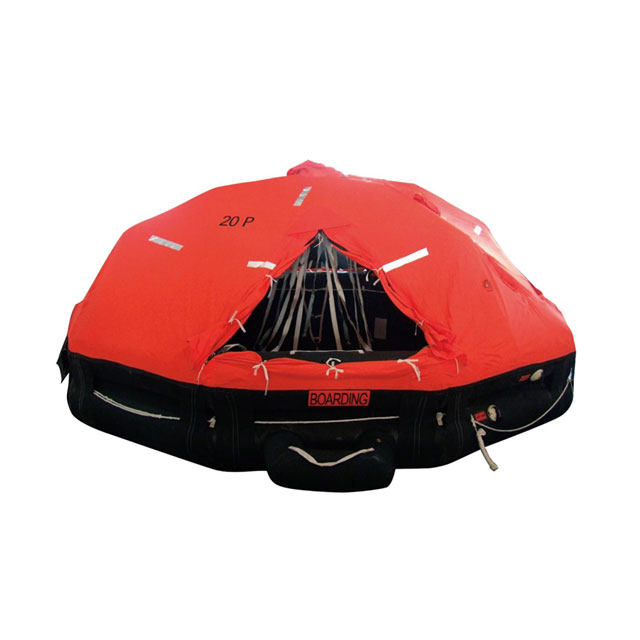
6. Avoiding Problems Caused by Incorrect Life Raft Sizing
Choosing the wrong life raft size can cause a few safety issues, and it can be a bit messy. If the raft is undersized, it may get overcrowded quickly, so the people inside can not really sit in a safe way, reach emergency supplies, or keep their balance in choppy weather. When it gets crowded, the overall stability of the raft often drops, and the load on the structure can become higher than expected, which adds extra stress.
If you go the other way and select a raft that is much larger than needed, you may end up paying more, plus you might run into storage trouble, awkward handling, and slower deployment. Bigger units tend to weigh more, they need extra installation space, and you may also need more launching, or release gear to get them into the water fast.
So the intent is to strike a workable middle point between enough capacity and real-world operation. A correctly sized life raft should fit all occupants, while staying manageable to store, maintain, and deploy without too much fuss.
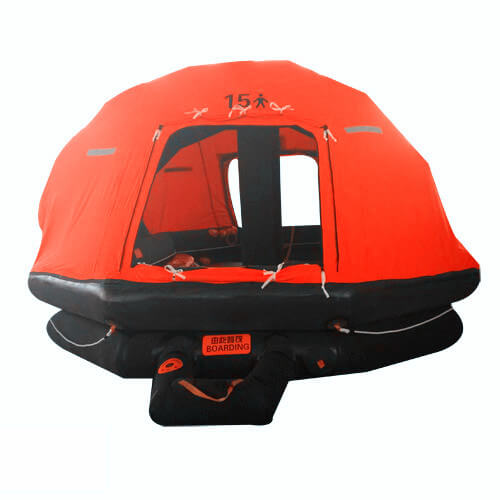
7. Choosing Between a Single Large Life Raft vs. Multiple Smaller Rafts
Some vessels must decide whether to use a single high-capacity life raft or several smaller units. The best choice depends on vessel design, crew size, and emergency procedures.
| Comparison Factor | Single Large Life Raft | Multiple Smaller Life Rafts |
| Capacity Arrangement | One raft is designed to accommodate all or most people onboard. | Several rafts are distributed to accommodate passengers and crew in separate groups. |
| Evacuation Efficiency | Requires most occupants to reach and board one location, which may take longer during emergencies. | Allows people to evacuate through different access points, potentially speeding up abandonment procedures. |
| Storage Requirements | Needs a larger storage area and stronger mounting arrangements due to its size and weight. | Requires multiple storage locations, but each individual raft may be easier to position. |
| Deployment Process | Deployment is simpler because fewer units need inspection and launching. | Requires coordination of multiple rafts during deployment and emergency evacuation. |
| Safety Redundancy | If the single raft becomes damaged, inaccessible, or fails to deploy, evacuation options may be limited. | Provides backup options because other rafts remain available if one unit cannot be used. |
| Maintenance Requirements | Fewer units may reduce inspection, servicing, and maintenance workload. | More units require additional inspections, servicing schedules, and equipment management. |
| Crew Management | Easier to organize survivors because everyone gathers in one location. | Requires crew members to manage multiple groups and ensure all rafts are properly occupied. |
| Stability in Rough Conditions | Larger rafts can provide more internal space and may offer better comfort for a larger group. | Smaller rafts may be easier to handle individually but may have less space for occupants. |
| Cost Considerations | May reduce equipment quantity but could require higher installation and handling costs. | Initial costs may be higher due to multiple units and additional servicing needs. |
| Suitability for Large Vessels | Suitable when vessel layout allows safe access to a central evacuation point. | Often preferred for large ships where passengers and crew are spread across different areas. |
| Suitability for Small Vessels | Can be practical when crew numbers are higher but storage space is available. | Useful when limited space prevents installation of one large raft. |
| Emergency Flexibility | Provides a single survival location but depends heavily on successful deployment. | Offers greater flexibility by providing multiple evacuation choices. |
| Best Application | Vessels with predictable evacuation routes and enough space for a large-capacity raft. | Vessels requiring distributed evacuation solutions, such as passenger ships, offshore vessels, and large commercial ships. |
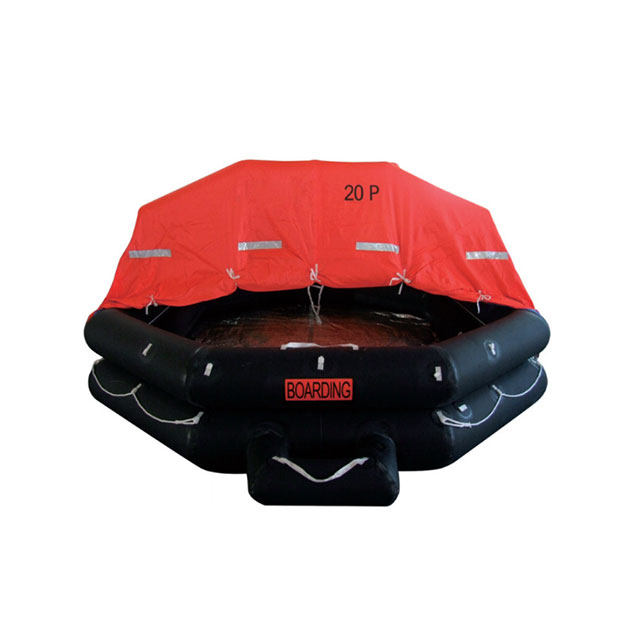
Maintenance Requirements after Selecting the Right Size of Life Raft
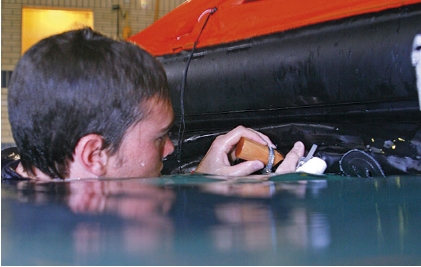
Selecting the right size is one part of life raft safety. Realistically though, it all comes down to whether you keep it in good shape. With regular inspection and proper servicing, the raft should work when it actually matters, not just when you check it on a calm day.
Important maintenance practices for life rafts include:
- Periodic professional servicing
- Look over the inflation systems
- Check the emergency equipment
- Verify the container or valise condition
- Confirm the expiration dates on supplies
Even a life raft that matches the correct size can still let you down during an emergency if it has not been maintained properly.
Final Words
Choosing the right size of life raft for your vessel needs more than counting how many people are onboard. Vessel type, operating environment, storage limitations, applicable regulations and emergency deployment conditions all play a role in deciding the best option.
A properly sized life raft gives enough room, some steadiness, and reasonable shielding while still being practical to fit and to actually use. When you carefully look at the capacity needs, and pick a dependable life raft setup that is certified, vessel owners and operators can boost onboard safety a lot, and be better prepared for any emergency.