
Why Do Marine Anchors Drag: Common Causes and Solutions
Marine anchors serve the function of holding a vessel in place. When anchored offshore, waiting in a port, or pausing to anchor for the night in a quiet bay, anchors need to hold. It is a common problem to experience anchor dragging in marine operations. It is defined as an anchor losing grip on the bottom and slowly being displaced by wind, waves, currents, or the movement of the vessel.
There are multiple reasons why marine anchors drag. Understanding these reasons and applying appropriate solutions will allow vessel operators to improve anchoring reliability.
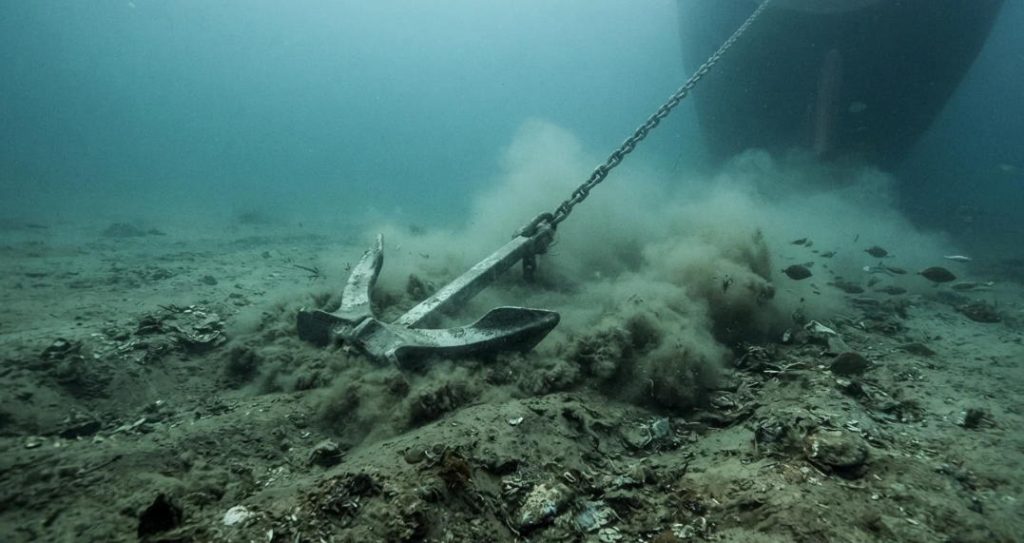
Table of Contents
Understanding Marine Anchor Dragging
Marine anchor dragging occurs when the anchor loses its position on the bottom and moves. While the vessel moves from its planned anchorage, the anchor chain and rope remain in place.
It can happen all at once or it can slowly take hold of the bottom. While there are some cases when a boat drags a short distance before it regains position, there are also more serious situations in which the boat drags continuously towards other ships, offshore structures, or shallow water.
There are many factors involved in marine anchor dragging, such as the anchor type, the seabed, the length of chain, the way an anchor is set and external factors.
Common Causes of Marine Anchor Dragging: How to Solve
1. Unsuitable Seabed Conditions
The nature of the seabed is one of the primary variables determining anchor holding capability. The different materials that constitute the seabed give various levels of resistance to the anchor.
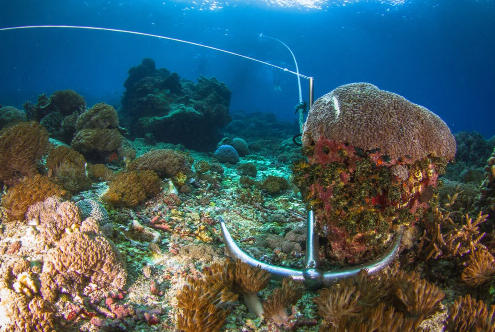
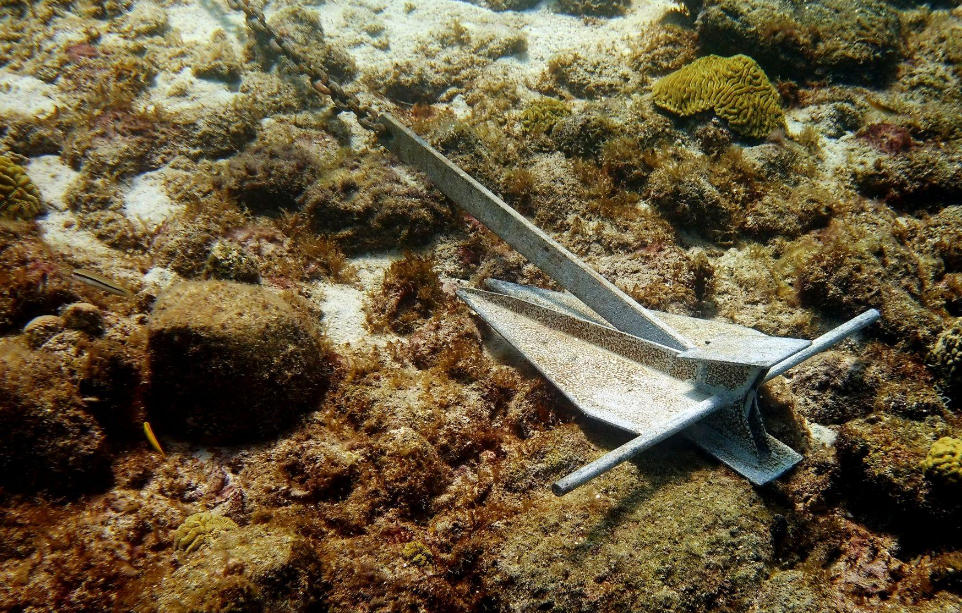
Some mud and clay may allow deeper penetration for many types of anchors, while harder materials like sand and gravel can give acceptable anchor performance to many properly designed anchors. Anchors can even fail to properly set on rocky seabeds, and on coral, as well as on vegetation.
An anchor can slide across the seabed due to externally applied forces should it fail to set or lose its position on the bottom.
Solutions:
Operators should analyze nautical charts and take into account seabed conditions, as well as anchoring recommendations from locals, before setting anchor. Making a selection of an anchoring location which provides optimal seabed conditions, can make a difference in anchor performance.
Anchors should also be chosen to be appropriate for the type of seabed which is present. For example, fluke anchors will be effective in optimal sand and mud, but for other seabed types, other designs should be used.
2. Insufficient Anchor Chain Length
Insufficient anchor chain length is another common reason for anchor dragging.
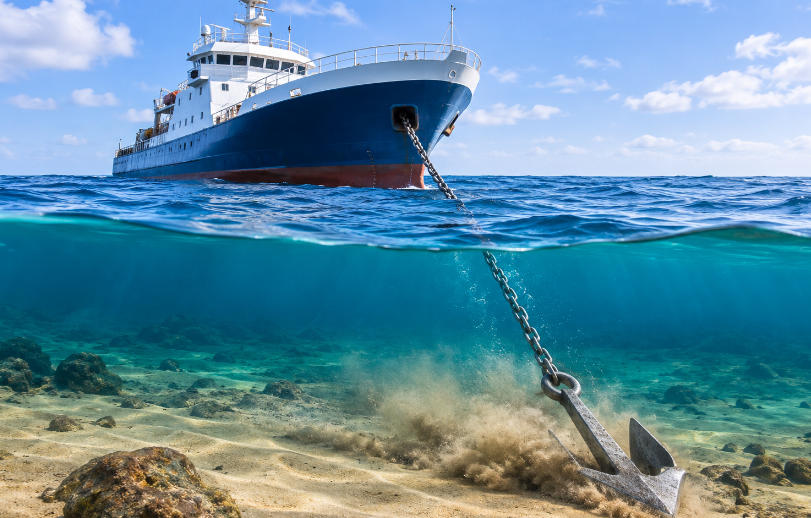
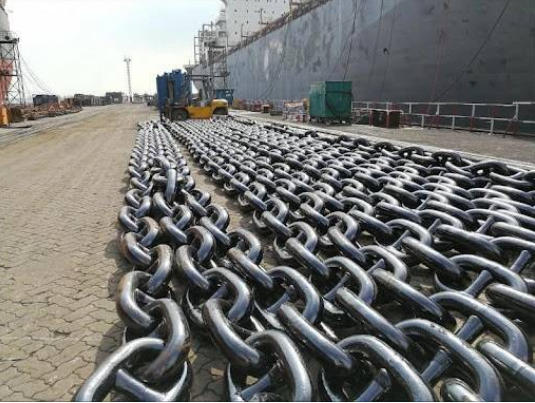
The length of marine anchor chain deployed is commonly described by the term scope, which refers to the ratio between the length of the deployed rode and the vertical distance from the bow roller to the seabed.
When the scope is too short, the anchor chain may pull upward at a steep angle. This upward force can lift the anchor out of its embedded position and reduce its holding ability.
A longer scope generally helps maintain a more horizontal pull on the anchor, allowing it to remain engaged with the seabed.
Solutions:
The operator should calculate rode scope based on water depth, the effects of tidal action, the dimensions of the vessel, weather conditions, and the space available to anchor the vessel.
For greater scope, there is a commensurate increase in vertical loading on the anchor, and thus the operator must account for available swinging space and the distance to neighboring vessels when adding anchor chain.
3. Strong Winds and Changing Wind Directions
Strong winds develop significant transverse forces on the anchored vessel. Strong winds also mean the vessel creates more wind resistance when there is more exposed area, thus further loading the anchor through the chain and anchor.
The problems can become exacerbated with a shift in the winds. As winds blow from a new direction, the vessel begins to lose its orientation with the wind and begins to move. During this process, the chain drags along the seafloor, potentially weakening the hold of the anchor.
Loss of hold gradually takes place if the anchor is unable to deal with the shifting forces.
Solutions:
Vessel operators need to pay close attention to the forecast of the winds and shifting wind patterns both before and while anchored. Selection of protected anchorage areas is suggested when winds become strong.
The risks of the anchor dragging are reduced with the choice of an anchor having appropriate holding capabilities, along with a sufficient length of chain and proper orientation of the vessel.
4. Strong Tidal Currents and Water Movement
Significant forces occur on vessels that are anchored where there are tidal currents, especially when anchoring in channels and other shallow water areas.
Anchors of vessels in changing currents may become the pivot point as the vessel rotates in the changing currents. These changes in direction create alternating tension forces on the anchor. Along with changing currents, greater forces are added to the overall anchoring system.
If the anchor is not properly set or the holding capacity is insufficient, these forces can cause it to move along the seabed.
Solutions:
Operators should evaluate tidal patterns and current speeds before selecting an anchoring position. Anchoring in areas with excessive current should be avoided when safer alternatives are available.
For vessels operating in tidal waters, monitoring current direction and speed is important. Operators should also ensure that the anchor and chain are suitable for the expected environmental loads.
5. Improper Anchor Selection
Different marine anchor designs have different structural characteristics and holding mechanisms. Choosing an unsuitable anchor for a vessel or seabed condition can significantly increase the risk of dragging.
For example, an anchor designed primarily for sandy seabeds may not perform effectively in rocky or heavily vegetated areas. Similarly, an anchor that is too small or has insufficient holding capacity for the vessel may fail under strong environmental loads.
Solutions:
Marine anchor selection should consider vessel displacement, windage, operating environment, seabed characteristics, and expected weather conditions.
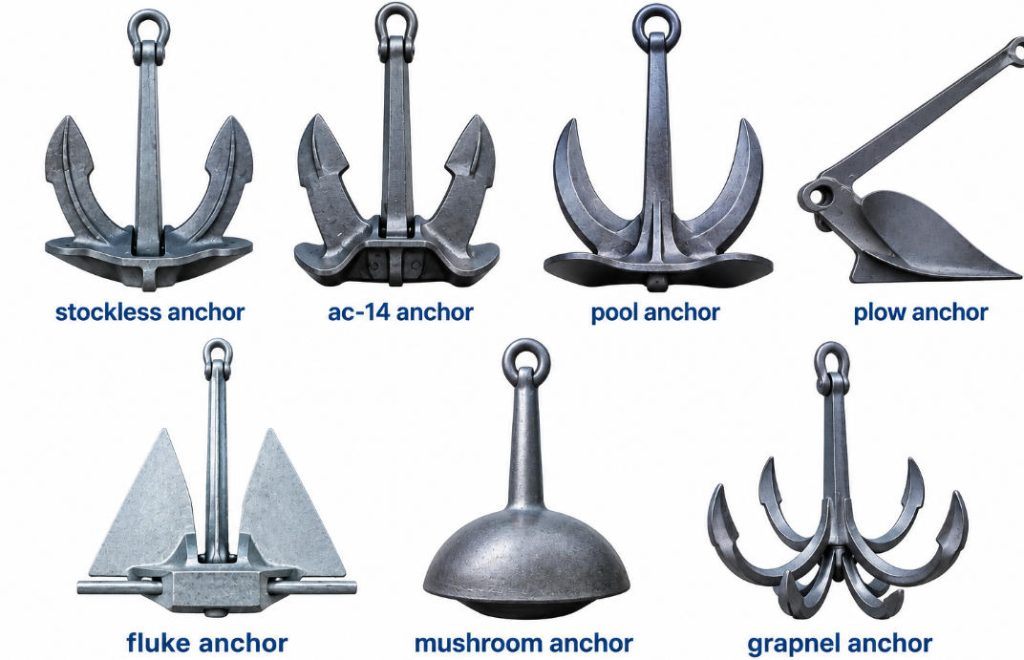
Common Marine Anchor Types and Their Applications
| Marine Anchor Type | Main Structural Features | Working Principle | Common Applications |
| Stockless Anchor | Compact design with movable flukes and a central shank | Flukes rotate and penetrate the seabed to establish holding power | Commercial ships, cargo vessels, tankers, and naval vessels |
| AC-14 Anchor | High-holding-power design with broad, shaped flukes | Flukes penetrate the seabed and generate strong resistance against movement | Large commercial ships, offshore vessels, and marine applications |
| Pool Anchor | High-holding-power structure with specially shaped flukes | Uses fluke penetration and seabed resistance to maintain its position | Commercial vessels and offshore applications |
| Plow Anchor | Plow-shaped fluke connected to a long shank | Plow penetrates the seabed and maintains engagement when properly set | Recreational boats, yachts, and smaller vessels |
| Danforth Anchor | Lightweight structure with two wide, pivoting flukes | Wide flukes dig into soft seabed materials | Small boats, fishing vessels, and recreational craft |
| Mushroom Anchor | Mushroom-shaped head with a heavy central shaft | Weight and seabed penetration create resistance against movement | Mooring systems, buoys, and permanent anchoring |
| Grapnel Anchor | Multiple curved arms or hooks | Hooks catch rocks, debris, or other seabed features | Small boats, dinghies, and temporary anchoring |
Selecting the appropriate design and size is essential for achieving reliable anchoring performance.
6. Improper Anchor Deployment
A drag anchor may not work well even when the anchor design is of good quality. Rapid dropping of an anchor, anchoring when a vessel is moving at a fast speed, or failing to wait until the anchor settles, will hinder its effective operation. In some cases, the anchor chain may be tangled up near the anchor, making the anchor unable to settle.
Solutions:
Operators should follow proper anchoring procedures. The vessel should approach the anchoring position at a controlled speed, and the anchor should be lowered rather than released in a way that causes excessive chain accumulation.
After deploying the appropriate amount of chain, the vessel should apply controlled astern movement to help set the anchor. Operators should verify that the anchor is holding before considering the anchoring operation complete.
7. Excessive Vessel Movement and Overloading
Large ships are very sensitive to wind and sea states, resulting in huge dynamic loads in the anchor chain, which can quickly overload an anchoring system.
Anchors fail most frequently when dynamic loads in the anchor chain are high, particularly on poorly set anchors.
Passing vessels, strong winds, and sea state conditions also lead to dynamic vessel movements that can result in dragging.
Solutions:
Vessel operators should account for the size of their vessels, windage, cargo load, and anticipated environmental conditions.
Anchors used on smaller vessels may be adequate in less severe conditions; however, larger vessels or more demanding situations will require an approved anchor plan that uses multiple anchors, provided adequate swinging room is available.
How to Prevent Marine Anchors from Dragging
Marine anchor dragging can be stopped if the equipment is good, if the procedures are right, and if constant surveillance is provided. Vessel operators should not think of quality anchors alone. For instance, even a very good anchor can drag when conditions and operations are bad.
1. Select the Right Anchor for the Vessel
Operators should first determine the needs of their vessels and then pick an appropriate anchor. Things like anchor weight, anchor design, anchor holding power and strength should all be considered.
The anchoring needs of offshore vessels and commercial ships are completely different from recreational vessels. Hence, marine anchor selection standards and the vessel specifications should be considered.
2. Use an Appropriate Anchor Chain
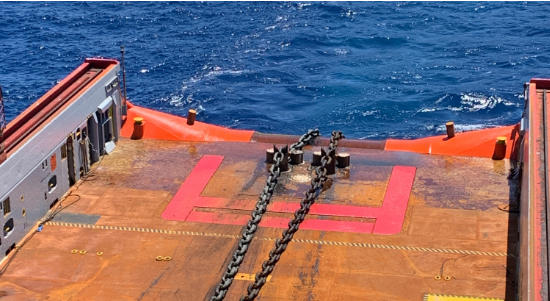
Anchor chains are vital for maintaining the connection between anchor and ship. Its mass assists the creation of catenary shapes when deployed, decreasing upward pulling forces. Length, strength and compatibility with the anchor windlass should be confirmed by the operator. Corrosion, worn, damaged links, and similar defects require the chains to be replaced.
3. Choose a Suitable Anchoring Location
Good anchorages offer suitable depth of water and proper seabed, along with adequate swing space for the vessel.
The captain should also take into account neighboring ships, underwater hazards, shipping routes, and changes to weather and tides.
Avoiding exposed anchorages during harsh weather will decrease the external stresses to which the anchoring system will be subjected.
4. Monitor Anchor Position Continuously
Anchors may move even after they have been set and should therefore be monitored.
Many vessels have GPS, ECDIS, Radar, and anchor watch alarms, all of which may be utilized to assist with continuous monitoring of the vessel position.
Visual checks of the vessel position should be done in conjunction with electronic monitoring to supplement, not replace, active watchkeeping.
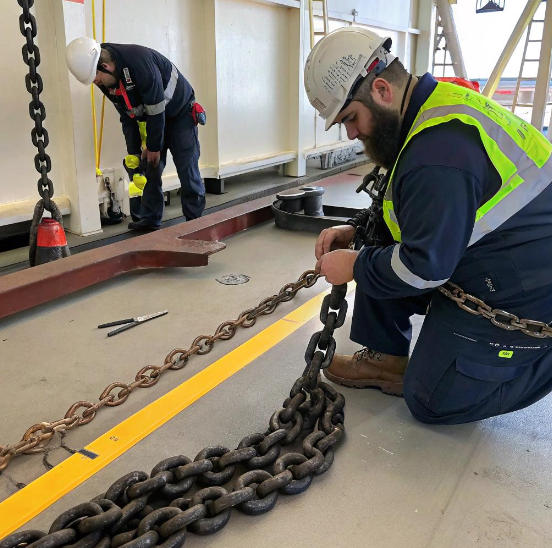
5. Anchor and Chain Inspections
Reliable systems start with well-maintained equipment.
Anchors need inspection for signs of wear and tear, corrosion, deformation, and damage.
Anchor chain and shackles need to be routinely examined along with swivels and connecting equipment.
Proper anchor maintenance guarantees that the anchoring system can cope with adverse conditions in the maritime environment.
What Should Operators Do When an Anchor Starts Dragging
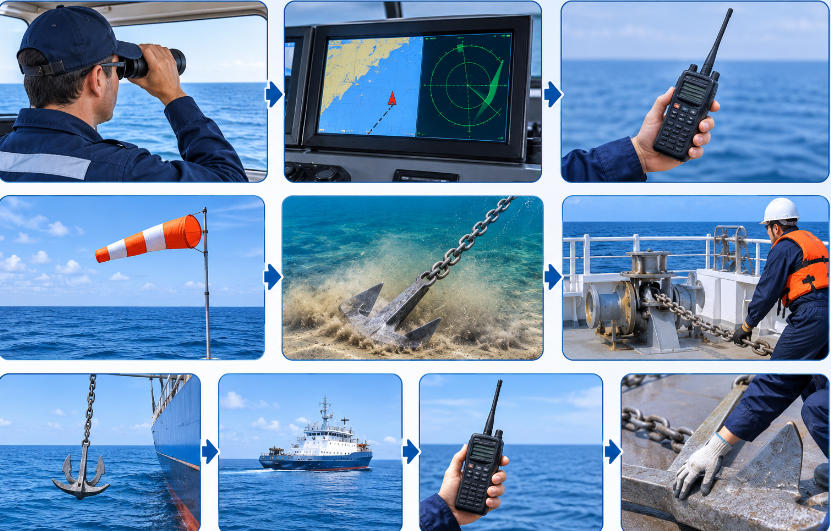
When anchor dragging is detected, prompt action is essential. Delayed responses can allow the vessel to drift into dangerous areas or collide with other vessels.
| Response Step | Recommended Actions | Purpose |
| 1. Confirm Anchor Dragging | Check the vessel’s GPS position, radar readings, electronic charts, and anchor alarm information | Verify whether the anchor is actually dragging rather than the vessel simply swinging around its anchor point |
| 2. Alert the Crew | Notify the bridge team, master, and relevant crew members immediately | Ensure that everyone understands the situation and can respond quickly |
| 3. Assess Surrounding Hazards | Check nearby vessels, shallow waters, coastlines, offshore structures, and navigation channels | Identify potential collision, grounding, or other navigational risks |
| 4. Evaluate Environmental Conditions | Monitor wind speed, wave conditions, tidal currents, and changes in weather | Determine the forces contributing to anchor dragging |
| 5. Adjust the Anchoring Arrangement | If conditions and available space permit, consider adjusting the anchor chain length or deploying an additional anchor according to the vessel’s procedures | Improve holding performance and reduce the risk of further dragging |
| 6. Prepare to Weigh Anchor | Inspect the windlass and prepare the anchoring equipment for retrieval when necessary | Ensure the vessel can leave the anchorage safely |
| 7. Move to a Safer Location | If the anchor cannot maintain its holding position, move the vessel to a more suitable anchoring area when safe to do so | Prevent grounding, collision, or drifting into hazardous waters |
| 8. Notify Relevant Parties | Inform nearby vessels, port authorities, or vessel traffic services when required | Reduce navigational risks and improve coordination |
| 9. Inspect the Anchoring Equipment | After the situation is under control, inspect the anchor, chain, shackles, windlass, and related components | Identify equipment damage or mechanical problems that may have contributed to dragging |
| 10. Record and Review the Incident | Document weather conditions, vessel movement, anchoring procedures, and corrective actions | Improve future anchoring practices and prevent similar incidents |
Final Thoughts
Marine anchor dragging may occur due to various factors, including unsuitable seabed conditions, insufficient anchor chain length, strong winds, changing tidal currents, improper anchor selection, and incorrect deployment procedures.
The chance of anchor dragging can be minimized by selecting appropriate equipment, anchoring in the right place, properly using the anchor chains, and keeping track of the position of the ship.
Shipowners, marine equipment suppliers and vessel operators should all be concerned about anchor dragging. Proper anchoring helps make vessels safe. Understanding the causes of marine anchor dragging also helps crews respond more effectively when anchoring conditions become challenging.
Ultimately, Reliable anchoring depends not only on the quality of the marine anchor but also on the compatibility of the entire anchoring system with the vessel and its operating environment.