
Marine Anchor Standards: Governing Designs and Operations
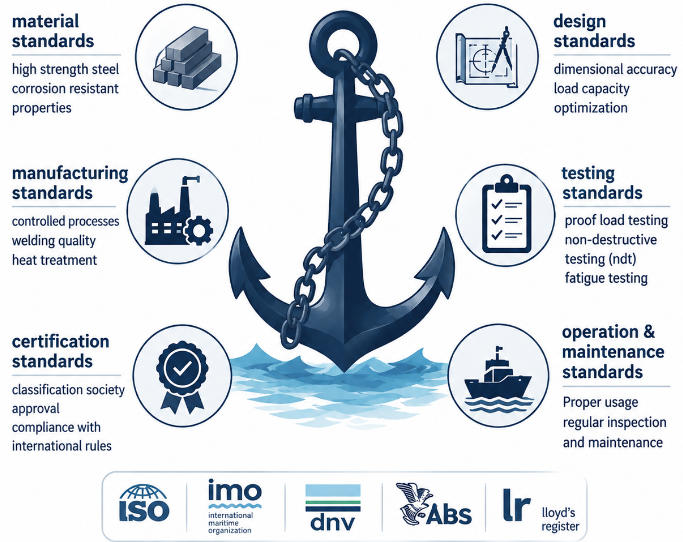
Marine anchors are usually used for holding fast vessels, offshore platforms, and floating structures, basically against wind, waves, and currents, and other harsh environmental forces. Since anchoring systems impact operational safety, their design, testing, and certification are governed by strict international standards. These anchor standards help make sure the products keep working reliably in extreme marine situations, and they also support compatibility with many seabed types and vessel categories.
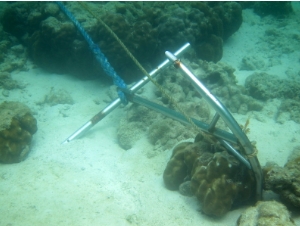
Table of Contents
Importance of Standardization in Marine Anchors
Standardization in marine anchors matters a lot, mainly because it keeps performance consistent, keeps parts interchangeable, and improves safety across worldwide shipping operations. If requirements are not standardized, anchors from different makers may end up differing in strength, shape geometry, and holding power, and that can lead to serious problems during deployment.
Standards also help shipbuilders, offshore engineers, and classification bodies make sure anchoring systems meet minimum safety thresholds before they are actually approved for use in commercial shipping, offshore oil and gas, and marine construction projects.
Key International Standards Governing Marine Anchors
| Standard Authority | Key Standards | Focus Area | Relevance to Marine Anchors |
| International Organization for Standardization | ISO 1704 (Anchor chains), ISO mooring-related standards | Anchor chains, components, dimensional compatibility, mechanical properties | Ensures compatibility between anchors, chains, and mooring systems; defines baseline material and dimensional requirements |
| International Maritime Organization | SOLAS Convention guidelines (indirect influence) | Maritime safety, vessel safety equipment requirements | Provides overarching safety framework influencing anchoring system requirements on ships |
| Det Norske Veritas classification society | DNV Rules for Ships / Offshore Mooring Rules | Anchor design approval, holding power, fatigue and corrosion resistance | Certifies anchors for offshore and shipping use; verifies performance under real sea conditions |
| American Bureau of Shipping | ABS anchor Rules for Building and Classing Offshore Structures | Structural integrity, anchor holding capacity, material testing | Approves anchor systems for offshore platforms and vessels operating globally |
| Lloyd’s Register | LR Rules for Ships / Offshore Units | Design verification, material quality, fatigue life | Ensures anchors meet global safety and reliability benchmarks |
| National Maritime Authorities (e.g., China MSA, US Coast Guard, etc.) | National safety and certification codes | Local compliance, vessel registration requirements | Enforces country-specific anchoring and mooring safety regulations |
Marine Anchor Types and Their Compliance Requirements
Different anchor types must meet varying performance criteria depending on their application.
| Anchor Type | Typical Application | Key Compliance Requirements | Certification Focus |
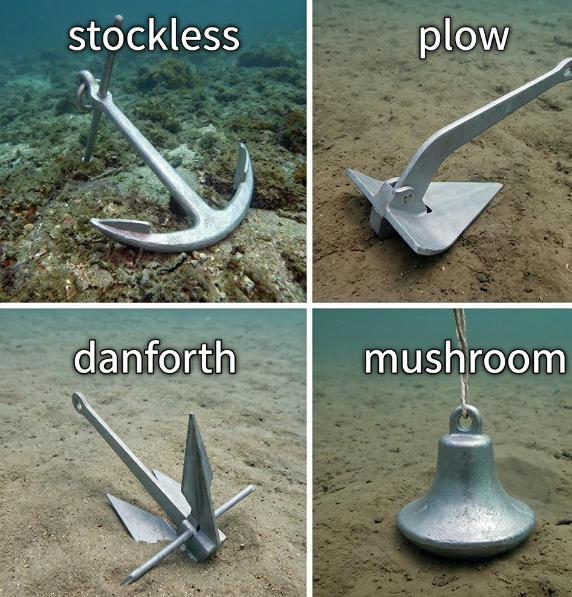
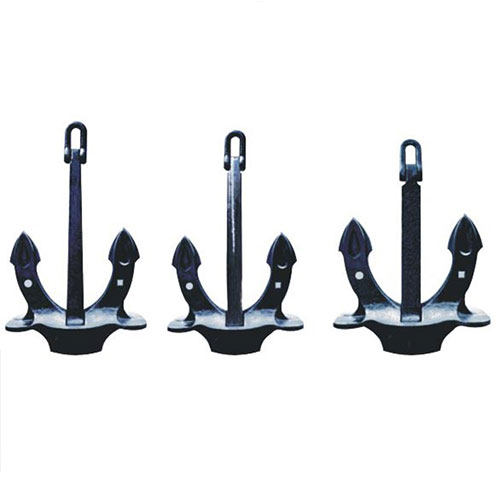
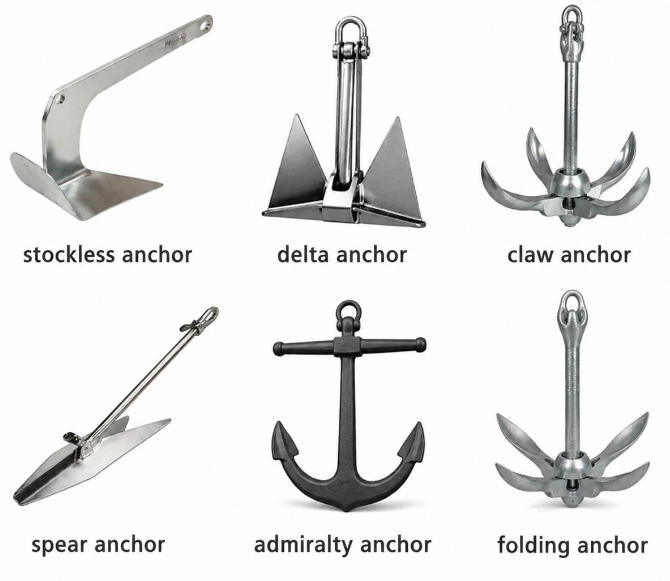
| Stockless Anchor | Commercial ships, general maritime use | Must meet minimum holding power and dimensional standards; basic strength and impact resistance | International Organization for Standardization compatibility rules; classification society approval (e.g., DNV, ABS, LR) |
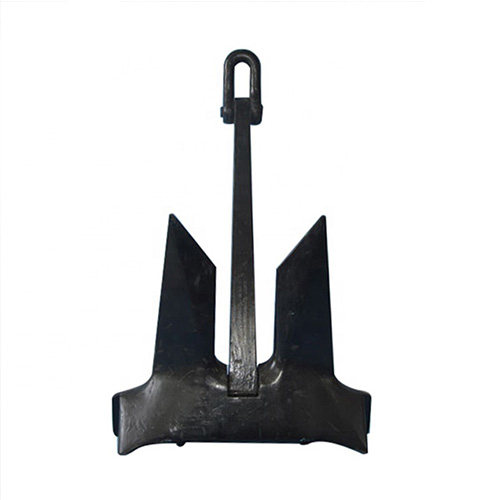
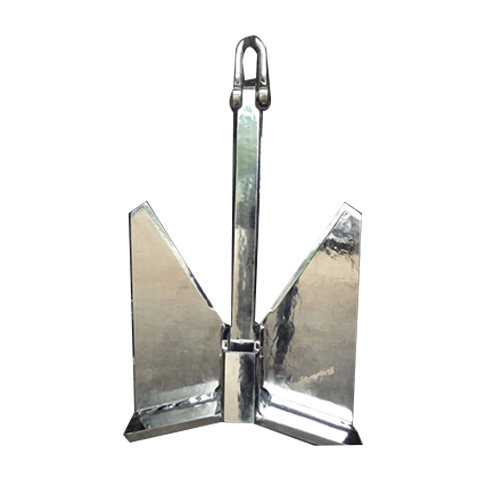
| High Holding Power (HHP) Anchor | Cargo ships, tankers, offshore supply vessels | Requires higher holding power-to-weight ratio than stockless anchors; seabed performance validation | Det Norske Veritas classification society / American Bureau of Shipping performance testing rules |
| Super High Holding Power (SHHP) Anchor | Offshore platforms, deepwater mooring | Extremely high holding efficiency; strict fatigue, cyclic load, and seabed penetration tests | DNV / ABS / Lloyd’s Register offshore mooring certification rules |
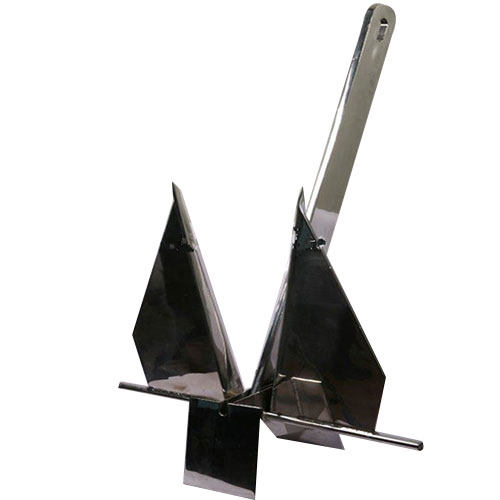
| Danforth (Fluke) Anchor | Small vessels, yachts, light craft | Must demonstrate stability in sand/mud seabeds; lightweight structural integrity requirements | National maritime authority approval + ISO-related material strength compliance |
| AC-14 Navy Anchor | Naval vessels, high-load operations | Strict structural strength, shock resistance, and rapid recovery performance | Military/naval standards + classification society verification |
| Drag Embedment Anchor | Offshore mooring systems, FPSOs | Must pass full-scale seabed embedment and long-duration load testing | International Maritime Organization influenced offshore safety rules + DNV offshore mooring certification |
Material and Manufacturing Standards for Marine Anchors
When marine anchors fail, the outcomes can get pretty serious, operationally and environmentally too. Because of that, international maritime bodies and classification societies enforce strict rules for material selection and manufacturing standards.
1. Material Requirements
Marine anchors are mostly produced from high-strength carbon steel, cast steel, or forged steel. Those materials are chosen to handle high static plus dynamic loads, while still holding their structural integrity in corrosive seawater.
A key requirement is balanced mechanical performance: good tensile strength to resist pulling forces, enough ductility to prevent brittle fracture, and controlled hardness so durability stays, without harming toughness. In advanced offshore uses, alloyed steels with improved low-temperature behavior are also applied.
2 . Mechanical Performance Standards
Anchor materials have to satisfy strict mechanical property limits set by marine classification rules. These limits typically involve minimum yield strength, ultimate tensile strength, required elongation percentage, plus impact toughness at low temperatures.
Fatigue resistance is just as important since anchors face repeated cyclic loading from waves and vessel motion. Materials must prove long term structural stability under those varying stress levels, so crack initiation and crack propagation do not happen.
3 . Casting and Forging Manufacturing Standards
Two main manufacturing approaches are used, casting and forging. For cast anchors, there has to be strict quality oversight to avoid inside troubles such as porosity , shrinkage cavities and inclusions. Forged anchors, meanwhile , depend on a regulated deformation process so the grain structure stays uniform and the mechanical strength gets better.
4. Welding and Fabrication Requirements
When welding comes into play during assembly or reinforcement, welding procedures need to follow the approved marine fabrication standards. The weld joints should show a strength level that is comparable with the base material and they should be free from cracks or structural breaks.
Preheating and post-weld heat treatment are commonly required too, mainly to lessen residual stresses and increase weld toughness, in particular with big offshore anchor systems.
5. Heat Treatment and Microstructure Control
Heat treatment itself plays a vital role in reaching the needed trade-off between strength and toughness. In practice, methods like quenching and tempering refine the steel microstructure, which helps the anchor resist deformation better and handle impact loading with more confidence. When heat treatment is applied correctly, the anchors can face abrupt shock loads without brittle failure, and still keep long-term structural reliability even when the marine conditions are aggressive.
6. Corrosion Protection and Surface Treatment Standards
Because anchors have to work in severely corrosive seawater, some kind of surface protection is essential. Typical options involve hot-dip galvanizing, epoxy coating layers, and marine-grade anti-corrosion paint systems. For offshore installations that stay for a long time, the anchors can also be paired with cathodic protection to limit electrochemical corrosion, then the service life becomes longer even with continuous submersion.
7. Dimensional Accuracy and Tolerance Control
Manufacturing standards demand tight control over anchor geometry and how the mass is spread out. Correct dimensional accuracy makes sure it works with anchor chains, shackles and mooring arrangements. Even small deviations can throw off holding strength, seabed penetration behavior, and the way forces get distributed, so precise manufacturing becomes necessary for operational safety.
Testing and Certification Procedures for Marine Anchors
| Stage | Procedure | Key Requirements | Purpose | Responsible Bodies |
| Material Verification | Chemical and mechanical testing of steel | Confirm steel grade, tensile strength, yield strength, toughness | Ensures raw material meets marine-grade requirements | International Organization for Standardization / mills certification |
| Traceability Check | Material batch tracking | Full documentation from steel source to finished anchor | Ensures accountability and quality control | Classification societies |
| Dimensional Inspection | Measurement of geometry and weight | Check fluke angle, shank length, tolerances | Ensures compatibility with chains and mooring systems | American Bureau of Shipping |
| Non-Destructive Testing (NDT) | Ultrasonic, magnetic particle, radiographic tests | Detect internal and surface defects | Identifies cracks, voids, inclusions without damage | DNV / LR inspection rules |
| Proof Load Testing | Apply overload beyond working conditions | No permanent deformation or structural failure allowed | Confirms structural strength and safety margin | Det Norske Veritas classification society |
| Holding Power Test | Seabed performance evaluation | Test in sand, clay, gravel conditions | Measures anchoring efficiency and holding capacity | Offshore test standards (DNV / IMO influenced) |
| Fatigue Testing | Cyclic loading simulation | Withstand repeated stress cycles | Ensures long-term durability under wave and motion effects | Lloyd’s Register |
| Corrosion Resistance Test | Coating and immersion evaluation | Resistance to seawater corrosion and coating degradation | Ensures long service life in marine environment | ISO coating standards |
| Final Certification | Review and approval | Full compliance with all test results | Legal approval for marine and offshore use | DNV / ABS / LR classification societies |
Operational and Maintenance Standards for Marine Anchors
To make sure marine anchors stay reliable for the long run and keep working safely, the maritime industry uses strict operating rules and maintenance standards.
1. Proper Anchor Deployment Process
How an anchor is put out matters a lot for real holding, not just in theory. The anchor should be lowered at controlled rates so it does not slam into the seabed and to help it reach the intended penetration. Before any deployment, the crew has to check the vessel speed, the water depth, and the nature of the bottom, meaning sand, mud, rock, or mixed areas. If anchoring is handled poorly, you can end up with chain entanglement, the anchor sliding, or unexpected stress on components, which weakens the whole anchoring system’s efficiency.
2. Anchoring Load Monitoring and Control
During operation, anchor loads should be continuously monitored to ensure they remain within safe working limits. Excessive tension caused by strong currents, storms, or vessel drift can lead to system overload. Modern vessels often use digital monitoring systems to track tension in real time, enabling operators to adjust positioning and prevent failure.
3. Routine Visual Inspection Practices
Regular visual inspections are required to identify early signs of wear, deformation, or corrosion. Key inspection points include the fluke, shank, crown, and connecting shackle areas. Any visible cracks, bent components, or excessive rust should be addressed immediately to avoid further deterioration.
4. Corrosion Monitoring and Protection Maintenance
Because marine anchors work inside extremely corrosive seawater, it is crucial to keep monitoring corrosion over time. Any protective coatings, like epoxy or galvanization, should be reviewed at regular intervals for signs of damage, blistering, or peeling, even small issues matter. If a cathodic protection system is in use, then the anode condition and its practical effectiveness also need evaluation and later renewal when required.
5. Chain and Connection System Maintenance
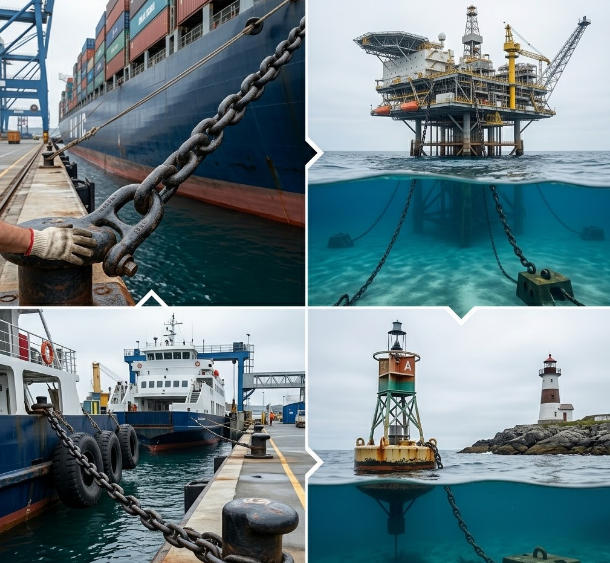
The real effectiveness of an anchor depends a lot on the state of linked parts, for example anchor chains, shackles, and swivels. Each piece should be checked for elongation, surface wear, and mechanical fatigue. Lubricants and replacement timing need to be followed closely so the assembly keeps moving smoothly, and so failures do not start at the joints.
6. Scheduled Overhaul and Servicing
Anchors should go through scheduled maintenance using operational hours, or the inspection intervals set out in classification rules. In practice, this might involve taking the unit apart, cleaning everything thoroughly, carrying out non-destructive testing, and then repainting or recoating. Overhaul steps are meant to return the equipment to proper performance and keep it aligned with safety requirements from classification organizations such as Det Norske Veritas, and American Bureau of Shipping.
7. Storage and Handling Requirements
When anchors are not in use, they need to be kept in dry places with good air movement, to reduce corrosion risk. During movement, handling devices like cranes and lifting slings should be applied carefully, so you do not cause mechanical impairment. Also, contact between the anchors and hard surfaces should be reduced to avoid surface scoring or any unwanted deformation.
8. Documentation and Compliance Records
All maintenance activities of marine anchors have to be properly documented, even things like inspection results, repairs, replacements, and also testing outcomes. These records are necessary for regulatory compliance, and for those classification audits too. Having accurate documentation makes the whole traceability work, and it backs up safety verification across the anchor’s full service life.
Final Words
Anchor standards matter in a foundational way for maritime safety and offshore engineering reliability. By steering design choices, materials selection, testing requirements, and operational practices, international standards help make sure marine anchors perform properly under severe conditions.