
Drag Embedment Anchors vs. Suction Anchors: Which Type to Choose
Anchoring systems are really critical in offshore engineering, they bring the stability that floating structures, subsea installations, and all that marine infrastructure need to actually stay in place. There are drag embedment anchors and suction anchors. Both basically lock offshore assets down to the seabed, but they’re not the same, like, the design, how they get installed, what kind of forces they resist, and where they work best all differ a lot.
Figuring out the differences between drag embedment anchors and suction anchors is essential if you want to pick the most effective, and also the most economical, marine anchor for a given offshore project.
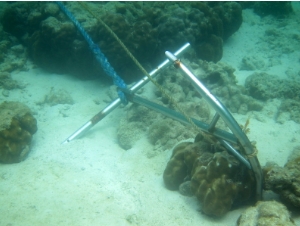
Table of Contents
Understanding Drag Embedment Anchors
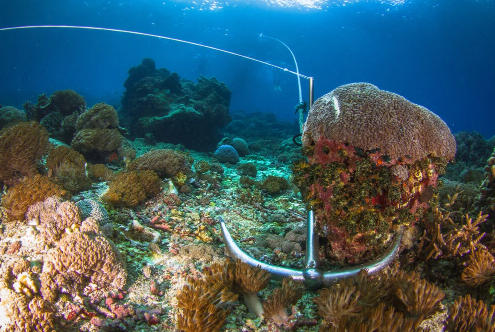
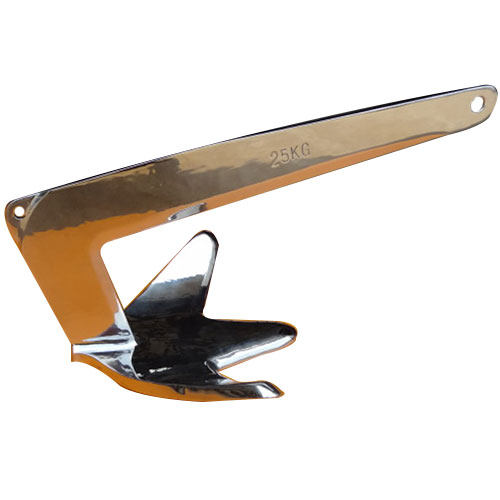
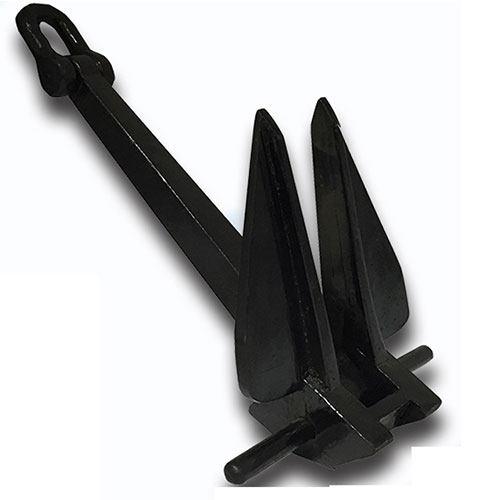
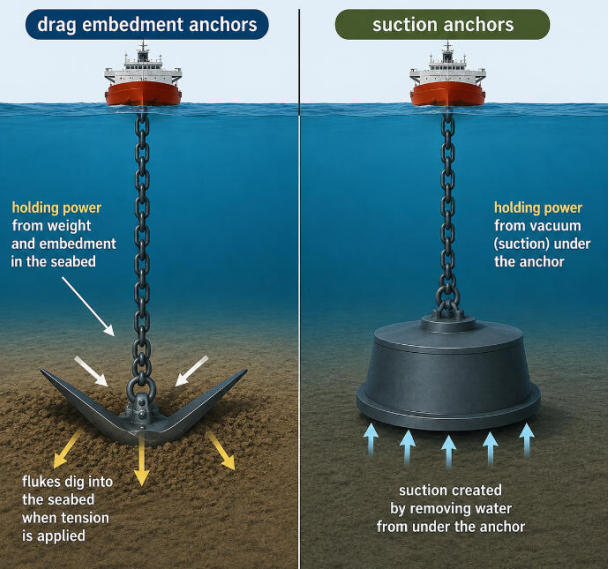
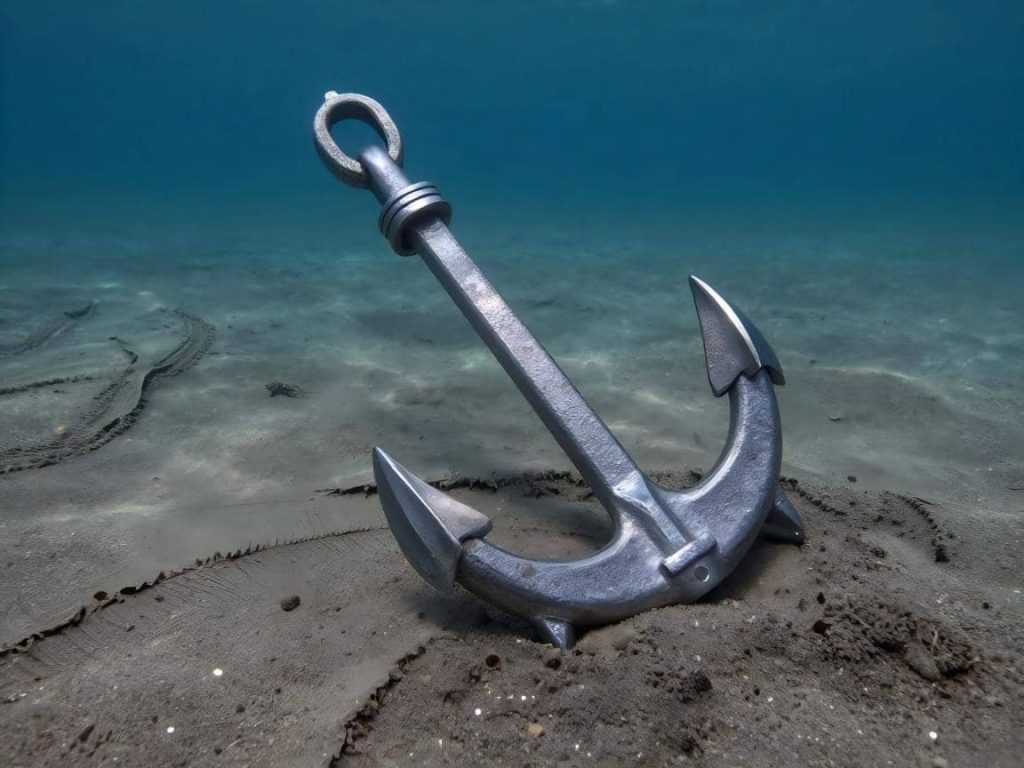
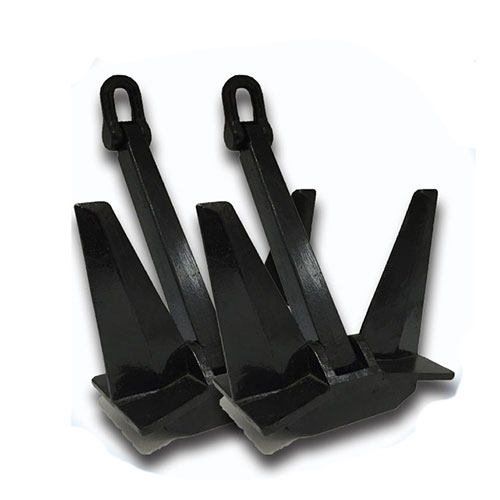
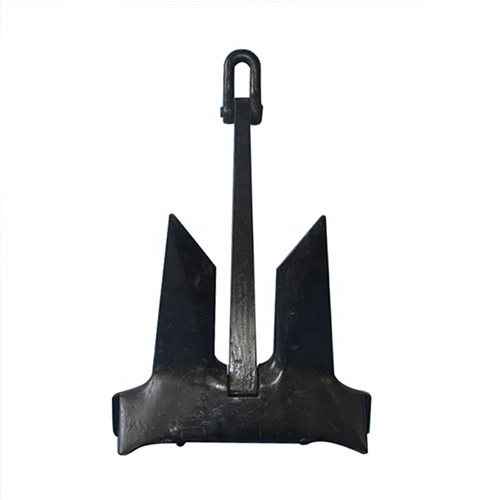
Drag embedment anchors are seabed anchors that get their holding strength by penetrating and then burying themselves into the soil when a horizontal pulling force is applied. The anchor usually includes a steel shank, flukes, and a connection point where the mooring line links in. Unlike pile-based anchors that are installed vertically, drag embedment anchors depend on horizontal movement through the seabed, so they can reach the needed embedment depth. And that buried configuration is what delivers the holding capacity.
How They Work
The installation process begins by lowering the anchor to the seabed from an anchor handling vessel. Once the anchor reaches the bottom, tension is applied to the mooring line, causing the anchor to move horizontally across the seabed.
As the anchor moves:
- The flukes penetrate the soil.
- The anchor gradually buries itself deeper.
- Soil resistance increases around the anchor.
- The anchor reaches a stable embedment depth.
- The required holding capacity is achieved.
The holding power is generated primarily through the interaction between the anchor flukes and the surrounding seabed material.
Types of Drag Embedment Anchors
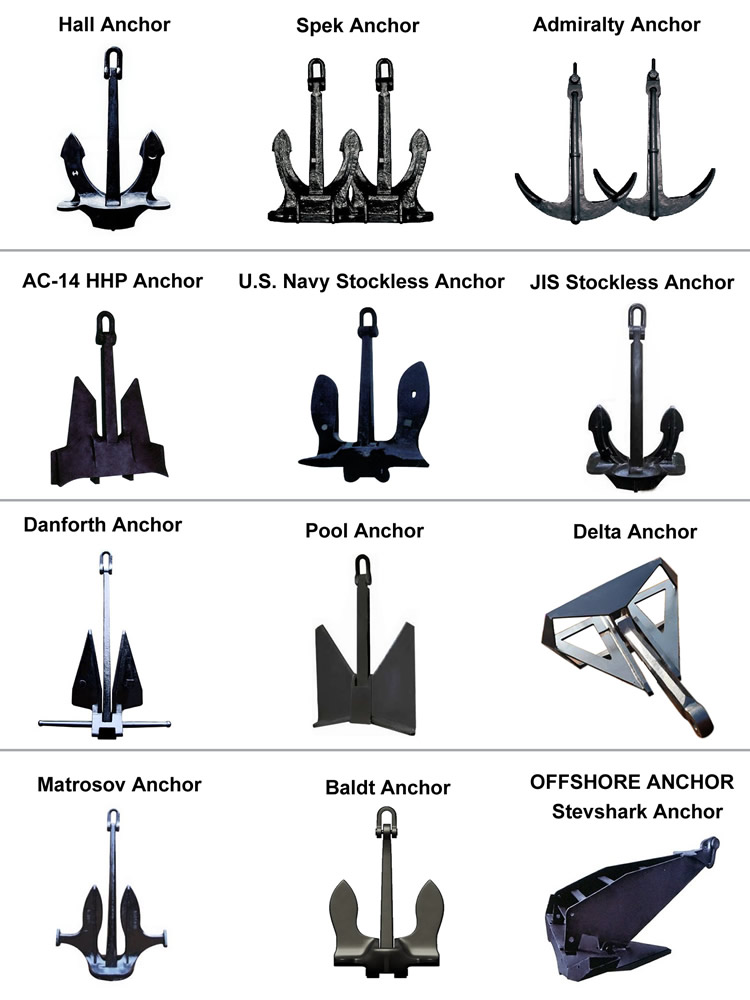
This chart provides the main types of drag embedment anchors, highlighting their design features, advantages, and typical use cases.
| Type | Description | Key Advantages | Applications |
| Conventional Drag Anchors | Traditional design with simple flukes and shank. | Easy to manufacture, cost-effective, proven reliability. | General offshore mooring, temporary installations. |
| High Holding Power (HHP) Anchors | Optimized fluke geometry for increased soil penetration and holding capacity. | Higher holding capacity relative to weight, better performance in soft soils. | Floating production units, semi-permanent moorings, deepwater applications. |
| Stevpris-Type Anchors | Fluke-based design with enhanced penetration characteristics. | Reliable embedment, well-tested in offshore projects. | Oil and gas mooring, construction vessels, floating platforms. |
| Bruce Anchors | Multi-fluke anchor with a wide base, good holding in various soils. | Versatile, effective in soft clay and sand, easy deployment. | Mobile drilling rigs, support vessels, temporary and semi-permanent moorings. |
| Plough Anchors | Single-fluke or multi-fluke anchors shaped like a plough for gradual penetration. | Effective in soft clay and sandy soils, moderate holding capacity. | Barges, construction vessels, temporary mooring. |
| Stockless Anchors | Adapted from traditional ship anchors for dragging installation. | Can be easily handled, simple design, moderate cost. | Short-term mooring, light offshore structures. |
Advantages
- Cost Effective Solution: Drag embedment anchors generally have lower manufacturing and installation costs than pile anchors or suction anchors, so they tend to be attractive for projects that have a tight budget.
- Simple Installation Process: The installation method is relatively easy and does not demand complicated drilling or suction equipment. In many cases standard anchor handling vessels can perform the installation without too much extra setup
- Proven Offshore Technology: For decades, these anchors have been used successfully, and that long record has made drag embedment anchors a dependable anchoring choice throughout the offshore industry.
- High Holding Capacity Relative to Weight: Newer high holding designs can deliver substantial holding force while keeping the overall size and mass relatively compact.
- Suitable for Temporary Moorings: They work especially well for temporary setups, floating units that move between locations, and vessels that might need to relocate periodically.
- Wide Availability: Drag embedment anchors are sold commercially in a wide variety of sizes , and they also come in different arrangements so ordering usually feels manageable.
- Adaptability to Various Offshore Applications: Marine anchors are commonly used on floating production units, offshore drilling rigs, construction vessels, barges, temporary mooring systems , marine transportation tasks, etc.
Limitations
- Limited Vertical Load Capacity: Drag embedment anchors are mainly meant to handle horizontal loads. Their capability against uplift or vertical forces is not as strong as suction anchors or driven piles.
- Dependence on Soil Conditions: Performance can be quite sensitive to what the seabed is like. If the soil is not cooperative, embedment depth may shrink and holding capacity can drop.
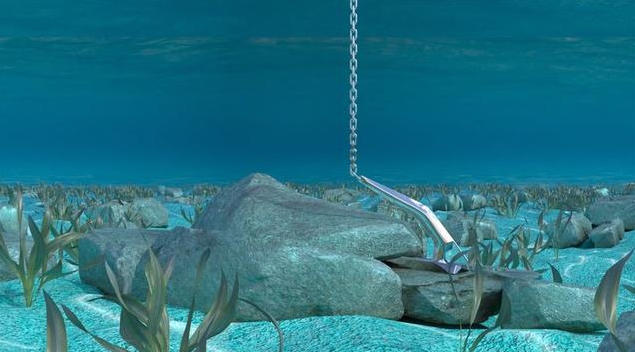
- Reduced Effectiveness in Hard Seabeds: Rocky, gravelly, or extremely dense seabeds can stop proper penetration, which then weakens the anchoring results.
- Large Installation Footprint: The anchor needs a dragging route across the seabed while it is being installed, and that tends to stir up a broader disturbance zone than a few other anchoring options.
- Less Precise Final Positioning: When the anchor is going in and seats itself, it still moves a bit, so where it ends up can be hard to foresee with full precision.
- Challenging Retrieval: After long years of service, pulling it back may be a headache, especially if the anchor ends up really, deeply embedded.
- Limited Suitability for Deepwater Taut Mooring Systems: Modern deepwater installations often require anchors capable of handling complex multidirectional loads, which may exceed the capabilities of conventional drag embedment anchors.
Understanding Suction Anchors
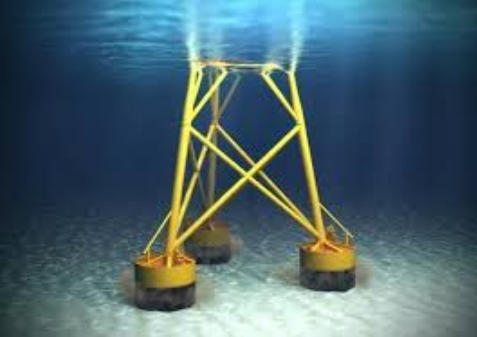
A suction anchor is basically a big hollow steel cylinder, it has an open bottom and a closed top. It gets put into the seabed by making a pressure difference between the inside of the anchor and the seawater right around it. That pressure gap creates a downward force, so the anchor is forced deeper into the soil. In practice, suction anchors are installed straight down, and once they’re embedded they behave a lot like deep foundations, even if the method feels more ”mechanical” at first.
How They Work
The whole process starts when the anchor is lowered onto the seabed. Its own weight usually causes a first, small penetration into the soft marine sediment. Then specialized pumping equipment kicks in and removes the water that’s trapped inside the anchor. As the internal pressure drops, the external water pressure that’s higher basically pushes the anchor further into the seafloor. Engineers then keep a close eye on penetration depth, the alignment , and the soil conditions during the entire operation so the installation ends up correct.
After it’s embedded the anchor’s holding power comes from how the anchor’s surface interacts with the surrounding soil. Because of this, it can resist pretty substantial horizontal forces, plus it also handles meaningful vertical loads and uplift loads without much trouble.
Types of Suction Anchors
Several configurations have been developed to meet different offshore requirements.
| Type | Description | Key Features | Applications |
| Standard Suction Caisson | A single cylindrical steel caisson installed vertically into the seabed using suction pressure. | Simple design, reliable installation, high horizontal load resistance. | Floating production systems, subsea equipment, offshore moorings. |
| Suction Pile Anchor | A deeper and larger version of the standard caisson designed for higher load capacities. | Greater embedment depth, enhanced holding power, suitable for deepwater environments. | Deepwater oil and gas developments, permanent mooring systems. |
| Multi-Caisson Anchor System | Multiple suction caissons interconnected to function as a single anchoring structure. | Distributes loads across several anchors, provides exceptional stability. | Large offshore platforms, heavy subsea structures, major infrastructure projects. |
| Tension Leg Platform (TLP) Suction Anchor | Specifically engineered to resist significant uplift and cyclic loading forces. | Excellent vertical load capacity, high fatigue resistance. | Tension leg platforms, floating production facilities. |
| Floating Wind Turbine Suction Anchor | Optimized for dynamic loading conditions associated with floating renewable energy systems. | Supports multidirectional loads, long-term durability, environmentally friendly installation. | Floating offshore wind farms and renewable energy projects. |
| Skirted Suction Anchor | Features extended skirts that increase soil engagement and improve stability. | Improved holding capacity, enhanced resistance in soft seabed conditions. | Deepwater moorings, floating production units, offshore wind installations. |
| Hybrid Suction Anchor | Combines suction caisson technology with other anchoring methods such as piles or plate anchors. | Enhanced load resistance, adaptable to challenging seabed conditions. | Specialized offshore projects requiring high-performance anchoring solutions. |
Advantages
- High Holding Capacity: Suction anchors offer strong resistance against both horizontal and vertical forces. Because they are driven down with deep penetration, they can mobilize a large mass of nearby soil, so the holding ability becomes quite substantial.
- Ideal for Deepwater Applications: As offshore projects keep moving into deeper waters, suction anchors have been chosen more often. This happens because their performance stays reliable even when installation becomes difficult with older methods.
- Precise Installation: Suction anchors are installed vertically, so engineers can manage the positioning with a high degree of precision. That accuracy matters a lot for complex offshore work.
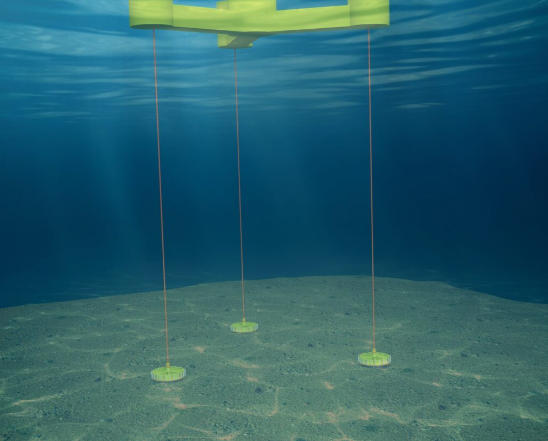
- Ability to Resist Uplift Loads: Rather than behaving like many conventional anchors, suction anchors can handle major vertical and uplift loads. For that reason, they work well for taut-leg mooring systems and tension-leg platforms.
- Reduced Seabed Disturbance: Installation tends to involve localized penetration rather than simply dragging over the seabed, so environmental impact stays lower and marine habitats see less disturbance than you would expect.
- Reusability: Many suction anchors can be taken back by reversing the installation steps, which means they can be reused again in later projects without much fuss.
- Lower Noise During Installation: When compared with pile driving work, suction anchor installation produces a lot less underwater noise, which is valuable for environmentally sensitive regions.
- Suitable for Offshore Renewable Energy: More floating offshore wind farms are leaning on suction anchors because they keep good stability, they perform reliably, and they remain compatible with the varying, dynamic loading conditions typical offshore.
Limitations
- Higher Initial Cost: The costs for fabrication and installation are usually higher than for drag embedment anchors, mostly because the structures are large and the workflow needs specialized equipment, in addition.
- Dependence on Soil Conditions: Suction anchors seem to do better in soft up to medium strength seabed materials. That said, particular seabed conditions can reduce how well the installation goes, and the whole thing might not reach the expected outcome.
- Limited Performance on Rocky Seabeds: When there is rock , dense gravel, or really firm hard formations, penetration can fail to happen, so placing them becomes impractical.
- Specialized Installation Equipment Required: To get it right, you need pumps plus monitoring systems. Also you need experienced offshore staff, which adds extra layers of complexity to the project.
- Transportation challenges: Because many suction caissons are large, they can be awkward to move and handle. Their size and weight makes the logistics harder than expected.
- Risk of Installation Irregularities: If the soil is uneven, you can end up with tilting or misalignment. Without close monitoring during installation, these issues become more likely.
- Reduced Efficiency in Highly Permeable Soils: In coarse sands or highly permeable sediments it can be hard to keep enough suction pressure. As a result the performance during installation may drop.
Key Differences Between Drag Embedment Anchors and Suction Anchors
| Aspect | Drag Embedment Anchors | Suction Anchors |
| Basic Design | Consist of a shank and flukes that penetrate the seabed when dragged. | Large cylindrical steel caissons installed into the seabed using suction pressure. |
| Installation Method | Pulled along the seabed by an anchor handling vessel until embedded. | Lowered vertically and driven into the seabed by creating a pressure differential. |
| Load Resistance | Primarily designed to withstand horizontal loads. | Can resist both horizontal and significant vertical loads. |
| Holding Capacity | Moderate to high, depending on soil conditions and embedment depth. | Very high due to deep penetration and large soil interaction area. |
| Positioning Accuracy | Less precise because final location depends on drag distance and soil conditions. | Highly accurate installation and positioning. |
| Suitable Water Depths | Commonly used in shallow to deep water applications. | Particularly suitable for deepwater and ultra-deepwater environments. |
| Seabed Requirements | Performs well in soft clay and sandy soils. | Most effective in soft to medium clays and fine-grained sediments. |
| Installation Footprint | Requires a larger seabed area during installation. | Creates a localized seabed disturbance. |
| Mooring System Compatibility | Best suited for catenary mooring systems. | Suitable for taut-leg, semi-taut, and complex mooring systems. |
| Installation Equipment | Requires anchor handling tug vessels and towing equipment. | Requires suction pumps, monitoring systems, and specialized installation equipment. |
| Reusability | Recovery can be difficult and may damage the anchor. | Often recoverable and reusable after project completion. |
| Cost | Lower manufacturing and installation costs. | Higher fabrication and installation costs. |
| Inspection and Monitoring | More difficult to verify exact embedment depth. | Easier to monitor installation and verify penetration depth. |
| Environmental Impact | Greater seabed disturbance due to dragging action. | Generally lower environmental impact with localized seabed penetration. |
| Service Life | Commonly used for temporary and semi-permanent installations. | Frequently selected for long-term and permanent offshore projects. |
Key Factors to Consider for Choosing Between Drag Embedment Anchors and Suction Anchors
Choosing between these two anchor types really depends on project needs and what the environment is doing at the same time. There are several key factors you should look at, carefully, so you end up with the best performance, safer operation, and yes, lower cost effectiveness.
1. Evaluating Seabed Conditions
In many cases the seabed situation is the main factor for selecting an anchor type. The effectiveness of a drag embedment anchor and a suction anchor is strongly tied to soil properties.
Drag embedment anchors usually do well in soft clays, medium-strength clay zones, and sandy sediments, where the anchor can sink in and build enough holding capacity. Still, that same setup might struggle when the seabed is highly variable, or if you get dense gravel, or a rocky bottom, since penetration can be inconsistent.
Suction anchors are especially good for soft to medium clays and fine-grained marine sediments, they work when the ground will let the base sink far enough without losing the pressure difference needed for placing them. If the site is very permeable sand or there is a rocky environment then, the insertion can turn out to be difficult.
Always run a full geotechnical survey before you pick an anchoring option, because otherwise you may miss the details that control installation.
2. Considering Load Requirements
The character and size of the loads you expect will drive the selection, basically they decide what will hold and what will struggle.
Drag embedment anchors are mainly meant to take horizontal loads, and they are frequently used in catenary mooring setups where the side forces are the main problem. They tend to perform well for cases with relatively steady horizontal loading.
Suction anchors give strong resistance against horizontal as well as vertical forces. Because they can take uplift loads really well, they tend to work nicely for tension leg platforms, semi taut mooring schemes, and floating offshore wind turbines that see a mix of loading directions during service.
For projects that carry serious vertical loading, or repeated cyclic actions, the features suction anchors bring can be a clear advantage.
3. Assessing Water Depth
Water depth is a major factor when choosing an offshore anchor. As offshore developments push deeper, the requirements for anchoring can become more demanding.
Drag embedment anchors have been used across a broad span of water depths, and they stay a practical choice for many typical offshore activities. Even so, in ultra deepwater settings, installation accuracy, and the load demand targets might feel more difficult to meet.
Suction anchors have become widely accepted in deepwater, and ultra deepwater work because they show high holding capacity and very controlled installation behavior. In many cases their performance ends up as the preferred choice for newer deepwater developments.
4. Installation Logistics and Equipment Availability
The way installation of marine anchors is planned can really sway both timeline and total cost.
Drag embedment anchors are usually easier to place, since the typical setup relies on an anchor handling vessel plus towing gear. That practical approach can cut down operational complication, and it often helps shorten the time on site.
Suction anchors, on the other hand, depend on specialized pumping systems, dedicated monitoring tools, and experienced installation crews. Even though the installation is carefully managed and precise, the workflow tends to demand more sophisticated equipment and additional planning.
Project managers should check, if the required vessels, equipment, and technical expertise are readily there within the project region.
5. Examining Project Duration
The offshore installation expected service lifetime, can affect which anchors are selected.
For short-term scopes, mobile offshore units, and temporary moorings, drag embedment anchors often turn out to be an affordable plus effective approach. With their smaller up-front price and deployment that is easier than many alternatives, they fit projects that do not last very long.
For long-lasting setups like floating production systems and offshore wind farms, suction anchors can bring better value over the years. Their endurance, dependable load capability , and the chance for accurate performance monitoring tend to help them stay in service for a long time.
By aligning anchor features with project duration you can optimize the life-cycle costs.
6. Analyzing Economic Considerations
Cost keeps being a major factor in any offshore project. Still, when you choose an anchor, it helps to look at the full lifecycle costs instead of just counting the starting price.
Drag embedment anchors usually come with lower manufacturing costs and installation work. Because of that, they can feel especially useful when the budget is tight, and the load expectations are not extremely high.
Suction anchors often require more expensive fabrication and installation, mainly because of their overall size and the specialized procedures needed for placement. Even so, their stronger performance, fewer maintenance needs, and good fit for demanding conditions can make the extra spend look reasonable across the life of the project.
A thorough cost and value review should include fabrication, transport, set-in-place, inspection, upkeep, and eventual removal or decommissioning costs.
7. Evaluating Environmental Impact
Environmental considerations are becoming more and more relevant in offshore project planning and development , especially when the stakes feel higher than usual.
For drag embedment anchors, the work means moving across the seabed, and that movement can stir up a relatively wide patch of sediment. Most of the time this effect is still manageable, but in environmentally sensitive zones it can turn into a bigger worry.
Suction anchors tend to cause a more localized disturbance, since they are placed in a vertical manner, without that dragging action. Their installation phase also tends to create less underwater noise than several other foundation approaches. So they often look appealing when strict environmental demands have to be met.
Then again, environmental policies and broader sustainability targets should be built into the anchor selection workflow, not treated like an afterthought.
8. Considering Future Recovery and Reuse
The ability to recover and reuse an anchoring system can also shape the long-term financial picture, even years down the line.
Drag embedment anchors are recoverable, though if they sit for long periods, or are embedded deep then getting them back can be tricky. Suction anchors are usually built with recovery in mind. If the installation is reversed, they can often be pulled out and used again for later work. This helps sustainability goals , and it may also trim costs across multiple deployments, especially when you can plan re-use ahead.
For teams needing flexibility and an easier way to redeploy assets, recoverability can be a real benefit, not just a nice feature.
9. Balancing Risk and Reliability
Reliability matters a lot in offshore work, because an anchor failure can bring serious safety issues, environmental harm, and financial fallout.
Drag embedment anchors have a record of dependable performance and they still get used as a trusted approach in many standard mooring setups. Their reliability is well supported, provided they are used within the proper design limits and not beyond them.
Suction anchors bring exceptional reliability in demanding settings, especially when we are talking about heavy loads, deep water, and mooring systems that are really quite complex. Also their installation process lets you check embedment depth and positioning more exactly, with better confirmation than you would expect in other cases.
Summary
- Drag embedment anchors remain a proven and cost-effective choice for many traditional offshore mooring applications, particularly where horizontal loads dominate and installation simplicity is valued.
- Suction anchors offer superior performance in deepwater environments and applications involving significant vertical or multidirectional loads, making them increasingly important for modern offshore oil, gas, and renewable energy projects.
Final Thoughts
Both drag embedment anchors and suction anchors are vital for modern offshore operations, even if people use them differently. The best selection really depends on things like water depth, seabed conditions, the actual loading requirements, installation logistics, the overall project duration, and a few other details too. When offshore engineers take the time to assess all those points, they can choose the anchoring system that offers the strongest mix of safety, operational performance, and economic value.