
How to Customize Life Rafts for Different Vessel Types
Life rafts are key marine safety gear, made to keep passengers and crew safe in an emergency, such as, ship accidents, onboard fire, flooding, or when people must abandon ship in a hurry. Still, no two vessels really behave the same way, because conditions differ a lot. You’ve got changes in vessel size, the operating area, how many people are carried, and a bunch of other factors. So, a standard life raft design may not be the best fit for every vessel type, not even close sometimes.
When you customize life rafts for a specific vessel, safety usually improves, but also reliability and practicality tend to get better. Think about commercial cargo ships, fishing boats, offshore platforms, and even luxury yachts: each one tends to need a distinct life raft setup. In practice, proper customization means choosing the right materials, setting the exact capacity, deciding the deployment method, adding the right equipment kit, and shaping the structural design around the vessel’s real operating environment. And yeah, if you match those details well, the whole system tends to work more smoothly, even under stressful conditions.
Table of Contents
Understanding Vessel Requirements Before Life Raft Customization
The first step in customizing a life raft is analyzing the vessel’s operational profile.
| Vessel Type | Operating Conditions | Key Customization Requirements |
| Commercial Cargo Ships | Long-distance ocean voyages, heavy weather, large crew capacity | High durability, large capacity, compliance with international maritime standards, reliable long-term storage |
| Container Ships | Global shipping routes, rough seas, limited deck space | Efficient storage, rapid evacuation capability, resistance to harsh marine environments |
| Bulk Carriers | Long voyages carrying heavy cargo, exposed ocean conditions | Strong structural protection, improved stability, long-duration survival support |
| Fishing Vessels | Coastal and offshore fishing, changing weather conditions, limited onboard space | Lightweight structure, easy operation, cold or heat resistance depending on fishing area |
| Offshore Platforms | Extreme offshore environments, high waves, strong winds, remote locations | Maximum reliability, extended survival capability, superior stability |
| Offshore Support Vessels | Frequent operations near offshore facilities, emergency response requirements | Fast evacuation, repeated use readiness, harsh-weather resistance |
| Passenger Ships and Ferries | High passenger numbers, frequent operations, crowded evacuation situations | Large capacity, safe boarding, passenger comfort, easy emergency operation |
| Cruise Ships | Long voyages with many passengers, international routes | Passenger safety, comfort during extended survival periods, efficient evacuation management |
| Yachts | Recreational cruising, coastal or offshore navigation, limited storage areas | Compact design, lightweight construction, easy deployment, aesthetic integration |
| High-Speed Boats | Fast movement, limited space, sudden emergency situations | Minimal weight, quick accessibility, strong vibration resistance |
| Research Vessels | Scientific missions in remote marine areas, long operation periods | Extended endurance, equipment flexibility, protection in different climates |
| Naval and Government Vessels | Defense operations, specialized missions, extreme environments | High reliability, mission-specific requirements, advanced safety performance |
Life Raft Customization Solutions for Different Vessel Types
1. Commercial Cargo Ships
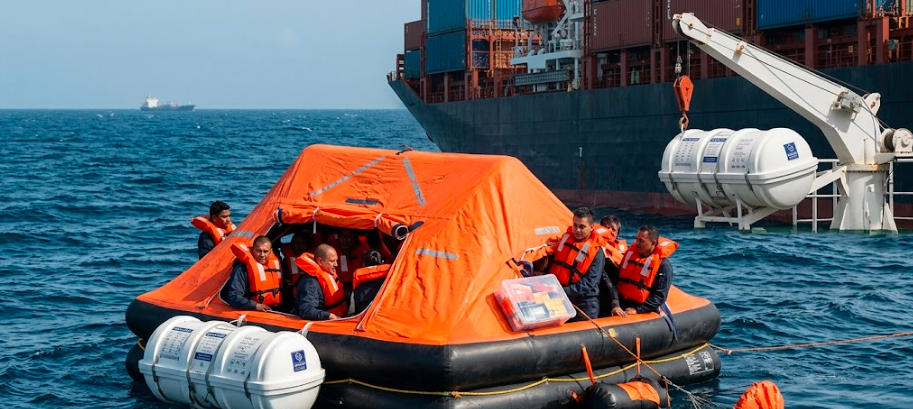
Commercial cargo ships, including container ships, bulk carriers and general cargo vessels, often head across long international routes, so the ocean conditions can get severe. Because of that, the life rafts placed onboard have to be able to handle a lot, meaning high durability, sizable capacity, and dependable long-term performance.
On cargo ships, the usual customization tends to lean toward boosting passenger capacity, adjusting storage arrangements, and also upgrading emergency survival gear. With larger ships, it is common to have multiple life rafts arranged in different areas, so evacuation is quicker from almost any section of the vessel.
The life raft canopy too, can be customized with stronger insulation, plus weather-resistant materials, to shield survivors from cold weather, heavy rainfall, and intense sun. Other survival equipment can be added depending on the voyage, for example, emergency communication tools, water supplies, signaling gear and thermal protection aids, all together to improve the chances after disembarkation.
Automatic launch systems and davit-compatible setups are regularly chosen for cargo ships, because they let crews deploy equipment faster and in a safer way, especially if evacuation needs to happen when conditions are not friendly. You know, the timing matters, and the environment can be harsh.
2. Fishing Vessels
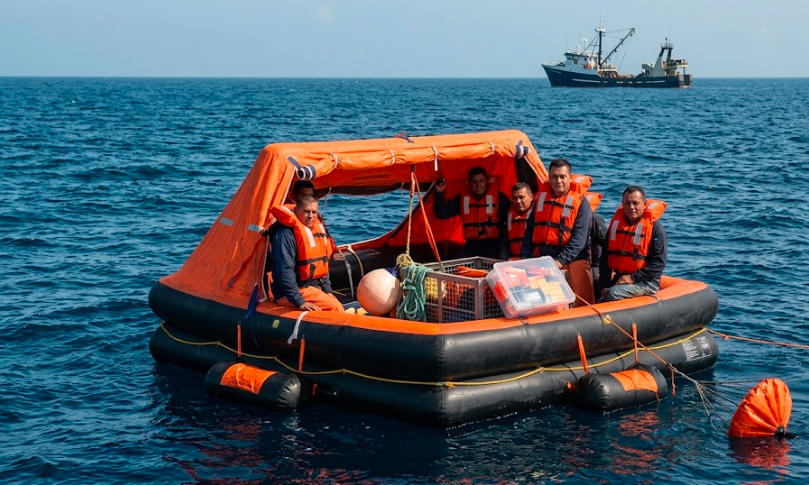
Fishing vessels tend to work in unpredictable waters, like choppy coasts and offshore fishing grounds. Because of this, life rafts for fishing boats have to be compact and relatively easy to manage, and they need to withstand strenuous use during everyday operations.
Since many fishing boats have limited deck space, customized life rafts are often planned with smaller stowage dimensions and flexible fitting arrangements, rather than a single rigid layout. Using lightweight materials also limits the effect on vessel stability while still making it easier for the crew members to manage the equipment.
For fishing operations in colder regions, life rafts sometimes come with better insulation layers, sturdier canopies, and extra thermal protection equipment. In tropical areas, crews may ask for improved ventilation systems and UV-resistant materials, so survivor comfort stays higher for longer periods, not just briefly.
Since fishing crews are often working far from any immediate rescue backing, the gear package can be customized with extra emergency rations, location signaling devices, and communication tools that are easier to deploy.
3. Offshore Platforms and Workboats
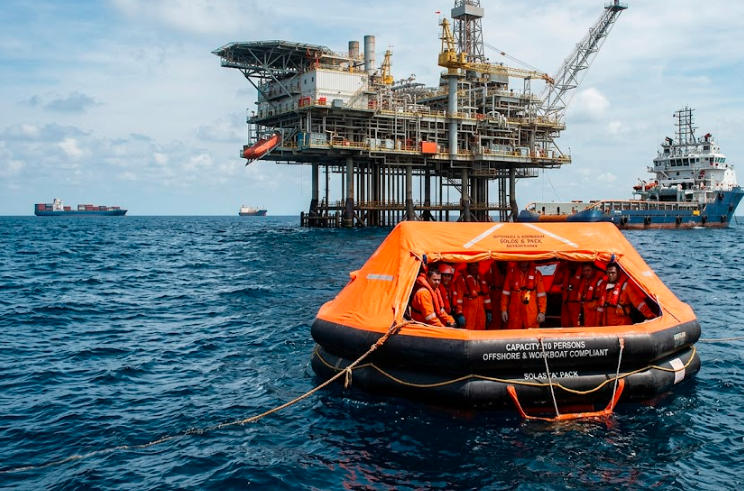
Offshore platforms and support vessels move through some of the toughest marine settings. They need life rafts made for extreme conditions, including strong winds large waves and stretches of time far beyond the coast.
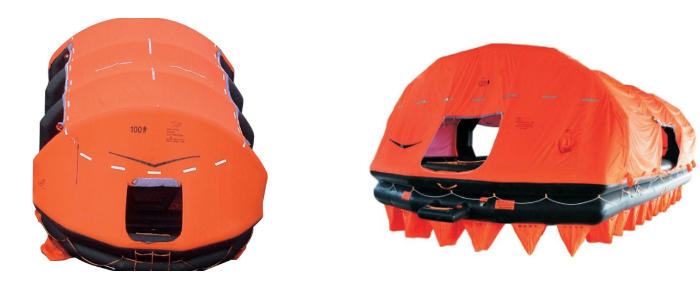
Rafts for offshore use usually need reinforced structures, high-strength buoyancy chambers, and better stability systems. Some designs use double buoyancy tubes so there’s added protection, and flotation stays maintained even when conditions get severe.
Offshore life rafts can also have specialized equipment made for long survival periods. More complete emergency stores, improved illumination systems, water collection setups, and firmer anchoring arrangements can be added so people remain sustained until the rescue team shows up.
On offshore support vessels, fast evacuation is usually the top goal. Because of that, tailored launching systems and quick inflation devices are commonly used in the overall design.
4. Passenger Ships and Ferries
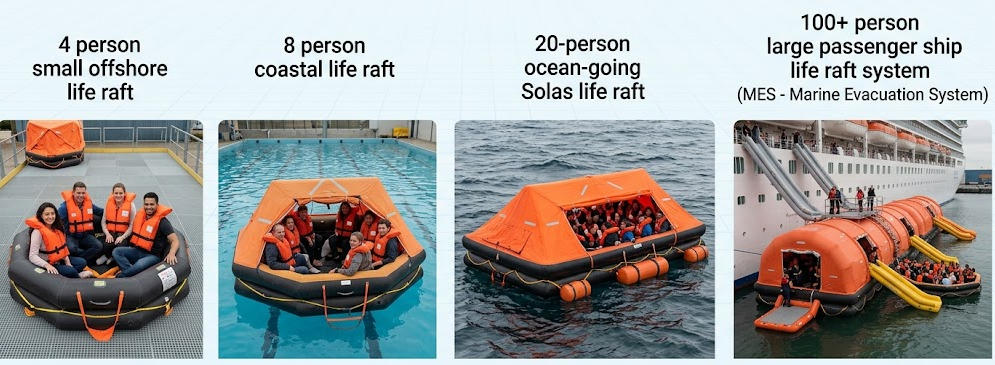
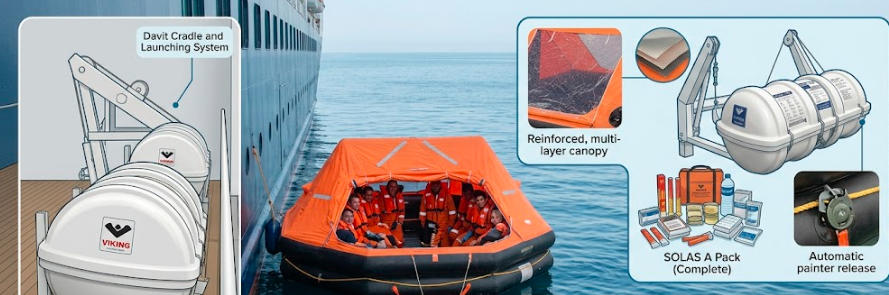
Passenger vessels, such as ferries, cruise ships and sightseeing boats, transport large crowds, so capacity and evacuation performance become the deciding factors.
Customized life rafts for passenger ships are often built with extra seating capacity, and with better boarding arrangements. Larger entrances, several boarding points, and steady platforms help passengers get inside safely, particularly during stressful emergency conditions.
Passenger vessels may also require life rafts with enhanced comfort features, because survivors might need to remain onboard for extended periods. Better ventilation helps, plus rainwater collection systems and improved lighting. There can also be extra emergency provisions, so larger groups of people have more support while waiting.
For cruise ships and luxury passenger vessels, the way a life raft looks and where it sits might be adjusted too, so it can blend into the vessel’s design. But safety performance still has to stay intact and measurable.
5. Yachts and Recreational Boats
Yachts and recreational craft tend to follow a different set of requirements than commercial ships do. Space efficiency matters, the appearance counts, and practical handling is frequently a major factor.
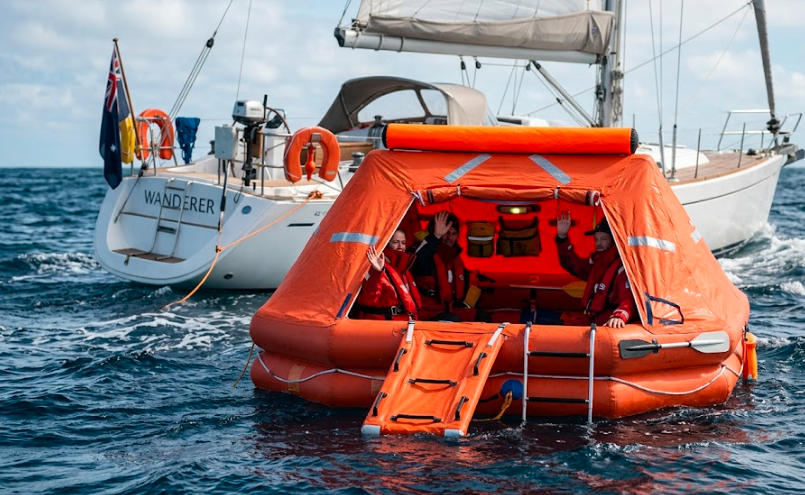
Customized yacht life rafts are usually built to be lightweight and compact, along with being easy to place away. Canister-style models that match limited deck space, or fit dedicated storage compartments, are commonly chosen.
Since recreational boat owners often have less emergency training than professional crews, user-friendly deployment systems are needed, really. Simple inflation mechanisms, clear operating instructions, and safety gear that is easy to reach help people stay prepared when something goes wrong.
On high-end yachts, customization might extend beyond the basics. Premium materials can be used, concealed storage solutions may be added, and specialized equipment packages can be built for long-distance cruising without making handling annoying.
Customizing Life Raft Safety Equipment and Accessories for Different Vessel Types
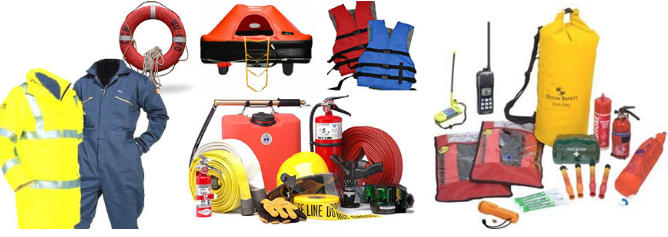
A life raft is more than an inflatable survival platform. Its onboard equipment directly affects survival chances during emergencies. Different vessel types may require different safety packages.
| Vessel Type | Safety Equipment and Accessories Requirements | Recommended Customized Equipment |
| Commercial Cargo Ships | Long-distance voyages, large crew numbers, extended survival needs | Emergency rations, drinking water, first-aid kits, sea anchors, signaling devices, repair kits, thermal protective aids, radar reflectors |
| Container Ships | Global routes and limited emergency response options | High-visibility life-saving equipment, EPIRBs, signaling mirrors, emergency lights, communication tools |
| Bulk Carriers | Exposure to rough seas and long offshore routes | Heavy-duty marine anchors, additional water supplies, durable repair equipment, protective clothing |
| Oil Tankers and Chemical Tankers | Higher operational risks and strict safety requirements | Chemical-resistant protective equipment, emergency communication devices, specialized first-aid supplies |
| Offshore Platforms | Remote locations, extreme weather, delayed rescue possibilities | Advanced survival kits, satellite communication devices, GPS trackers, emergency lighting, additional food and water supplies |
| Offshore Support Vessels | Rapid evacuation and emergency response operations | Quick-deployment accessories, rescue signaling equipment, heavy-duty repair kits, communication devices |
| Fishing Vessels | Small crews, limited space, remote fishing areas | Compact first-aid kits, emergency flares, waterproof flashlights, portable communication equipment, extra thermal protection |
| Passenger Ships and Ferries | Large passenger groups with different ages and abilities | Additional lighting, passenger guidance systems, larger first-aid supplies, seasickness bags, extra drinking water |
| Cruise Ships | Large numbers of passengers and extended survival requirements | Enhanced communication devices, lighting systems, passenger protection equipment, expanded medical supplies |
| Research Vessels | Long missions in remote areas and changing environments | Scientific communication equipment, extended survival supplies, navigation tools, specialized medical kits |
| Yachts | Limited onboard space and recreational use | Compact emergency kits, handheld communication devices, GPS beacons, small repair kits, lightweight supplies |
| High-Speed Boats | Fast operations and limited preparation time | Quick-access signaling devices, compact first-aid kits, emergency lights, lightweight communication tools |
| Sailing Vessels | Long voyages with self-sufficient operation | Water purification tools, navigation aids, repair materials, weather protection equipment |
Modern Technology in Life Raft Customization
Recent advances in marine technology have expanded what can be done when life rafts are customized. Manufacturers can take advantage of better materials, digital design tools, and newer testing approaches to build more dependable survival systems.
Many advanced life rafts now feature improved inflation systems, more durable pressure valves, better stability design choices, and advanced tracking equipment. Certain tailored options also include electronic emergency devices that assist rescue teams in finding survivors sooner.
Computer-aided design and simulation tools let manufacturers check life raft behavior across a range of sea states before the product is even built. That means they can tune how stable it is, how strong it stays, and how safe it feels for the users.
Summary
Customizing life rafts for different vessel types is essential if you want stronger maritime safety and better emergency readiness. Every vessel has its own operating profile, and the right tailoring can give people better shielding, faster release, and more dependable survival chances.
Whether the goal is cargo ships, fishing vessels, offshore platforms, passenger ships, or private yachts, the customized life rafts should reflect issues like the number of persons, selected materials, storage space limits, ocean conditions and the specific expectations for safety equipment. With solid engineering, and a careful choice of components, these life rafts can provide consistent protection for crew and passengers when the water becomes the most hostile.