

Impact-resistant Design in Marine Windows
Impact resistance is one of the most critical factors for marine windows, because it really shapes vessel safety, passenger protection, and that long-run reliability you need when you are out at sea. Impact-resistant marine windows are designed with advanced materials, structural reinforcement, and specialized manufacturing methods in order to stop cracking, shattering, or other failure modes when conditions get rough. And since marine transportation and offshore work are still growing, the demand for tougher, safer, and durable window solutions keeps going up.
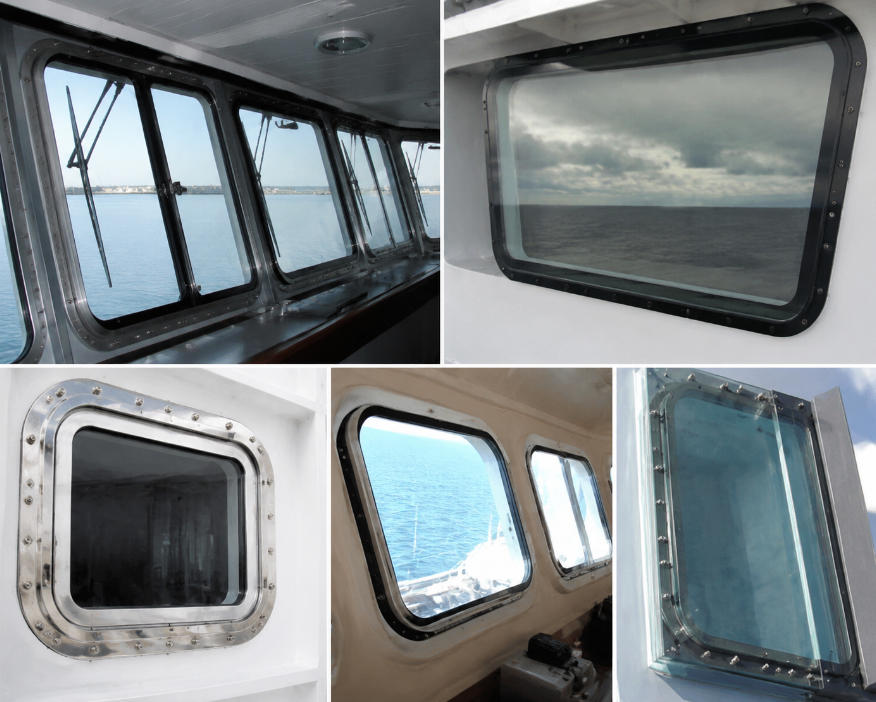
Table of Contents
Why Impact Resistance is Important in Marine Windows
Marine vessels often operate in places that are not very predictable, where boat windows can get hit by sudden external forces. Big waves can bring strong water impacts, floating debris might strike the window face, and even equipment shifting or routine maintenance can lead to accidental contact. A normal glass window is usually not up to that type of strain.
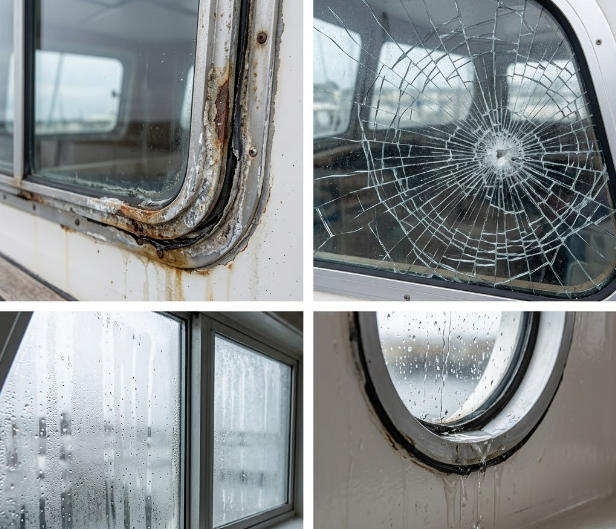
Impact-resistant marine windows support the overall structural stability of the vessel, mainly by lowering the chance of glass breakage. If a window is damaged, seawater can get inside the cabin, visibility can drop, navigation safety can be affected, and the situation can become risky for passengers and crew. So impact resistance is not just a durability; it is also a core safety obligation.
Materials Used for Impact-Resistant Marine Windows
The performance is largely depends on the marine window materials selected for their construction. Manufacturers use specially engineered glass and composite materials to improve strength, flexibility, and resistance to external forces.
| Material | Key Characteristics | Impact Resistance Performance | Common Applications |
| Tempered Glass (Toughened Glass) | Heat-treated safety glass with increased strength and controlled breakage behavior | High resistance to mechanical impact and thermal stress; breaks into small fragments instead of sharp pieces | Passenger ships, yachts, cabin windows, general marine applications |
| Laminated Glass | Multiple glass layers bonded with a strong polymer interlayer | Excellent impact resistance; broken glass remains attached to the interlayer after damage | Navigation windows, wheelhouses, offshore vessels, commercial ships |
| Polycarbonate | Lightweight engineering plastic with very high toughness | Extremely high impact resistance compared with conventional glass | Patrol boats, high-speed vessels, military vessels, special-purpose marine equipment |
| Acrylic (PMMA) | Transparent thermoplastic with good weather resistance and optical clarity | Good impact resistance with lower weight than glass | Yachts, recreational boats, small vessels, observation windows |
| Glass-Polycarbonate Composite | Combination of glass and polycarbonate layers | Provides enhanced resistance by combining glass hardness with plastic toughness | High-performance vessels, offshore applications, security vessels |
| Aluminum-Framed Glass Systems | Marine glass panels supported by corrosion-resistant aluminum structures | Frame reinforcement improves overall impact performance | Commercial ships, ferries, workboats, marine cabins |
| Stainless Steel Reinforced Window Systems | Glass panels installed with strong stainless steel frames and supports | High structural strength under severe impact and pressure conditions | Offshore platforms, naval vessels, heavy-duty marine applications |
| Laminated Acrylic | Multiple acrylic sheets bonded together with an intermediate layer | Improved resistance against cracking and impact damage compared with single-layer acrylic | Recreational vessels, custom yacht windows, lightweight marine structures |
| Polyurethane Interlayer Materials | Flexible bonding layers used between glass panels | Absorbs impact energy and helps maintain window integrity after damage | Laminated marine windows and safety glazing systems |
| Marine-Grade Coated Glass | Glass with protective surface coatings for harsh environments | Improved resistance against scratches, abrasion, and environmental damage | Offshore vessels, passenger ships, exposed marine areas |
Structural Design Features of Marine Windows for Impact Resistance
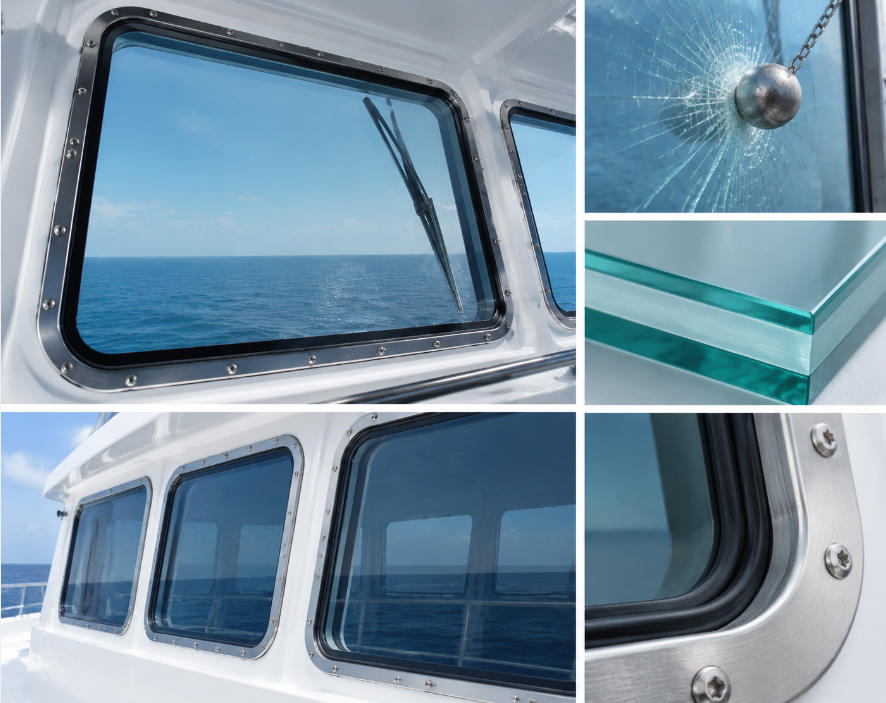
The structural design of marine windows for impact resistance includes quite a few engineering points, like reinforced frames, a window thickness that is properly optimized, and more advanced mounting methods etc. All of these elements work in tandem to lower the chance of cracking, uneven deformation, and outright failure during demanding marine operations.
1. Reinforced Frame Structures
The frame structure is among the most important parts that affects how well marine windows resist impacts. A solid frame offers mechanical support for the glass or the transparent panel, and it also helps redirect external forces away from the spots that are most vulnerable.
Marine window frames are often made from corrosion-resistant materials, including marine-grade aluminum alloys, stainless steel, and specially treated metals. With these choices you get high strength while still keeping good resistance to saltwater corrosion as well as long term exposure to the environment
The whole design of the frame aims at building a stable bond between the window panel and the vessel structure. Reinforced corners, thicker frame profiles , and joints that are machined to exact tolerances, help reduce stress hotspots, which may cause cracks or even structural failure. And when the impact loads are spread in a more even way across the frame, the window system can handle those abrupt forces from waves, floating debris or unintended collisions better than before.
2. Optimized Glass Thickness and Layered Construction
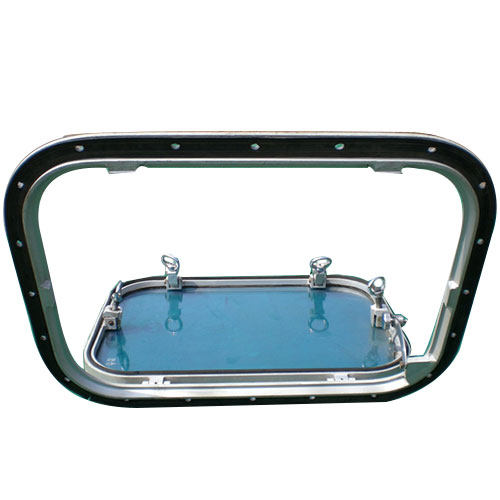
The thickness plus the internal layout of marine window glass has a direct effect on how well it resists impact. Usually marine windows are made with thicker glass panels than what you see in standard installations, because extra thickness supports strength and helps with load bearing.
Many impact-resistant marine windows rely on laminated, multi-layered arrangements. These setups bring together several glass layers with tough interlayers, the kind that keep everything linked, even when the outer surface takes a hit. Rather than letting the panes fall away in pieces, the stacked construction tends to preserve the window overall shape, and it lowers the odds of water getting into the vessel.
The use of multiple layers also improves resistance against repeated impacts.. In marine settings windows can face ongoing pressure swings as well as vibration, so layered layouts bring extra durability, and they support steady long-term service.
3. Advanced Stress Distribution Design
A key problem in marine window engineering is handling the forces produced by impacts. When stress piles up in a tiny spot, cracks can appear fast, and then run across the window face. For that reason, the structural approach is mainly about spreading the loads more effectively, across the surface.
Curved window designs are often used in marine applications because curved surfaces can spread outside pressure more evenly than flat panels. This means the window can take stronger forces, while also cutting down on those localized stress points that show up in weaker areas.
Engineers also look closely at how the glass panel works with the frame and the mounting system. A properly made structure lets the assembly move in a controlled way under pressure, so stress does not keep building up right at the connection points. That balance between rigidity and flexibility, improves impact performance and helps extend service life, over time.
4. Strong Window Mounting Systems
The link between the marine window and the vessel body matters a lot for impact performance. Even when the glass itself is strong, it can still fail if the installation system can not really absorb, and properly transfer, external forces.
Marine windows usually depend on dedicated mounting arrangements that mix mechanical fasteners, bonding materials and some flexible support components. They are made to keep the window held in place, while still letting a little motion happen due to vessel vibration, and wave impacts.
In many cases high-performance marine adhesives are paired with mechanical fixing methods to form a more rigid and cohesive connection. The adhesive film helps spread the shock loads over a broader zone, so the pressure is not forced onto only a few, specific attachment points.
5. Impact-Absorbing Sealing Systems
Sealing systems for marine windows do more than just keep water out. They also improve impact resistance because they absorb energy, and they lower the direct force transfer between the window pane and the frame.
Marine-grade rubber gaskets, silicone sealing agents, and flexible bonding materials give some necessary elasticity, helps shield the window frame when sudden forces happen. When a vessel gets hit by rough wave energy or endures mechanical vibration, these materials lessen the shock that travels inward and they can stop premature damage.
A reliable sealing system also maintains performance under temperature changes, UV exposure, and constant contact with seawater. This ensures that the window remains both impact-resistant and watertight throughout its operating life.
6. Protective Coatings and Surface Treatments
The face of a marine window can be exposed to scuffs, abrasion, and other outdoor wear. Protective coatings are frequently used to increase overall surface durability, while still keeping optical sharpness.
Hard coatings can boost resistance to scratches that come up during cleaning operations, airborne particles, and even marine debris. Anti-UV coatings help lessen material degradation from long-term sunlight exposure, and hydrophobic treatments can improve water resistance plus visibility when the weather turns rough.
These surface treatments back up the bigger impact-resistant design idea by keeping the window strength and optical clarity intact, for extended periods.
7. Vibration and Fatigue Resistance Design
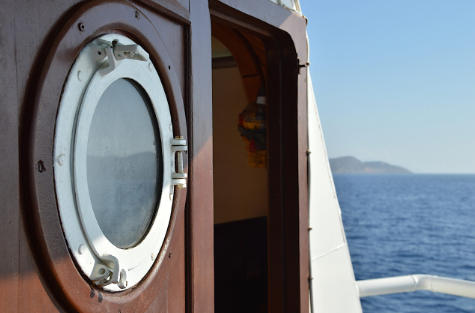
Marine vessels always endure vibration from engines, propulsion systems, and wave movement. Over time, repeated vibration can weaken window structures, and it can cause small defects, that later may become serious damage.
Impact-resistant marine windows are built with fatigue resistance in mind. The frame, glass layers, mounting hardware, and sealing materials need to work together so they can tolerate ongoing mechanical strain.
Flexible support structures along with reinforced attachment methods can help lessen fatigue damage, because the window system can tolerate steady motion, and still keep structural steadiness. This becomes even more critical for high-speed vessels plus offshore equipment, especially when they’re working in harsh environments, like you’d expect at sea.
8. Hydrodynamic Considerations
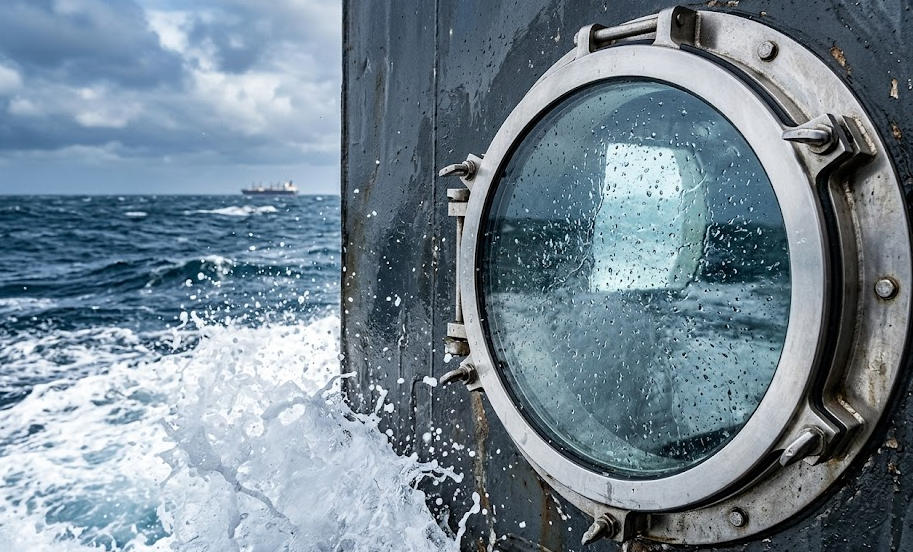
Marine windows fitted in exposed locations also need hydrodynamic attention, since water movement generates forces that act on the glass and frame. During heavy seas, waves may hit the windows with considerable pressure, which means the impact loads can be far above what you normally see in routine conditions.
To deal with that, engineers rely on specialized design choices to increase resistance to wave strikes. For example sloped, or angled window setups can reduce the straight-on force coming from the water, and reinforced structures support the system during abrupt pressure changes, without becoming unstable.
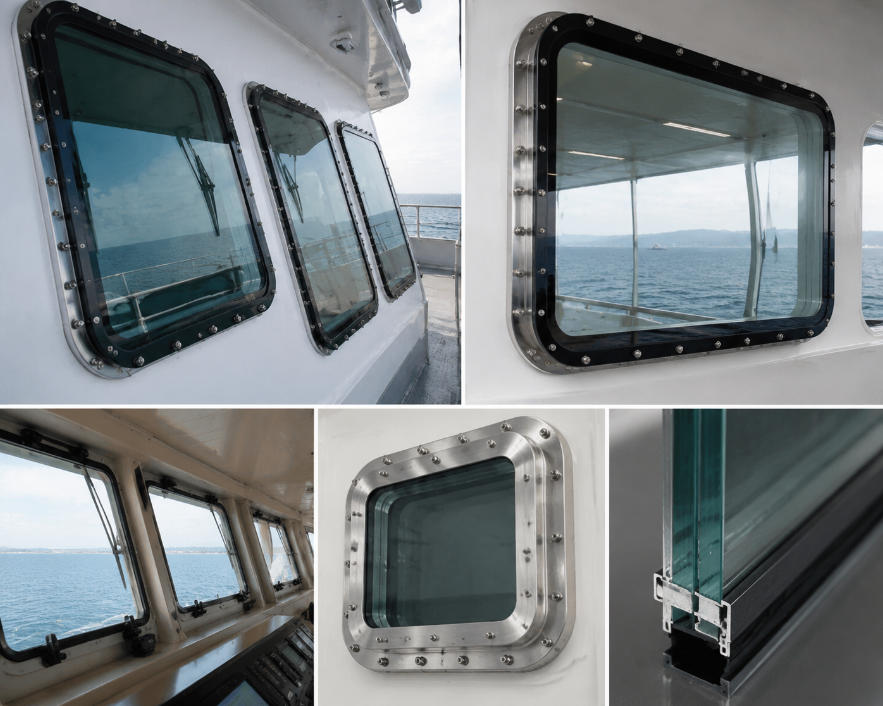
For navigation windows and bridge windows, these ideas are particularly useful, because the installations must deliver strong protection and clear sightlines at the same time, so safe vessel operation stays possible.
Impact Testing Methods for Marine Windows
To make sure the safety and reliability of marine windows, various impact testing methods are used to simulate real-world operating conditions. In practice, these tests check the glass strength, how durable the frame structure is, whether the sealing systems keep performing, and in general how well the window resists damage over time.
1. Ball Impact Testing
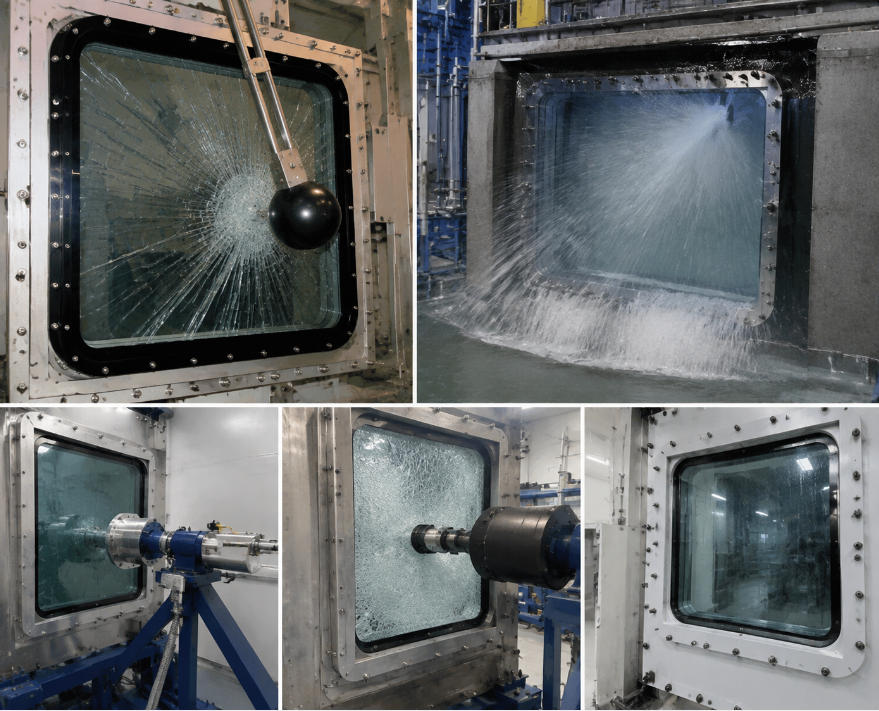
Ball impact testing is one of the usual methods for judging how marine windows stand up to sudden outside forces. In this test a weighted ball or another impact object is released or thrown onto the window face, all under controlled conditions.
The aim is to copy accidental strikes that can happen from tools, dock equipment, floating debris, or other items that may hit the window during vessel operation. The findings are reviewed by looking at crack formation, the ability to resist penetration, how the glass breaks apart, and whether the window structure can still hold together and not fail.
For laminated marine windows, the test also checks if the interlayer can still keep jagged glass fragments in place after an impact. That matters because it helps curb dangerous separation of the glass, and keeps the window doing its job by maintaining protection against water intrusion.
2. Wave Impact Testing
Wave impact testing looks at how marine windows hold up when they are hit by intense water forces that come from rough sea conditions. In real operation, vessels can face direct wave strikes that push high-pressure impacts onto exposed windows, especially near the bridge and on navigation-facing areas.
In this trial, the windows are exposed to simulated wave forces, often through high-pressure water systems or dedicated testing gear. Engineers then evaluate the window’s capacity to resist distortion, chipping, and seal failure after repeated water impacts, not just one single event.
This approach is especially important for offshore vessels, commercial ships, and boats working in zones with severe weather.
During testing, engineers monitor glass deflection, frame strength, mounting stability, and sealing performance. A high-quality marine window should maintain its structural integrity without excessive deformation or leakage.
Pressure testing is especially critical for large navigation windows and windows installed in exposed areas where environmental loads are higher.
3. Pressure Load Testing
Pressure load testing uses a swinging impact device to apply controlled force to the window surface. This method allows manufacturers to measure how much energy a marine window can absorb before damage occurs.
During testing, engineers monitor glass deflection, frame strength, mounting stability, and sealing performance. A high-quality marine window should maintain its structural integrity without excessive deformation or leakage.
Pressure testing is especially critical for large navigation windows and windows installed in exposed areas where environmental loads are higher.
4. Pendulum Impact Testing
Pendulum impact testing uses a swinging striker setup, basically an impact arm, to hit the window surface with a measured blow. With this approach, manufacturers can estimate the energy absorption capacity, meaning how much impact energy the marine window can take before any damage starts.
The test measures the strength of a variety of materials, including tempered glass, laminated glass, acrylic, and polycarbonate panels. It also helps figure out if the window design can stop a sudden failure when it faces concentrated impacts, or a strong blow in a small area
Pendulum testing comes in handy for comparing different window setups, and for fine-tuning impact-resistant structures over time, you can really see the differences between configurations
5. Fragment Retention Testing
Fragment retention testing is mainly about safety performance after a marine window has already taken damage. Rather than only checking if the window cracks, the goal is to see how well the window holds together once the impact happens, the response after the strike matters too
Laminated glass systems are usually evaluated with this method because their polymer interlayers are meant to keep shattered glass pieces in place. When fragment retention is maintained, it helps lower injury risks and it also prevents big openings that could let seawater get into the vessel
This testing method matters a lot for passenger vessels, offshore platforms, and routing zones where safety is the main focus.
6. Shock and Vibration Impact Testing
Marine windows are constantly exposed to vibration caused by engines, propulsion systems and wave motion. Shock, and vibration testing looks at whether the window assemblies can keep their performance when they face repeated mechanical stress.
In the test setup, windows receive simulated vessel vibrations along with sudden shock loads. Engineers then check frame linkages, mounting systems, sealing materials, and the glass structure for visible signs of wear, fatigue or damage.
Through this process, marine windows stay dependable for long-term duty, especially on high-speed craft and offshore installations.
7. Water Tightness Testing After Impact
Water tightness testing is meant to figure out whether marine windows can block seawater leakage after they’ve been hit by impact forces. A window might look fine, like fully holding its shape after the strike, but later it can develop tiny failures in the seals or at the mounting areas, yes small things, and they matter.
In the testing phase water pressure is applied across the window face while inspectors watch carefully for any dripping or seepage near the glass, the frame, and the sealing parts. In practice, this check helps confirm the window will still be able to guard the vessel interior after real impact situations.
Keeping water tightness is essential, not only for passengers, but also for onboard equipment and for key operational zones where loss of protection would be unacceptable.
8. Thermal Impact Testing
Marine windows regularly deal with fast temperature swings brought on by direct sunlight, cold seawater and changing weather. Thermal impact testing, looks at how well the window resists cracking caused by temperature stress, meaning the glass and frame have to handle the expansion and contraction without failing.
The test is basically about putting windows through controlled heating and cooling cycles. The engineers look at whether the glass, the interlayer materials, and the frame parts can stretch and shrink again, without something failing. It is not just one quick look, they check how the materials behave across the whole range of temperatures.
This kind of testing really matters for vessels working in places where the temperature swings are extreme, you know hot spells and cold snaps, back to back.
9. Debris Impact Testing
Debris impact testing mirrors the everyday problems where floating stuff, chunks of ice, or even loose tools might hit marine windows. The main point here is to see how well the window materials handle impacts at high speed.
Specialized test gear is used to fire impact objects at set speeds and specific angles. From that they judge if the window holds up against penetration and still keeps safety performance.
This approach is especially useful for offshore vessels, workboats, and ships that run through areas where debris hazards tend to show up frequently.
Common Performance Standards for Marine Windows
| Standard | Main Focus | Application Areas |
| Marine Classification Society Requirements | Structural strength, safety, and reliability of ship components | Commercial ships, offshore vessels, passenger vessels |
| IMO (International Maritime Organization) Requirements | Safety regulations for marine equipment and vessel operations | International shipping and passenger vessels |
| ISO Marine Window Standards | Testing methods, dimensions, materials, and performance requirements | Various marine window manufacturers and vessel builders |
| Wheelhouse Window Requirements | High impact resistance, visibility, and weather protection | Ship bridges and navigation areas |
| Offshore Structure Standards | Extreme environmental resistance and long-term durability | Offshore platforms and support vessels |
Final Words
Impact-resistant design is a foundational requirement for modern marine windows. Using advanced materials, reinforced frameworks, sturdy sealing systems, and through strict testing, marine window manufacturers can deliver solutions that handle demanding ocean conditions well.