

How to Maintain Life-saving Equipment
Life-saving equipment is pretty much essential for protecting people when something goes wrong at sea during emergencies. Stuff like lifeboats, life rafts, life jackets, emergency beacons, fire extinguishers, etc, has to work flawlessly exactly when it matters. If you want it to do that, maintenance is not optional. You need proper maintenance, so reliability stays high, safety rules are met, and human life is actually protected.
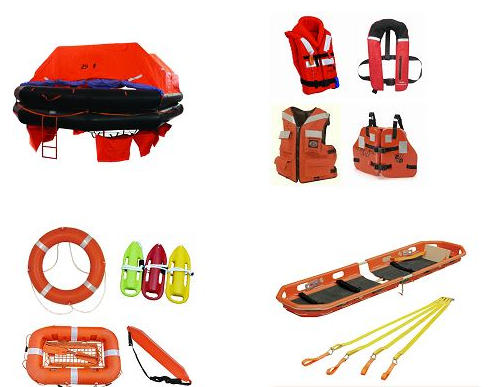
Table of Contents
Why Maintaining Life-saving Equipment is Important
Most of the time, life-saving equipment is unused for long stretches, until an emergency suddenly demands it. During that wait, the environment can beat on it, materials get older, corrosion shows up, mechanical parts start losing alignment, and storage that’s not handled well can quietly weaken performance. Often you won’t see dramatic damage right away, but the effectiveness is already slipping. With regular maintenance, you can spot issues early, before they turn into critical breakdowns.
Also, well-maintained life-saving equipment brings real advantages. It improves immediate operational readiness, helps equipment last longer, lowers the need for frequent replacements, supports compliance with the required safety norms, and in the end it greatly raises the odds that rescues work as intended when the emergency finally arrives.
Common Types of Life-saving Equipment Requiring Maintenance
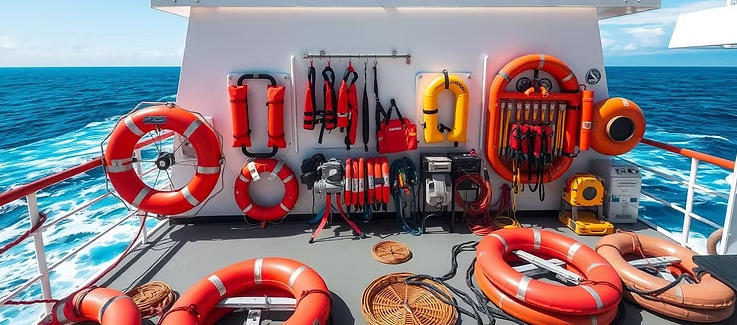
Different types of life-saving equipment have unique maintenance requirements.
This chart provides an overview of the common life-saving equipment and the maintenance requirements to keep them ready for emergency use.
| Equipment Type | Function | Maintenance Requirements | Inspection Focus |
| Life Jackets | Provide personal flotation during emergencies | Clean after use, inspect straps and buckles, check buoyancy materials | Tears, damaged straps, broken buckles, worn reflective tape |
| Inflatable Life Jackets | Automatic or manual flotation support | Engine maintenance, hull inspection, and communication equipment testing | Cylinder condition, inflation status, leaks, corrosion |
| Lifeboats | Evacuate personnel from vessels or offshore facilities | Inspect inflation mechanisms, check gas cylinders, and test indicators | Battery checks, self-testing, and waterproof seal inspection |
| Rescue Boats | Rapid response and recovery operations | Periodic servicing, inflation system inspection, and equipment inventory checks | Fuel system, steering, propulsion, safety gear |
| Life Rafts | Emergency survival platform at sea | Structural damage, engine performance, and release systems | Cylinder pressure, fabric condition, emergency supplies |
| Immersion Suits | Protect against hypothermia in cold water | Clean and dry properly, inspect seals and zippers | Tears, punctures, seal integrity, zipper functionality |
| EPIRBs (Emergency Position-Indicating Radio Beacons) | Transmit distress signals and location information | Inspect cylinders, seals, and storage conditions | Battery expiration, signal transmission, casing condition |
| SARTs (Search and Rescue Transponders) | Assist rescuers in locating survivors | Functional testing, battery verification | Signal response, battery life, antenna condition |
| Fire Extinguishers | Suppress small fires during emergencies | Pressure checks, refill or replace as required | Pressure gauge, nozzle blockage, corrosion |
| Firefighter Breathing Apparatus | Provide breathable air in hazardous environments | Cylinder inspection, regulator testing, mask cleaning | Air pressure, valve function, hose integrity |
| Emergency Escape Breathing Devices (EEBDs) | Enable escape from smoke-filled areas | Battery testing, lamp replacement, and functional checks | Cylinder pressure, expiration dates, mask condition |
| Emergency Lighting Systems | Provide illumination during power failures | Battery testing, lamp replacement, functional checks | Battery capacity, bulb performance, wiring condition |
| Distress Flares | Signal distress and attract rescuers | Verify storage conditions and expiration dates | Expiration dates, waterproof packaging, damage |
| First Aid Kits | Provide immediate medical assistance | Replenish supplies, replace expired items | Inventory completeness, expiration dates, packaging condition |
| Marine Searchlights | Support navigation and rescue operations | Clean lenses, inspect electrical systems, test operation | Lamp condition, beam performance, corrosion |
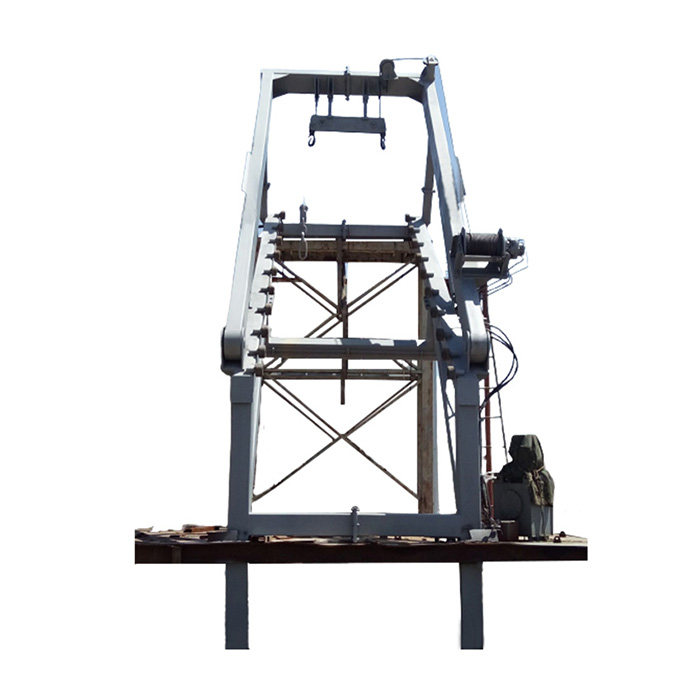
| Launching Davits and Winches | Deploy lifeboats and rescue equipment | Lubrication, load testing, cable inspection | Wire rope wear, hydraulic systems, braking mechanisms |
Key Maintenance Practices for Life-saving Equipment
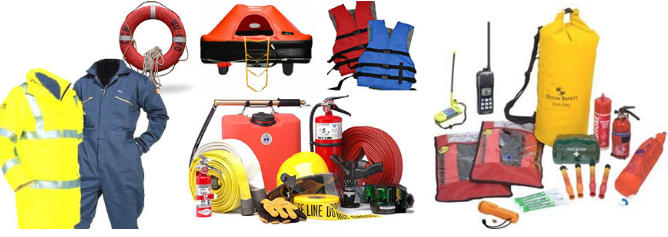
1. Regular Inspection
The foundation of effective maintenance is regular inspection, honestly, Life-saving equipment like lifeboats, life jackets and emergency beacons should be examined closely for signs of wear, corrosion, cracks leaks, or mechanical damage. Even tiny defects can turn into equipment failure during emergencies. Inspection frequency should follow the manufacturer’s guidance and also factor in the surrounding situation, like saltwater exposure, humidity, or extreme temperature. Visual checks let the maintenance team spot troubles before they grow bigger.
2. Cleaning and Preservation
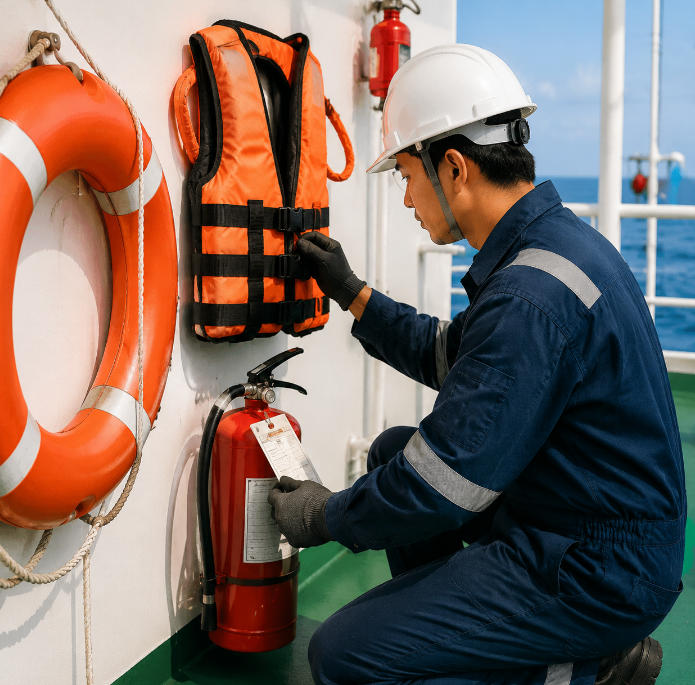
Keeping everything clean is, I mean essential to prevent the build up of grime, salt and other contaminants that can speed up deterioration. When you clean properly it helps with mechanical operation, protects buoyant materials, and keeps the electronic parts away from corrosion. It is important to pick cleaning methods and agents that match the equipment, otherwise you might cause accidental damage. After cleaning, make sure there is proper drying and storage, because otherwise mold, rust, or even material fatigue can show up.
3. Lubrication of Moving Parts
Mechanical elements like lifeboat davits, winches, hinge points, release mechanisms and propulsion systems depend on movement that stays smooth. Lubrication reduces friction-related wear and supports operational readiness. Use lubricants in the way the manufacturer says, because that way performance stays steady and the service life of the mechanical equipment gets longer.
4. Functional Testing
Functional testing checks that the gear works properly in realistic conditions. Emergency lighting, inflatable life jackets, communication devices, breathing apparatuses, and rescue gear should go through regular operational checks, and it really matters that they are actually used like you would in practice, not just observed. Testing can bring to light hidden problems like misbehaving sensors, low battery levels, leaks, or sluggish inflation mechanisms, things that inspections alone often do not show, even when everything looks fine at first glance.
5. Documentation and Record Keeping
Accurate documentation is crucial so maintenance activities can be tracked, and so regulatory compliance is supported. Thorough logs should note inspections, repairs, functional tests, and whenever components are replaced. Keeping these records lets organizations see patterns over time, plan preventive maintenance, and show compliance during audits. The records also help spot repeated troubles, so organizations can take early action before failures happen.
6. Training and Personnel Competence
Even the most advanced life-saving equipment can fail, if the staff are not trained in the right way. People who handle maintenance have to understand inspection routines repair methods and what the equipment needs to work properly. Likewise, the users should be comfortable with deploying the device quickly and correctly during high stress moments. Regular training sessions along with emergency drills helps expose small maintenance gaps, and it also reinforces the correct operation, before something urgent actually happens.
7. Leveraging Emerging Technologies
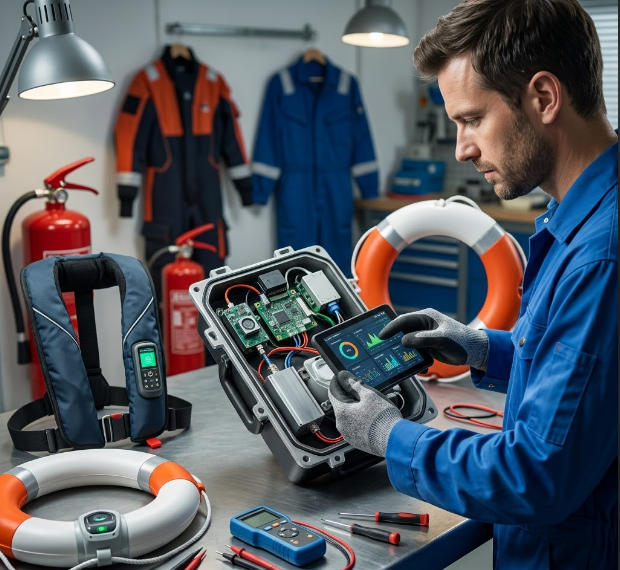
Emerging technologies are improving maintenance efficiency and reliability of life-saving equipment.
This chart offers how modern technologies are transforming maintenance practices for life-saving equipment, making them safer, more efficient, and more reliable.
| Technology | Purpose | Benefits | Examples of Application |
| Condition-Monitoring Sensors | Continuously track equipment status and detect early signs of wear or failure | Enables early detection of issues, reduces downtime, increases reliability | Sensors on lifeboat davits, winches, and inflatable life jackets to monitor stress or leaks |
| Predictive Maintenance Tools | Analyze performance data to forecast potential failures before they occur | Shifts maintenance from reactive to proactive, extends equipment lifespan, reduces emergency repairs | Predictive software for fire suppression systems or EPIRBs analyzing battery life and usage patterns |
| Digital Maintenance Management Systems | Schedule, track, and document maintenance activities | Improves record keeping, ensures compliance, simplifies audit preparation | Cloud-based platforms for logging inspections, repairs, and functional tests of marine and industrial life-saving equipment |
| Smart Batteries and Power Management | Monitor battery health and manage power usage | Prevents unexpected battery failures, extends operational readiness | EPIRBs, emergency lighting, and portable communication devices with smart battery systems |
| Automated Testing Devices | Simulate operational scenarios to test equipment performance | Reduces manual testing errors, ensures consistent functional verification | Inflatable life jackets or breathing apparatuses tested via automated inflation and pressure cycles |
| Augmented Reality (AR) Maintenance Tools | Provide guided instructions and diagnostics during maintenance tasks | Enhances technician accuracy, reduces training time, improves complex system maintenance | AR headsets guiding lifeboat engine servicing or fire extinguisher system inspections |
| Data Analytics Platforms | Aggregate maintenance and usage data to identify trends | Supports decision-making, optimizes maintenance schedules, identifies recurring issues | Analysis of inspection logs for life jackets, lifeboats, and emergency lighting systems |
| Robotics and Remote Inspection | Perform inspections in hard-to-reach or hazardous areas | Reduces personnel risk, increases inspection thoroughness | Drones inspecting ship hulls or confined storage spaces for life-saving equipment |
| Smart Coatings and Materials | Provide self-monitoring or corrosion-resistant properties | Reduces material degradation, extends service life, improves environmental resilience | Corrosion-resistant coatings on lifeboats, winches, and davits exposed to marine environments |
Challenges in Maintaining Life-Saving Equipment
This chart provides the main challenges in maintaining life-saving equipment and practical ways to address them.
| Challenge | Description | Impact on Equipment Maintenance | Possible Solutions |
| Environmental Exposure | Equipment is exposed to saltwater, humidity, UV radiation, extreme temperatures, or chemicals | Accelerates corrosion, material degradation, and mechanical wear | Use protective coatings, controlled storage, and frequent inspections |
| Accessibility Issues | Equipment may be installed in hard-to-reach or confined areas | Makes inspections, cleaning, and testing difficult or time-consuming | Implement scheduled maintenance plans, use specialized tools, and ensure proper access design |
| Budget Constraints | Limited financial resources for maintenance, replacement, or spare parts | Delays inspections, servicing, or necessary repairs, potentially compromising safety | Prioritize critical equipment, adopt preventive maintenance strategies, and leverage cost-effective monitoring tools |
| Regulatory Compliance | Complex rules and standards governing life-saving equipment maintenance | Requires documentation, testing, and certifications | Maintain accurate records, follow manufacturer guidelines, and engage certified service providers |
| Mechanical Wear and Aging | Moving parts and materials degrade over time | Reduces reliability and increases risk of equipment failure | Implement preventive maintenance, functional testing, and component replacement schedules |
| Personnel Training | Staff may lack knowledge of proper maintenance procedures | Increases risk of improper inspections, repairs, or operational errors | Provide regular training, drills, and competency assessments |
| Storage and Handling | Improper storage, rough handling, or overcrowded storage areas | Leads to damage, reduced lifespan, and decreased operational readiness | Use proper storage solutions, protective covers, and handling protocols |
| Hidden Defects | Problems may not be visible during routine inspections | Equipment may fail unexpectedly during emergencies | Conduct functional testing, condition monitoring, and periodic professional servicing |
| Technological Complexity | Modern equipment may include electronic, hydraulic, or automated systems | Requires specialized skills and tools for maintenance | Train staff on advanced systems and collaborate with certified service providers |
| Supply Chain Delays | Difficulty sourcing replacement parts or consumables | Extends downtime and delays maintenance schedules | Maintain inventory of critical spares and work with reliable suppliers |
Summary
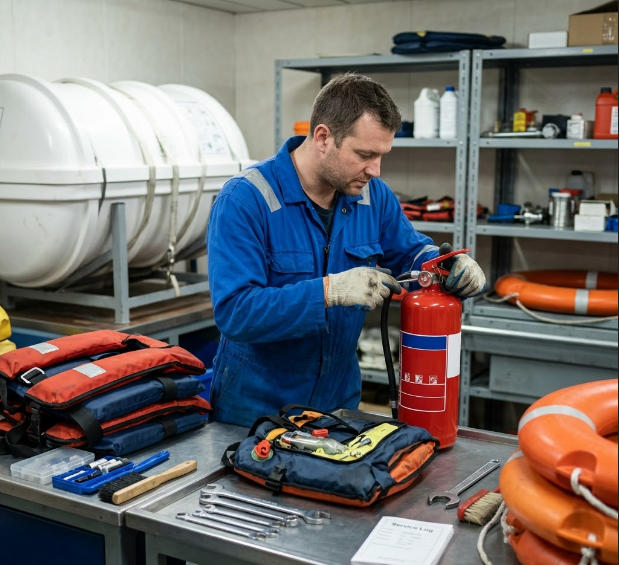
Maintaining life-saving equipment is a basic duty for organizations working in marine, industrial, and public safety settings. Routine inspections, functional checks, proper cleaning, timely repairs, and detailed log keeping all help ensure the equipment remains prepared for emergency use. When organizations invest in solid maintenance programs and make room for modern technologies, they can strengthen safety, meet required rules, and make sure the life-saving equipment works reliably when lives are on the line.