
Marine vessel operators often spend extended hours just sitting while navigating rough waters. Sometimes it feels like the whole deck is moving, and after a while repeated shocks and vibrations add up. That kind of exposure can cause fatigue, less concentration, and long-term musculoskeletal disorders.
To deal with these issues, adjustable suspension systems in marine seats have become an important part of modern vessel design. By reducing how much the hull’s impacts get passed to the person, these seating solutions improve ergonomics, help lower operator fatigue, and support safer vessel operation.
Why Marine Seats Require Adjustable Suspension Systems
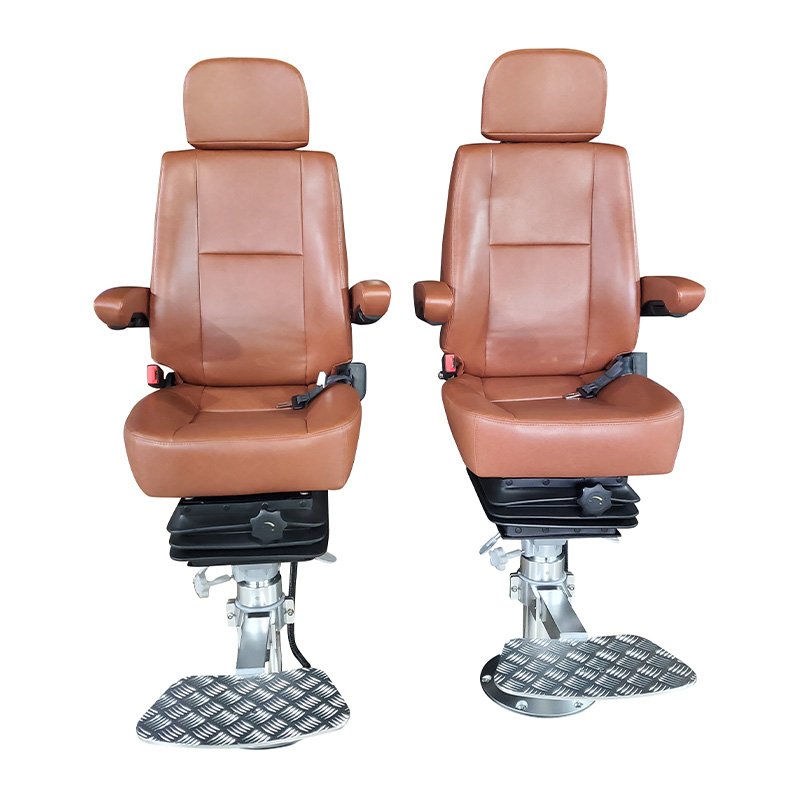
Unlike conventional seats, marine seats have to handle constant motion caused by waves, vessel acceleration, and changing sea conditions. Without a proper suspension system, the occupant ends up taking in too many of the vessel’s vertical and horizontal forces, which leads to discomfort and potentially injuries.
Adjustable suspension systems offer a handful of real perks. They take in shocks that come from choppy waters, cut down whole body vibration exposure, and help keep a good seating posture during long runs. They can also fit different operator body weights, improve vessel handling by reducing tiredness, and support overall workplace wellbeing.
For professional crews doing long shifts, these improvements show up as better operational flow and less physical strain.
How Adjustable Suspension Systems Work
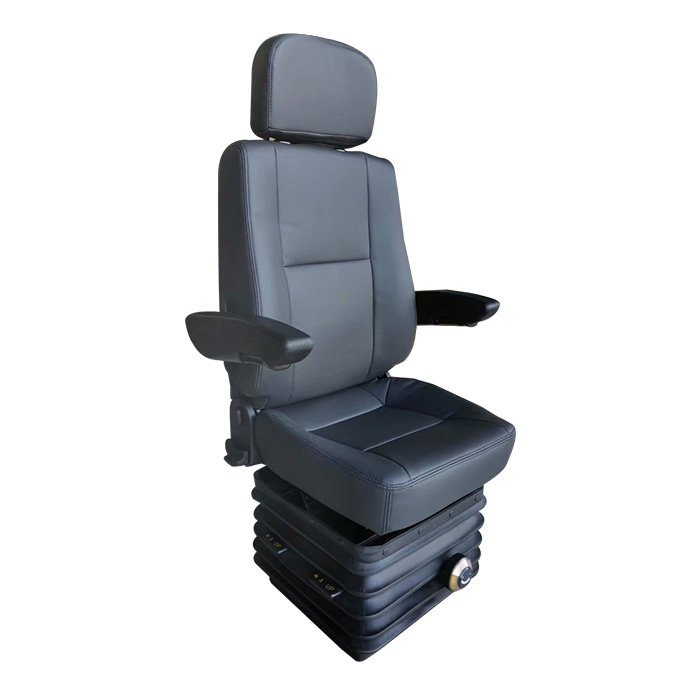
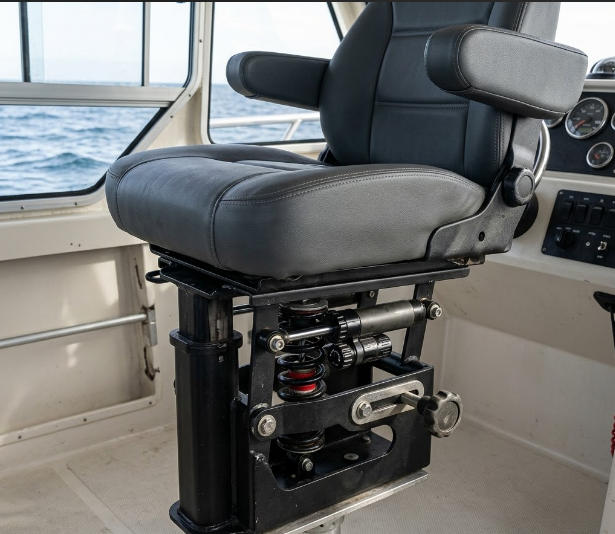
A marine suspension seat uses a shock-absorbing assembly that sits between the seat base and the deck mounting frame. Rather than sending every vessel motion straight to the person, the suspension unit compresses then rebounds, so the energy is released and not passed through as much.
Most modern systems usually include
- Mechanical or pneumatic springs
- Hydraulic or gas dampers
- Weight adjustment systems
- Travel limiters
- Locking devices
- Ergonomic seat frames
- Adjustable seat rails
When the vessel meets waves the suspension compresses a bit to absorb the impact while the damper then controls rebound, so there is no excessive bouncing. The outcome is steadier up and down travel and a noticeable drop in impact forces on the operator.
Key Features of Adjustable Suspension Marine Seats
Modern suspension marine seats come with many adjustment options, meant for different operators and changing work conditions.
1. Advanced Shock Absorption System
The main job of an adjustable suspension marine seat is to take in shocks that come from choppy sea conditions. Rather than pushing the whole force of vessel impacts straight to the person, the suspension system dissipates a good deal of that energy before it ever reaches the body.
Depending on the seat design, shock absorption can be achieved via mechanical springs, hydraulic dampers, pneumatic air suspension, gas shock absorbers, or hybrid systems that put together several technologies, instead of relying on just one. Suspension shock absorbing pilot chair can noticeably reduce spinal compression and also helps minimize discomfort when navigating at high speed or when the surroundings are rough.
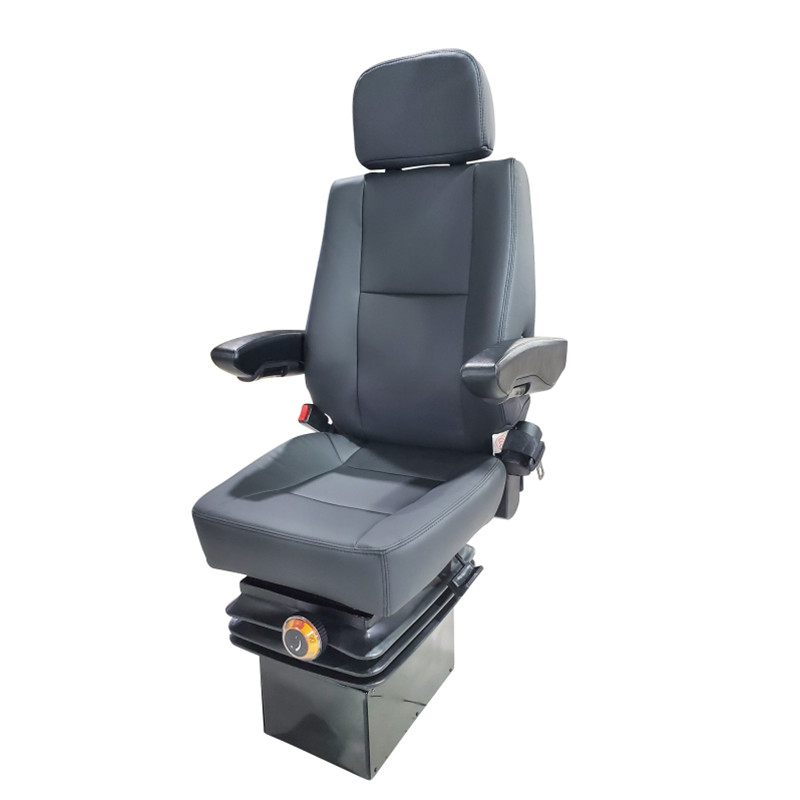
2. Adjustable Weight Compensation
One of the key features in today’s suspension seats is adjustable weight compensation. Each operator has a distinct body weight, and suspension performance leans heavily on correct calibration.
Weight adjustment mechanisms let users fine-tune the setup so the seat compresses in a controlled way under their body mass. With the right setting, the rider avoids too much seat travel for lighter users, while heavier occupants are less likely to bottom out. In the end, consistent shock absorption is maintained, along with a more stable comfort level across different body types.
3. Variable Suspension Travel
Suspension travel is basically the amount of vertical movement the seat can make while it absorbs impacts. When the suspension travel is adjustable, operators can fit the seat to different vessel types, plus changing sea conditions, without too much fuss.
In general, longer suspension travel gives better shock absorption in rough offshore environments, whereas shorter travel tends to keep things steadier in calmer waters. Being able to tweak suspension travel also makes the seating system more versatile across a lot of operating scenarios.
4. Adjustable Damping Control
Springs handle the impact absorption part, but dampers manage the rate at which the seat returns to its original position. Adjustable damping lets users tune how responsive the suspension feels.
When damping is set higher, the ride becomes firmer, with less bouncing, which makes it a better match for high-speed vessels. If damping is set lower, you get a softer, more cushioned feel, and that tends to boost comfort during moderate sea conditions. This capability helps balance comfort along with vessel control.
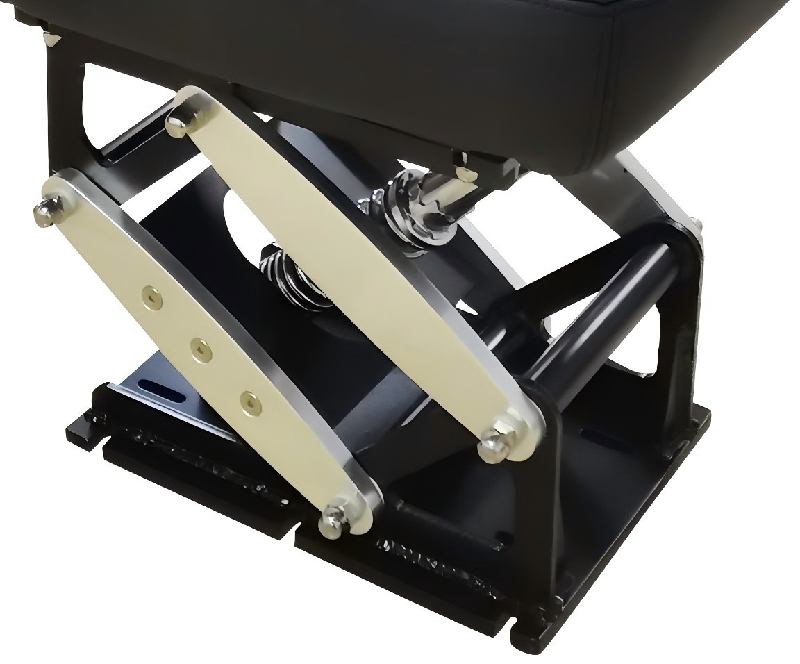
5. Seat Height Adjustment
Getting the seating height right is crucial for maintaining a good view and an ergonomic posture while you are at the helm. Adjustable suspension marine seats let an operator raise or lower the seat, to reach a proper eye level in relation to navigation equipment, and also to the rest of the surrounding environment. When the seat height is correct it helps reduce tension in the neck, shoulders, and lower back, while also making it easier to control the vessel.
6. Fore-and-Aft Sliding Mechanism
Operators are not all built the same, so seating position needs vary with height and arm reach. Fore-and-aft adjustment lets the whole seat glide forward or backward along integrated rails. With this option you can reach steering controls, throttle levers, pedals, and navigation equipment in a relaxed way, and still keep the posture you need. It also supports multiple operators using the same boat, without forcing anyone to “settle” for an awkward position.
7. Adjustable Backrest Angle
Backrest adjustment lets users pick a comfortable reclined posture , that supports the spine’s natural curve. During extended voyages the ability to change the backrest position can help reduce muscle fatigue and also lessen the stress on the lumbar area. Some higher grade marine seats even include synchronized reclining mechanisms which keep the ergonomic alignment between the seat cushion and the backrest, steady across the whole range of movement.
8. Lumbar Support Adjustment
Lower back discomfort shows up as one of the most common complaints for people operating in marine environments. Adjustable lumbar support provides focused support for the lower spine’s inward curvature, so the back is steadier and less strained.
When spinal alignment gets better and muscle tension eases, a lumbar adjustment makes extended working hours feel more comfortable, and it can also help lessen the likelihood of long term back discomfort. Adjustable armrests matter here too, because they help with upper-body fatigue, since the arms get something solid to rest on during steering and equipment use. A lot of adjustable marine seats let people change the armrest height, width, angle, and where it sits. If the armrests are set well, the shoulders and wrists experience less strain, while the operator keeps a more relaxed working stance.
9. Headrest Adjustment
A properly adjustable headrest supports the head and neck while the vessel is moving. This reduces stress that comes from recurring hits and the steady background vibrations. With the headrest height and angle set right, operators with different body heights can position it correctly, which boosts comfort and reduces neck fatigue during long runs.
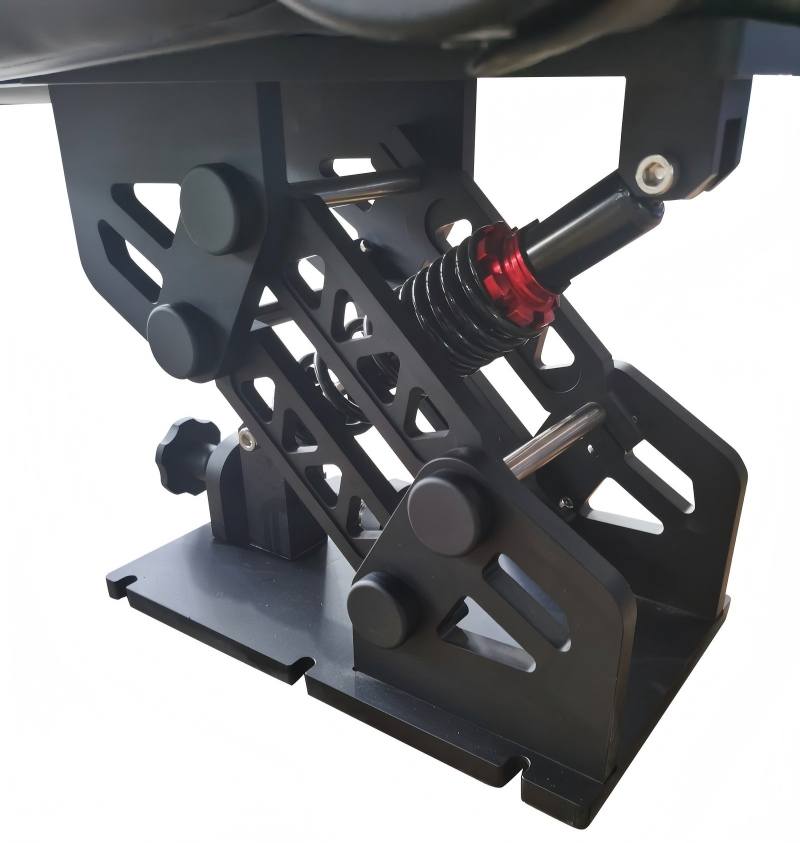
10. Swivel and Rotation Capability
A lot of adjustable marine seats have swivel bases, so the seat can rotate, usually around 90 180, or 360 degrees. Those rotating setups can boost accessibility inside the cockpit, help crew members communicate, and make it easier to reach nearby gear without continuous body twisting. A solid locking mechanism keeps everything in place while the vessel is underway, so the seat does not drift or shift.
11. Ergonomic Seat Cushion Design
Beyond suspension tech, the cushion really matters for how comfortable the occupant feels. Many well-made marine seats use high density foam and pressure distributing shapes, plus breathable upholstery materials, and water-resistant covers that keep supporting you over time. They also work against moisture, salt, and ultraviolet exposure. When the cushion is shaped ergonomically, it supports better weight distribution and can reduce pressure points during long periods of sitting.
12. Corrosion-Resistant Construction
Marine settings make seating systems face saltwater, a lot of humidity and rough weather. Because of that, adjustable suspension seats are built with corrosion-proof parts, like marine-grade aluminum, stainless steel, reinforced composites and polymers that resist UV rays. In this way, the seating keeps going longer, with less upkeep or attention needed.
13. Safety Locking Mechanisms
Safety is still the first concern in marine seat design. Adjustable suspension seats come with locking mechanisms meant to hold the chosen adjustments steady while the vessel is moving. It may be locking the seat height, the sliding rails, swivel action or the suspension settings. These arrangements help keep things from shifting by accident during travel, which supports operator stability and safety.
14. Smart Adjustment Technologies
The newest generation of adjustable suspension marine seats brings in electronic technologies that boost everyday comfort and performance, you know without the usual hassle. Smart functions might involve automatic weight sensing, electronically controlled damping, and programmable memory settings that multiple operators can reuse quickly. There could also be posture monitoring, plus sensor driven suspension tuning that keeps responding. In some advanced setups, the suspension keeps adjusting in real time based on vessel pace and sea state, so the ride stays steady and smooth with very little manual meddling.
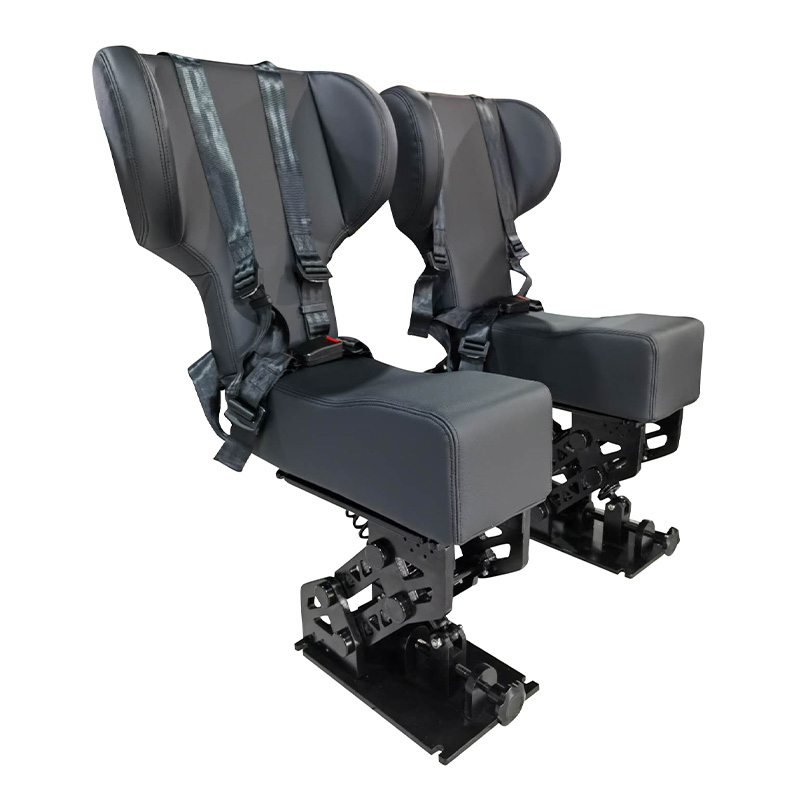
Applications across Different Marine Vessels of Adjustable Suspension Marne Seats
Adjustable suspension seats have become standard equipment across numerous marine industries.
| Marine Vessel Type | Operating Conditions | Functions | Key Benefits |
| High-Speed Patrol Boats | High speeds, rough seas, rapid acceleration and deceleration | Absorb severe impacts and reduce whole-body vibration during high-speed operations. | Improved crew safety, reduced fatigue, enhanced vessel control. |
| Search and Rescue (SAR) Vessels | Emergency response in challenging weather and rough waters | Minimize shock loads during rescue missions while maintaining operator comfort. | Increased endurance, better concentration, faster emergency response. |
| Offshore Support Vessels (OSVs) | Long-distance offshore operations with continuous wave motion | Provide continuous vibration isolation during extended work shifts. | Reduced musculoskeletal strain, greater operator productivity. |
| Commercial Fishing Boats | Long hours at sea with frequent vessel movement | Cushion repetitive impacts while supporting ergonomic posture. | Improved comfort, less fatigue, reduced risk of back injuries. |
| Pilot Boats | Frequent acceleration, docking, and transfer operations | Deliver responsive suspension that adapts to changing sea conditions. | Better stability, smoother ride, enhanced operational efficiency. |
| Military and Naval Vessels | High-speed maneuvers, tactical operations, demanding environments | Protect personnel from repeated shocks while maintaining combat readiness. | Increased crew performance, reduced injury risk, improved mission effectiveness. |
| Passenger Ferries | Continuous passenger transport in varying sea states | Enhance seating comfort and reduce vibrations for operators and crew. | Better passenger experience, improved crew comfort, safer navigation. |
| Workboats and Utility Vessels | Construction, maintenance, inspection, and harbor operations | Reduce vibration exposure during repetitive daily tasks. | Higher operator comfort, increased productivity, lower physical stress. |
| Luxury Yachts | Leisure cruising and extended recreational voyages | Offer customizable suspension and ergonomic adjustments for premium comfort. | Enhanced onboard luxury, smoother cruising experience, superior ergonomics. |
| Recreational Speedboats | High-speed boating and water sports | Absorb sudden impacts from waves during recreational use. | Greater comfort, reduced spinal stress, improved boating enjoyment. |
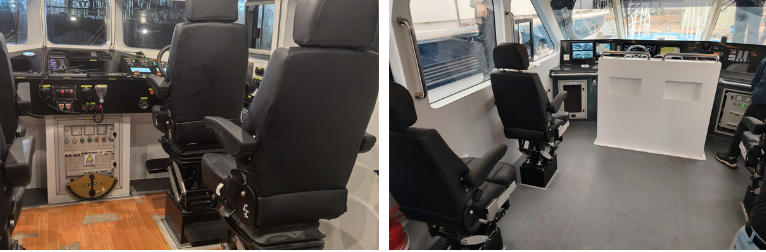
Types of Adjustable Suspension Marine Seats
Marine seating manufacturers offer various suspension technologies depending on vessel type and operational requirements.
| Suspension Type | Working Principle | Key Adjustable Features | Typical Applications |
| Mechanical Spring Suspension Seat | Uses coil springs or elastomer springs to absorb shocks and vibrations. | Spring preload, seat height, fore-aft slide, backrest angle. | Fishing boats, workboats, tugboats, commercial vessels. |
| Air Suspension Seat | Uses compressed air to cushion impacts and automatically support the occupant’s weight. | Air pressure, ride height, damping, lumbar support, seat position. | Offshore support vessels, ferries, high-speed boats, luxury yachts. |
| Hydraulic Suspension Seat | Hydraulic dampers absorb impacts while controlling rebound motion. | Damping force, suspension travel, seat height, weight adjustment. | Patrol boats, rescue vessels, military craft, pilot boats. |
| Gas Shock Suspension Seat | Gas-filled shock absorbers reduce sudden impacts and vertical oscillations. | Shock stiffness, seat height, reclining angle, fore-aft movement. | Recreational boats, sport fishing boats, passenger boats. |
| Hybrid Suspension Seat | Combines mechanical springs with hydraulic or gas dampers for optimized performance. | Weight adjustment, damping control, suspension travel, ergonomic settings. | Commercial ships, offshore vessels, professional marine applications. |
| Active Electronic Suspension Seat | Electronic sensors continuously adjust suspension settings according to vessel movement. | Automatic damping, weight sensing, programmable ride modes, memory settings. | High-speed patrol craft, naval vessels, premium offshore vessels, advanced marine operations. |
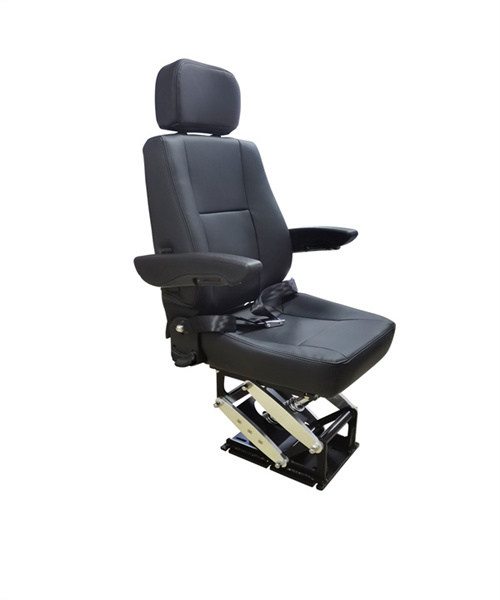
Key Factors to Consider for Choosing the Right Adjustable Suspension Marine Seats
However, not all suspension marine seats are made the same, even if they look similar at a glance. Things like vessel type, operating environment, the particular suspension technology, adjustability and so on, all affect whether a seat will actually fit the job. Looking over these elements carefully makes it easier to confirm that the seating system chosen will keep delivering strong performance across its service life.
1. Consider the Type of Vessel
First, you need to think about the type of vessel where the seat will be installed. Different marine uses expose operators to different degrees of shock and vibration.
For example, high-speed patrol boats and rescue vessels call for advanced suspension systems that can take heavy impacts during fast maneuvers. Offshore support vessels often need seats for long-term vibration isolation, especially during long stretches of operation. Commercial fishing boats typically lean toward durability and comfort for many hours of daily work, while luxury yachts place more focus on premium ergonomics alongside a polished visual presence.
Matching the seat to the vessel’s operating profile does end up giving the best balance between comfort and performance, even if it feels small.
2. Evaluate the Operating Environment
Sea conditions really do affect suspension seat performance in a big way. Vessels working in open ocean or offshore zones get far stronger wave impacts than boats that run in sheltered coastal waters or along inland waterways.
If the vessel runs often in rough seas, then picking a seat with extended suspension travel, plus advanced damping ability, becomes a must. In calmer water, you might be fine with a more compact suspension layout, since it still gives adequate comfort while also easing cost and installation complexity.
3. Ensure Adequate Weight Adjustment Range
Operators vary a lot in body mass, so weight adjustment becomes one of the key things with a suspension seat. If the system is properly adjustable, it keeps the best shock absorption even when the rider is light or heavier. When the adjustment range is inadequate, you can end up with too much seat travel, or weaker impact damping, and that will lower comfort plus safety. Seats that offer a broad weight adjustment span are really useful on vessels because the crew can change from person to person.
4. Look for Various Ergonomic Adjustments
Comfort doesn’t just stop at suspension performance. A good marine seat really should give you a wide range of ergonomic tweaks that fit operators with different body sizes, so everything feels aligned and usable. Key adjustable bits usually include seat height, fore-and-aft positioning, reclining backrest, lumbar support, armrest height and angle, headrest position, plus swivel capability. When these are dialed in, posture stays steadier and muscle fatigue drops, while overall visibility at the helm becomes easier. The larger the range of ergonomic customization, the better the seating experience during long stretches of operation.
5. Assess Shock Absorption Performance
The main role of a suspension seat is to cut down the transmission of impacts and vibrations from the vessel to the occupant. When you’re comparing various models, take a close look at suspension travel, the way damping behaves, the rebound control, and the entire vibration isolation effectiveness. Strong suspension systems reduce whole-body vibration exposure, so operators stay focused and comfortable across lengthy journeys. Independent performance testing, plus meeting marine seating standards, can act as a practical sign of how well shock absorption really works.
6. Verify Material Quality and Check Corrosion Resistance
Marine settings put seating systems in contact with saltwater, humidity, ultraviolet light, and temperature swings. Choosing seats built from corrosion-resistant materials gives long-term reliability.
Marine-grade aluminum, stainless steel, reinforced composites, and UV-resistant polymers help it stand up to corrosion, weathering, and environmental stress pretty well. Water-resistant upholstery plus mildew-resistant foam also pushes the service life further along. Using quality materials in the first place generally lowers maintenance cost, and keeps the look and function steady for many years, without as much fuss.
7. Consider Installation Compatibility
No two suspension seats behave the same with every vessel layout. Before buying, confirm the seat dimensions, the mounting pattern, the deck space available, and suspension travel are going to fit the exact installation location. Some boats have tight cabin space and then you need a compact suspension mechanism, while other vessels can accept bigger seats with a longer adjustment range. Quick installation plus compatibility with existing pedestal systems can make later upgrades more manageable, too.
8. Evaluate Safety Features
Safety should always be the first thing on your mind when selecting marine seating. Try to find secure locking mechanisms that stop unintended movement while you are underway. A sturdy seat frame, reinforced mounting systems, and integrated seat belts where they are needed, plus dependable suspension limiters, all help protect the occupants. When the seats are designed to match recognized marine safety standards, you get extra assurance in demanding operating environments.
9. Examine Maintenance Requirements
You should plan for periodic inspection of the suspension system, because it has to stay in top shape. Picking a seat with easy-to-reach components and modular construction makes routine upkeep much less painful, honestly.
Most mechanical spring setups generally need only minimal servicing. Meanwhile pneumatic and hydraulic systems may demand periodic checks of seals, dampers, and pressure components. If replacement parts are easy to get, and manufacturer support is present, long-term maintenance costs can drop quite a bit.
10. Consider Smart Features and Advanced Technologies
Today’s adjustable suspension marine seats more and more include clever electronics that make the ride more comfortable and improve daily efficiency. Depending on the model, you may see automatic weight sensing, electronically managed damping, saved memory presets, posture monitoring, occupancy sensors, and quick suspension changes that respond in real time to sea conditions. Sure, these improvements raise the first price, but they often bring clear returns for professional marine work, where operator output matters every minute.
11. Balance Cost with Long-Term Value
Cost is still a key factor; however, the cheapest seat usually is not the most cost-effective choice in the long run.
Higher-quality suspension seats usually offer a longer service life, fewer maintenance costs, better crew output, and a smaller chance of operator injuries. When you look at the total cost of ownership, meaning durability, upkeep workload, replacement timing, plus day to day operational advantages, it gets easier to spot the best overall value.
Investing in premium shock absorbing suspension seats can bring strong long-term benefits , through improved comfort, safety, and reliability .
12. Select a Reputable Manufacturer
Choosing a marine seat from a proven and reputable manufacturer gives extra comfort about product quality, engineering knowledge, and after sales assistance.
YSmarines is an experienced marine seat manufacturer, focusing on the design and production of high-quality seating solutions for commercial vessels, offshore platforms, patrol boats, ferries, yachts, and workboats. With an ergonomic approach, strong marine-grade materials, and advanced suspension technologies, YSmarines brings marine seats that boost operator comfort, safety, and overall performance in rough sea conditions.
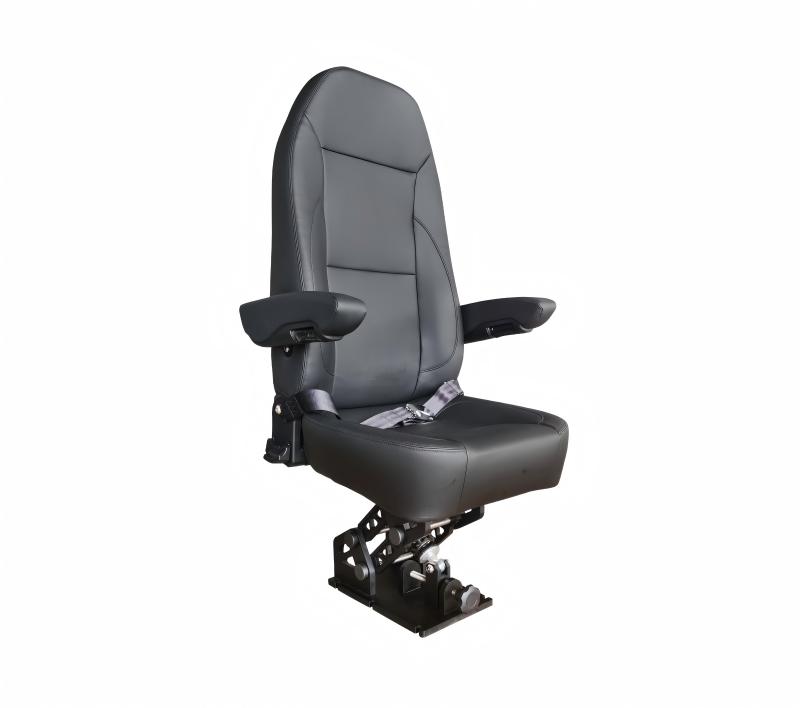
Final Words
Adjustable suspension systems have changed marine seating quite a lot, by lowering the physical strain caused by vessel movement on operators and passengers. With better shock absorption, tailored adjustments, and supportive ergonomic shape, these systems help with comfort, increase safety, reduce fatigue, and support more efficient vessel operation.