

Marine Window Failures: Types, Causes and Prevention Strategies
Marine windows are crucial safety and working parts installed on ships, yachts, offshore platforms and other marine boats. They have to deal with harsh environments, including sea contact, hard winds, wave impacts, and a few other harsh things. Even with a solid design, marine windows can still run into different troubles over time, they are in service. Such problems may hurt vessel safety, increase maintenance costs, and also cut down daily efficiency. Knowing the main types of marine window failures, what usually triggers them, and which prevention methods actually work is pretty important for ensuring long-term reliability and performance.
Table of Contents
Common Types of Marine Window Failures
| Type of Marine Window Failure | Description | Potential Impacts |
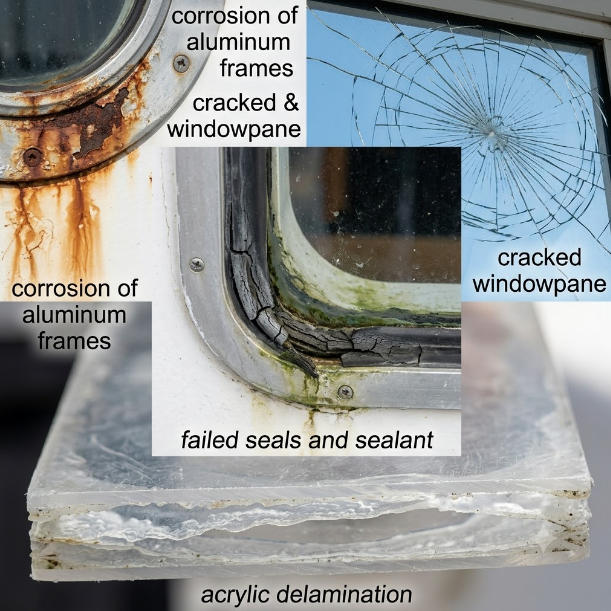
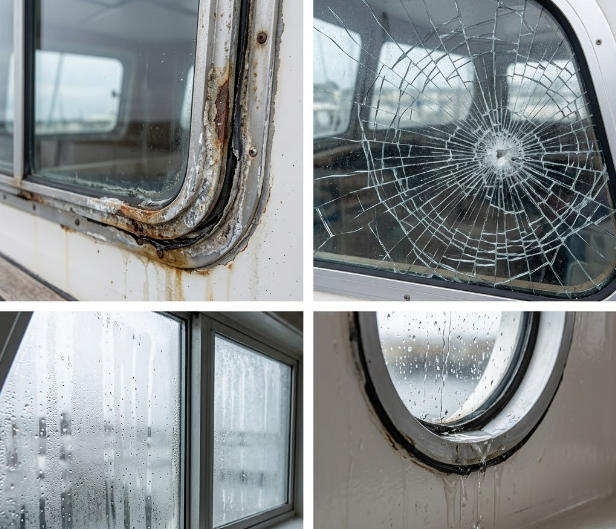
| Water Leakage | Water enters the vessel through gaps around the window frame, seals, or bonding areas. | Interior damage, corrosion, electrical system problems, reduced passenger comfort, increased maintenance costs. |
| Glass Cracking and Breakage | Cracks, chips, or complete breakage occur on the window glass due to external forces or material weakness. | Reduced safety, water ingress, poor visibility, need for emergency replacement. |
| Sealant and Gasket Failure | Sealing materials lose flexibility or develop cracks, reducing waterproof performance. | Leakage, moisture penetration, reduced window service life, higher repair frequency. |
| Frame Corrosion | Metal window frames deteriorate due to prolonged exposure to saltwater and humidity. | Reduced structural strength, poor sealing, loose connections, difficulty in window operation. |
| Window Frame Deformation | The window frame changes shape or alignment, affecting the fit between glass, seals, and vessel structure. | Seal damage, glass stress, leakage, reduced operational reliability. |
| Fastener Loosening | Screws, bolts, or mounting components become loose over time. | Window instability, leakage paths, increased risk of component failure. |
| Glass Delamination | Layers of laminated glass separate, reducing strength and transparency. | Reduced impact resistance, poor visibility, possible glass failure. |
| Window Operation Failure | Movable marine windows become difficult to open, close, or lock properly. | Reduced ventilation, operational inconvenience, safety concerns during emergencies. |
| Condensation Problems | Moisture forms between glass layers or on interior surfaces. | Reduced visibility, mold growth, interior damage, decreased comfort. |
Main Causes of Marine Window Failures
1. Seal and Gasket Deterioration
A usual cause of marine window problems is when the sealing materials get old or get hurt. Marine windows depend on rubber gaskets, sealants and bonding systems to keep seawater out of the vessel. Over time, saltwater, ultraviolet rays, heating and cooling cycles, and even cleaning chemicals can make these components harden, split, contract, or lose their elasticity.
Once the seals start deteriorating, tiny openings can form between the window frame and the glass panel. These spaces let water get in. Then, that moisture can harm interior components, electrical circuits, and thermal insulation, not just the window itself.
2. Glass Cracking and Impact Damage
Marine windows are frequently ran into mechanical hits from wave action, floating debris, tools, and daily operational activities. Strong wave forces can also build up sudden pressure loads that go beyond the glass strength. Traditional glass types may crack or even shatter when they face high-impact events. Once cracks start, the window integrity is compromised and water ingress can follow
3. Corrosion of Window Frames
Marine window frames are often made from aluminum, stainless steel, or other corrosion-resistant alloys. Yet long-term contact with saltwater and humidity can still drive corrosion, especially when protective coatings get chipped or worn down. Corrosion reduces the stiffness of the frame, disturbs sealing efficiency, and can lead to slight warping so the window no longer operates as intended
4. Improper Installation
Even good marine windows can fail if they are installed in a bit careless way, maybe too fast or without double-checking. Installation mistakes like uneven sealing, wrong fastening torque, poor alignment, or improper adhesive use can form weak spots that you do not notice at first.
When installed incorrectly, the glass or the frame can end up under extra stress. This may lead to early cracking, leaks, or other operational headaches.
5. Structural Movement and Vibration
Ships and offshore structures keep moving because of waves, engine cycles, and what the navigation environment demands. Ongoing vibration, together with hull flexing, puts new stress on marine windows. Over time, the repeated mechanical load may loosen the fasteners, wear down the seals, or even start fatigue cracks near the window frame.
6. Pressure and Wave Impact Forces
Marine windows placed in exposed areas have to endure pretty heavy pressure, coming from both wind and wave action. In really rough weather, a wave striking the glass can create unexpectedly high forces on the window surface(s). When the window design does not actually satisfy the required load benchmarks, it can lead to failures during storms or in rough sea situations.
Prevention Strategies for Marine Window Failures
Implementing effective prevention strategies is essential for extending the service life of marine windows and ensuring ship safety.
1. Select High-Quality Marine-Grade Materials
The foundation of reliable marine window performance is the use of high-quality materials specifically designed for marine environments, which can withstand continuous exposure to saltwater, humidity, UV radiation and mechanical stress.
| Window Component | Marine-Grade Materials | Key Properties | Functions |
| Window Glass | Laminated marine glass | High impact resistance, excellent safety performance, maintains integrity after damage | Reduces the risk of cracking and breakage caused by wave impacts, debris, and mechanical stress |
| Window Glass | Tempered glass | High strength, improved thermal resistance, better resistance to mechanical loads | Minimizes damage from vibration, pressure changes, and temperature fluctuations |
| Window Glass | Heat-strengthened glass | Improved durability and resistance to thermal stress | Helps prevent cracks caused by rapid temperature changes |
| Interlayer Material | Polyvinyl butyral (PVB) or ionoplast interlayers | Strong bonding ability, moisture resistance, enhanced safety performance | Prevents glass layers from separating and improves protection after impact |
| Window Frames | Marine-grade aluminum alloy | Lightweight, corrosion-resistant, strong structural performance | Marine aluminum window reduces frame corrosion and maintains structural integrity in saltwater environments |
| Window Frames | Stainless steel (marine-grade) | Excellent corrosion resistance, high strength, long service life | Prevents rusting and structural weakening caused by seawater exposure |
| Window Frames | Anodized aluminum | Protective oxide layer, improved surface durability, corrosion resistance | Extends frame lifespan and protects against environmental damage |
| Gaskets | EPDM rubber gaskets | Excellent resistance to UV, ozone, seawater, and temperature changes | Maintains flexibility and prevents leakage caused by aging or environmental exposure |
| Gaskets | Neoprene rubber seals | Good resistance to oil, weather, and mechanical wear | Provides reliable sealing in demanding marine conditions |
| Bonding Materials | Structural marine adhesives | High strength, vibration resistance, durable bonding performance | Improves connection stability between glass, frame, and vessel structure |
| Surface Protection Materials | UV-resistant protective films and coatings | Resistance to sunlight degradation and weathering | Protects glass and sealing materials from premature aging |
2. Ensure Professional Installation and Proper Sealing
Correct installation is essential if you want the marine windows to deliver the designed performance. Even the best window systems can underperform if the installation steps aren’t followed.
Professional installation should cover accurate frame positioning, the right fastening methods, proper sealant application, and compatibility checks between the various materials. The sealing approach needs to be applied uniformly to prevent small gaps that could lead to seawater penetration.
After the work is finished, waterproof testing and structural inspections should be completed to verify that the window system can handle real marine operating conditions.
3. Implement Regular Inspection and Preventive Maintenance
Routine inspection and maintenance is crucial, for catching those possible issues early, before they grow into major failures. Marine operators really should set up recurring maintenance calendars, so they can review the actual state of glass, frames, seals, and the mounting parts in general.
During checks, the goal is to spot early hints of damage, things like small cracks, seal degradation, corrosion stains, loose fasteners and yes, occasional water seepage. Cleaning off salt buildup, and then fixing small defects right away, can stop bigger harm later on, and it also helps the marine windows last longer, in real service.
With preventive maintenance, you get fewer unexpected failures, and the vessel stays safer, while operations keep running efficiently.
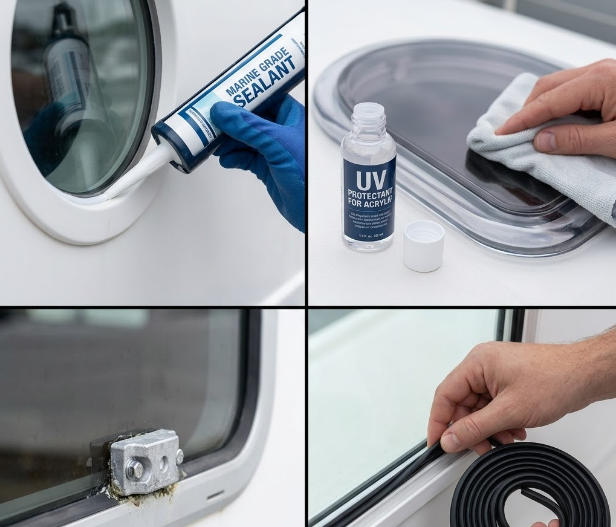
4. Use Advanced Sealing Technologies
Upgraded sealing systems can significantly boost both water resistance and long-term durability for marine windows. Today, many marine windows rely on advanced adhesives, adaptable sealants, and performance-rich gasket materials, all made to handle vibration, temperature swings, and constant seawater contact.
Flexible sealing technologies let marine windows tolerate small movements from vessel vibration and hull deformation, without sacrificing their waterproof capability, or at least not in any practical sense. In addition, high-quality sealants reduce the chance of moisture getting through and guard internal vessel structures against water damage.
5. Conduct Performance Testing Before Installation
By testing marine windows under simulated operating conditions, crews can confirm reliability and safety. Manufacturers and shipbuilders typically use several testing approaches to see how the window behaves when exposed to different stresses.
Water pressure testing checks sealing integrity. Impact testing, on the other hand, looks at how well the unit resists external forces. Structural load testing also matters because it helps establish whether the window handles wind pressure, wave impacts, and general vessel motion.
Overall, thorough testing supports that marine windows satisfy the safety standards that are required and keep working reliably in harsh environments.
6. Apply Anti-Corrosion Protection Measures
Corrosion protection is essential for keeping marine window frames both strong and looking good. When saltwater keeps hitting, metal components can slowly break down, if no proper protection is in place, for example, the wrong coating or none at all.
Using protective coatings, surface treatments, and corrosion-resistant materials helps cut back the seawater effects. Also, routine inspections matter , they can reveal worn coatings or early corrosion so any repairs can be finished before the structure gets harmed.
Good corrosion control increases overall frame durability and also helps avoid failures that come from window structures getting weakened.
7. Design Marine Windows According to Operating Conditions
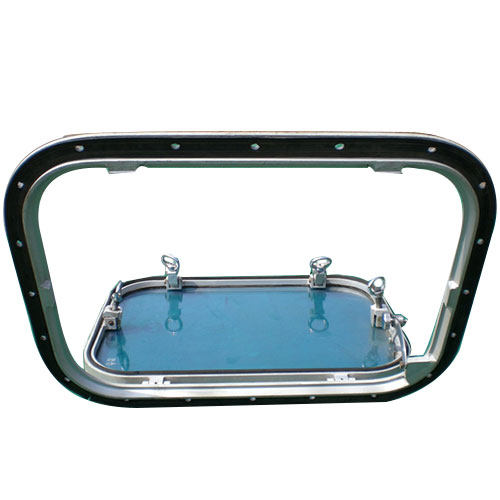
Marine window systems need to be made based on the specific needs of each vessel or marine structure. Each use case carries its own level of load, exposure, and safety requirements.
Windows fitted on offshore platforms, high-speed vessels, or exposed bridge sections need a more robust design approach than windows in protected interior spaces, and this is not just a technical detail. Things like vessel speed, the specific operating setting, wave conditions, and where the window sits on the installation should all be weighed before the final design is approved.
A well-designed window system gives better ability to resist mechanical forces and the daily environmental pressures.
8. Replace Damaged Components Promptly
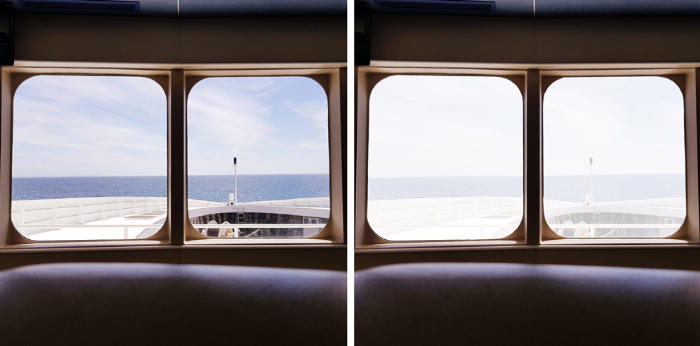
Even small defects can grow into major marine window failures when they are left unattended. Damaged seals, cracked glass, corroded frames, or worn fittings should be repaired or replaced as soon as practical, ideally without delay.
Doing it in time helps stop water intrusion, lowers future repair expenses and avoids possible safety risks. Keeping spare parts on hand and following the manufacturer’s replacement guidance can also improve maintenance workflow.
9. Adopt Smart Monitoring and Predictive Maintenance Technologies
Modern marine operations are leaning more and more toward digital monitoring technologies to boost equipment reliability, and it’s becoming a regular thing. Smart sensors, along with condition monitoring systems, can help spot strange or unwanted conditions like excessive vibration, moisture getting in, or structural stress building up.
When these tools collect real-time performance information, they can also act as early warnings for things that could go wrong with the window units, and they help guide predictive maintenance decisions. This can cut down on those unpleasant surprise failures and it improves vessel safety overall.
10. Follow Marine Safety Standards and Regulations
Staying compliant with international marine safety standards matters a lot for preventing window failures. Classification societies and maritime regulations lay out the expectations, for example, window strength, suitable materials, installation techniques, and testing procedures
Sticking to these standards helps make sure marine windows are designed and kept up the right way, following recognized safety requirements. When compliance is handled properly, it also helps with vessel reliability, and it lowers the chances of trouble during operations in demanding sea conditions.
Summary
Marine window failures can show up for a few reasons, including water leakage, glass damage, seal deterioration, corrosion, structural stress, and improper maintenance. When that happens, vessel safety can be affected, repair costs can rise, and daily operational reliability can drop.
Operators can reduce the risk of window failures by choosing high-quality materials, making sure the installation is done professionally, doing regular inspections, and using advanced monitoring technologies. Reliable marine windows are crucial for keeping vessel operations safe, efficient, and durable in rough marine environments.