Cone vs Cell Rubber Fender: A Selection Guide for Modern Port Engineering
Table of Contents
The selection process for port engineering fender systems exceeds ordinary procurement decisions because engineers must evaluate different options that directly impact terminal operations, structural strength, and financial sustainability through time. Port designers need to select between super cone (SC) and super cell (SCK) rubber fenders because modern ships have expanded their dimensions while docking at difficult positions in ports.
While both are high-performance solid rubber fenders, their distinct geometric architectures lead to vastly different physical behaviors under load.
Cone vs Cell Rubber Fender: Structural Mechanics and Deformation Mechanisms
The fundamental difference between these two systems lies in how they handle compression and distribute stress.
Super Cone (SC) Rubber Fender
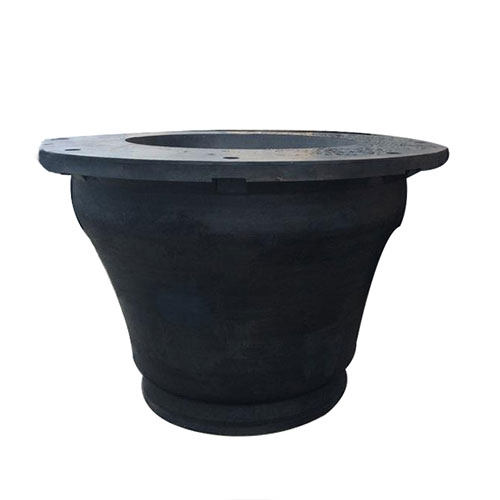
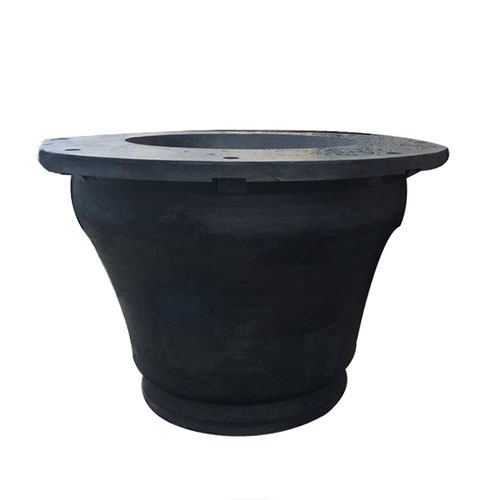
The design of the cone fender was inspired by the need to optimize the traditional cell structure. Its truncated cone shape allows for more uniform stress distribution during compression, which facilitates a larger displacement range.
- Compression Limits: The cone fender is designed for high-efficiency travel, with a rated compression typically reaching 72% to 72.5%. This provides a significantly longer cushioning stroke compared to a cell fender of the same height.
- Reaction Force Characteristics: It features a relatively flat reaction force curve. This allows the fender to reach its rated energy absorption while maintaining a lower reaction force, which is vital for protecting aging quay structures or lightweight berthing platforms.
Super Cell (SCK) Rubber Fender
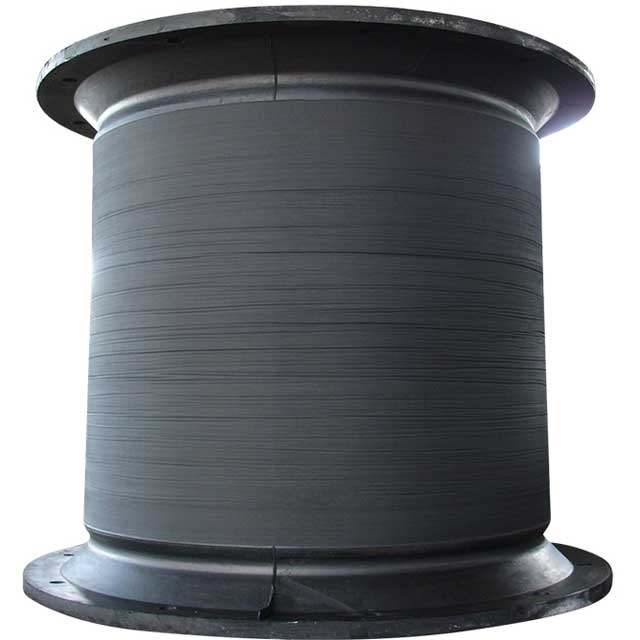
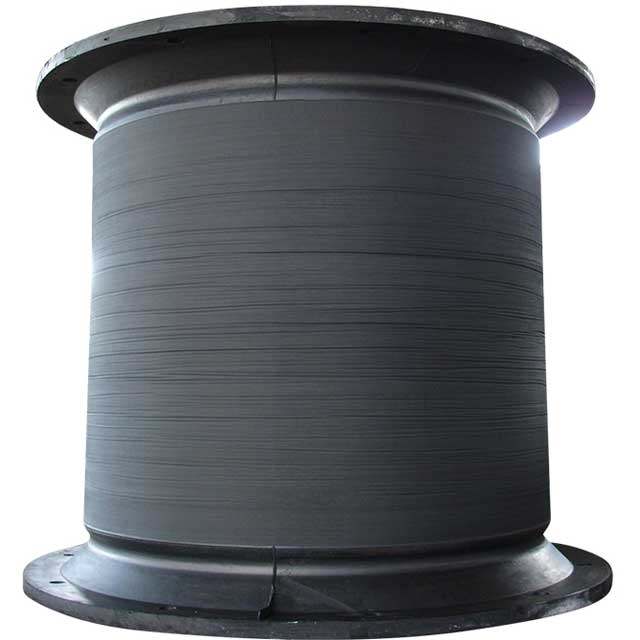
The cell fender remains a staple in the industry due to its cylindrical, thick-walled structure that offers immense structural stability.
- Compression Limits: Its rated compression is generally limited to 52.5%, though high-performance variants may reach 55%.
- Reaction Force Characteristics: Because of its high structural stiffness, the reaction force of a cell fender rises sharply. It generates significant resistance even at small displacements, making it ideal for environments requiring “hard” support where quay wall movement must be minimized.
Four Critical Dimensions in Fender Selection
When engineers choose between these two systems, they must weigh four critical dimensions: angular performance, shear resistance, spatial constraints, and lifecycle costs.
1. Performance Under Large Berthing Angles
Angular berthing is one of the most challenging real-world conditions for any boat rubber fender system, particularly in exposed harbors or congested terminals.
Cone Rubber Fender Advantage
Cone rubber fenders excel in this domain. When vessels approach at angles of 10°–15°, the tapered geometry helps mitigate edge loading and stress concentration. According to PIANC performance data, cone fenders exhibit significantly lower energy absorption loss under angular compression compared to cell fenders.
This makes them especially suitable for:
- Large container terminals
- LNG jetties
- Ports handling vessels with complex maneuvering profiles
Cell Fender Limitations
Cell fenders are inherently more sensitive to angular loads. Under inclined compression, their sidewalls may experience asymmetric buckling, leading to:
- Reduced effective energy absorption
- Increased risk of rubber tearing near the base
- Higher localized stress at anchor points
For ports with frequent angled berthing, this performance degradation can be a decisive drawback.
2. Resistance to Shear Forces and Lateral Loads
Shear forces occur when vessels move parallel to the quay due to wind, waves, currents, or mooring line dynamics.
Cell Fender Strength
Thanks to their large contact area and thick sidewalls, cell fenders naturally resist lateral deformation. They perform reliably under high shear loads without requiring additional components.
Cone Rubber Fender Considerations
While modern cone rubber fenders have significantly improved shear resistance, their narrower midsection can experience higher bending moments under extreme lateral forces. As a result, shear chains are commonly incorporated into cone fender systems in high-current or high-wave environments to share the lateral load.
This added system complexity should be considered during early-stage design.
3. Quay Space Constraints and Construction Economics
The physical footprint and weight of the fender system directly influence the cost of the quay construction.
Retrofit and Space Optimization
For port upgrades and retrofitting projects, space at the quay front is often limited.
Due to their higher energy density, cone fenders can achieve the same energy absorption with a smaller overall footprint. This enables:
- Reduced steel panel dimensions
- Lower cantilever loads on quay structures
- Easier adaptation to constrained berthing lines
Installation and Anchor Layout
Cone fenders typically feature a wider base flange than equivalent cell fenders. While this enhances load distribution, it also requires careful coordination with:
- Reinforcement layouts in concrete structures
- Existing anchor bolt patterns in retrofit applications
Cell fenders, with their simpler geometry, often integrate more easily with legacy quay designs, reducing installation complexity and cost.
4. Maintenance Cost and Lifecycle Performance
Cell Fender Longevity
Cell fenders are renowned for their minimal maintenance requirements. In low- to medium-frequency berthing environments, it is not uncommon for a well-designed cell fender system to exceed 20 years of service life.
Modern Cone Rubber Fender Durability
Early-generation cone fenders faced challenges related to rubber fatigue. However, contemporary designs manufactured using PIANC 2024-compliant rubber compounds have significantly improved fatigue resistance and ozone aging performance.
While cone fenders may involve slightly higher initial investment, their superior performance often results in lower total lifecycle cost for high-demand terminals.
Recommended Fender Selection by Application
Based on the technical characteristics mentioned above, the following table outlines the recommended fender types for specific marine environments:
| Application Scenario | Recommended Fender Type | Engineering Rationale |
| Ultra-large container & LNG terminals | Cone Rubber Fender | High energy absorption, excellent angular performance |
| Offshore terminals with large tidal range | Cone Rubber Fender | Better support for large steel panels and eccentric loads |
| Heavy bulk and ore terminals | Cell Fender | Superior robustness under extreme shear and impact loads |
| Small ferry berths & legacy quay rehabilitation | Cell Fender | Easier bolt alignment, lower upfront cost |
A cell fender or a cone rubber fender is a question that does not limit one to better or the other, but depends on the situation. By selecting the fender based on what occurs in practice and not only on theoretical values, the safety, effectiveness, and the worth of assets in a port in the present-day maritime landscape can be positively affected to a good extent.