
Tuas Port Phase 2 Updates: Why Double Bitt Bollards are the New Standard
Table of Contents
The worldwide maritime landscape is changing in a big way because of two things: the growth of huge ships and the automation of ports. Singapore’s Tuas Port is at the heart of this change. The Maritime & Port Authority of Singapore (MPA) has given important updates for Phase 2 of this huge project as of February 2026. Tuas Port is not only getting bigger; it’s also changing the standards for terminal infrastructure by being the world’s largest fully automated terminal. The purchase and installation of high-performance marine bollards, especially the double bitt bollard configuration, is a key part of this progression. These bollards will keep the next generation of Ultra-Large Container Vessels (ULCVs) safe.
The Context of Tuas Port Phase 2 (February 2026 Update)
Tuas Port Phase 2 represents the most ambitious stage of Singapore’s long-term consolidation of its container terminals. Spanning over 387 hectares of reclaimed land, Phase 2 is engineered to handle an annual capacity of 21 million TEUs.
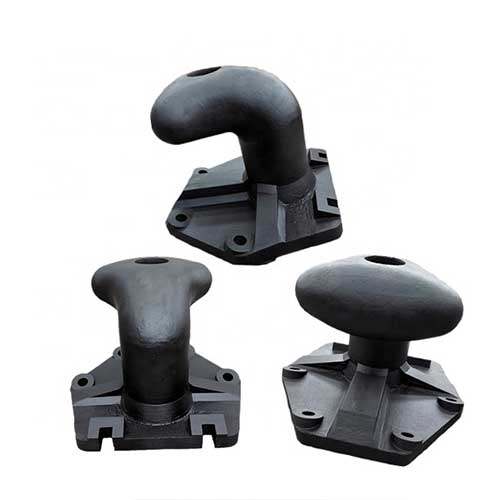
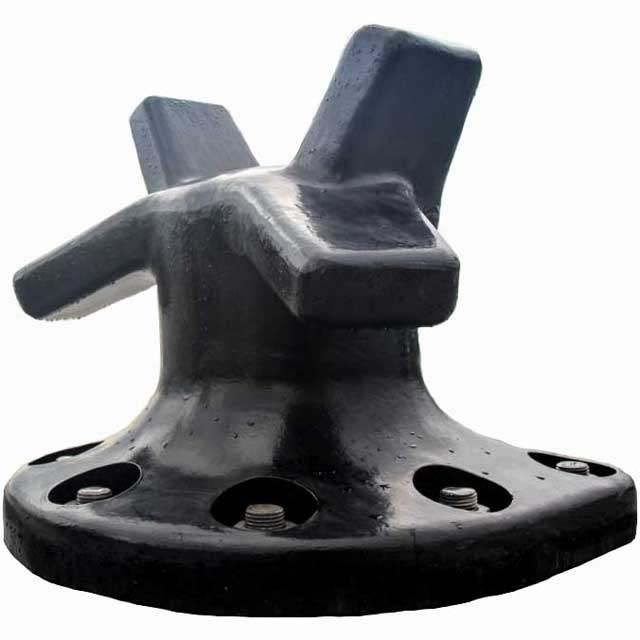
By February 2026, the infrastructure focus has shifted from land reclamation to the “Topside” maritime engineering phase. This involves the installation of wharf-side hardware that can withstand the immense kinetic energy of 24,000+ TEU vessels. The MPA’s latest tender documents highlight a massive shift toward High-strength Steel and Spheroidal Graphite (SG) Cast Iron components. For the mooring systems, the double bitt bollard has emerged as the architectural standard for the project’s main berths, replacing older “Tee-head” or “Bean” designs in high-load zones.
Why the Double Bitt Bollard? Technical Superiority in Automation
In a traditional port, mooring is a labor-intensive process. In a fully automated terminal like Tuas, the mooring infrastructure must be “smart-ready” and geometrically optimized for robotic intervention and high-frequency cycling. The choice of the double bitt (or twin horn) design is strategic for several reasons:
1. Load Distribution and Stability
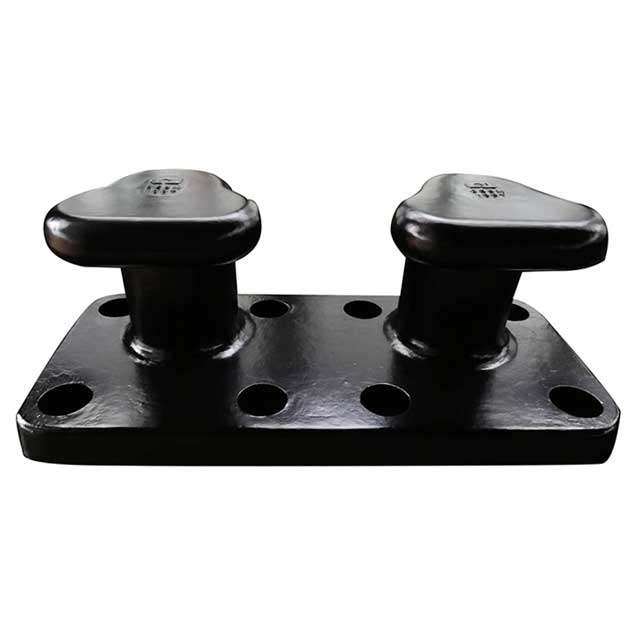
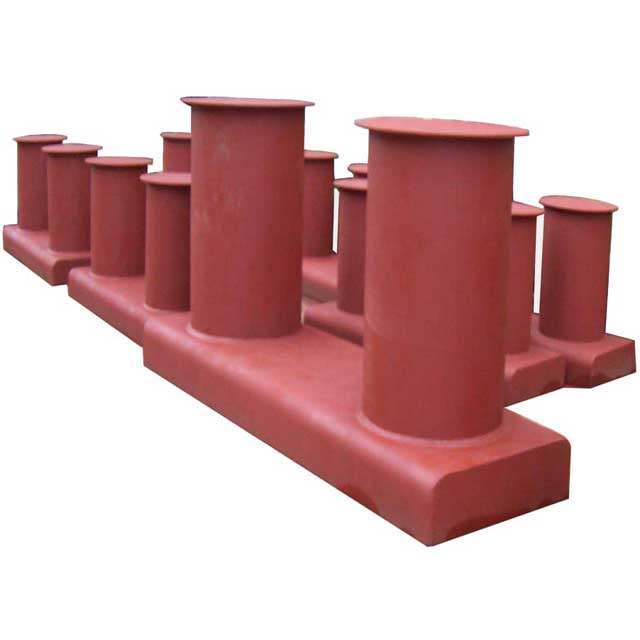
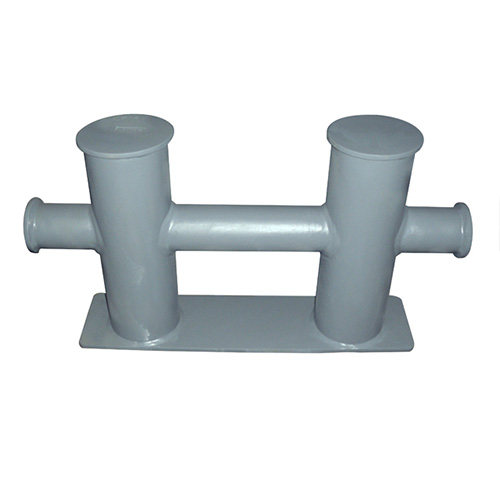
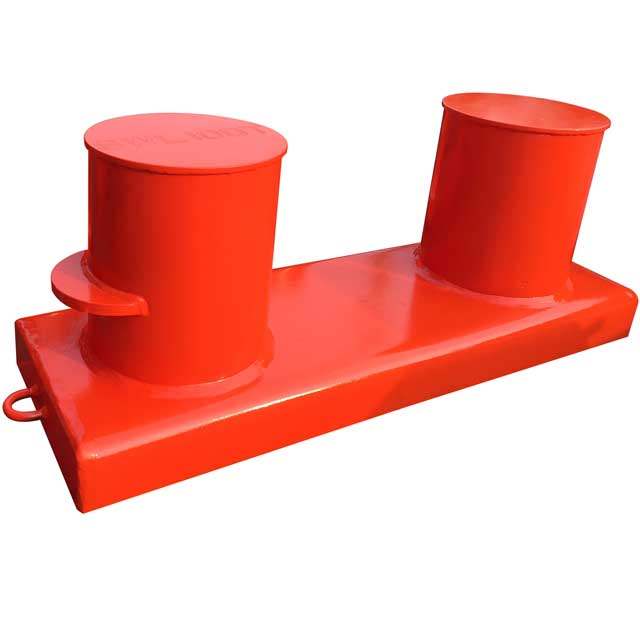
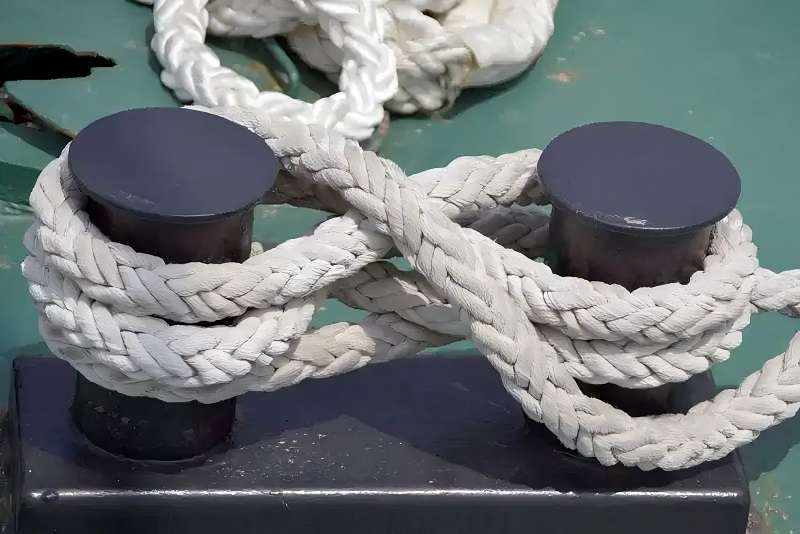
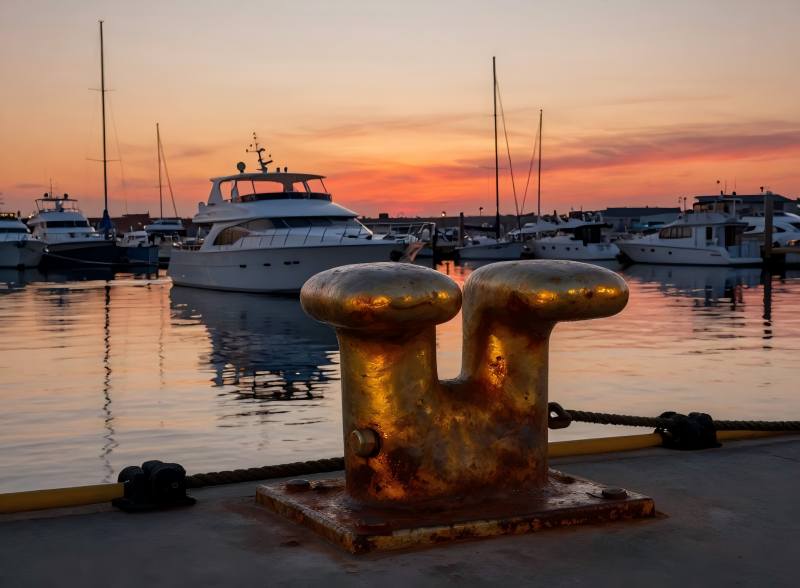
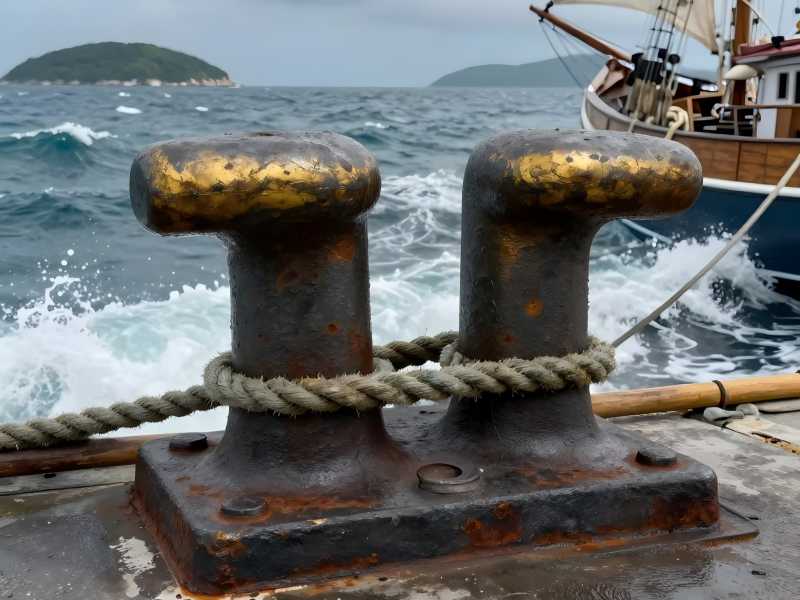
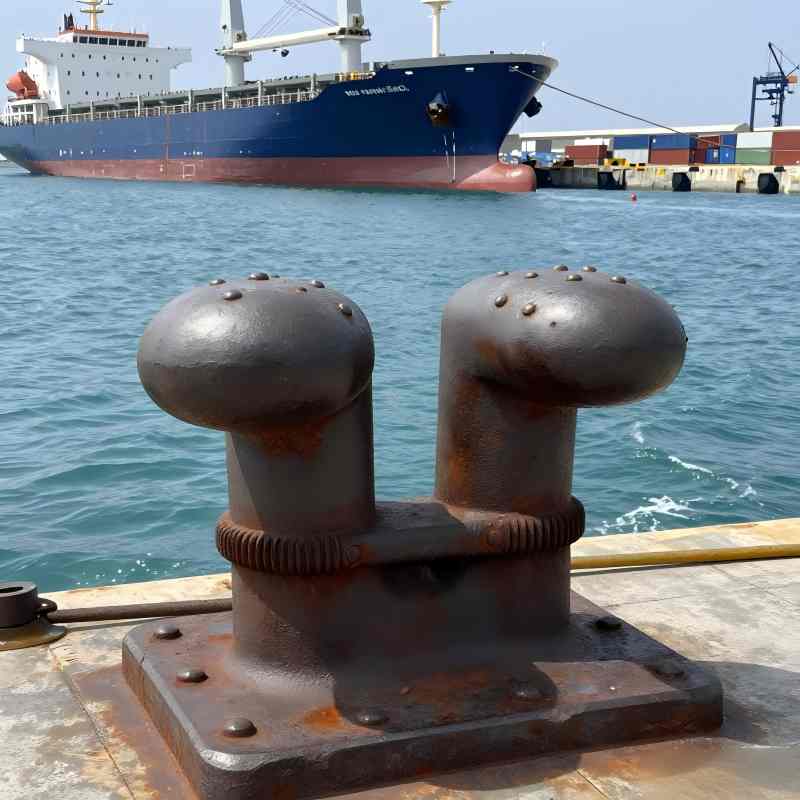
The Double Bitt design features two vertical pillars (bitts) mounted on a single, elongated base. This configuration allows for the separation of mooring lines. For a vessel like the MSC Tessa or HMM Algeciras, which may require multiple breast and spring lines, the Double Bitt allows for independent line management. By distributing the horizontal shear force across two pillars, the structural stress on the concrete caisson is more uniformly managed, reducing the risk of localized cracking in the wharf deck.
2. High Mooring Angles
Modern ULCVs have high freeboards, especially when empty. This creates steep vertical angles for mooring lines. The Double Bitt’s pillar height and the “lip” at the top of the bitt prevent line slippage during extreme tidal surges—a frequent occurrence in the Johor Straits.
3. Compact Footprint for Automation Rails
Tuas Port uses Automated Rail Mounted Gantry Cranes (ARMGs) and Automated Guided Vehicles (AGVs). The “dead zone” between the wharf edge and the first rail is narrow. The double bitt’s rectangular base (1500mm×750mm for 200T models) is specifically designed to fit within these tight corridors without obstructing the path of automated sensors or heavy-duty crane wheels.
Material Science: Beyond Standard Steel
The 2026 procurement standards for Tuas Phase 2 emphasize Durability-by-Design. The specified material for these bollards is typically Ductile Cast Iron (Grade GGG50 or EN-GJS-500-7).
Why GGG50?
Different from conventional grey iron, which is fragile, GGG50 has graphite in spherical form, which is responsible for toughness and considerable ductility. In case the ship hull is lined with bollards made of GGG50, for example, and some accidental conditions occur that cause the bumps, it is not the end of the bollard; therefore, it will rather deform irretrievably than break totally.
- Tensile Strength: ≥500N/mm2
- Yield Strength: ≥320N/mm2
- Safety Factor: The MPA requires a Safety Factor of 3.0, meaning a bollard rated for 2000kN must not fail below a peak load of 6000kN.
Corrosion Resistance in the Tropics
Singapore’s humidity and salinity are brutal on metal. The 2026 specifications mandate a multi-stage coating system:
- Surface Prep: Shot blasting to Sa 2.5 standard.
- Primer: Inorganic Zinc Silicate primer.
- Intermediate/Topcoat: High-build Epoxy and Aliphatic Polyurethane (total thickness ≥450μm).
Engineering Specifications: 200T vs. 300T
The mooring plan for Tuas Phase 2 divides the wharf into “Standard Berthing Zones” and “High-Stress Zones” (corners and berth ends).
| Feature | Standard Berth (2000 kN) | Corner/End Berth (3000 kN) |
| Bollard Type | Double Bitt | Double Bitt / Custom Triple |
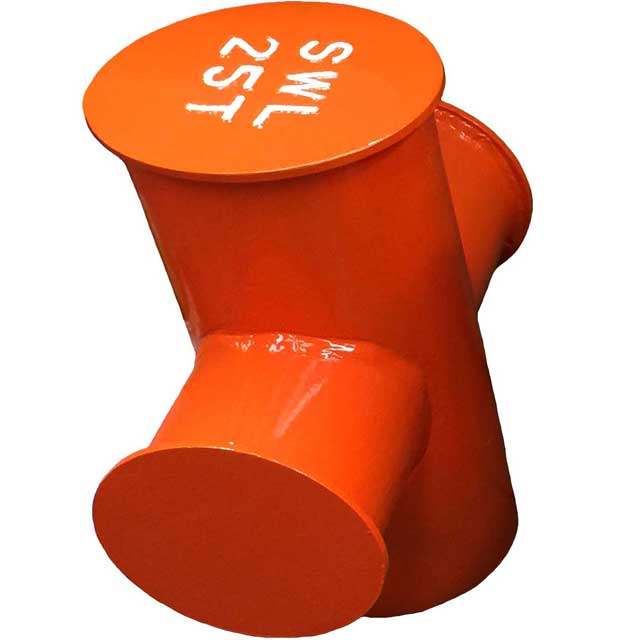
| Safe Working Load (SWL) | 200 Tonnes | 300 Tonnes |
| Anchor Bolts | 8 x M72 (Grade 8.8) | 12 x M80 (Grade 10.9) |
| Embedment Depth | 1200 mm | 1800 mm |
| Application | Mid-ship mooring lines | Spring lines and storm mooring |
For the 200T double bitt, the anchor bolt template is a critical engineering document. It ensures that the bolts are cast directly into the wharf’s reinforcement cage, creating a monolithic bond with the quay wall.
The Rise of “Smart Bollards” in the 2026 Roadmap
A major highlight of the February 2026 update is the integration of IoT-enabled smart bollards in the Tuas Living Lab—a testing ground within the port. These bollards are equipped with:
- Strain Gauges: To measure real-time tension on mooring lines.
- Wireless Transmitters: Sending data to the Port Operation Control Centre (POCC).
- Overload Alarms: To alert operators if a vessel is swaying beyond safe limits due to wind or passing ship suction.
While not every bollard in Phase 2 is “smart,” the base plates are being “future-proofed” with pre-drilled conduit holes to allow for easy sensor retrofitting in the coming decade.
Global Market Implications
The Tuas project’s grandness has exerted socioeconomic pressure in the area and affected the sector of the Marine Bollard. Different bollard manufacturers worldwide, such as Trelleborg, ESC Group, and China’s maritime bollard factories, are recalibrating their plants to the stringent requirements of Singapore. The “Tuas requirement”, very much centered around Double Bitt modes and high-strength ductile iron, aside from other more technical requirements, in such a way dictates to all the 21st century ports.
Frequently Asked Questions (FAQs)
Q1: Why is the “Double Bitt” preferred over the “Tee-head” bollard at Tuas Port?
A: Double Bitts handle multiple lines from ULCVs better, allow steeper line angles, and fit neatly between wharf edges and crane rails.
Q2: What are the primary load ratings for bollards in Tuas Phase 2?
A: Most are 2000 kN (200 t); key locations use 3000 kN (300 t) for higher stresses.
Q3: What material standards must these bollards meet?
A: ISO 13795 or DIN 82607, made from ductile iron (GGG50) for strength and ductility.
Q4: How does Tuas Port prevent corrosion on these bollards?
A: Sa 2.5 grit blasting, 450 μm marine epoxy + polyurethane coatings, sealed bases with grout and flexible sealant.
Q5: Will the bollards at Tuas Port be automated?
A: Bollards remain static but may have sensors; Double Bitts support future robotic or vacuum mooring systems.