
Stud-link vs. Studless Anchor Chains: How to Make the Right Choice
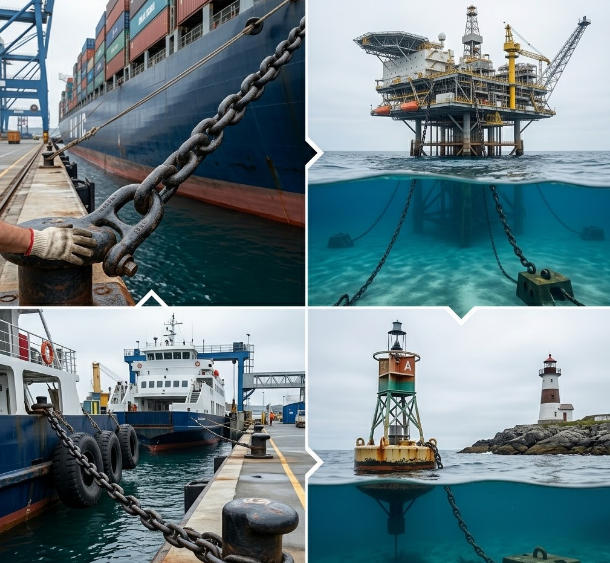
Stud-link and studless anchor chains are among the most widely used chain types in marine anchoring systems. Even if both do the basic job of holding vessels and offshore structures in place, they can be quite different in how they’re built, how strong they are, how they flex, how much they weigh and where they make sense to deploy them. Knowing those nuances helps shipowners, marine engineers, and offshore operators, select the right anchor chain for their actual working needs.
Understanding Stud-link Anchor Chains
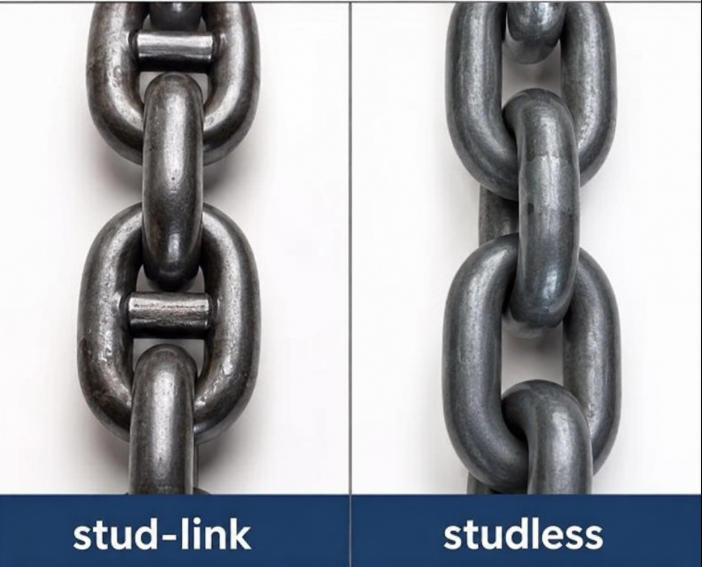
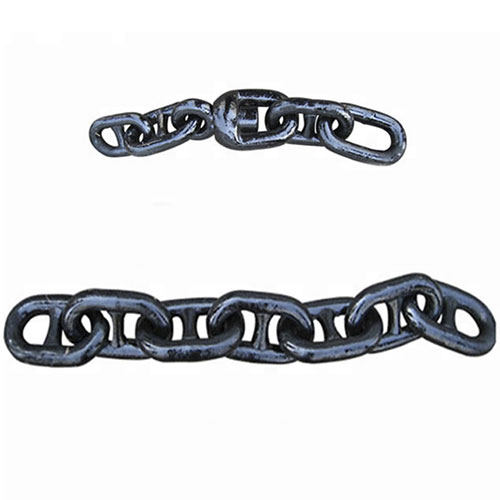
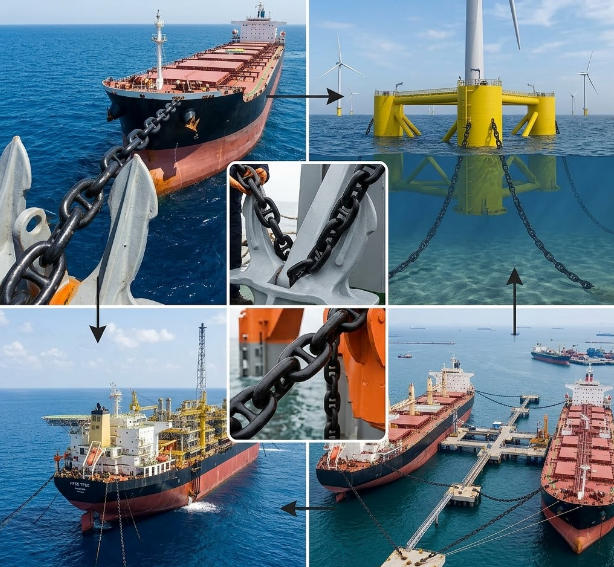
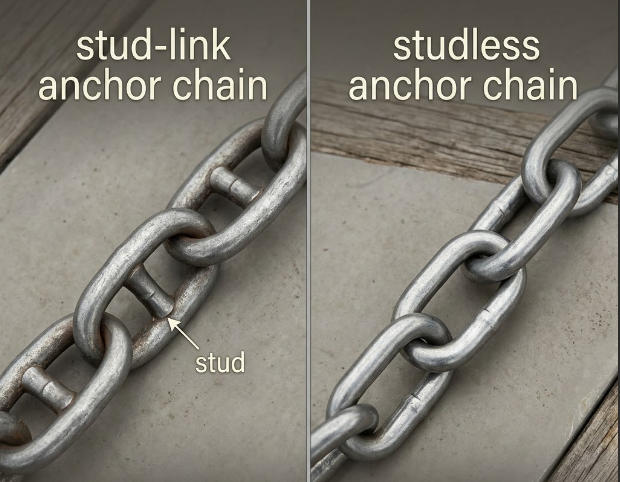
Stud-link anchor chains, specifically, are marked by a metal bar called a stud. The stud sits across the center area of each chain link. At first glance, this looks like a small addition, and yet it pushes up performance in a few ways. It boosts strength, improves stability, and supports durability over time. Because of this, stud-link chains often become the preferred option for bigger commercial ships, offshore platforms, and permanent mooring systems.
The stud serves a few functions at once. It keeps the chain link in its intended shape when heavy loads hit, helps stress get spread more evenly across the whole link, and also reduces the likelihood of deformation. So the stud-link anchor chains can endure those extreme forces that appear during vessel anchoring, wave action, currents, and offshore activities.
Advantages
- Superior Strength and Load Distribution: One of the main advantages of stud-link anchor chains is the excellent strength. The stud reinforces each link a bit more, so the chain can take higher tensile loads while keeping its structural integrity. The load is spread out more evenly across the link, so there are fewer stress pockets, that could otherwise trigger failure later.
- Reduced Link Deformation: When the chain is under heavy tension, the links can be stretched, elongated, or even slightly distorted. The stud works like an internal brace that helps keep the original profile of the link, which reduces the chances of deformation during long-term service.
- Improved Resistance to Twisting and Kinking: Stud-link chains are less likely to twist, tangle, and kink compared with studless chains. The stud supports stability between the links and helps keep alignment, which improves how the chain is handled during deployment and retrieval tasks.
- Enhanced Durability in Harsh Conditions: Marine environments keep anchor chains under ongoing mechanical stress, plus corrosion, and abrasion. With a robust stud link setup, these chains tend to stay durable and they work well for tough offshore work as well as deep-water use, even when conditions are not very gentle.
- Proven Industry Reliability: Stud-link chains have a long history in commercial shipping, naval operations, and offshore activities. That service record over decades gives people confidence in performance and reliability, especially when operating conditions feel challenging.
Limitations
- Heavier Overall Weight: Adding studs raises the total mass of the chain. Even though the added mass supports strength and steadiness, it also complicates handling, transportation, and installation. In some cases it may add to fuel consumption on vessels that carry large quantities of chain.
- Reduced Flexibility: When you compare studless chains with stud-link chains, you can feel the difference right away because the stud adds internal reinforcement so the chain becomes less flexible. That rigidity can make it a little harder to stow, and also to maneuver , especially if you are dealing with tight chain lockers where every inch matters.
- Higher Manufacturing Costs: The design is more involved, and it needs extra material for the stud. Because of that, the production expenses rise.
- More Complex Inspection and Maintenance: Since the stud is there, it creates extra spots that still need checking, like for wear, corrosion, cracking , or any defects that show up from manufacturing. So the upkeep routine may end up taking more time, and it can be more methodical.
- Larger Storage Requirements: Stud-link chains tend to keep a more rigid form, so they do not pack as compactly as studless chains. As a result, you might need additional storage room on board , even when you think you have it all planned out.
Understanding Studless Anchor Chains
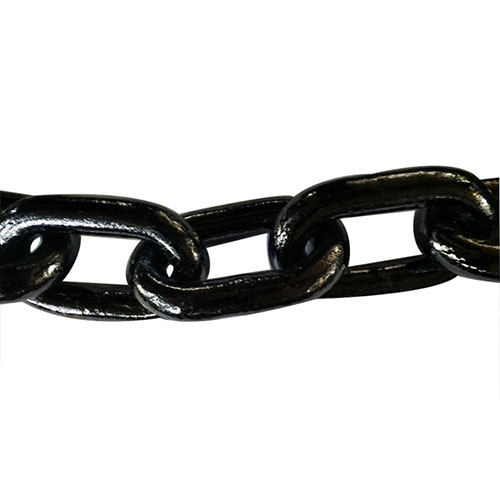
A studless anchor chain is made from linked steel elements without any internal bracing, in a way that feels a bit more open compared to designs with studs. The missing stud leaves the connection more articulated, so each adjacent link can move with more ease. Even with the simpler build, modern studless chains are still produced using high strength steel, and they go through strict testing so they meet international marine expectations. They also come in different grades and sizes, to fit a range of anchoring and mooring needs.
Advantages
- Lighter Weight: One of the most noticeable benefits of studless anchor chains is their lighter mass. Because the links do not include studs, the factory uses less steel overall. That reduction in chain weight makes moving it easier, supports installation work, and improves onboard handling.
- Greater Flexibility: Studless chains give noticeably better flexibility than stud-link chains. The links can move with more freedom, so the chain adapts in a more effective way to changing loads coming from waves, currents, and the whole floating setup. That wiggle, in practice, can improve how mooring systems behave when they are continuously shifting.
- Easier Handling and Installation: With a lighter mass and that increased flexibility, studless chains are easier to deploy, take back, and install. Offshore operators often see less time during installation, and also fewer support requirements.
- Improved Storage Efficiency: Studless anchor chains take up less space, because the links can settle more compactly inside chain lockers or other storage areas. This helps a lot on vessels where space is limited.
- Lower Manufacturing Expenses: The simpler design uses fewer materials and manufacturing steps than stud-link chains. So, the studless chains are often more economical, especially when we are talking about large-scale offshore mooring schemes.
Limitations
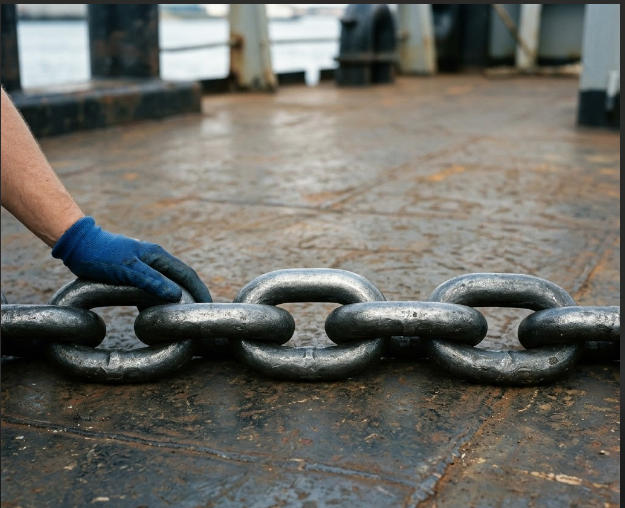
- Greater Risk of Link Deformation: Because there is no internal stud to prop up the link arrangement, studless chains may be more prone to deformation under extremely high loads. Even if contemporary chain grades deliver strong performance, stud-link chains generally resist distortion better.
- Increased Possibility of Twisting and Kinking: The extra freedom of movement between links can, sometimes, raise the risk of twisting or kinking while being handled and operated. In practice, chain management is important to reduce these problems as much as possible.
- Different Wear Patterns: Studless anchor chains tend to show more articulation between links, and that can mean the wear characteristics develop in a slightly different way over time. Routine checks are needed, to keep track of wear and keep safe operation.
- Lower Dimensional Stability: When compared with stud-link chains, studless chains may show a bit more change in link geometry after prolonged periods of heavy loading. That can play a role in how well they perform over the long haul, in especially in demanding applications.
- Not Always Ideal for Extreme Loads: For very large vessels, permanent mooring setups, and cases with exceptionally high loads, stud-link chains are often the preferred choice. This is largely because they offer better load distribution and solid structural stability.
Key Differences Between Stud-link and Studless Anchor Chains
| Feature | Stud-Link Anchor Chains | Studless Anchor Chains |
| Link Design | Contains a stud (cross bar) inside each link | No stud inside the link |
| Strength | Higher resistance to deformation and heavy loads | Strong, but generally less resistant to deformation under extreme loads |
| Load Distribution | More even load distribution due to the stud | Load distributed through the link structure alone |
| Weight | Heavier because of additional steel studs | Lighter due to simpler construction |
| Flexibility | Less flexible | More flexible and adaptable to dynamic movements |
| Resistance to Twisting | Better resistance to twisting and kinking | More susceptible to twisting and kinking |
| Handling and Installation | More difficult due to greater weight and rigidity | Easier to handle, transport, and install |
| Storage Efficiency | Requires more storage space | Packs more compactly in chain lockers |
| Manufacturing Cost | Higher due to more complex construction | Lower due to simpler design |
| Wear Characteristics | Reduced link movement can minimize certain wear patterns | Increased articulation may lead to different wear patterns |
| Maintenance and Inspection | Additional inspection needed for studs | Simpler inspection due to fewer structural components |
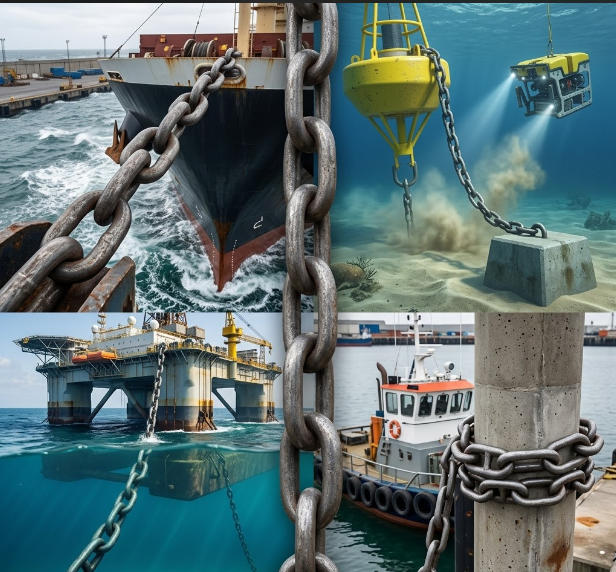
| Common Applications | Large cargo ships, tankers, naval vessels, offshore drilling rigs, permanent moorings | Offshore mooring systems, floating wind farms, buoys, aquaculture facilities |
| Dimensional Stability | Excellent dimensional stability under heavy loads | Slightly lower dimensional stability under prolonged heavy loads |
| Service Life in Heavy-Duty Operations | Generally longer in high-load applications | Good service life but may vary depending on operating conditions |
| Industry Preference | Preferred for heavy-duty anchoring and permanent mooring systems | Increasingly preferred for modern offshore and renewable energy projects |
Factors to Consider for Choosing Between Stud-link and Studless Anchor Chains
Choosing between stud-link and studless anchor chains need a careful evaluation of operational demands, surrounding conditions, and long-term cost factors.
1. Load Requirements and Strength
One of the main things is the load that the chain will be asked to take, day after day.
Stud-link chains are usually chosen for operations involving very heavy loads because the stud helps spread stress more uniformly and reduces link bending. Big commercial vessels, naval ships, and fixed offshore mooring systems often lean on stud-link chains for their stronger structural stability.
Studless chains can still manage serious loads too, especially when they’re built from high-strength steel, but they might not provide the same level of resistance to deformation when conditions become extreme.
2. Vessel Size and Application
The type and scale of the vessel or offshore structure really shapes which type of marine anchor chains makes sense.
Large tankers, bulk carriers, LNG carriers, and offshore drilling platforms usually need that enhanced strength plus durability which stud-link chains are able to give. Meanwhile studless chains are frequently selected for floating wind farms, aquaculture setups, buoy moorings, and various offshore support frames where flexibility matters and also weight reduction does.
When you match the chain type to the job in question it helps guarantee steadier performance and safety.
3. Environmental Conditions
Marine environments can shift a lot depending on water depth, wave action, currents and weather patterns.
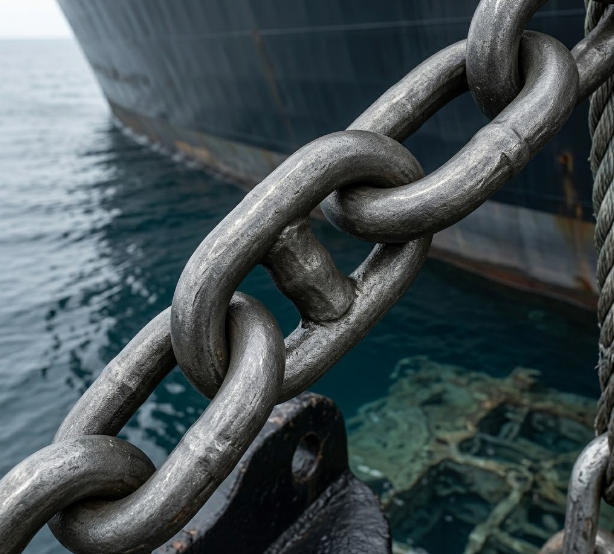
In very demanding locations where chains face continuous high loading along with extreme forces, stud-link chains often offer more reliability. This is because they resist deformation and twisting better than the alternatives.
Offshore installations that are going through dynamic movement, for example floating renewable energy systems, often benefit when they use studless chains, because the flexibility helps the chain to follow the motion a bit more readily, without fighting it too much.
4. Weight Issues
Weight becomes a big deal especially in offshore projects.
Studless chains tend to be lighter, since they do not have internal studs. That lessened mass makes transportation easier, handling more practical during deployment, and installation quicker, it can also reduce the total weight of the mooring arrangement.
Stud-link chains, on the other hand are heavier, which might raise the workload for handling, yet they can also provide extra gripping or holding characteristics in some anchoring setups.
5. Flexibility and Chain Movement
You should also think about how the chain behaves while loads change, meaning the way it flexes, and how it moves in real operation.
Studless chains bring more flexibility to the table, so the links can articulate more freely, and that little freedom matters during constant movement and shifting loads. In practice it can help overall performance, because the system isnt forced to behave in one strict way all the time.
Stud-link chains are more rigid though, and in return they tend to resist twisting, tangling, and kinking better. That can be especially useful during anchor deployment , and when you are recovering the anchor as well, since the chain is less likely to bunch up or misbehave.
6. Installation and Handling Requirements
Installation efficiency can end up steering the project costs, sometimes more than people expect.
With studless chains, the lighter weight and increased flexibility usually mean they are easier to transport, move around, and install. Less time at the job site, and fewer gear needs can follow from that.
Stud-link chains might demand more capable handling equipment and additional manpower, mainly because they are heavier and less flexible. The work process can feel more demanding, because the chain does not cooperate in the same way.
7. Storage Space Availability
Storage space is not always generous on vessels and offshore structures, and those limits can drive the chain selection decision.
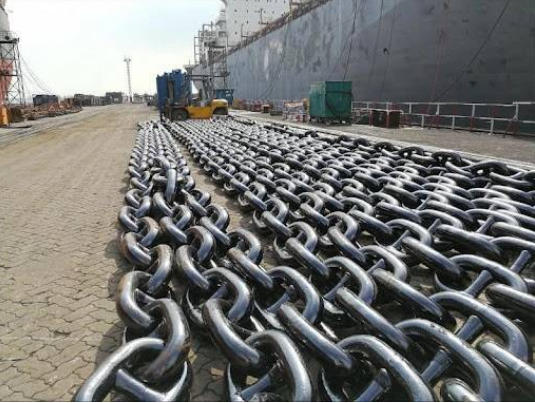
Studless chains tend to nest more compactly in the chain lockers, mostly because the design feels more flexible. That typically helps storage efficiency, especially on vessels where space is a real premium. On the other hand, stud link chains may end up needing slightly roomier storage areas, since their structure is more rigid.
8. Maintenance and Inspection Needs
You really want to think about long term upkeep obligations when you compare total ownership costs. Stud-link chains call for inspection not only of the links but also the studs, to verify structural integrity. Having that extra component can also add inspection complexity, in a way that operators might not like.
Studless chains feature a simpler layout, so inspections can be more straightforward. Yet, people still need to keep an eye on wear, corrosion, and fatigue through the whole service life of the chain.
9. Cost Considerations
Budget limitations often influence the chain choice, and they do matter more than many expect at first.
Studless chains usually come with lower manufacturing costs, because they use less material and the production method is more straightforward. In many cases, they can also lower installation and transport costs, mainly since the weight is lighter, and that matters when moving hardware.
Stud-link chains in general do cost more at the beginning, but they tend to be more durable and may last longer in demanding , heavy-duty use. This can translate into better long-term value over time, depending on how often the equipment is deployed.
10. Compliance with Industry Standards
Marine classification societies, and other regulatory bodies, often set out specific expectations for anchor chains.
So the operator should confirm the chosen chain type meets relevant industry standards, classification requirements, and project details. For some vessel classes or offshore setups, one chain style might be preferred over the other because of those compliance rules.
11. Future Operating Demands
While choosing anchor chains, you should focus on present requirements as well, but also plan for the upcoming operational demands.
A chain system set up while keeping future potential expansions in mind, changes in the environment, or increased load requirements can help you sidestep expensive replacements and upgrades later. Picking the right chain type right from the beginning, supports long-term operational efficiency, and it keeps things steady even when conditions start to shift.
Summary
- Stud-link chains excel in strength, load distribution, and resistance to deformation, making them ideal for large vessels and demanding offshore environments.
- Studless chains offer advantages in flexibility, weight reduction, handling and storage efficiency, making them particularly suitable for modern offshore mooring systems and renewable energy applications.
Final Thoughts
Both stud-link and studless anchor chains play an important part in modern marine and offshore operations. The optimal choice will be different based on what you really need in operation, the environment around you, the expected load demands, the broader aims of the project, etc. If marine operators really take time to compare those aspects, they can select the anchor chain type that gives a strong balance of safe practice, reliable performance and long-term value.