
How to Optimize Lifeboat Capacity for Different Vessel Types
Lifeboats serve as essential elements of maritime safety systems because crew and passenger safety during their maritime operations is a top priority. The process of optimizing lifeboat capacity for different vessel types, serves as a mandatory requirement that enables vessel operators to improve their safety operations while decreasing emergency risks and meeting international compliance requirements.
Table of Contents
Understanding Lifeboat Capacity Requirements
The determination of lifeboat capacity requires multiple factors which include the onboard passenger count, the vessel’s operational purpose and the specific regulations imposed by the International Maritime Organization (IMO) and flag-state authorities. The design of marine lifeboats needs to provide emergency evacuation capacity for all people present on the ship.
Key Considerations in Determining Lifeboat Capacity
This chart provides a comprehensive overview of the main factors that influence lifeboat capacity planning, ensuring safety, regulatory compliance, and effective emergency response.
| Consideration | Description | Importance |
| Number of Persons on Board | Total crew, passengers, and any additional personnel that may be on the vessel | Ensures that all individuals have access to a lifeboat in an emergency |
| Vessel Type and Size | Different vessel types (cargo, passenger, offshore rigs) have varying space, layout, and evacuation needs | Determines the number and size of lifeboats required |
| Regulatory Requirements | Compliance with SOLAS, IMO, and local maritime safety regulations | Guarantees legal adherence and safety standards are met |
| Evacuation Routes and Accessibility | Lifeboats must be easily reachable from all areas of the vessel | Ensures quick and safe evacuation in emergencies |
| Loading and Launching Capabilities | Consider lifeboat davits, cranes, and launching mechanisms | Ensures lifeboats can be safely and quickly deployed under emergency conditions |
| Environmental and Sea Conditions | Factors such as rough seas, ice, and tropical conditions | Impacts lifeboat design, size, and number needed to maintain safety in various conditions |
| Lifeboat Type | Open lifeboats, partially enclosed boats, fully enclosed life boats, or free-fall lifeboats | Influences capacity planning due to differences in protection and space efficiency |
| Survival Duration and Provisions | Water, food, medical supplies, and shelter onboard the lifeboat | Affects the number of lifeboats and storage requirements to sustain all occupants |
| Redundancy and Safety Margin | Extra capacity beyond maximum personnel | Provides contingency for unexpected situations or over-occupancy |
| Special Needs | Consideration for children, elderly, or disabled personnel | Ensures inclusivity and safety for all onboard |
Effective Strategies for Optimizing Lifeboat Capacity for Different Types of Vessels
Lifeboat capacity must be tailored differently for the needs of each ship type to ensure all crew can be evacuated safely in the event of an emergency while also meeting international safety requirements.
Cargo Ships and Bulk Carriers
Compared with passenger ships, cargo ships and bulk carriers are vessels carrying a crew of a smaller magnitude to size, larger vessels posing unique challenges in lifeboat launching. Optimizing the lifeboat capacity aboard these ships comprises:
- Placement Strategy: Lifeboats need to be located in such a way that they can be accessed from all handy locations it takes the minimum time for the crew to reach safety.
- Number vs. Size: Having fewer, high-capacity lifeboats seems to be enough. In reality, multiple small lifeboats cause redundancy in case one is lost.
- Operational Considerations: Automation in davit systems and easy releasing can be important, especially in rough weather, where exhausted humans with low alertness may become commonplace.
Passenger Ferries and Cruise Ships
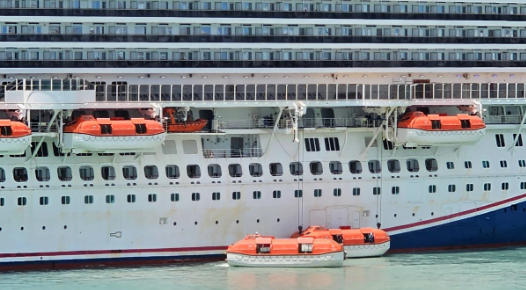
Passenger vessels are exposed to unique challenges as a result of high occupancy and very diverse passenger demographics. Within the context of optimizing lifeboat capacity, important prerequisites are:
- Maximizing Seating Capacity without Compromising Safety: Lifeboats have to meet International Maritime Organization limitations with regard to compartmentation, stability, rescue craft weight limits, and wheelchair accessibility.
- Zoning and Embarkation Planning: Organizing the passengers into embarkation teams can help prevent congestion and hasten evacuation.
- Multiple Lifeboat Types: This involves lifeboats for both able-bodied crew and passengers along with inflatable life rafts. These are capable of carrying different numbers of passengers, as well as those at varying levels of age and mobility.
Offshore Supply and Specialized Vessels
Offshore supply vessels, drilling units, and research ships have to typically operate in remote places where rescue may be delayed. Therefore, the lifeboat optimization for this kind of vessel should not only provide rescue of all personnel on board but should also embrace enough survival items such as food and drink, communication devices, and thermal protection gear. Launching systems with fast deployment features are vital to make sure that lifeboats may be used instantly during sudden mishaps such as fire, collision, and platform mishap.
Contrarily for other medium and smaller vessel categories, like fisheries and specialized research ships, lifeboat designs adhere to a different concept. Restricted deck space combined with magnified seating has indeed called for boat life designs that will serve the purpose well by offering high capacity with minimum boat built dimensions supportive of boat and stability. In addition, compliance with local and national safety regulations are even more mandatory in these vessel types to ensure safe operations.
Technology for Lifeboat Capacity Optimization
This chart provides how modern technologies help optimize lifeboat capacity, improving safety, regulatory compliance, and operational efficiency.
| Technology | How It Supports Capacity Optimization | Benefits |
| Digital Load Calculators | Calculates the exact number of lifeboats needed based on crew, passengers, and vessel type | Ensures precise lifeboat allocation and avoids under- or over-provisioning |
| Evacuation Simulation Software | Models evacuation scenarios under different conditions (weather, sea state, crew response time) | Identifies bottlenecks and optimizes lifeboat placement and number |
| 3D Vessel Layout Modeling | Integrates lifeboat locations into vessel designs | Enhances accessibility and safety, ensuring lifeboats are within easy reach |
| IoT-Enabled Sensors | Monitors lifeboat readiness, weight distribution, and occupancy levels | Provides real-time data for maintenance and capacity planning |
| VR/AR Training Tools | Simulates emergency evacuations for crew training | Improves evacuation efficiency and ensures practical use of lifeboats under stress |
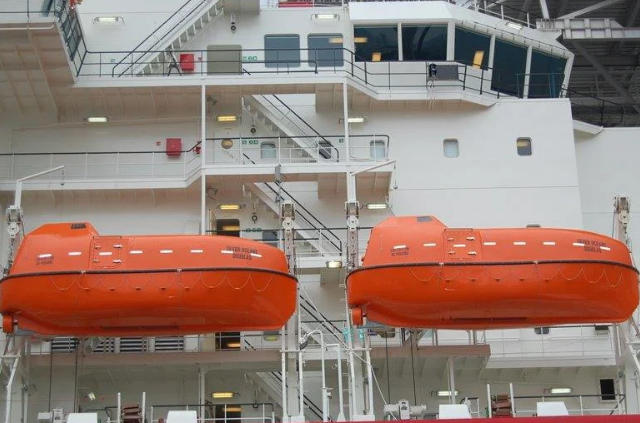
| Automated Deployment Systems | Advanced davits and free-fall lifeboat launch systems | Reduces manual errors and ensures rapid, safe lifeboat launch |
| Data Analytics & Reporting | Collects historical data on lifeboat usage, inspections, and drills | Supports decision-making for optimal lifeboat capacity and placement |
| Compliance Software | Tracks regulatory requirements and SOLAS/IMO guidelines | Ensures lifeboat capacity meets or exceeds safety regulations |
Final Thoughts
Optimizing lifeboat capacity is a complex challenge that brings to the fore vessel class, operational environment, passenger numbers and safety regulations. By customizing the design of lifeboat and its deployment plans, ship operators will see further safety, better evacuation efficiency, and compliance with international maritime regulations. Continuous evaluation, regular drills, and the adoption of modern technologies are key to ensuring that lifeboats serve their functions well, protecting lives at sea.