Inflatable vs. Rigid Hull Lifeboats: Which Type to Choose
Lifeboats serve as essential safety equipment which ships, offshore platforms and marine facilities require for their operations. The life-saving equipment enables people to escape dangerous situations which include fires, collisions, flooding and abandonment at sea. Among the various lifeboat types available today, inflatable lifeboats and rigid hull lifeboats are two widely chosen options, each offering unique advantages and limitations depending on the operating environment, vessel type and safety requirements. The process of choosing the appropriate solution requires people to comprehend the distinctions between the two options.
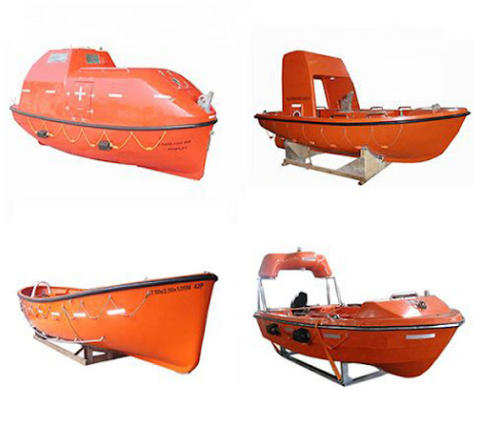
Table of Contents
Understanding Inflatable Lifeboats
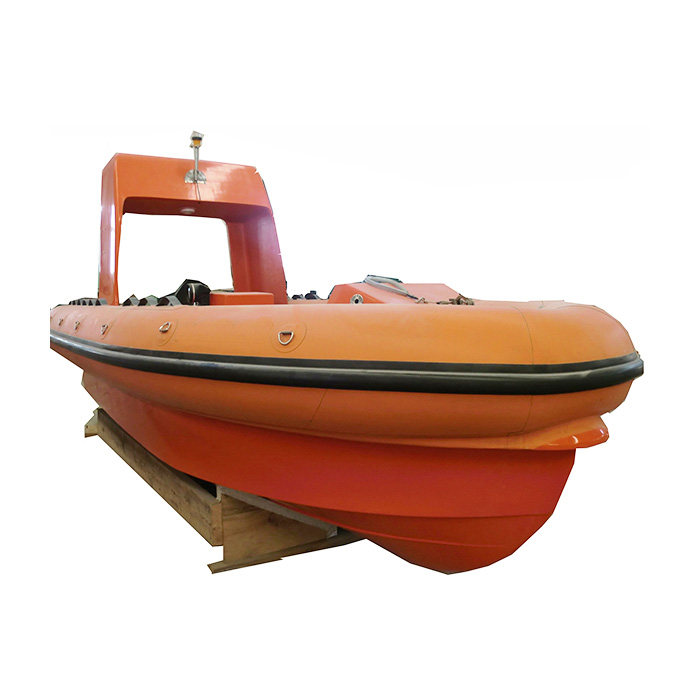
The inflatable lifeboat is an entirely unique and innovative type of survival craft. It is constructed of flexible reinforced material, such as rubberized fabric, neoprene, or PVC, with several inflatable chambers which constitute the lifeboat’s primary means of securing buoyancy and structural integrity. They can be packed inside rigid canisters or waterproof storage bags and be connected to automatic or manual inflation systems.
Once activated, the life boat quickly inflates and is ready to board at a moment’s notice. Many units come in a variety of models that are already equipped with emergency supplies such as waterproof canopies, ballast bags, or descent ladders, or have signaling devices to improve occupant safety pending the arrival of rescue.
Advantages
- Space-Saving Storage: One of the biggest advantages of these lifeboats is their storage ways, which are immensely space-efficient. The inflatable lifeboats can be set in quite small storage containers, in contrast to the large size of the rigid lifeboats which require keeping fixed on deck. Due to this, they are perfect for boats that possess limited space in form of smaller commercial craft or private yachts.
- Lightweight Construction: Inflatable lifeboats are significantly lighter than rigid hull alternatives. Their lessened weight certainly makes handling, installation, and deployment easier, while reducing the structural load on the vessel.
- Rapid Deployment: Modern inflatable lifeboats are built with quick emergency use in mind; upon entering the water, an automatic or manual inflation system is activated, enabling the lifeboat to be made operational in no time. Speed is the essence in fire, flood, or sudden situation of abandonment.
- Stable Flotation: Many inflatable lifeboats lead the way with multiple buoyancy chambers and systems for ballast, which assist them further in handling rough waters, even if one chamber is damaged.
- Cost-effective Solution: Inflatables are generally less expensive than rigid hull life boats for purchasing and installing. There is often no need for some large davit systems on ships, which costs shot up accordingly.
Limitations
- Vulnerability to Damage: The main downside to an inflatable-lifeboat type of design lies in its tendency to hang up during pumping in the remote chance that puncture, tearing, or abrasion could possibly occur in the future. The very nature of being made up of simple materials actually sharpens the chance of such a deformity in rough servicing conditions.
- Reduced Weather Protection: Inflatable life boats may have insulated outer sections as well as weather-canopy. Still, the ability to keep as warm as hard-covered lifeboats will always be less. Consequently, in very cold weather, heavy seas, or cases of fire, the sheltering and keeping-up of the occupants must be compromised.
- Limited Long-Term Durability: Fabric materials, when exposed to the necessities of endless solar rays, saltwater, condensation, and changes in temperature will, in time, generally be worn so as to impair the efficiency of the boat. Regular servicing is important to maintain the efficiency and regulatory compliance.
- Lower Impact Resistance: With less apparent consistency in rough seas or when struck upon hard surfaces, inflatable lifeboats do not handle impacts as effectively as rigid-hulled boats. This is most important for oil and gas operations or industrial marine operations.
- Capacity Constraints:Although inflatable lifeboats are made in varying sizes, the compact models sometimes have lesser capacity for passengers as compared with the large rigid lifeboats carried by bulk carriers or cruise ships.
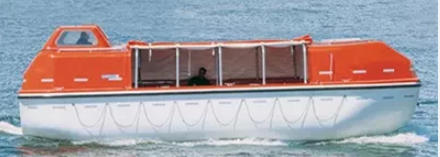
Understanding Rigid Hull Lifeboats
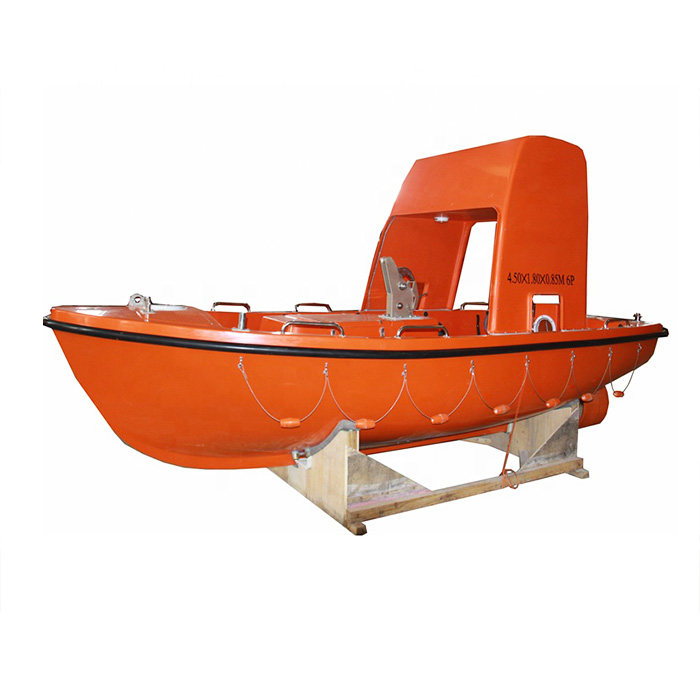
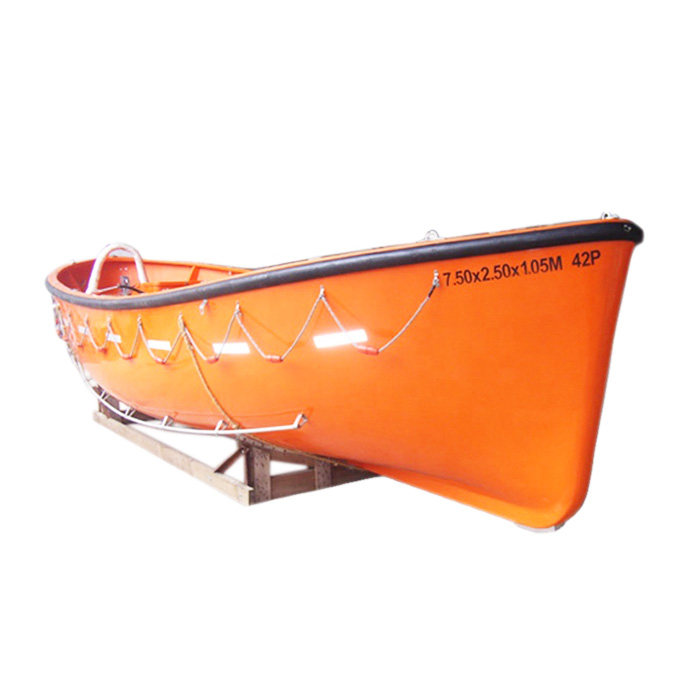
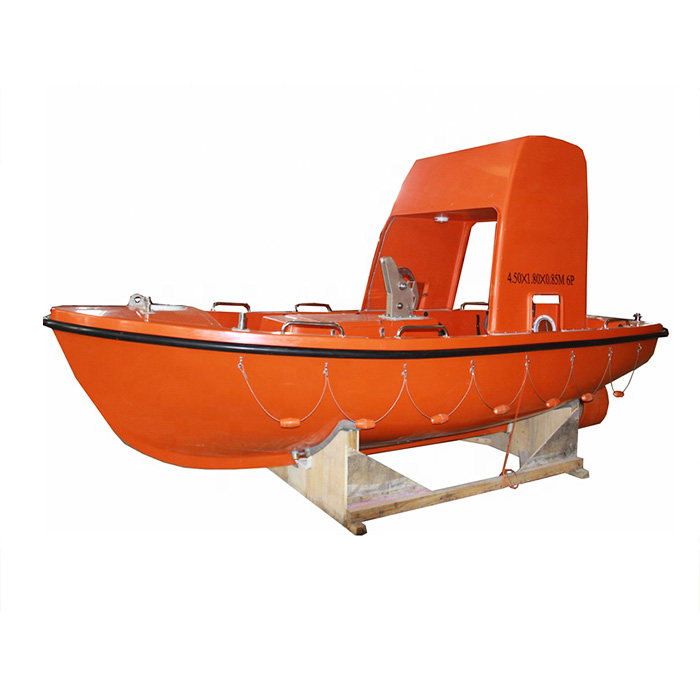
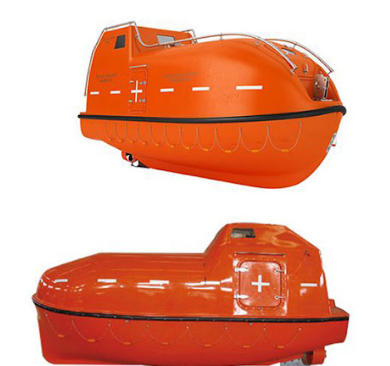
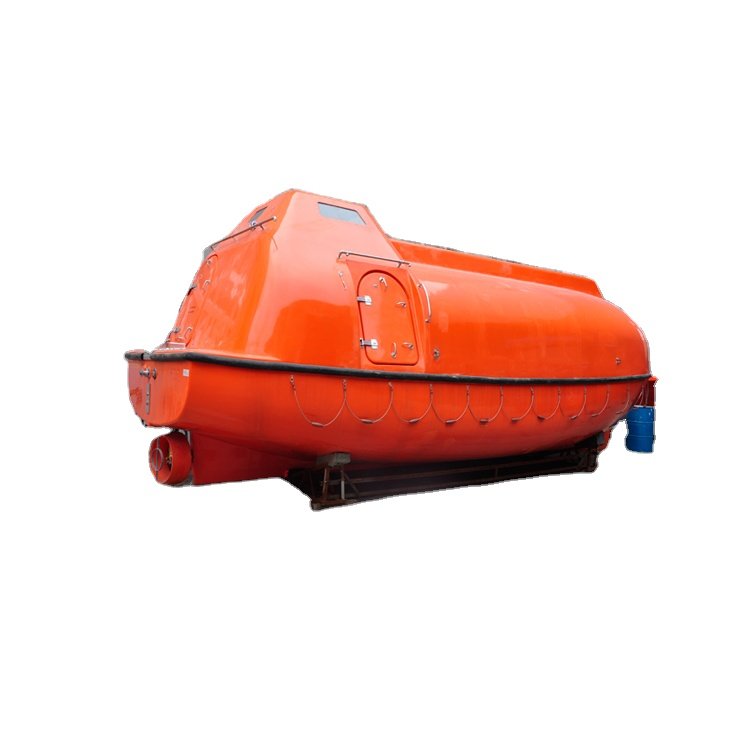
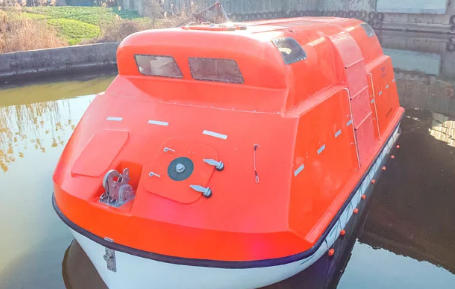
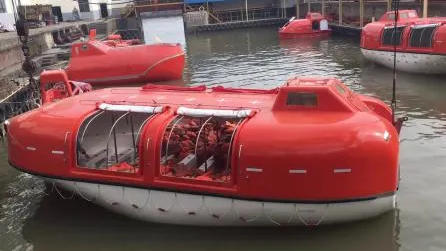
Rigid hull lifeboats are emergency boats with substantial construction, made of solid materials such as Fiber Reinforced Plastic (FRP), aluminum, or steel. The FRP rigid hull boats pioneer a technology very different from the inflatable lifeboats that rely on air chambers for both shapes and buoyancy.
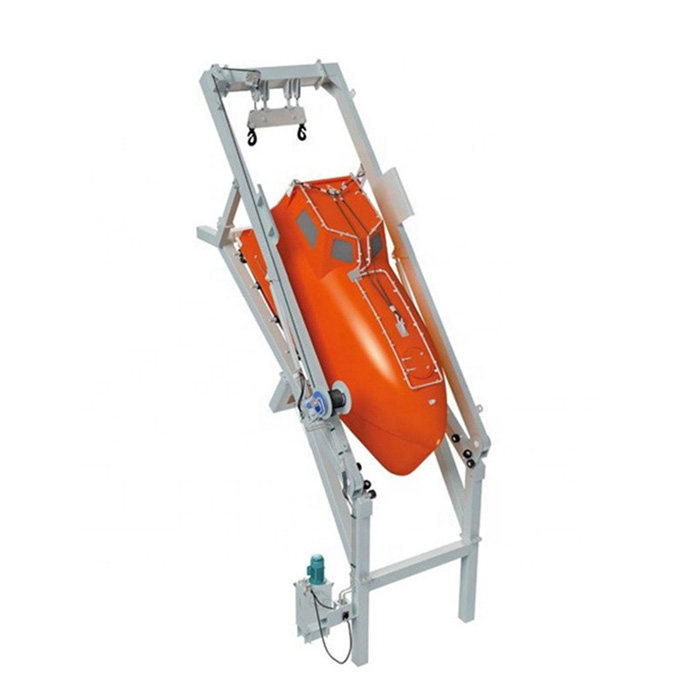
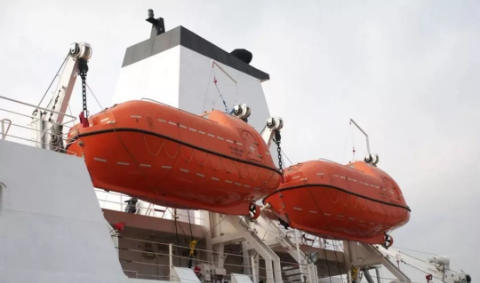
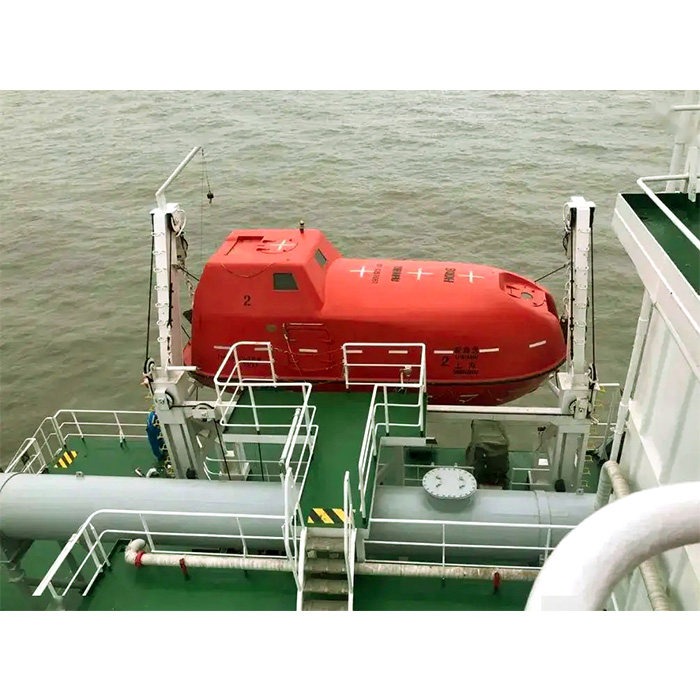
They are generally designed to be either davit-lifted, slipped along slipways, or dropped freely to ensure quick deployment in case of an emergency. Most of them will be in semi or complete enclosures providing some defense against the elements whilst the occupants evacuate.
Advantages
- Effective Structural Durability: One distinctive advantage of the rigid hull lifeboats is the tough as nails construction. They are practically built to withstand wear and tear during repetitious launch and recovery activities, withstand forces resulting from impact while traveling in tough marine environments. This makes them quite reliable in the long run when it comes to service on commercial and industrial vessels.
- Superior Passenger Protection: Most of the rigid hull lifeboats have their cabins enclosed thus offering protection from winds, rain, cold weather, waves, and sun. Fire-retarding models give additional protection in the event of an emergency with oil or gas installations.
- High Stability and Seakeeping Performance: Because they are designed to operate in rough seas, the hull design of the rigid hull lifeboats promotes quite a bit of steadiness, directional control, balance, and resistance to capsizing, which is crucial for a successful evacuation during bad weather.
- Larger Passenger Capacity: Rigid hull lifeboats come in many sizes, often accommodating more passengers than some of their smaller inflatable alternatives. These are, thus, popular on cargo ships, cruise ships, and offshore platforms since these people might need to be evacuated.
- Powered Navigation Capability: Most rigid hull lifeboats come fitted with diesel engines or other means of propulsion, giving them the capability to hasten away from the scene to a location near rescue operations.
Limitations
- Greater Space Requirements: The rigid hull lifeboat needs permanent deck space and a separate launching arrangement. On small vessels with room constraints, this can be a major useability disadvantage.
- Higher Initial Cost: Due to their solid structure, propulsion systems, and mounting equipment, rigid-hull lifeboats in general cost more than inflatable lifeboats. In addition, installation costs are an important aspect.
- Heavier Weight: Rigid lifeboats are heavier because of stronger materials and integrated systems. This can also necessitate structural load requirements for the vessel and complicate retrofitting projects.
- More Complex Maintenance: Rigid hull life boats require regular hull integrity, engine, fuel system, battery, control system, and launching equipment inspections. Mechanical systems might require specialized service.
- Deployment Equipment Dependence: Some rigid hull lifeboats will rely on davits, winches or release systems, and those systems may cause complexity to launch in cases of poor or damaged maintenance.
Key Differences Between Inflatable and Rigid Hull Lifeboats
| Comparison Factor | Inflatable Lifeboats | Rigid Hull Lifeboats |
| Structure | Made from reinforced flexible fabric with air chambers | Built from solid materials such as fiberglass, aluminum, or steel |
| Weight | Lightweight and easy to handle | Heavier due to hard-shell construction |
| Storage Space | Compact storage in canisters or bags | Requires dedicated deck space and mounting systems |
| Deployment | Rapid inflation and quick launch in emergencies | Launched by davits, slipways, or free-fall systems |
| Durability | Good durability but more vulnerable to punctures and abrasion | Highly durable with strong impact resistance |
| Passenger Protection | Basic shelter with canopy options | Better protection, especially enclosed models |
| Stability | Stable with ballast bags and multiple chambers | Strong seakeeping ability in rough waters |
| Capacity | Suitable for small to medium groups | Often available in larger passenger capacities |
| Maintenance | Requires inspection of fabric, seams, valves, and gas systems | Requires maintenance of hull, engine, fuel, and launch systems |
| Cost | Usually lower initial cost | Higher purchase and installation cost |
| Best Use Cases | Small vessels, yachts, ferries, supplementary emergency craft | Cargo ships, offshore platforms, passenger ships |
| Service Life | May be shorter due to fabric aging and UV exposure | Longer lifespan with proper maintenance |
Key Factors to Consider for Choosing Between Inflatable and Rigid Hull Lifeboats
To make a choice for life-saving equipment between inflatable and rigid hull lifeboats, one has to pay close attention to operational needs, safety standards, the size of the vessel, environmental operating conditions, etc. An understanding of these key factors can help ensure better preparedness and long-term value.
1. Understanding the Intended Application
A major factor in deciding on which type of life boat is how and where it will be used. Inflatable lifeboats are ideal for the smaller surface vessels, such as yachts, fishing boats, sailboats, and recreational craft, due to the attractions of compact storage and a lightweight design. Larger commercial ships, tankers, ferries, and offshore platforms are likely to need or prefer rigid hull lifeboats, which have to carry more passengers and operate more robustly in more inclement conditions. The class of vessel and its mission profile tend to push one choice to be more preferable than the other to a high degree.
2. Evaluating Available Space on Board
Deck space is always limited more so on smaller boats. Inflatable lifeboats come in handy and ideal for such situations because they can be folded into containers or valises and locked up compactly, saving valuable space unlike rigid hull lifeboats that, in turn, require separate mounting and launching from davits or free-fall systems. This method is workable for large vessels because where looks matter. On compact boats, the same may be impractical.
3. Considering Passenger Capacity Requirements
The number of personnel being evacuated in an emergency is also an important factor. These inflatable lifeboats come in various sizes as rigid hull even scaled up the size and they are generally selected for vessels with always more crew members and crew passengers. In the case of ferries, carriers, or offshore oil drilling platforms, Passenger capacity requirements should make one opt for the rigid hull model.
4. Assessing Environmental and Sea Conditions
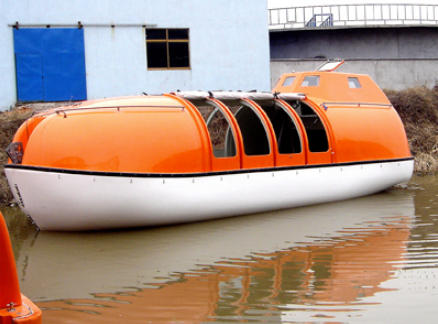
One of the most important decisions in selection is operating environment. A long journey can lead to rough seas, freezing cold or severe offshore conditions, but an RHIB alternative will offer a good protection level and strong-weather embrace. The more hardened rigid alternatives provide protection toward wind, waves, rainy weather, wind chill favorably, etc. Inflatable lifeboats are very successful in normal conditions but could be less effective to provide protection in rough weather for extended duration.
5. Reviewing Deployment Speed and Emergency Readiness
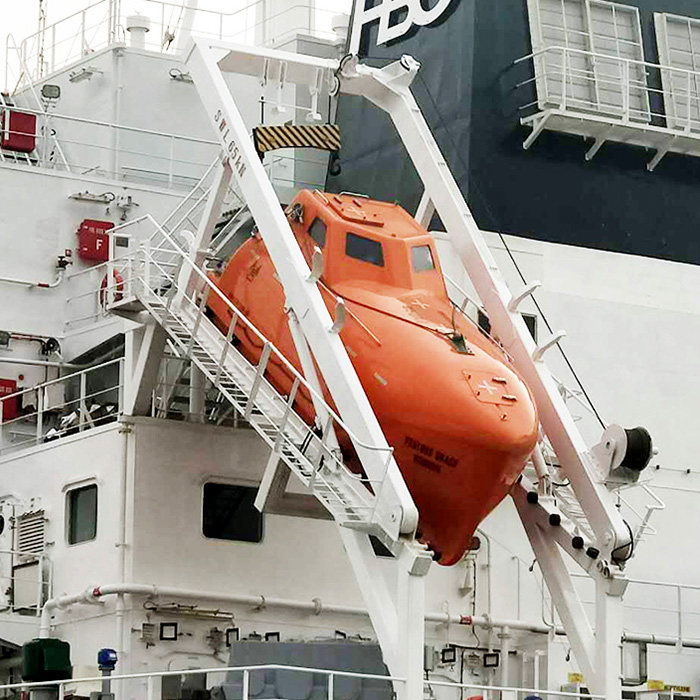
In emergency cases, quick deployment could mean saving lives. Inflatable lifeboats are famous for being released quickly into the water and inflating automatically. Beyond timely manning, the simplicity of their framework makes inflatable lifeboats most useful for the prompt loss of the vessel. The heavier and more elaborate launching system of the lifeboats with rigid hulls might include more complex procedure, but better systems like a free-fall lifeboat provide rapid evacuation facilities. The best alternative requires consideration of the crew training level and the emergency response plan of the vessel.
6. Comparing Durability and Service Life
Ergo, in most cases of signs for fiberglass or similar, rigid hull lifeboats have a better life span or suffer less wear and tear than those of inflatable hulls, and these have tackled many problems without any defects. Over the years, after many launches, such tough, strong hulls could undoubtedly suffer in ways unthinkable for the inflatable lifeboats. Good synthetic materials have been put to use, but through exposure to UV rays, saltwater, aging, and wear, the inflatable lifeboats can break down. It is important to keep regular maintenance and keep them in operation.
7. Understanding Maintenance Requirements
In addition, it should not be skipped over that maintenance requirements of life boats undeniably need to be taken into consideration. Fabric integrity, seams, cylinder inflation, valves, and other emergency equipment in inflatable lifeboats must undergo some mandatory testing. Being rigorously checked by authorized maintenance facilities is salutary. The maintenance of rigid-hulled lifeboats encompasses an hull inspection, engine servicing, battery checks, management of fuel, and running gear checks. Albeit well-built, they can command considerable mechanical upkeep. Which one is the ideal choice depends most on the operator’s maintenance resources and the access to the technical support.
8. Analyzing Budget and Long-Term Costs
Inflatable lifeboats usually have a lesser initial investment that can be a pull factor to the small operators or the ones with financial strictures. Besides, even less expensive in terms of installation, these lifeboats can show slight advantages with regard to lower costs. Feasibly, normal lifeboats, which are equipped with rigid hulls, do involve high capital and installation costs, but these costs are astutely compensated for by the solidity of the hull shell itself, thereby rendering long-term advantages to business operations. These cost decisions, as such, should involve, of course, both the immediate capital costs and the probable costs over the life of the lifeboat.
9. Ensuring Regulatory Compliance
Specific vessels are delimited in terms of applicable types of lifeboats all by way of classification society rules and marine safety regulations. International regulations such as the ones imposed by International Maritime Organization and SOLAS Convention could insist that lifeboats comply with specified capacities, launching systems, or levels of fire protection. Before finalizing the procurement of a lifeboat, the owner should ensure that the vessel selected fully satisfies the demands of maritime regulations.
Summary
- Inflatable lifeboats are ideal when compact storage, lighter weight and cost efficiency are top priorities. They are especially suitable for smaller vessels or supplementary emergency systems.
- Rigid hull lifeboats are better for demanding marine environments, larger passenger capacities and maximum protection during evacuation. They are often the preferred choice for commercial ships and offshore facilities.
Final Thoughts
Both inflatable and rigid hull lifeboats are important for maritime safety. It is necessary to articulate a choice of one of these two types in line with the vessel’s size, the type of environmental conditions it operates, the specifications that are applicable, etc. The ultimate position is that a lifeboat is chosen to provide safety during evacuation.