
Fatigue and Load Analysis in Mooring Chocks
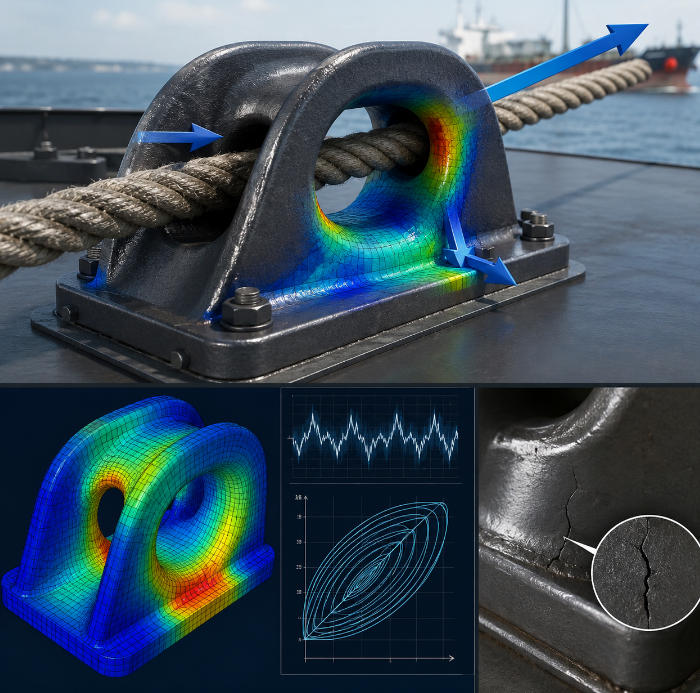
A mooring chock is a critical deck fitting, used on ships and offshore structures to guide mooring lines, in a secure way and efficiently during berthing, anchoring and other offshore operations. Since mooring chocks are constantly hit by dynamic loads, friction, vibration and environmental stress, fatigue and load analysis becomes a key factor for making sure their structural steadiness, and long term performance, staying reliable.
In modern marine engineering, if fatigue evaluation is handled improperly, or the load analysis of mooring chocks is inaccurate, then you can see deformation, cracking, equipment failure, and even harsh incidents involving mooring line breakage. So understanding how fatigue works, and how loads behave over time, is important for engineering durable mooring systems, that also remain safe.
Table of Contents
Types of Loads Acting on Mooring Chocks
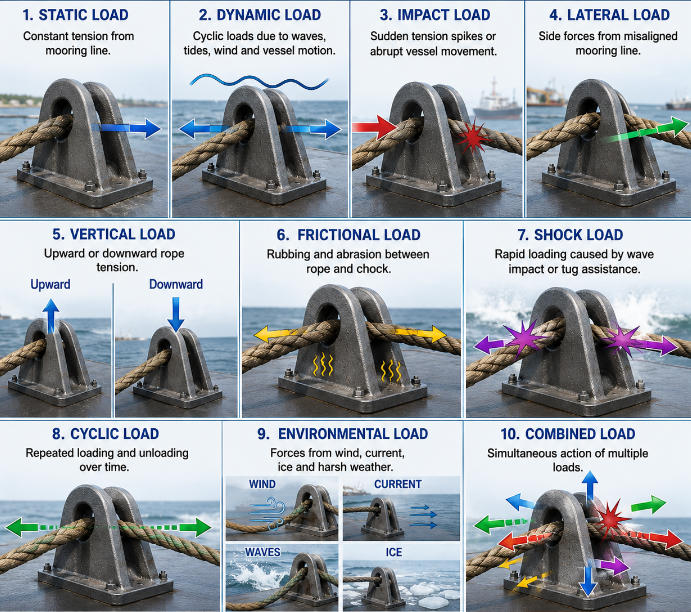
Mooring chocks experience multiple types of forces during operation.
| Load Type | Source of Load | Characteristics | Effects on Mooring Chocks | Examples |
| Static Load | Constant mooring line tension | Relatively steady and continuous | Causes sustained stress and gradual structural wear | Vessel secured at berth under normal conditions |
| Dynamic Load | Waves, tides, wind, and vessel motion | Cyclic and fluctuating forces | Leads to fatigue stress and crack initiation | Ship movement during rough sea conditions |
| Impact Load | Sudden tension spikes or abrupt vessel movement | Short-duration but high-intensity force | Can cause localized deformation or sudden damage | Snap-back events or emergency mooring |
| Lateral Load | Side forces from misaligned mooring lines | Acts horizontally on the chock structure | Produces bending stress and uneven load distribution | Cross-angle mooring operations |
| Vertical Load | Upward or downward rope tension | Acts perpendicular to deck surface | Creates additional structural stress at mounting points | Vessel movement due to tides or swell |
| Frictional Load | Contact between mooring rope and chock surface | Continuous rubbing and abrasion | Causes surface wear and heat generation | Repeated rope movement during docking |
| Shock Load | Rapid loading from environmental or operational changes | Extremely sudden and irregular | Accelerates fatigue damage and structural failure risk | Strong wave impact or tug assistance |
| Cyclic Load | Repeated loading and unloading over time | Continuous stress cycles | Primary cause of fatigue cracking | Daily port operations and offshore mooring |
Why Fatigue Analysis is Needed in Mooring Chocks
Fatigue refers to the progressive structural damage caused by repeated cyclic loading. Even when the applied stress is lower than the material’s yield strength, repeated cycles can eventually lead to failure.
Fatigue analysis is important because mooring chocks operate in highly repetitive loading environments over long service periods.
Objectives of Fatigue Analysis
The main goals of fatigue analysis include:
- Predicting service life
- Identifying high-stress regions
- Preventing crack initiation
- Improving operational safety
- Reducing maintenance costs
- Ensuring classification society compliance
Accurate fatigue assessment helps shipowners and engineers avoid unexpected equipment failures and downtime.
Common Fatigue Failure Areas in Mooring
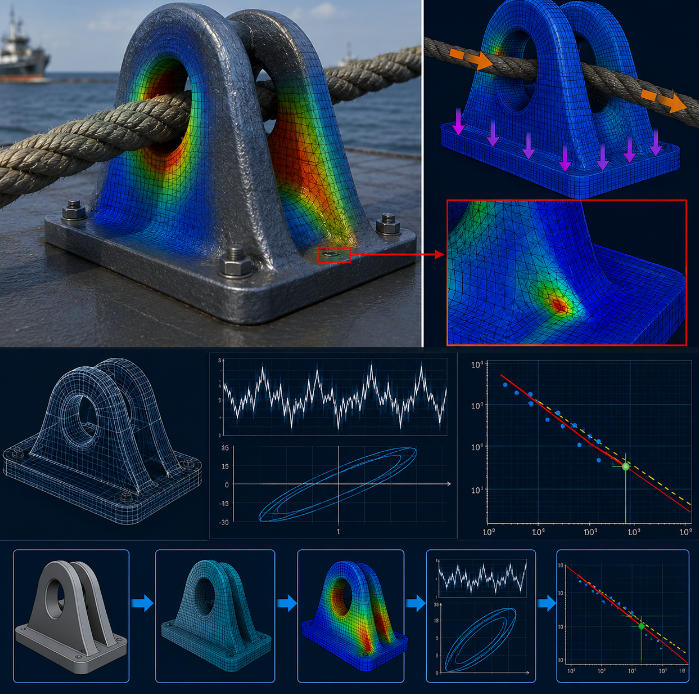
Certain regions of a mooring chock are more vulnerable to fatigue damage because of stress concentration and continuous friction.
| Fatigue Failure Area | Description | Main Causes of Fatigue | Potential Damage |
| Welded Connections | Areas where the mooring chock is welded to the deck or supporting structure | Residual welding stress, poor weld quality, cyclic loading | Crack initiation and propagation around weld seams |
| Base Plate Connections | The interface between the chock base and deck structure | Repeated bending stress and uneven load transfer | Structural loosening, cracking, or deformation |
| Curved Surface Transitions | Rounded or curved sections where geometry changes | Stress concentration caused by abrupt shape transitions | Surface cracking and localized fatigue damage |
| Corner Areas | Sharp edges or corners within the chock structure | High localized stress concentration | Crack formation at stress points |
| Rope Contact Surfaces | Surfaces directly contacting mooring ropes or wires | Friction, abrasion, and repeated rope movement | Surface wear, grooving, and fatigue cracking |
| Mounting Bolt Areas | Regions surrounding fastening bolts and securing components | Cyclic vibration and concentrated mechanical stress | Bolt loosening and crack development |
| Internal Structural Supports | Reinforced internal sections supporting heavy loads | Repeated dynamic loading and vibration | Hidden fatigue cracks and reduced strength |
| Heat-Affected Zones (HAZ) | Areas adjacent to welds affected by welding heat | Metallurgical changes and residual stress | Reduced fatigue resistance and crack susceptibility |
| Surface Defect Areas | Locations with scratches, corrosion pits, or manufacturing defects | Corrosion-fatigue interaction and stress risers | Accelerated crack initiation |
| High-Stress Load Paths | Structural regions carrying the majority of mooring force | Continuous heavy cyclic loading | Progressive material fatigue and deformation |
Factors Affecting Fatigue Life of Mooring Chocks
| Factor | Description | Impact on Fatigue Life | Common Problems |
| Material Selection | Type and quality of steel or alloy used in the mooring chock | Stronger and tougher materials for marine mooring chocks improve fatigue resistance | Low-strength materials may crack earlier |
| Welding Quality | Quality of welded joints and fabrication processes | Poor welds significantly reduce fatigue life | Porosity, undercuts, incomplete penetration |
| Surface Finish | Smoothness and condition of the chock surface | Smooth surfaces reduce stress concentration | Scratches and roughness promote crack initiation |
| Corrosion Resistance | Ability to withstand harsh marine environments | Corrosion accelerates fatigue crack growth | Rust, pitting, and material degradation |
| Load Magnitude | Amount of force acting on the mooring chock | Higher loads increase stress and fatigue damage | Overloading and permanent deformation |
| Cyclic Loading Frequency | Number of repeated load cycles during operation | More load cycles shorten fatigue life | Continuous stress accumulation |
| Stress Concentration | Localized stress caused by sharp edges or poor geometry | High stress concentration accelerates crack formation | Cracks at corners and transitions |
| Environmental Conditions | Exposure to waves, wind, saltwater, and temperature changes | Harsh environments increase fatigue and corrosion | Accelerated material deterioration |
| Alignment of Mooring Lines | Proper positioning of mooring ropes relative to the chock | Misalignment creates uneven load distribution | Localized overloading and bending stress |
| Manufacturing Accuracy | Precision during fabrication and installation | Poor fabrication may introduce hidden defects | Dimensional inaccuracies and weak points |
| Maintenance Practices | Frequency and quality of inspection and repair | Regular maintenance extends service life | Undetected cracks and corrosion |
| Dynamic Vessel Motion | Ship movement caused by waves and tides | Increased motion produces fluctuating loads | Excessive cyclic stress and vibration |
| Friction and Wear | Continuous rope movement across chock surfaces | Surface wear weakens structural integrity | Grooving and abrasion damage |
| Residual Stress | Internal stress remaining after manufacturing or welding | Residual stress can accelerate fatigue failure | Premature crack development |
| Structural Design | Overall geometry and reinforcement of the mooring chock | Optimized designs distribute stress more evenly | Weak structural regions |
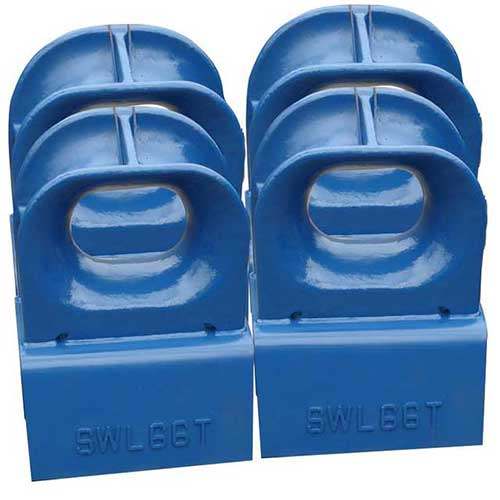
Techniques for Improving Fatigue Resistance of Mooring Chocks
To improve safety and stretch the service life, marine engineers use multiple techniques, not only one, to raise the fatigue resistance of mooring chocks, and yes they do it pretty systematically. One method is focused on the overall design choices rather than just material selection or coatings.
1. Structural Design Optimization
A strong approach is to tune the structural design of the mooring chock. Engineers examine how stress flows across the component, with the goal of reducing those localized stress concentration pockets that can later encourage crack initiation. They also tend to look at the whole load path, and not only peak values.
Smooth geometric transitions are often introduced, to replace sharp corners and those abrupt shape changes. Rounded edges and better load paths help the stress distribute more uniformly through the structure. In addition, reinforced support sections may be placed in high-load zones, to increase stiffness and limit over deformation during normal operation.
Advanced computer-aided engineering tools like Finite Element Analysis help designers play out real operational conditions , and spot weaker structural zones before any manufacturing starts. By doing structural optimization, the fatigue lifespan of the mooring chock can be pushed much further, actually extended notably.
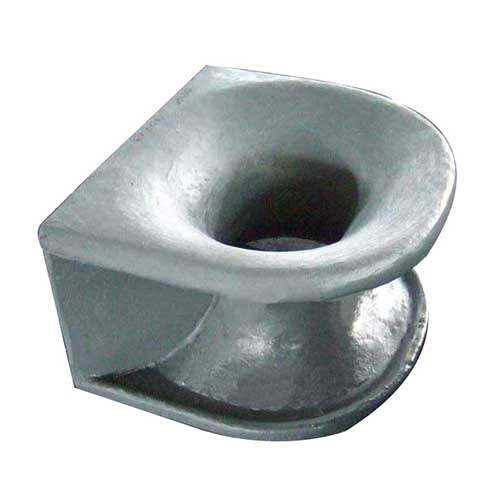
2. Selection of High-Strength Materials
The material quality really impacts fatigue behavior. High strength marine grade steels are commonly chosen because they bring strong toughness, long lasting durability, and good resistance to cyclic loading. In practical terms they can endure repeated stress variations without letting cracks run ahead quickly.
In severe offshore surroundings, corrosion resistant alloys are frequently used to limit the joint influence of corrosion plus fatigue. Because corrosion pits can act like starter points for fatigue cracks, better corrosion resistance becomes a key part of long term structural trustworthiness.
Some modern marine applications are also looking into more advanced composite reinforced materials and mixed build structures. These kinds of materials can cut down on weight while still keeping high fatigue strength, plus good environmental resistance.
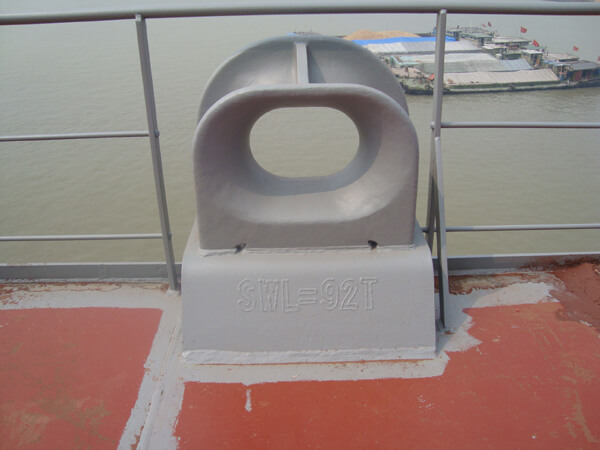
3. Improving Welding Quality
Welded joints are among the most common fatigue failure spots in mooring chocks, because welding can bring in residual stress, geometric discontinuities, and also metallurgical changes. So improving welding quality is a key step, for strengthening fatigue resistance
Using proper welding procedures helps limit issues like porosity, undercuts, incomplete penetration, and slag inclusions. Keeping an eye on heat input during welding further reduces residual stress, and distortion in the overall structure
Post-weld heat treatment is often used to take off internal stresses that build up during fabrication. It helps fatigue strength in the welded zones, mostly by making the material structure more stable and lowering stress concentration. Also, when you grind and polish the welded surfaces, you get smoother transitions and that further boosts fatigue performance, because cracks tend to be less likely to start.
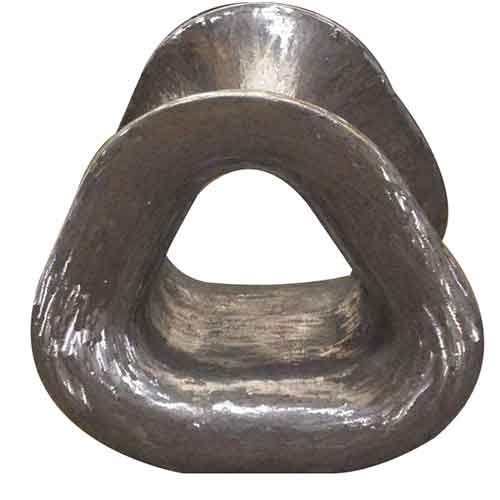
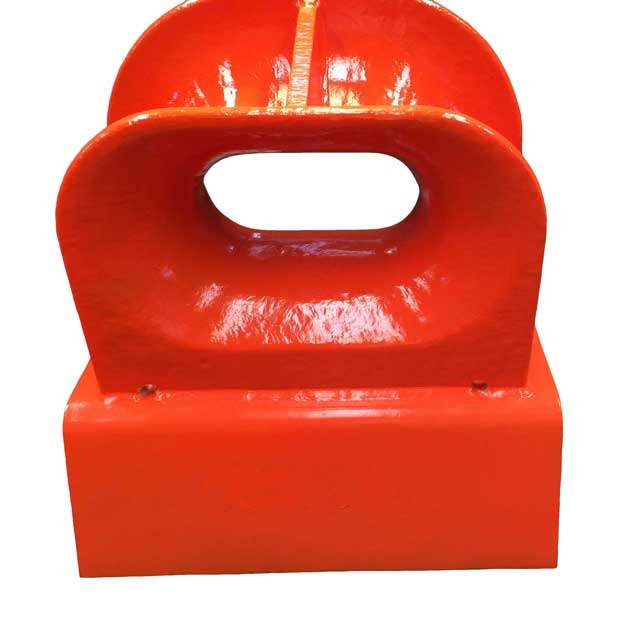
4. Surface Treatment Technologies
Surface enhancement methods can be very effective for raising fatigue resistance. This is because fatigue cracks often begin at the material surface. If the surface quality is better, the chance of crack formation under cyclic loading is reduced.
Shot peening is a popular treatment, it adds compressive residual stress on the surface of the mooring chock. That compressive stress works against the tensile fatigue stress, and it can delay when cracks first start. Because of this, the fatigue life of the component is able to improve quite a lot.
Polishing and precision machining are also crucial for getting rid of surface irregularities and tiny microscopic defects. Smoother surfaces help lower stress concentration, and they also make the part more resistant to fatigue cracking
Protective coatings offer another defense line against corrosion and environmental degradation. Marine-grade epoxy coatings, zinc-rich primers, and thermal spray coatings help guard the surface from saltwater exposure , abrasion , and chemical attack
5. Reducing Dynamic and Impact Loads
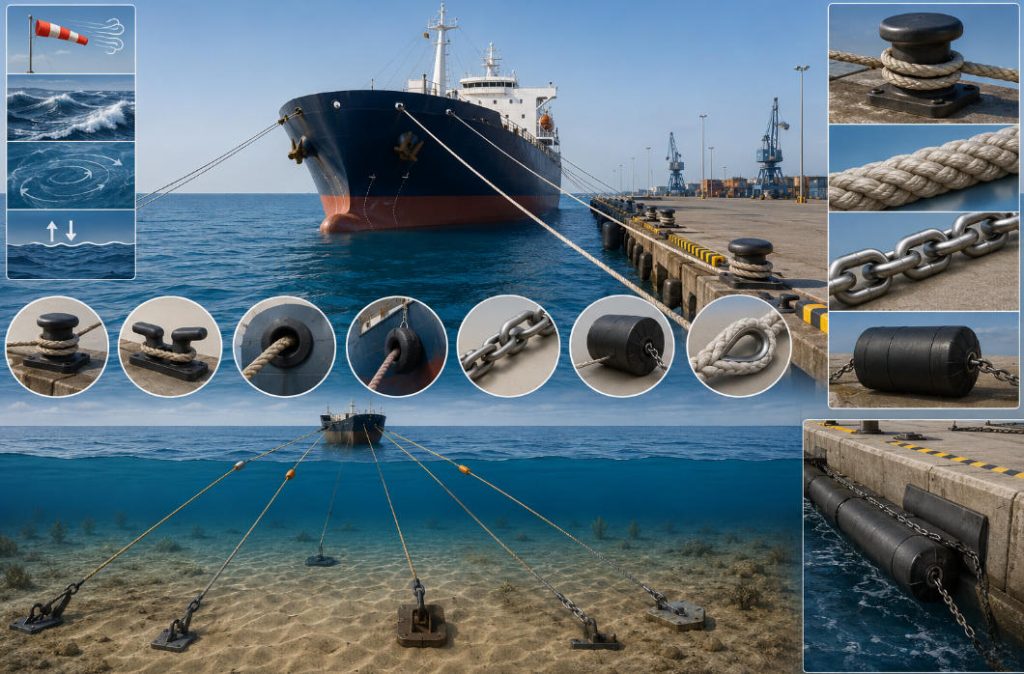
Reducing the operational loading conditions is another required method for enhancing fatigue resistance. Dynamic loads that come from vessel motion and environmental forces are a big reason for fatigue damage in mooring chocks.
Optimized mooring arrangements help distribute loads more evenly across the mooring systems. Proper alignment between mooring lines and chocks reduces bending stress, and localized overloading stays lower. Energy-absorbing mooring systems, including elastic mooring lines and damping devices, can reduce sudden impact loads and also prevent tension spikes.
Better vessel motion control during berthing and offshore operations further lowers cyclic stress levels that act on the mooring chock structure. When excessive movement is limited, fatigue buildup can be reduced in a meaningful way.
6. Advanced Fatigue Analysis and Simulation
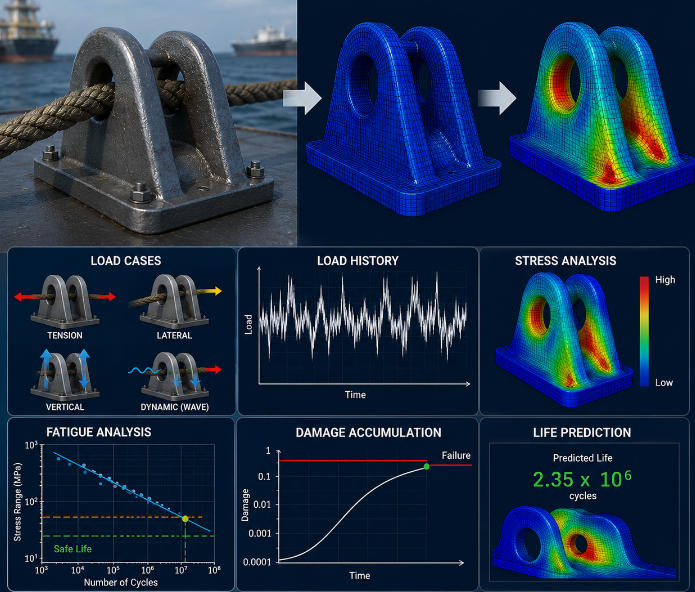
With modern engineering technologies, fatigue behavior in mooring chocks can be predicted with more accuracy. Finite Element Analysis is used a lot to assess stress distribution, deformation , and fatigue life under realistic loading scenarios.
Dynamic simulation software can capture the overlapping impacts of waves, wind, current, and vessel motion on mooring systems. With these simulations engineers can build detailed fatigue load spectra, which in turn helps to tune the structural layout and adjust daily operational procedures.
Fracture mechanics analysis is also applied to look at how cracks extend over time. Through this method engineers can predict crack growth rates, and then set safe inspection intervals, well before structural failure comes into play.
7. Corrosion Protection and Environmental Resistance
Marine settings are extremely harsh, mostly because of relentless contact with saltwater, humidity, and temperature shifts. Corrosion weakens structural materials in a big way and it can push fatigue crack growth much faster.
To strengthen fatigue performance, corrosion protection measures have to be put in place. Protective coatings together with cathodic protection systems, plus corrosion-resistant materials, all help maintain structural integrity across long service spans.
Regular cleaning and routine care also help stop salt buildup and other contaminants, which can worsen surface wear, and lead to corrosion fatigue issues.
9. Inspection and Preventive Maintenance
Doing regular checks and maintenance is vital to prevent fatigue related failures in mooring chocks. Catching small cracks early, or spotting minor surface damage , means repairs can be made before larger structural matters start to grow.
Non destructive testing approaches like ultrasonic testing, magnetic particle inspection, and dye penetrant testing are often used to watch areas that are known to wear out faster. In practice, these inspection methods can reveal buried cracks without breaking or damaging the structure.
A good preventive maintenance plan also covers corrosion tracking , upkeep for protective coatings, and swapping out worn parts when needed. With proper attention , the useful service life of mooring chocks can be extended a lot.
10. Smart Monitoring and Digital Technologies
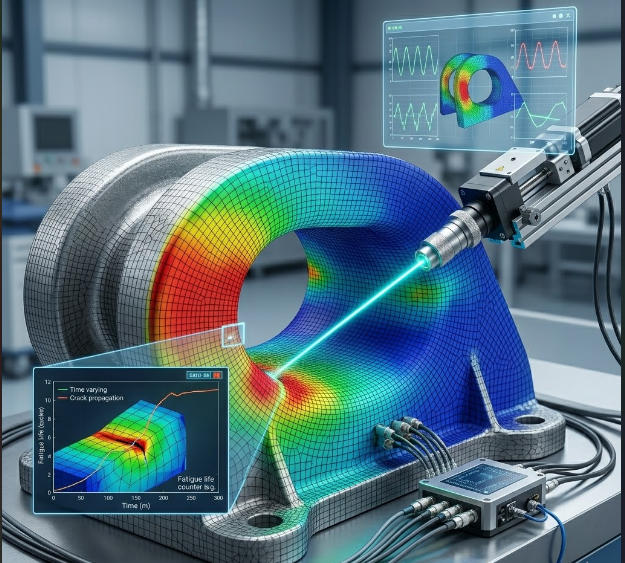
Modern marine industries are now adopting digital tech more frequently, to help with fatigue management and operational safety, and it’s improving results. Structural health monitoring systems, when they’re equipped with sensors, can continuously measure stress, vibration, and these load oscillations in real time, which is pretty useful.
Digital twin technology mixes operational information with virtual modeling, so it can foresee fatigue performance when the surroundings shift. With this, the system gives practical perspective on structural behavior and it also supports more refined upkeep scheduling.
Artificial intelligence and predictive analytics are being folded into fatigue management systems too. When AI studies historical records and live operational signals it can forecast potential fatigue troubles before a failure happens. This improves reliability and safety both.
Classification Societies and Standards for Mooring Chocks
Marine classification societies and regulatory organizations establish strict requirements for fatigue assessment and mooring equipment design. Compliance with these standards ensures that mooring chocks meet international safety and structural reliability requirements.
| Classification Society / Standard Organization | Country or Region | Main Role in Mooring Chock Standards | Key Areas Covered | Importance to Marine Industry |
| International Maritime Organization | International | Develops global maritime safety regulations and operational guidelines | Marine safety, ship operation, equipment compliance | Establishes international safety frameworks for marine operations |
| International Association of Classification Societies | International | Harmonizes technical standards among classification societies | Unified requirements, structural safety, fatigue assessment | Promotes consistency in marine engineering standards worldwide |
| American Bureau of Shipping | United States | Provides classification rules and certification for marine structures | Structural analysis, fatigue evaluation, welding standards | Ensures reliability and safety of ships and offshore structures |
| DNV | Norway | Develops advanced offshore and maritime engineering standards | Fatigue design, finite element analysis, offshore mooring systems | Widely recognized for offshore fatigue assessment expertise |
| Lloyd’s Register | United Kingdom | Establishes technical standards for marine equipment and structures | Structural integrity, inspection procedures, material certification | Supports safe shipbuilding and marine equipment reliability |
| Bureau Veritas | France | Provides marine classification and certification services | Fatigue life assessment, corrosion protection, safety verification | Enhances operational safety and regulatory compliance |
| Nippon Kaiji Kyokai | Japan | Develops standards for ship structures and marine components | Mooring equipment testing, welding quality, structural analysis | Important authority in Asian maritime industries |
| China Classification Society | China | Provides technical rules and inspection standards for marine equipment | Fatigue resistance, load testing, manufacturing quality | Supports growing global shipbuilding and offshore markets |
| ISO Marine Standards | International | Develops international technical standards for marine components | Material specifications, testing methods, quality management | Improves standardization and compatibility across industries |
Final Words
Fatigue and load analysis are really important things in mooring chock design, use, and maintenance. Since mooring chocks face constant cyclic loading and rough marine surroundings, it is crucial to grasp how the structure behaves, so safety and reliability stay intact.
With advanced analytical approaches, like Finite Element Analysis and dynamic mooring simulations, engineers can forecast stress distribution well, they can also spot the areas that are more likely to suffer from fatigue, and then improve the structural layout. When this is paired with sensible material selection, careful quality manufacturing, and scheduled checks, good fatigue control can extend the service life of mooring chocks a lot, while also lowering the operational risks in marine, and offshore work.