
Marine Seats for Passengers: Ferries vs. Workboats
Marine seating really matters because it supports passenger comfort, safety, and even daily operations on vessels. That said, not every marine passenger seat gets built for the exact same job. Ferries and workboats move through different waters, they meet different kinds of passengers, and they run into unique operational situations. Because of that the seating solutions used on these vessels end up looking pretty different, both in design choices, in what materials get used, in comfort features, in how long they last, and of course in the safety requirements. When you understand those distinctions, vessel owners and operators can select passenger seating solutions that match their specific routes and tasks.
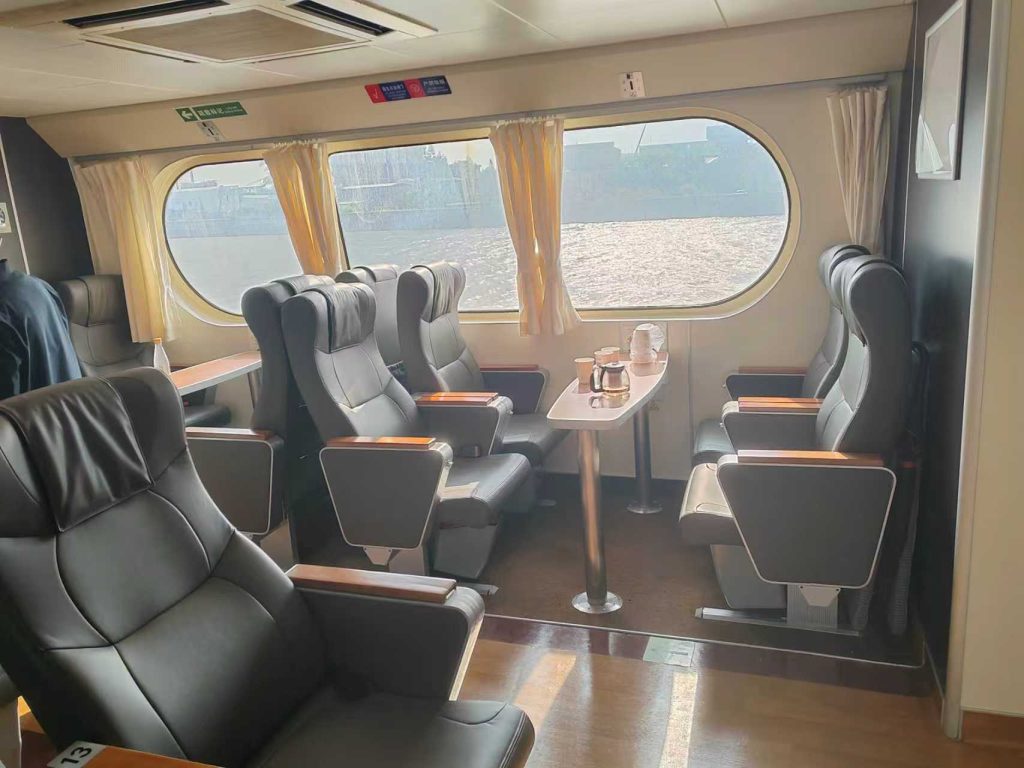
Table of Contents
Understanding the Design of Ferries Passenger Seats
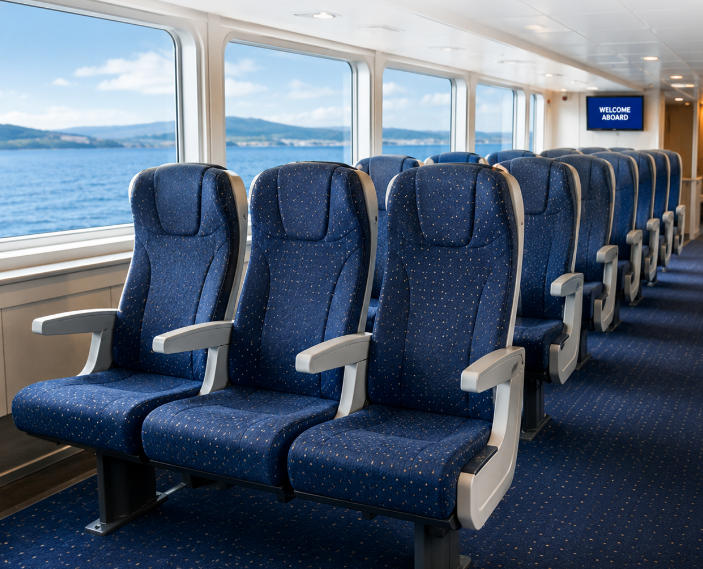
The main goal of ferry passenger seat design is to offer safe and comfortable shelter for travelers for the entire trip. Whether it is meant for everyday commuters, people visiting for leisure, or those riding over longer distances, ferry seats need to hold passengers steady during the movement of the vessel while also making the best possible use of the limited cabin space.
Unlike seats used in buildings, ferry seats are shaped for conditions where vibration, wave impacts, humidity, and frequent passenger turn over happen again and again. Because of this, each piece of the seat design is weighed carefully, so it can deliver steady results in real marine operating settings.
1. Ergonomic Design
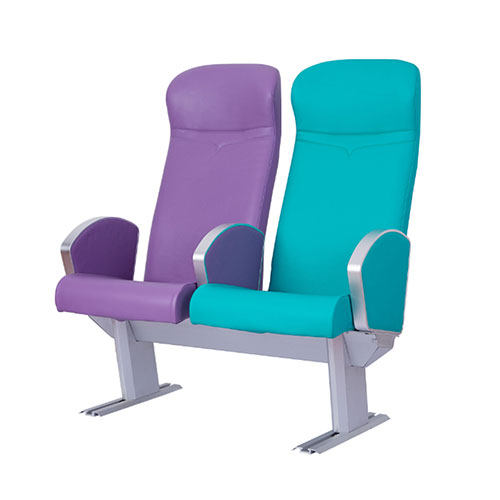
Ergonomics plays a central role, in how ferry passenger seats get designed. People can be seated for extended periods, so proper body support matters a lot, for reducing discomfort and fatigue. Designers look at human body dimensions, posture needs and seating behaviors, to work out forms that feel comfortable for a wide mix of users.
The shapes of the seat cushion and backrest are carefully engineered, to support the spine and spread body weight in an even way. Getting the right seat height, seat depth and backrest angle helps keep a natural sitting position, and having enough legroom also aids passenger comfort. On ferries that run longer routes, these ergonomic choices become even more important, because passengers are onboard for longer.
2. Structural Design and Strength
The structural framework of a ferry passenger seat needs to be able to take repeated use, while still dealing with vessel movements and those dynamic loading conditions that happen during travel. Seat frames are usually built to keep stability and maintain structural integrity through years of operation, not just for the first trips.
Designers often choose lightweight but very rigid materials like marine-grade aluminum, stainless steel, and reinforced composites. These materials deliver the required strength while also helping to reduce the overall weight of the vessel. Structural calculations and practical testing make sure the seating system can handle passenger loading, vibration, impacts, and emergency scenarios without reducing safety margins.
The mounting system matters just as much, because the seat has to stay firmly attached to the deck even when the sea turns rough, and the motion becomes more aggressive.
3. Material Selection for Marine Environments
Material selection really is one of the key elements when designing ferry seats. Once you put it in a marine environment, the problems seem to pile up faster, things like corrosion, wear, and overall material degradation can show up earlier than expected. Because of this, manufacturers often pick materials on purpose, for their durability and their resistance to what the environment throws at them.
In many cases, the metal bits are handled with corrosion-resistant alloys, or else they get specialized surface treatments applied. Composite materials get used a lot too, mainly because they bring strength while staying light, plus they resist moisture very well. As for the upholstery, those materials are chosen based on how well they can deal with constant passengers, repeated cleaning steps, ultraviolet exposure, and contact with moisture. Sometimes people overlook how much that combination matters.
With thoughtful material selection, designers can stretch the service life, cut down on maintenance tasks, and also lower operational costs.
4. Safety-Oriented Design Features
Safety considerations end up influencing nearly every aspect of ferry passenger seat design, so it is not just about comfort, it is more about onboard survival stuff. Seats have to comply with maritime regulations that cover passenger vessels and, at the same time, they should contribute to the overall safety picture on board.
Fire-resistant materials are often built into the seat, this helps reduce fire hazards while also supporting emergency response efforts when time is tight. The seat structure is engineered to stay stable even with dynamic conditions, meaning vibration and shifting movements. Smooth edges and carefully contoured surfaces help reduce the chance of injury. Seating arrangements are also planned so that aisles, exits, and emergency routes remain easy to reach, that way passengers can circulate efficiently throughout the vessel when necessary.
When safety requirements are integrated into seat design in a practical way, passengers are better protected, and the vessel stays aligned with regulatory compliance duties.
5. Space Efficiency and Layout Considerations
Ferry operators have to juggle passenger comfort and the goal to maximize seating capacity at the same time. So, ferry seat design usually leans toward making the best use of the cabin space that is available. Designers look closely at seat dimensions, row spacing, and different layout setups, so they can hit that sweet balance between comfort and capacity, not just one or the other.
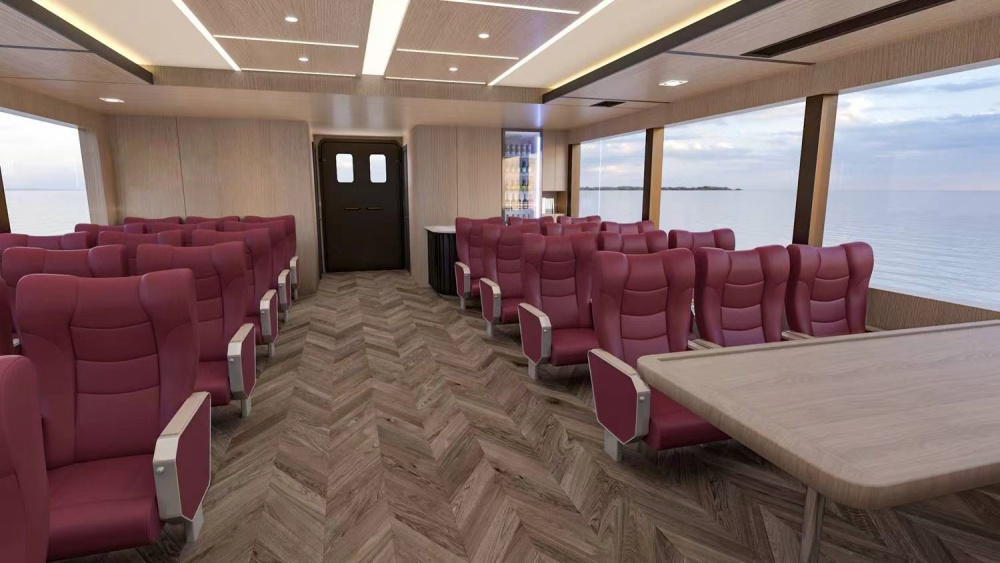
What the seating arrangement looks like can change a lot with the vessel’s operating profile. High-capacity commuter ferries tend to focus more on space efficiency. Meanwhile, long distance passenger ferries may give a bit more room per person to increase comfort and ease. Flexible or modular seating systems are showing up more often too, because they let operators reconfigure the cabin layout as service needs shift, even mid stream.
6. Aesthetic and Interior Design Integration
Passenger seats also matter for how the ferry looks inside. Many modern ferry operators understand that a nice, well-considered cabin makes the trip feel better and it can reinforce their brand image too.
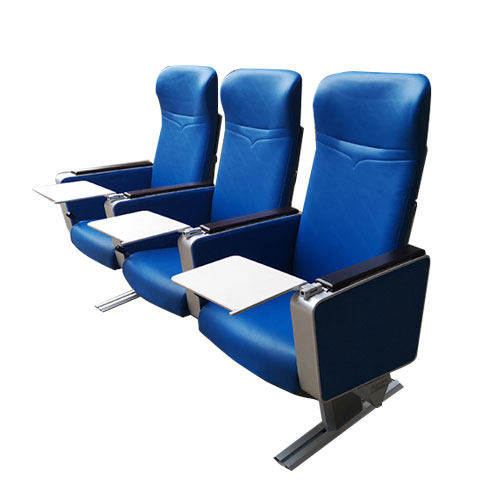
Seat colors, upholstery textures, and the overall styling are usually chosen to match the vessel interior design theme, and it can matter a lot. Contemporary seating designs blend functionality with a pleasing visual rhythm, so the space feels inviting comfortable and professional at the same time. Aesthetic considerations are especially important on tourism-focused ferries, because passenger first impressions play a big role in how satisfied customers end up being.
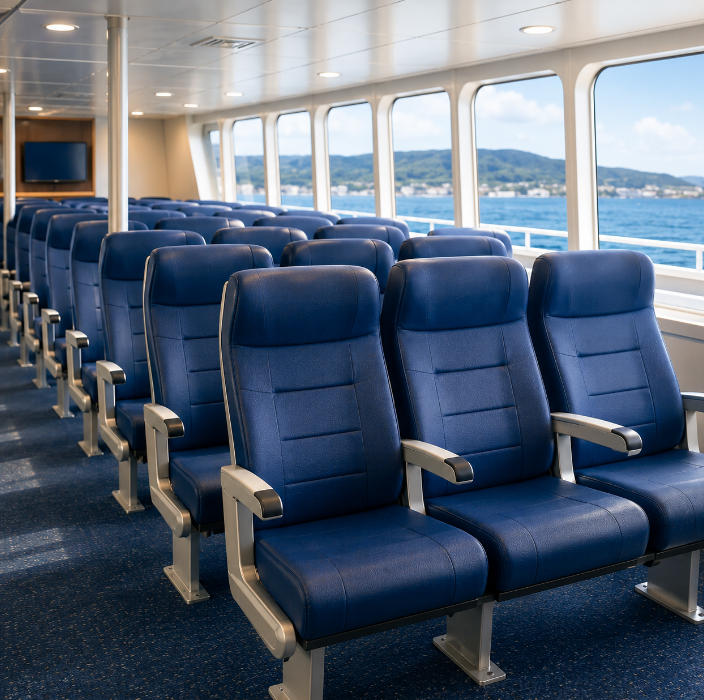
Types of Ferry Passenger Seats
| Type of Seat | Main Characteristics | Typical Applications | Advantages |
| Standard Passenger Seats | Fixed seating with basic cushioning and ergonomic support | Commuter ferries, short-distance routes | Cost-effective, space-efficient, easy to maintain |
| Reclining Passenger Seats | Adjustable backrests and enhanced cushioning | Medium- and long-distance ferries | Improved comfort during extended voyages |
| Premium-Class Seats | Wider seats, extra legroom, premium upholstery, additional amenities | VIP lounges, premium passenger areas | Enhanced passenger experience and comfort |
| Bench Seats | Long continuous seating structures accommodating multiple passengers | High-capacity ferries, open-deck areas | Maximizes passenger capacity and simplifies maintenance |
| Foldable Seats | Seats that can be folded when not in use | Multi-purpose ferry cabins, flexible passenger areas | Optimizes space utilization and layout flexibility |
| Modular Seats | Configurable seating units that can be rearranged or replaced individually | Modern ferries with changing operational needs | Easy customization and maintenance |
| High-Back Seats | Seats with extended backrests and head support | Long-distance passenger ferries | Better posture support and reduced fatigue |
| Outdoor Deck Seats | Weather-resistant seats designed for open-air environments | Exterior passenger decks | Resistant to UV exposure, moisture, and corrosion |
| Accessible Passenger Seats | Designed for elderly passengers and individuals with mobility limitations | Accessible seating zones throughout the vessel | Improved inclusivity and compliance with accessibility requirements |
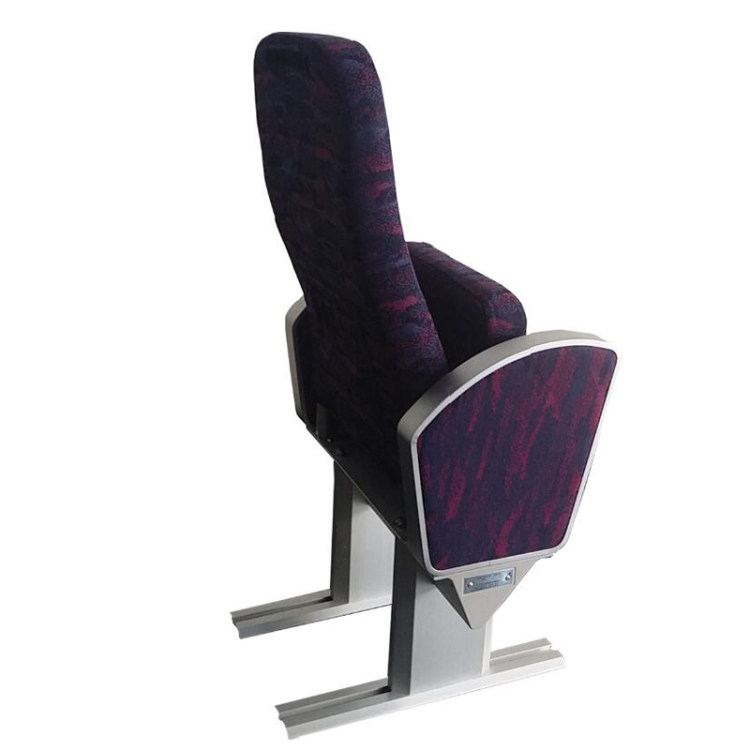
Understanding the Design of Workboat Passenger Seats
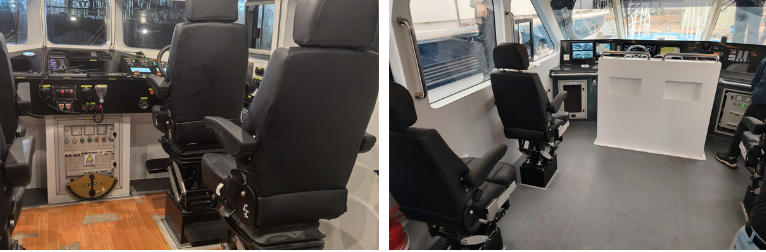
The main objective for workboat passenger seat design is to shield the people aboard from the physical stresses that come with the vessel’s motion. Workboats are often pushed at higher speeds than conventional passenger vessels, and they regularly meet rough seas, sudden collisions, and ongoing vibration. In practice the passengers can be offshore technicians, engineers, maintenance crews, pilots, and other personnel traveling back and forth to work sites.
The seating system works like an important link, between the boat and the occupants, aiding in reducing the transfer of shocks and vibrations. Those loads can drive fatigue, discomfort, and even injury if they are not managed. When the seat is done well, passenger well being improves, and operational safety benefits too.
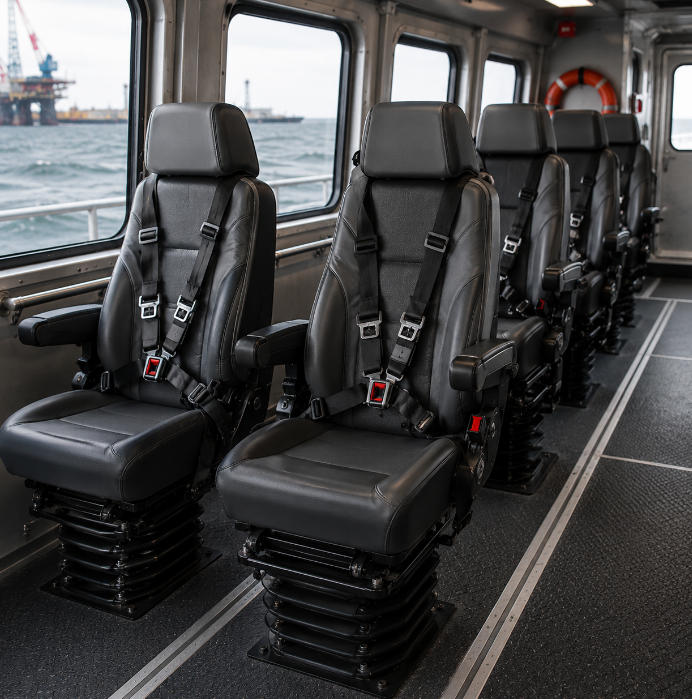
1. Ergonomic Considerations
Ergonomics is a basic piece of workboat seat design, because people might stay onboard for long stretches while the vessel keeps moving in unpredictable ways. So the people who design these systems focus on seating that supports a natural body posture and helps cut down physical strain in day to day use.
In practice, the seat cushion form, the backrest angle, the lumbar support, and the overall seating geometry are built with intent, so body weight gets spread out more evenly and pressure spots are less noticeable. When ergonomic support is set up well, passenger comfort tends to last through long transits, and at the same time fatigue and musculoskeletal stress can be reduced.
In many real jobs, the design is also adjusted for occupants wearing protective clothing, life jackets, or specialized work gear, so the seats stay practical even when operations are demanding.
2. Shock Mitigation and Suspension Systems
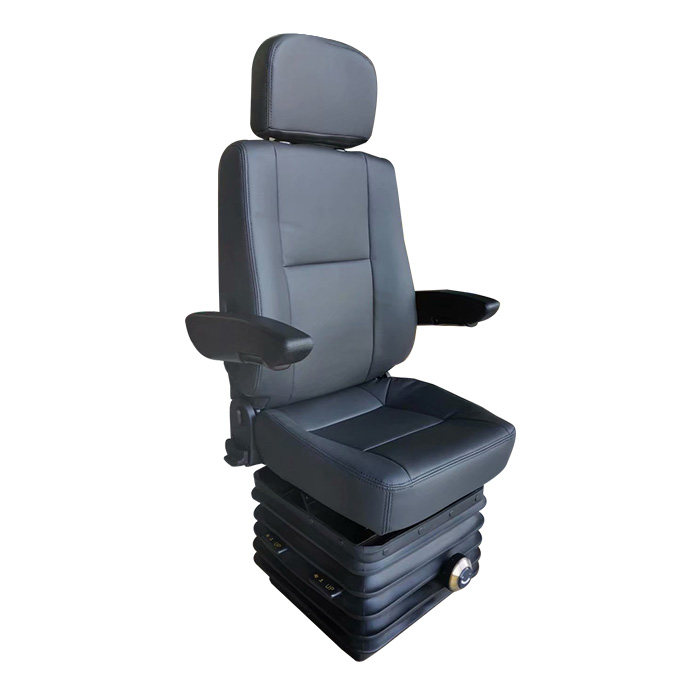
One of the most distinctive things about workboat passenger seats is that they include shock-mitigation technology. When a high-speed vessel runs, its hull can hit the waves and that can cause noticeable vertical accelerations. If there is no real protection, these repeated contacts may bring discomfort, or even turn into long-term spinal injuries.
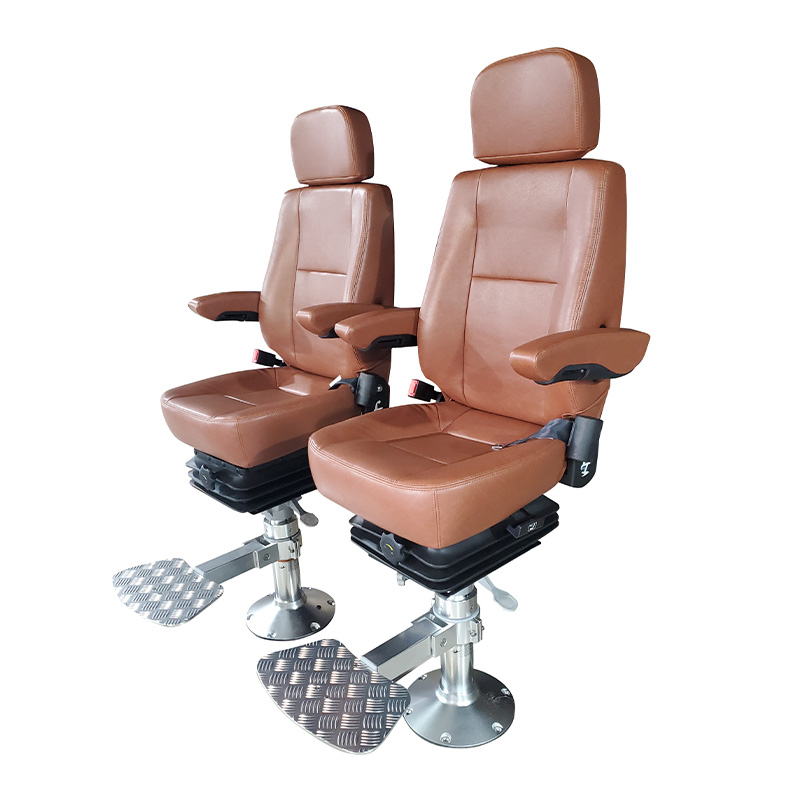
Because of that, many workboat seats have advanced suspension mechanisms. They are meant to take in and dissipate the impact forces before those loads actually reach the person sitting there. Depending on the design, the system might use mechanical springs and dampers, pneumatic components, or other energy-absorbing technologies that are built for this exact purpose.
The value of these shock-mitigating seats has grown a lot lately. Vessel operators want to improve crew welfare, reduce the likelihood of injury, and also meet occupational health and safety requirements.
3. Structural Strength and Reliability
Workboat passenger seats must deal with extreme daily demands on the job. Structural integrity matters a lot, because these seats are getting constant vibration, repeated impacts, and heavy use every single day. The seat frame plus the mounting structure are worked out to handle those loads, while still keeping stability and safety.
Manufacturers often choose marine-grade aluminum, stainless steel, and high-strength composite materials, to hit the right mix of stiffness, resistance to corrosion, and weight reduction. There is usually extensive testing to prove the seats can handle both normal operations and emergency moments.
The mounting systems are also designed to connect the seats tightly to the vessel structure, so passengers stay protected, even when the vessel is going through rough motions that really challenge everything.
4. Material Selection for Harsh Marine Environments
Material selection is a big part of the long-term performance for workboat passenger seat s. In marine environments, equipment gets hit with saltwater, high humidity, ultraviolet exposure, temperature swings and mechanical wear, basically every day.
Corrosion-resistant metals support structural integrity, while advanced composite materials give durability without adding extra mass. Upholstery materials get picked based on how well they resist moisture, abrasion, chemical exposure, and the frequent wash-down routines. A lot of current seat covers also include antimicrobial properties to keep hygiene stable in high-traffic areas.
With these material choices, the seating system usually needs less upkeep and it can keep going for longer.
5. Safety Features
Safety is a defining aspect of workboat passenger seat design. Beyond shock absorption, many seats also add protective elements that help keep occupants secure during vessel operations.
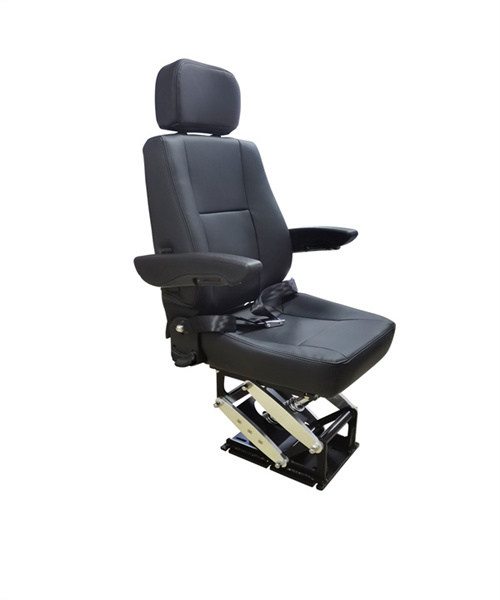
High side supports, integrated grab handles, and secure seating spots help passengers stay steady during rough sea conditions. Some seating systems may come with restraint mechanisms or harnesses for duties in particularly demanding operating environments. The overall idea is to reduce the likelihood of injury while helping passengers keep a calm, secure, sitting posture for the full trip.
Meeting the right maritime rules and occupational safety standards remains a key focus during the full design process, start to finish.
6. Space Efficiency and Operational Functionality
Workboats often end up with limited cabin space because operational equipment, cargo and crew work areas have to fit too. So passenger seating needs to focus on practical functionality while using the available space in a more efficient way.
The seat layouts are carefully planned, to help safe movement inside the cabin and to support rapid boarding and disembarking. In some cases, modular or foldable seating solutions get used so there is more flexibility when operational needs change.
The design has to juggle passenger accommodation with the practical requirements of vessel operations, making sure the cabin stays functional as well as safe.
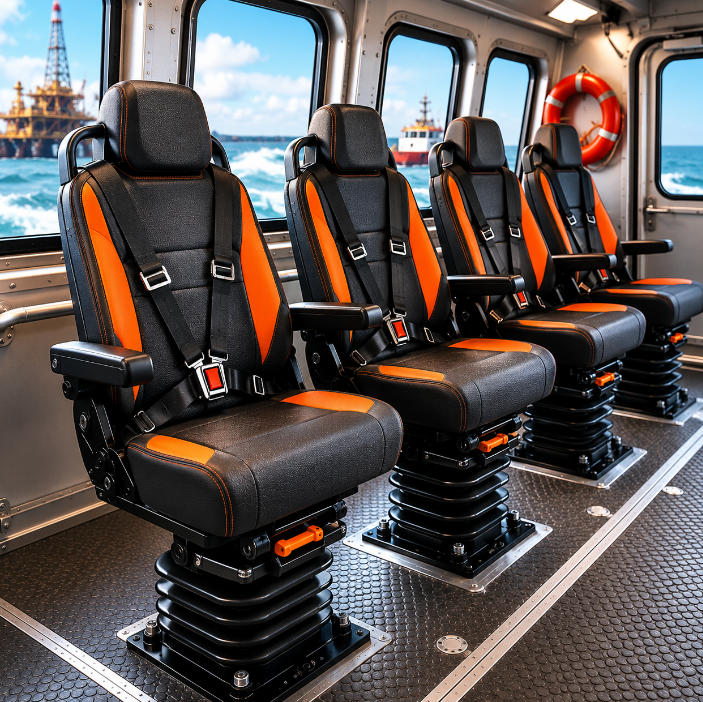
Types of Workboat Passenger Seats
| Type of Seat | Main Characteristics | Typical Applications | Key Benefits |
| Fixed Passenger Seats | Rigid-mounted seats with durable construction | Utility boats, harbor workboats | Simple, cost-effective, low maintenance |
| Suspension Seats | Advanced mechanical or pneumatic suspension mechanisms | High-speed workboats, patrol boats | Enhanced comfort and protection in rough seas |
| High-Back Seats | Extended backrests with head and lumbar support | Offshore transport vessels | Improved posture support during long journeys |
| Shock-Mitigating Seats | Equipped with suspension systems to absorb impacts and vibration | Crew transfer vessels (CTVs), offshore support vessels | Reduces spinal stress and passenger fatigue |
| Foldable Passenger Seats | Seats that can be folded when not in use | Multi-purpose workboats | Maximizes cabin flexibility and available space |
| Modular Seating Systems | Configurable seating arrangements that can be adjusted as needed | Workboats with changing operational requirements | Adaptable layout and simplified maintenance |
| Bucket Seats | Deep-contoured seats with lateral support | Fast rescue craft and pilot boats | Improved occupant stability during vessel motion |
| Crew Transfer Seats | Specialized shock-absorbing seats designed for offshore personnel transport | Wind farm crew transfer vessels | Increased passenger safety and comfort |
| Bench Seats | Continuous seating for multiple occupants | Harbor vessels and utility craft | Efficient use of limited cabin space |
| Restraint-Equipped Seats | Integrated harnesses or restraint systems for occupant security | High-speed and extreme-condition operations | Enhanced protection in severe sea states |
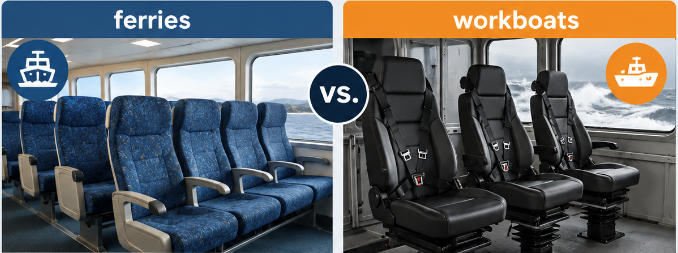
Key Differences in Passenger Seat Design Between Ferries and Workboats
| Design Aspect | Ferry Passenger Seats | Workboat Passenger Seats |
| Primary Objective | Passenger comfort and travel experience | Passenger protection and operational safety |
| Operating Environment | Relatively stable routes and moderate sea conditions | Rough seas, high-speed operations, and demanding marine environments |
| Comfort Features | Reclining backrests, padded armrests, enhanced cushioning | Functional comfort with emphasis on stability and support |
| Shock Absorption | Generally limited or basic vibration control | Advanced shock-mitigation and suspension systems |
| Seat Structure | Lightweight, ergonomic, and aesthetically designed | Reinforced, rugged, and impact-resistant construction |
| Passenger Capacity | Optimized for high passenger volumes | Optimized for smaller groups of workers and crew |
| Safety Features | Fire resistance, secure mounting, evacuation accessibility | Shock protection, restraints, lateral support, and occupant stabilization |
| Material Selection | Focus on comfort, appearance, and corrosion resistance | Focus on durability, impact resistance, and corrosion protection |
| Cabin Layout | Maximizes seating density and passenger flow | Prioritizes operational functionality and safety |
| Typical Users | Commuters, tourists, and general passengers | Offshore workers, technicians, pilots, and crew members |
Key Factors to Consider for Choosing the Suitable Passenger Seating Solution for Ferries and Workboats
Selecting the right passenger seating solution takes some careful thought, because you want good daily performance, regulatory fit, and real long-term value.
1. Understanding the Vessel’s Operational Purpose
To do that, you really need to start with the vessel’s actual work. The first move is understanding what the vessel is meant to do in practice, not only on paper. Ferries usually move lots of people, comfortably, over short trips or longer crossings, so passenger comfort plus overall capacity tend to be the main priorities. Workboats are normally focused on carrying crew members, technicians and offshore staff, in rougher marine settings, where safety measures and shock protection can matter more than any extra comfort or feeling of luxury.
Once you have a clear picture of the vessel’s operational role, it becomes easier to decide which seating elements you should prioritize during the selection process.
2. Evaluating Passenger Comfort Requirements
Passenger comfort is a crucial thing to think about, especially for ferries that run longer routes. If the seats are ergonomically designed with enough cushioning, good lumbar support, armrests, and some reclining options, the whole trip feels noticeably better. When people can sit well, they tend to feel less worn out, and that usually means better passenger satisfaction.
On workboats the whole comfort topic still matters, but it has to share the space with stability and protection needs. In those cases, the seating systems should offer firm enough support, while also letting passengers stay accommodated even when they are wearing safety equipment and work clothing.
Also, the expected journey duration should affect seat selection, because on longer voyages passengers generally need stronger ergonomic support, not just the basic kind.
3. Assessing Safety Requirements
Safety is one of the more important factors when selecting passenger seating for marine vessels, and it really should be treated seriously. The seating setup must meet the maritime regulations that apply and also the classification society demands. Each seat needs to be firmly mounted, structurally robust, and able to withstand vessel motion plus emergency scenarios, even when things get hectic.
For workboats running in rough waters or traveling at high speed, shock mitigating seats may be needed, so occupants are protected from repeated impacts, as well as vibration. Options like suspension systems, lateral support, and restraint mechanisms can improve passenger safety in demanding operating situations. Even the smallest details matter, so the arrangement should be reviewed closely.
The amount of safety protection that is required should match the vessel operating conditions, and the passenger profile too. It should not be picked randomly or assumed to be good enough, because operational context changes the risk.
4. Considering the Operating Environment
Marine environments are pretty hard on seating systems. Saltwater, that high humidity, ultraviolet radiation, temperature swings and the always-on vibration can all quietly erode materials over time.
For passenger seats, operators should pay attention to materials that bring strong corrosion resistance, structural sturdiness, and solid weather tolerance. Marine-grade aluminum, stainless steel, reinforced composites, and purpose built upholstery materials are often chosen so the seats stay reliable longer.
Some vessels, especially those running in rough zones, need seating systems engineered for offshore exposure or other open marine conditions.
5. Passenger Capacity and Space Utilization
Efficient use of onboard space is another really important consideration. Ferries often have to maximize passenger capacity while still keeping acceptable comfort levels. Seat dimensions, row spacing, and the overall layout should be tuned, so you can reach a practical balance between capacity and passenger experience.
Workboats usually carry fewer passengers, yet the available cabin area can feel limited because of operational equipment and cargo needs. In these situations, compact seating layouts or modular designs can help improve overall functionality without reducing safety margins
It helps to plan seating arrangements carefully, this can enhance operational efficiency and also make passenger movement easier across the vessel.
6. Durability and Maintenance Requirements
Passenger seats are a long-term investment, so durability becomes a key selection factor. Seating systems should be able to handle frequent use, repeated cleaning, and constant exposure to marine conditions without showing significant wear or early deterioration.
Materials must handle corrosion, staining, scuffing, and UV exposure without giving up too soon. With modular designs you can swap a single piece, and it makes maintenance procedures easier, less downtime overall, in practice.
If you look at lifecycle costs, not just the first purchase cost, operators often get more real value across the entire vessel life.
7. Weight and Vessel Efficiency
Passenger seating weight can affect vessel performance, plus it can nudge fuel use higher. Many modern seating makers now use lightweight materials, with good structural strength, while keeping total mass lower than before.
By cutting the vessel weight, fuel efficiency usually improves, payload capacity can rise, and operating costs can drop. This matters a lot for high-speed ferries and workboats, because even small weight reductions can change how the vessel runs.
Choosing seating that is light but still durable helps meet both budget goals and environmental objectives.
8. Accessibility and Passenger Inclusivity
Modern passenger vessels are expected to help individuals with diverse mobility needs, in real life that means seating layouts should still leave spaces that work for elderly passengers , passengers with disabilities, and people who need extra assistance during the journey.
Those accessible seating locations ought to be simple to reach and also blended into the overall cabin design. Following accessibility regulations and industry best practices matters a lot, it supports a more inclusive passenger environment too, while improving the service quality the vessel operator delivers.
9. Evaluating Additional Features and Technologies
Recent progress in seating technology has brought in multiple options that can improve the passenger experience and boost operational efficiency. Ferries may gain from integrated charging ports, foldable trays, upgraded upholstery, and newer ergonomic designs , all of which can feel surprisingly practical once onboard.
Workboats might need adjustable suspension setups, more advanced shock mitigation tech, or even seating arrangements tuned to what they do day to day. In practice, operators should check which features actually bring real perks, based on the vessel’s intended operations and what passengers expect.
The idea is to pick features that boost day to day functionality, without making everything more complex, or adding too much to the maintenance workload.
10. Balancing Cost and Long-Term Value
Even though budget matters, the cheapest seating option is not always the best financial decision later. Better seating systems often deliver a longer service life, fewer servicing headaches, stronger rider comfort, and better safety performance overall.
A comprehensive evaluation should take in mind the acquisition costs, the maintenance expenses, the expected lifespan, plus the day to day operational benefits, and possible impacts on passenger experience. This broader look, helps operators make informed investment decisions that can really deliver long-term value.
Summary
- Ferry seats emphasize comfort, aesthetics, and high-capacity passenger accommodation
- Workboat seats prioritize safety, shock absorption and durability in demanding operational environments.
Final Thoughts
Although ferries and workboats both carry passengers, the seating needs are fundamentally different. If vessel owners and operators understand these distinct requirements, they can choose marine seating solutions that improve passenger wellbeing, help with maritime rules, and also support efficient vessel operations, because the flow of people and the time spent onboard can vary.