
How Free-fall Lifeboats Work to Enhance Safety in Emergencies
In emergency situations like fires, collisions, explosions, or when a vessel must be abandoned, lifeboats provide a dependable way for people to evacuate. Among the different types of survival craft, free-fall lifeboats are well known because they can deliver a rapid and safe exit, in particular on offshore platforms and bigger vessels.
Unlike traditional davit-launched lifeboats, free-fall lifeboats are designed so they slide down a launching ramp, then enter the water using gravity. This unusual method of launching cuts down evacuation time, boosts dependability in severe conditions, and it also helps shield the occupants from a number of hazards that can show up during ship emergencies.
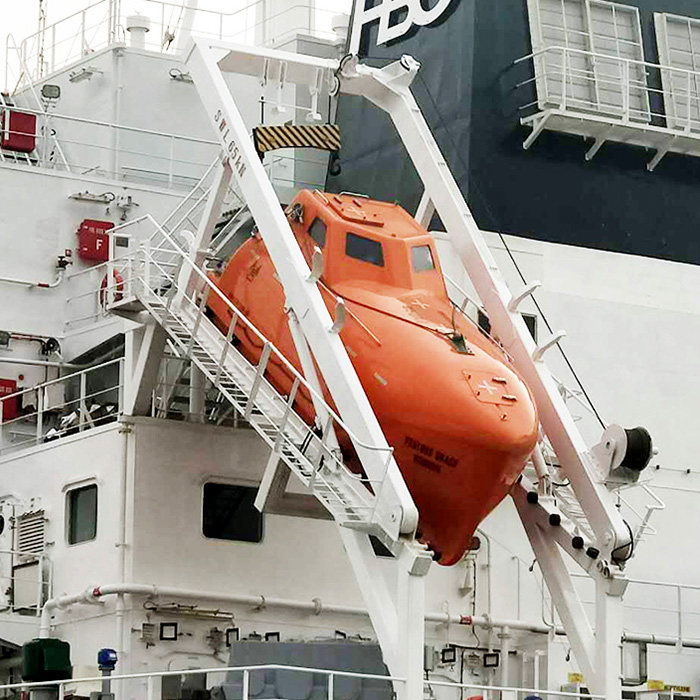
Table of Contents
Overview of Free-fall Lifeboats
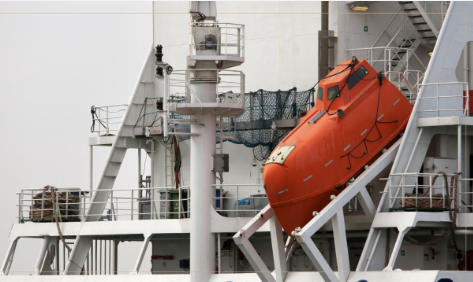
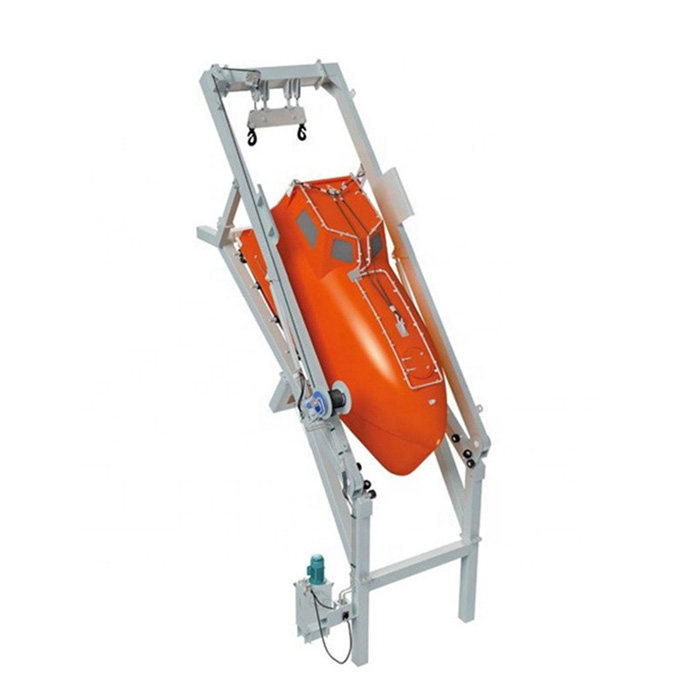
A free fall lifeboat is a fully enclosed survival craft that keeps passengers inside a protected cabin, before it gets released from where it sits on its launching position. During an emergency, the lifeboat is released from the release mechanism and it slides down the launching ramp, mostly just driven by its own weight, then it reaches the water at high speed.
This design helps the lifeboat get away from the danger zone quickly, which is really important in cases like fires, explosions, gas leaks, or when a vessel is sinking. Once it enters the water, the boat’s propulsion system takes over and lets it move away from the affected area while still maintaining a safer space for the occupants until rescue arrives.
Free-fall lifeboats are normally built to match international maritime safety standards, including requirements set by the International Maritime Organization (IMO) and the International Convention for the Safety of Life at Sea (SOLAS).
Working Process of Free-fall Lifeboats
The operation of a free-fall lifeboat involves several carefully engineered stages to ensure passenger safety during evacuation.
1. Emergency Activation and Lifeboat Preparation
The working process starts when a serious emergency takes place, like fire, collision, explosion flooding, or structural failure. When evacuation becomes necessary the alarms get activated, and crew members guide passengers toward the designated free-fall lifeboat station, without waiting around.
Before launching, passengers enter the fully enclosed lifeboat, and they take their assigned seats. The seating system is built to safeguard occupants under the high acceleration forces that happen during free fall, and during the water impact. Passengers also fasten their safety harnesses, so they remain firmly positioned for the whole launch sequence.
At this stage the crew, checks essential systems like the engine fuel supply steering equipment communication devices and emergency supplies, which is really the point. These checks help make sure the lifeboat can operate by itself after it hits the water.
2. Boarding and Securing Passengers Inside the Lifeboat
Once every passenger is inside, the lifeboat doors and hatches are shut, to form a more protected environment. The enclosed structure helps keep outside threats away, for instance smoke, flames, waves and harsh weather. So during evacuation, occupants are not exposed as much.
Crew members then verify that all passengers are seated and secured correctly before they activate the release system. This part matters because a free-fall launch creates strong forces. Those forces can influence passengers during acceleration and also when the lifeboat impacts the water.
The whole preparation phase is built to be finished quickly, since emergencies can progress fast. That leaves not much time to move everyone out, and into position.
3. Activation of the Release Mechanism
After the last safety checks are completed, the release mechanism gets activated to start the launching process. The release system unlocks the lifeboat from its securing position while still keeping a controlled movement, along the launch ramp.
Instead of conventional lifeboats that rely on mechanical lowering gear, free-fall lifeboats use gravity as the main driving force. That means there is less dependence on outside mechanisms that could get damaged or become unavailable during an emergency.
A dependable lifeboat launching mechanism makes sure the lifeboat stays securely stored in operations, but can also be rapidly deployed when it is truly needed.
4. Sliding Along the Launching Ramp
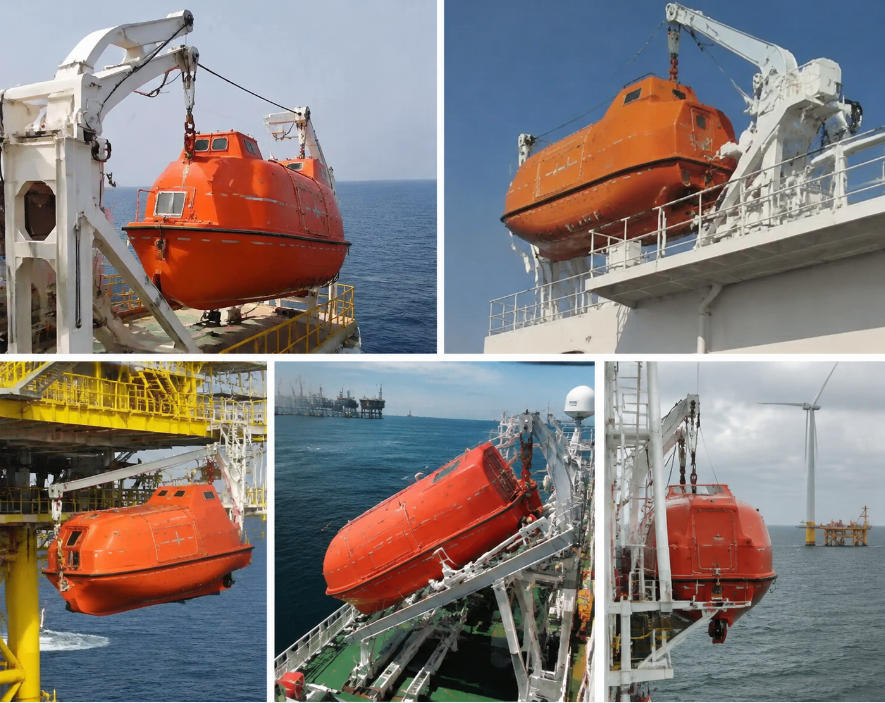
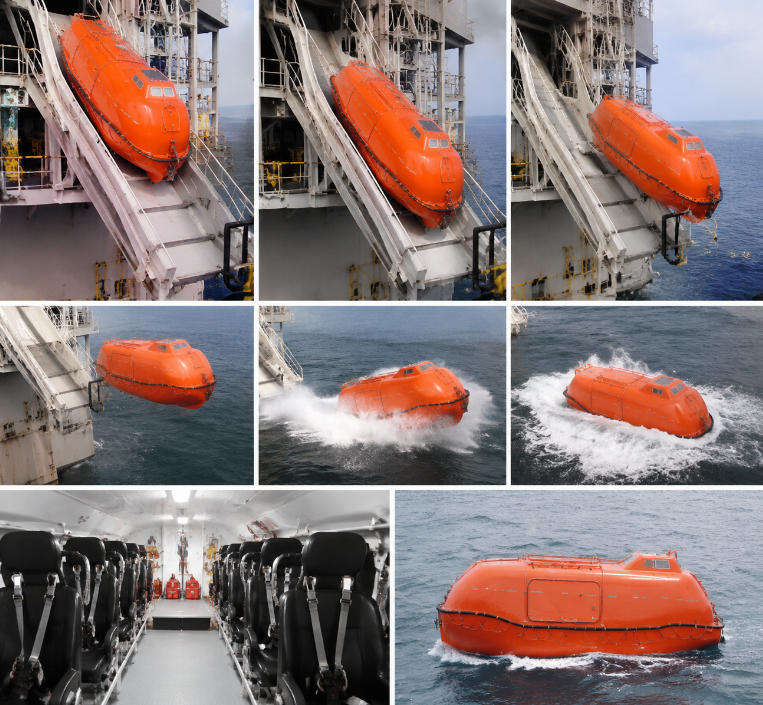
Once released, the lifeboat starts sliding down the slanted launching ramp. The ramp acts as a managed route that steers the lifeboat away from the vessel before it enters the free fall phase .
At this point gravity boosts the lifeboat’s speed, so it can reach the needed momentum for a safe breakaway from the ship or the offshore structure. The ramp layout together with the hull geometry makes sure the lifeboat stays steady and stays in the right spot while it moves, even with the changing forces.
That regulated slide, rather than an abrupt rush, helps avoid any touching with the vessel and gets the lifeboat ready for dependable water entry.
5. Free-fall Descent and Water Entry
Once the lifeboat clears the launching ramp, it moves through a brief free-fall interval before it meets the sea surface. Throughout that window, the hull design is key for steadiness and for managing where the craft lands.
The lifeboat is built to endure the loads that happen when it impacts the water. A rigid hull framework takes in the energy, and it lowers the stress on the craft as well as on the passengers.
When entering the sea, the lifeboat’s overall shape tends to help reduce too much rolling, or even that feeling of wobbly instability.
1. Engine Activation and Movement Away from Danger
After the lifeboat is in the water, the onboard engine is switched on to give independent propulsion. The crew then uses the steering system to push the lifeboat away from the abandoned vessel, or from the offshore installation.
Making distance from the emergency place is a major part of the survival routine. In incidents involving fire, explosions, fuel leaks, or toxic substances, remaining close to the damaged structure may expose passengers to further hazards.
Because of the independent propulsion system, the lifeboat can head toward a safer area while still maintaining communication with rescue teams.
2. Independent Survival Operation at Sea
After escaping from the danger zone, the free-fall lifeboat works like a sealed survival unit that stays independent. The covered cabin guards passengers against harsh marine conditions, while the onboard systems help with prolonged endurance.
The lifeboat carries core equipment, including emergency communication devices, navigation tools, signaling equipment, drinking water, food supplies, and medical materials. With these resources, occupants can stay protected until the rescue efforts are finished.
The lifeboat’s stability, shielding, and standalone operation make it fitting for offshore zones where outside help might need more time to arrive.
Safety Features of Free-fall Lifeboats
The safety performance of free-fall lifeboats comes from a combination of advanced structural design, reliable launching systems, protective features, and emergency operation capabilities.
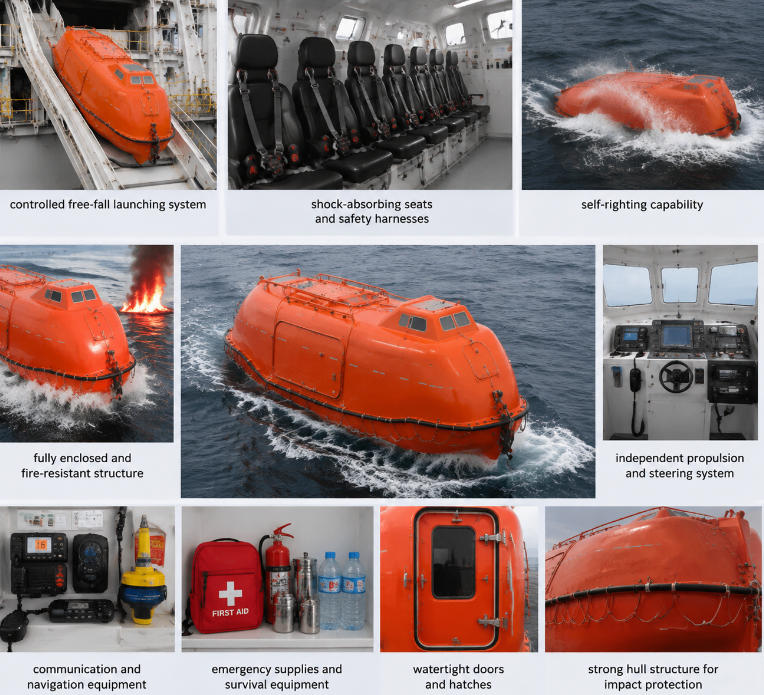
1. Fully Enclosed Design
One of the most significant safety features of free-fall lifeboats is that they have a fully enclosed structure. This enclosure basically creates a secure environment that protects passengers from harsh weather, and outside hazards during emergencies which is really the key idea.
The strong outer shell helps safeguard occupants against heavy rain, high waves, strong winds, smoke, and fire. In offshore settings where emergency situations can happen far from rescue assistance, the fully enclosed lifeboats delivers better survival conditions than open lifeboats do.
The sealed cabin structure also keeps water from entering during rough sea conditions, so passengers can stay sheltered while they wait for rescue.
2. Strong Hull Structure
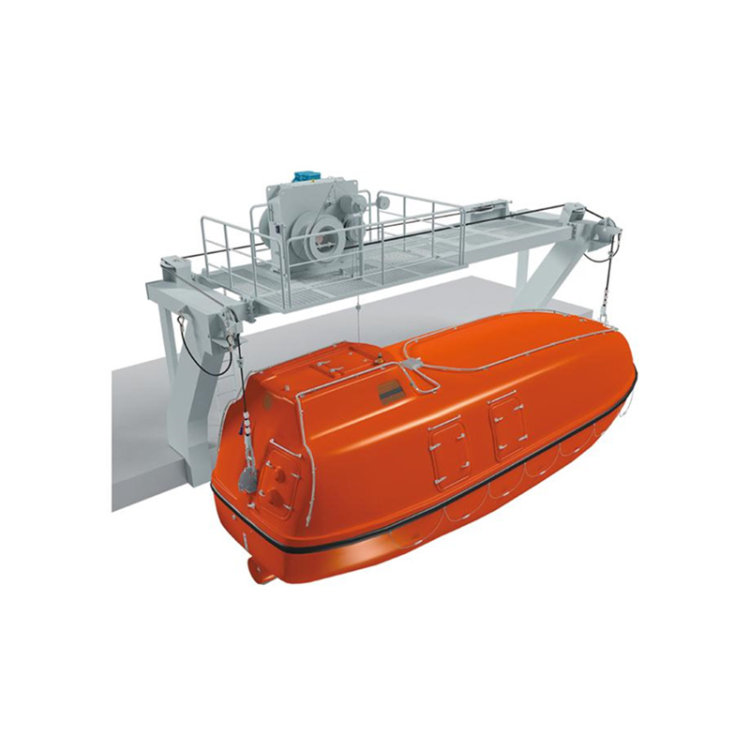
Free-fall lifeboats are made with reinforced hulls, meant to resist the high forces produced during launching, and the moment the boat hits the water. When the lifeboat leaves the launch ramp, it experiences notable acceleration before it finally contacts the water surface.
To manage these forces, manufacturers rely on sturdy composite materials and more advanced hull geometries, which in turn help with impact tolerance. The hull’s overall form supports the even distribution of impact energy, and it keeps the framework steady after it touches down in the water.
With this reinforced build, the chance of damage is reduced, and the lifeboat still has a good chance of staying serviceable after a high-velocity departure.
3. Controlled Free-fall Launching System
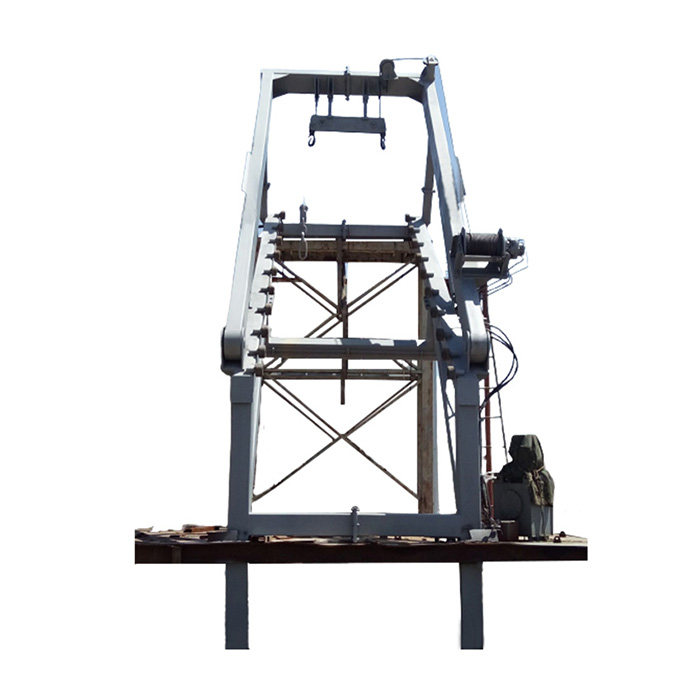
The controlled free-fall launching system in life boats is a main element, it boosts evacuation dependability. Rather than needing cranes, cables, or a manual lowering routine, free-fall lifeboats use gravity to finish the launch sequence.
Once the release mechanism is triggered, the lifeboat slides along an inclined launching ramp and leaves the ship in a controlled fashion. This configuration decreases the odds of launch failure, especially from damaged mechanical equipment during urgent situations.
The simple, efficient launching method lets passengers get away pretty quickly, which matters a lot during incidents like fire, explosions, or vessel instability.
4. Shock-resistant Seating and Passenger Restraints
In a free-fall lifeboat, the passenger seating systems are built with special attention so occupants stay protected during acceleration and the impact phase. Each seat includes secure restraints that hold passengers in place while the lifeboat is being launched.
The seats are positioned to support the body, and they reduce the effects of abrupt forces that come from the lifeboat’s motion. This helps limit injuries, and it adds extra cover when the lifeboat hits the water at a high speed.
Together, sturdy seating arrangements and safety harnesses help make sure passengers remain stable for the full evacuation cycle.
5. Self-righting Capability
Another important safety feature on many free-fall lifeboats is self righting capability. In marine environments things can be unpredictable, and strong waves or severe weather might cause the lifeboat to overturn after it is launched, even if everyone is prepared well.
A self-righting lifeboat is made so it automatically returns to an upright posture if it capsizes. Then passengers can stay inside the sealed cabin, without needing to take risky recovery actions themselves, which is really the point.
With this ability survival odds increase a lot during emergencies out in rough offshore waters, where conditions change quickly.
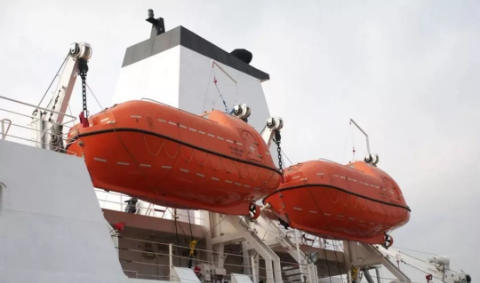
6. Independent Engine and Propulsion System
Free-fall lifeboats also have an independent engine setup, so they can keep working after launching without leaning on the main vessel. After the lifeboat touches the water, the propulsion arrangement lets it maneuver away from the emergency zone, with no delay.
Quick distancing from the damaged vessel or offshore installation is crucial because the accident may include fire, fuel leaks, explosions, or hazardous toxic agents. The separate propulsion setup lets the survivors get to a more secure distance, and it enhances rescue activities overall.
7. Fire-resistant and Heat-protection Features
Fire remains one of the most severe dangers in sea emergencies, especially on offshore platforms, tankers and industrial carriers. Free-fall lifeboats are built using fire-resistant materials along with guarded structural design, so exposure to intense heat is reduced.
The closed cabin limits immediate contact with flames and smoke, and heat-resistant components add further coverage during evacuation. In addition, some advanced lifeboat designs are prepared to work in places influenced by burning fuel, giving extra protection for crew members when the incident becomes critical.
8. Emergency Communication and Survival Equipment
Free-fall lifeboats have a range of emergency systems that help people keep breathing and staying alive after they evacuate. Communication devices let the occupants get in touch with rescue teams while navigation instruments help the lifeboat hold a safer, more stable course at sea. In the meantime, the survival kit is not small either, with drinking water, emergency meals, medical supplies, signaling tools and protective clothing and gear.
All of that together means passengers can remain secure while waiting for rescue, even if it takes a long time before help arrives.
9. Reliable Release Mechanism and Safety Controls
The release mechanism is, in practice, a key part of a free-fall lifeboat. It has to keep the lifeboat firmly secured during operations, yet still permit quick and dependable deployment when something goes wrong.
Modern release systems get built with safety controls to stop an accidental launch, and to keep things smooth when evacuation is needed. Regular inspections and testing still keep the reliability of these mechanisms up to standard.
If the release system is maintained properly, the lifeboat can be dispatched effectively when each second matters.
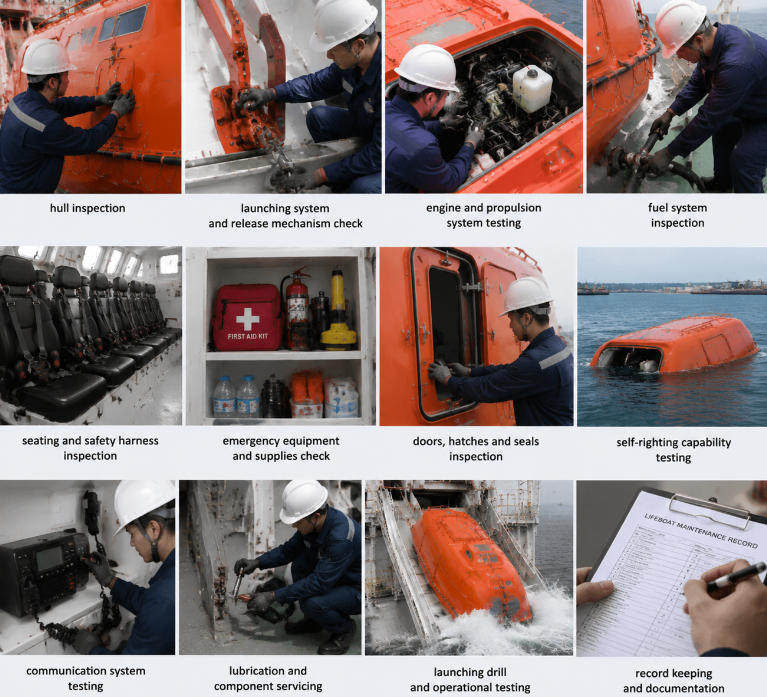
Maintenance and Testing Requirements for Free-fall Lifeboats
Regular maintenance and testing in free-fall lifeboats are essential to ensure the products remain ready for emergency evacuation.
| Maintenance and Testing Item | Description of Requirements | Importance for Safety |
| Hull Structure Inspection | Check the lifeboat hull for cracks, corrosion, deformation, damage, and material deterioration. Inspect the outer shell and internal structure regularly. | Ensures the lifeboat can withstand free-fall launching forces and water impact. |
| Launching System Inspection | Examine the launching ramp, release mechanism, securing devices, and related components for wear or malfunction. | Guarantees reliable and safe deployment during emergency evacuation. |
| Release Mechanism Testing | Test the release system to confirm smooth operation and prevent accidental release or failure during launching. | Ensures the lifeboat can be activated quickly when an emergency occurs. |
| Engine and Propulsion System Checks | Inspect the engine, fuel system, cooling system, batteries, and steering equipment. Perform regular operational tests. | Ensures the lifeboat can move away from danger after entering the water. |
| Fuel System Inspection | Check fuel tanks, fuel lines, filters, and connections for leaks or contamination. | Provides reliable engine operation during extended emergency situations. |
| Safety Harness and Seating Inspection | Examine passenger seats, restraint belts, buckles, and shock-absorbing systems for damage or wear. | Protects occupants from injury during acceleration and water entry. |
| Emergency Equipment Inspection | Check communication devices, navigation equipment, signaling tools, first-aid supplies, food, water, and survival equipment. | Supports passenger survival and improves rescue efficiency. |
| Door and Hatch Inspection | Verify that doors, windows, and hatches close properly and maintain watertight protection. | Prevents water ingress and protects passengers from external hazards. |
| Fire Protection System Testing | Inspect fire-resistant materials, insulation, and fire protection equipment where applicable. | Helps protect occupants during fire-related emergencies. |
| Self-righting System Testing | Check the lifeboat’s ability to return to an upright position after capsizing, if equipped. | Improves survival capability in rough sea conditions. |
| Communication System Testing | Test radios, emergency beacons, and signaling equipment to ensure proper operation. | Allows passengers to communicate with rescue teams quickly. |
| Visual Inspection Before Use | Perform routine checks for cleanliness, corrosion, loose parts, and visible defects. | Helps identify problems before they affect emergency performance. |
| Lubrication and Component Servicing | Apply proper lubrication and replace worn components according to manufacturer recommendations. | Extends equipment lifespan and maintains operational reliability. |
Applications of Free-fall Lifeboats in Offshore and Marine Industries
Free-fall lifeboats are widely applied across offshore and marine industries because of their fast launching capability and reliable performance in emergency situations.
| Application Area | How Free-fall Lifeboats Are Used | Safety Benefits |
| Offshore Oil Platforms | Installed as emergency evacuation systems for workers on fixed offshore drilling platforms and production platforms. | Provides rapid escape during fires, explosions, gas leaks, and severe weather conditions. |
| Floating Production Storage and Offloading Units (FPSOs) | Used as primary survival craft for personnel working on floating oil and gas production facilities. | Ensures reliable evacuation in remote offshore locations where rescue support may be limited. |
| Drill Ships | Installed on deep-water drilling vessels to provide emergency escape capability during drilling operations. | Allows quick abandonment of the vessel during well control incidents, fires, or structural emergencies. |
| Offshore Support Vessels | Used by crews supporting offshore construction, maintenance, and exploration activities. | Improves crew safety by providing an independent evacuation method in harsh marine environments. |
| Cargo Ships | Installed on large commercial cargo vessels as part of the vessel’s life-saving equipment. | Provides fast evacuation during collisions, flooding, or onboard fires. |
| Oil Tankers | Used as emergency escape systems due to the high risks associated with transporting flammable liquids. | Protects crew members from fire, explosions, and hazardous cargo-related incidents. |
| Chemical Tankers | Provides emergency evacuation capability for vessels carrying dangerous chemicals. | Helps reduce exposure to toxic substances and chemical hazards during accidents. |
| Container Ships | Installed on large container vessels operating on international routes. | Ensures reliable crew evacuation during severe weather, accidents, or vessel damage. |
| Offshore Construction Vessels | Used during subsea construction, platform installation, and marine engineering projects. | Provides emergency protection for workers operating in complex offshore environments. |
| Jack-up Rigs | Installed on mobile offshore drilling units to support emergency evacuation during drilling operations. | Enables fast evacuation when platform stability or operational safety is threatened. |
| Semi-submersible Platforms | Used on floating offshore structures involved in exploration and production activities. | Offers dependable evacuation even in deepwater and challenging ocean conditions. |
| Passenger Ships | Used on some large passenger vessels where enhanced evacuation systems are required. | Provides additional protection for passengers and crew during maritime emergencies. |
| Research Vessels | Supports scientific teams working in remote ocean areas. | Improves safety when operating far from coastal rescue services. |
| Naval and Government Vessels | Used on specialized marine vessels requiring advanced emergency escape solutions. | Provides rapid evacuation capability under demanding operational conditions. |
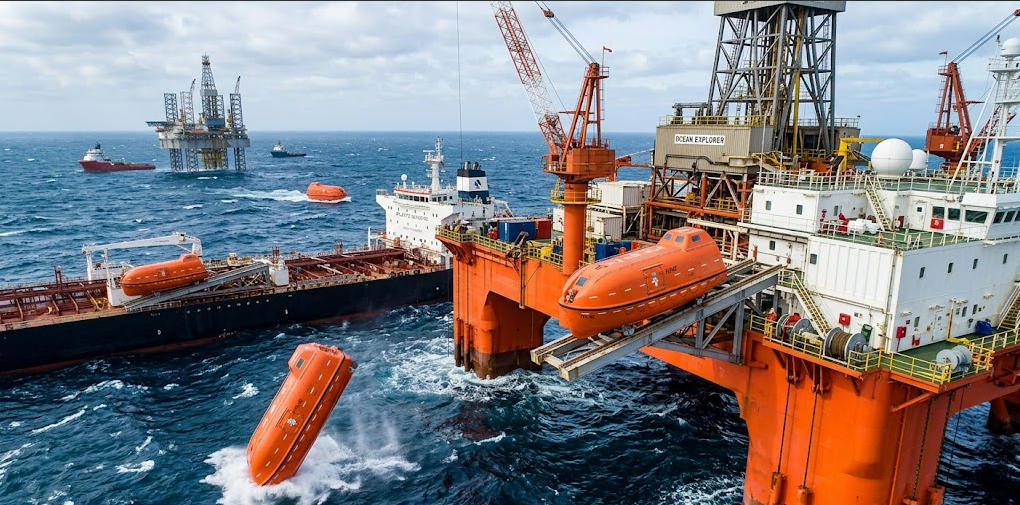
Final Thoughts
Free-fall lifeboats are kinda important for upping maritime as well as offshore safety, because they bring a rapid, dependable, and protective way to evacuate. With their gravity-driven launching setup, fully enclosed body, impact-resistant build, and standalone operation, they work really well when emergencies happen.