What Is an ABS Approved Stockless Anchor? Certification Guide
Table of Contents
International shipbuilding and offshore operations require anchor certification because it serves as a mandatory structural safety standard. The ABS approved stockless anchor meets all classification requirements, which provide dependable performance, complete traceability, and suitable operation in harsh ocean environments.
For shipowners, shipyards, and offshore engineering contractors, it is crucial to understand the ABS certification standards when purchasing ship anchoring equipment. This guide will explain what ABS certification means, the certification requirements, the testing procedures, and how to select qualified suppliers.
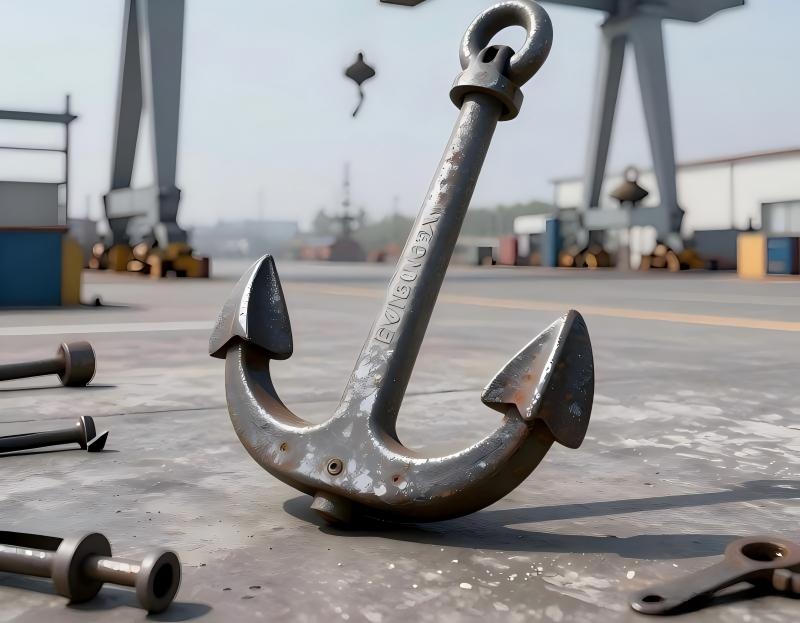
What Is an ABS Approved Stockless Anchor?
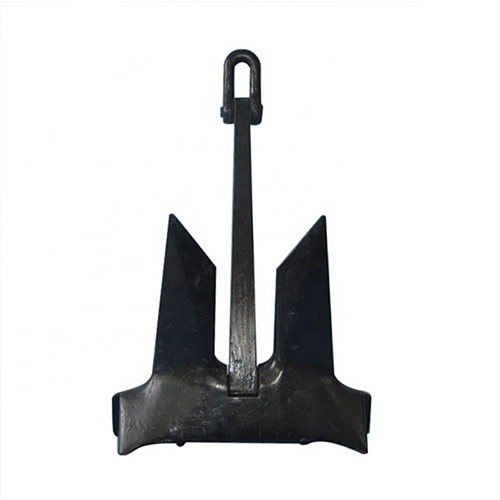
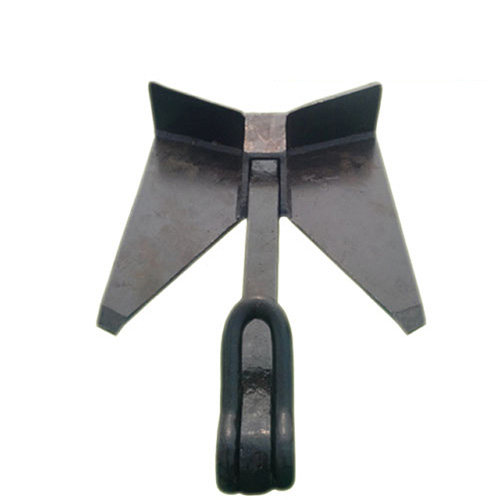
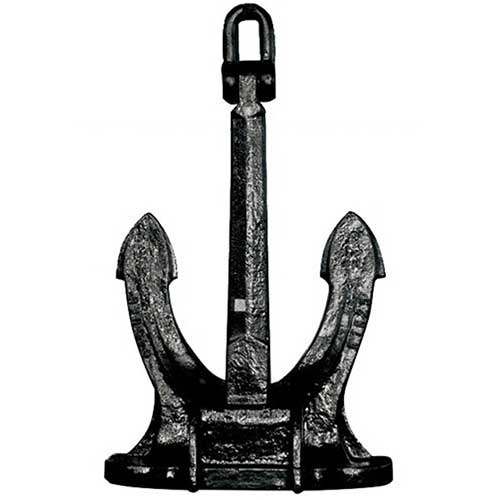
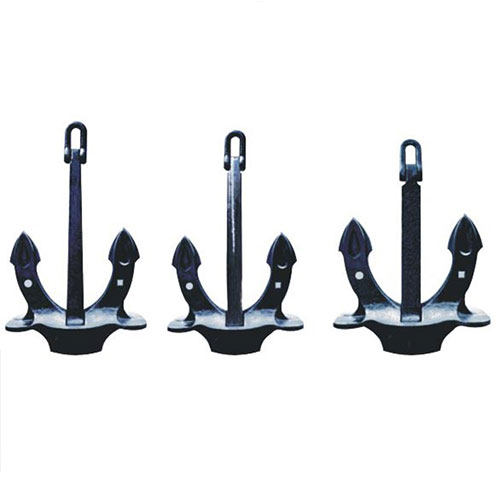
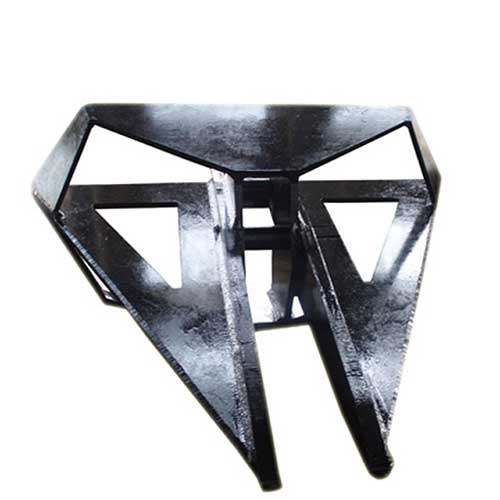
A stockless anchor is the most widely used anchor type for commercial vessels. Unlike traditional stocked anchors, it lacks a transverse bar (stock), making it easier to store in the anchor chain locker. Common types include:
When the label of an anchor states that the anchor is ABS accredited, it means that the anchor has been built, tried, and verified following the standards set by the American Bureau of Shipping (ABS).
ABS is one of the world’s leading classification societies. Its approval confirms that the anchor:
- Meets structural safety standards
- Complies with material and mechanical property requirements
- Has passed proof load and inspection testing
- Is eligible for installation on ABS-classed vessels
Relying on a non-approved anchor in a vessel working in ABS-class will probably attract some grounded reasons for non-compliance upon inspection.
Why ABS Certification Is Critical for Marine Anchors
Marine anchors are primary safety components. In heavy weather or emergency anchoring situations, failure is not an option.
ABS certification ensures:
1. Structural Integrity: The anchorages must be capable of withstanding the forces generated by the movement of the vessel, the action of wind, and the resistance from the seabed.
2. Insurance and Port Compliance: Ships without qualified anchoring equipment may encounter issues related to insurance or deficiencies in port regulations.
3. Vessel Classification Approval: For newly-built vessels, the anchor equipment must meet the requirements of the classification society before delivery.
4. Quality Control and Traceability: ABS mandates the recording of all materials and manufacturing processes for traceability purposes.
Compared with non-certified anchors, an ABS class anchor provides higher reliability and global acceptance.
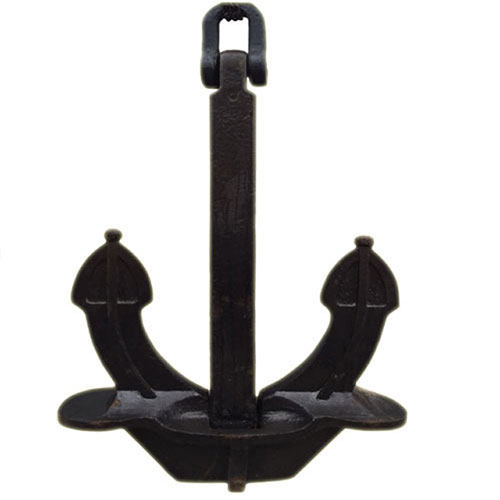
ABS Certification Requirements for Stockless Anchors
To obtain certification from the American Bureau of Shipping (ABS), drag anchors must meet the structural, material, and testing standards specified in the “American Bureau of Shipping Rules for Building and Classing Steel Vessels”. Certification is not a mere paperwork process, but a rigorous inspection process conducted at multiple stages of production.
1. Approved Material and Mechanical Properties
ABS requires anchors to be manufactured from certified marine-grade cast steel. The material must meet specific criteria, including:
- Controlled chemical composition
- Minimum tensile strength and yield strength
- Verified elongation properties
- Impact toughness testing (where applicable)
Each casting batch must be accompanied by a Mill Test Certificate (MTC) and heat number traceability to ensure full material origin verification.
2. Dimensional and Structural Compliance
The anchor must be manufactured strictly according to approved technical drawings. ABS inspectors verify:
- Nominal weight and allowable tolerance
- Shank cross-sectional dimensions
- Fluke geometry and structural symmetry
- Pin, crown, and connection integrity
Dimensional deviations beyond ABS tolerance limits can result in rejection or rework.
3. Proof Load Testing Requirements
Proof load testing is mandatory for ABS certification. The anchor is subjected to a specified tensile load based on its rated weight.
The objectives of proof load testing are:
- Confirm structural integrity under simulated service loads
- Detect casting weaknesses or hidden defects
- Ensure no permanent deformation occurs
Testing is either witnessed directly by an ABS surveyor or conducted under approved procedures with documented verification.
4. Non-Destructive Examination (NDE)
ABS requires inspection of critical structural areas using recognized NDT methods, including:
- Ultrasonic Testing (UT) for internal defects
- Magnetic Particle Inspection (MPI) for surface cracks
- Visual and dimensional inspection
Inspection records must be documented and submitted as part of the certification package.
ABS approval is granted only when all technical, material, and testing requirements are fully satisfied.

Manufacturing Process of an ABS Approved Stockless Anchor
Producing an ABS approved stockless anchor requires controlled manufacturing procedures and inspection readiness at every stage.
1. Engineering and Drawing Approval
Before production begins, technical drawings must align with ABS standards. Key parameters such as weight class, shank geometry, and fluke angle are confirmed to ensure compliance.
2. Casting and Material Control
High-grade molten steel is poured into precision molds under carefully monitored temperature conditions. Strict quality control ensures:
- Uniform casting density
- Minimal porosity
- Accurate dimensional formation
Each casting is assigned a unique heat number for traceability.
3. Heat Treatment
After casting, the anchor undergoes heat treatment processes such as normalizing or tempering. This stage ensures:
- Improved mechanical strength
- Controlled grain structure
- Required hardness levels
Heat treatment records are maintained for inspection.
4. Machining and Finishing
Critical areas, including pin holes and connection points, are machined to meet tolerance standards. Proper machining ensures smooth operation and structural stability during anchoring operations.
5. Inspection and Testing
The anchor then undergoes:
- Dimensional verification
- Non-destructive testing
- Proof load testing
ABS surveyors review inspection procedures, confirm compliance, and validate documentation before issuing approval.
6. Surface Protection and Final Marking
After certification, the anchor is coated with marine-grade anti-corrosion paint. Permanent markings typically include:
- Manufacturer identification
- Anchor weight
- Heat number
- ABS stamp (where applicable)
This ensures traceability throughout the anchor’s service life.
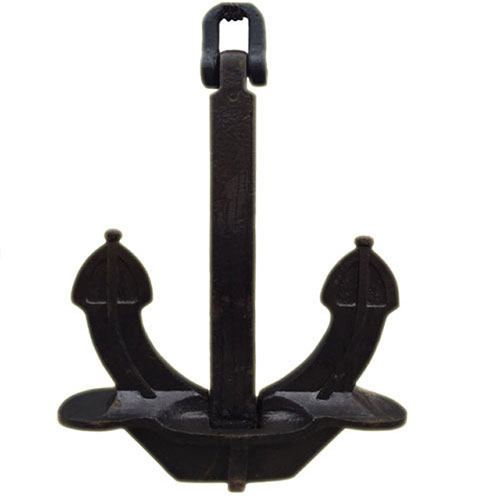
How to Verify an ABS Approved Stockless Anchor
When sourcing marine anchors, buyers must verify certification authenticity to avoid compliance risks.
1. Examine the ABS Certificate
A valid ABS certificate should clearly state:
- Manufacturer name
- Anchor model and type
- Certified weight
- Applicable ABS rule reference
- Inspection and approval date
The certificate must correspond exactly to the delivered anchor.
2. Confirm Material Traceability
Each anchor should have a stamped heat number that matches the Mill Test Certificate. This ensures the steel used meets ABS material standards.
3. Review Testing Documentation
The supplier should provide:
- Proof load test report
- NDT inspection report
- Dimensional inspection record
Documentation should include inspector signatures and testing parameters.
4. Check Physical Markings
ABS approved anchors typically include identification markings stamped or cast into the body. These markings support verification during port inspections or vessel surveys.
If uncertainty exists, buyers may confirm documentation directly with ABS or request third-party verification.
How to Choose an ABS Approved Stockless Anchor Supplier
Selecting a reliable stockless anchor supplier is essential for ensuring compliance and long-term operational safety.
1. Proven ABS Project Experience
Choose manufacturers with a consistent track record of supplying anchors for ABS-classed vessels. Experience reduces certification delays and compliance risks.
2. Integrated Testing Capabilities
Suppliers with in-house proof load testing facilities and NDT capability offer:
- Faster delivery timelines
- Better quality control
- Transparent inspection processes
3. Multi-Classification Support
A qualified marine anchor supplier should also be capable of providing certification from other major classification societies such as DNV, LR, BV, or CCS. This reflects broader compliance expertise.
4. Production Capacity and Export Experience
Evaluate whether the manufacturer can handle:
- Full weight ranges (e.g., 100 kg to 20,000 kg)
- Custom design requests
- International shipping documentation
Global export experience ensures smoother logistics and documentation handling.
5. Documentation Transparency
A professional ABS approved stockless anchor supplier should provide a complete documentation package including:
- ABS certificate copy
- 3.1 Material Certificate
- Proof load test report
- NDT report
- Packing list and inspection checklist
Clear documentation demonstrates reliability and strengthens buyer confidence.
An ABS approved stockless anchor is more than a marine component—it is a certified safety structure essential for vessel classification and operational compliance. From material selection and manufacturing control to proof load testing and ABS survey inspection, every step must meet strict standards.
When sourcing marine anchors for classed vessels, ABS approval is not an option—it is a requirement for structural integrity and regulatory confidence.
Frequently Asked Questions (FAQ)
Q1: Is ABS approval mandatory for all ships?
Not all vessels require ABS classification, but ships built under ABS class rules must use approved equipment.
Q2: Can a Hall stockless anchor obtain ABS approval?
Yes. Hall anchors are commonly certified under ABS standards.
Q3: Does ABS certification increase anchor cost?
Certification adds testing and inspection costs but significantly increases reliability and compliance value.
Q4: How long does ABS certification take?
Certification depends on production schedule and inspection availability, typically coordinated during manufacturing.
Q5: Can an existing anchor be retroactively certified?
Generally, certification must occur during manufacturing and testing stages.