Watertight vs. Weathertight Marine Doors: Which Type to Choose
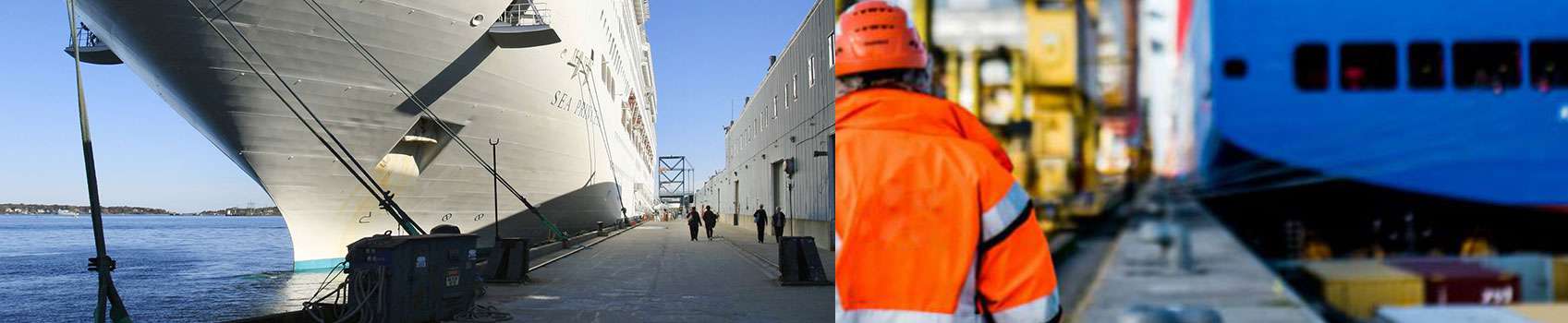
The ability to safeguard ships and their cargo and their crew from all types of operational hazards depends on marine doors which function as essential safety elements in ship design. The main door types used in this system include watertight doors and weathertight doors. The two doors seem alike but their operational functions and construction methods and regulatory standards show major differences. The differences between watertight and weathertight marine doors need to be understood by shipbuilders and operators and marine engineers.
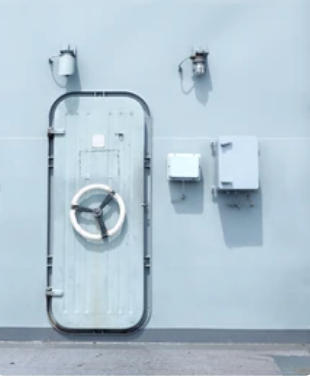
Table of Contents
Understanding Watertight Marine Doors
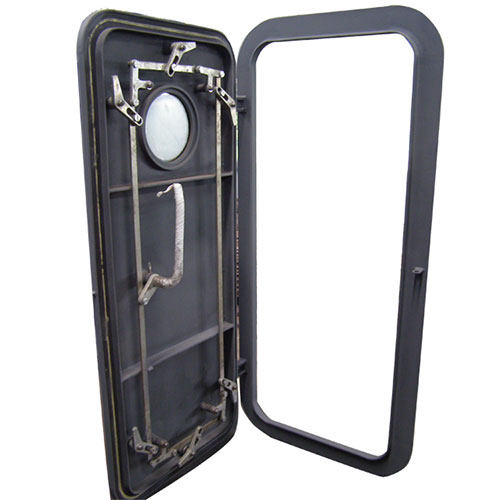
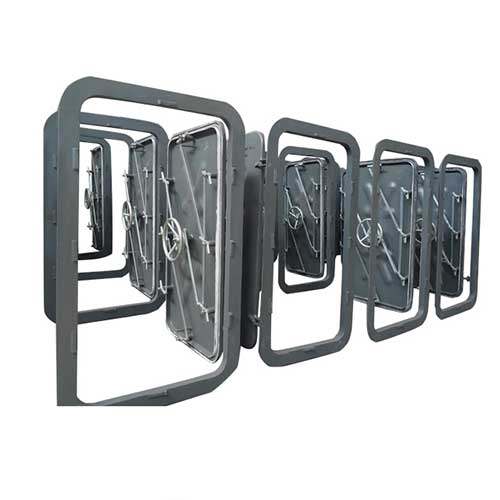
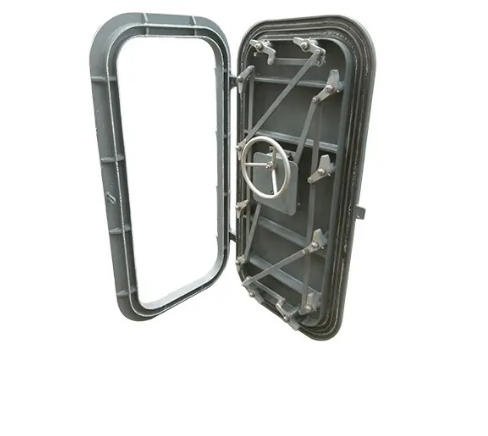
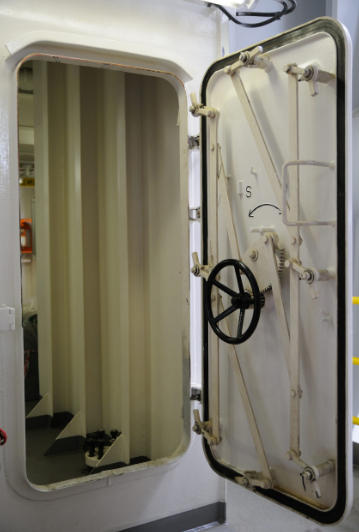
Watertight marine doors play a crucial role in keeping water out during emergencies. These doors must be able to withstand water pressure and prevent reverse backflooding.
- Flood Protection: Watertight doors provide an effective barrier from water entering the ship, even under a significant head of hydrostatic pressure. In case of an emergency situation, this becomes a critical operation to maintain vessel buoyancy and stability.
- Enhanced Compartmentalization: Watertight doors, by keeping flooded areas in isolation, happen to shield the rest of the compartments, ensuring survivability of the vessel.
- Compliance with Safety Regulations: Watertight doors are designed according to stringent standards given by International Maritime Organization (IMO) rules of SOLAS, ensuring the safety standards are maintained and safeguarded worldwide.
- Remote and Automated in operation: Some modern watertight doors are already plumbed into hydraulic or electric deferred control from the bridge increasing response during an emergency scenario.
- High Structural Strength: Built with heavy-duty steel, watertight doors can be withstand the extreme pressure and mechanical demand in some critical areas of the ship.
Limitations
- High Cost and Complex Technology: Although the strong build, sealing systems coupled with the automation features are considered to be some of the most complex and expensive to manufacture, install, and maintain for the watertight doors.
- Weight and Space Requirements: Their strong structure adds weight and eats up valuable space in the boat, often affecting design flexibility.
- Maintenance Requirements: Seals, hinges, and associated operational devices go through periodic adjustment and control at given intervals as a basic stage of preserving the watertight integrity.
- Operation Restrictions: The marine doors must be kept shut quite often during sailing through resvery where the obligatory requirement to keep safe water-free zones restricts crew movement and drastically curtails operational options.
- Risk of Improper Use: Incorrect operation, such as leaving doors open or failing to secure them properly, can negate their protective function and pose serious safety risks.
Applications
- Below-Waterline Compartments: implanted in areas like engine spaces, pump zones, and cargo holds having the most potential for flooding.
- Bulkhead Openings: Fitted to transverse bulkheads for dividing a ship into compartments with watertight integrity required for damage stability.
- Passenger and Crew Vessels: Used aboard embarkation and dismissal at annuities in associations to shipping and marine naval navigating setting for safeguarding passage straits during cargo liners and cruise vessels.
- Submarines and Specialized Vessels: In the context of submarines and rigs, such doors may mean acquisition of high-pressure ration and sealing effectiveness.
- Emergency Isolation Zones: Employed to isolate hazardous areas quickly, preventing the spread of water, fire, or other risks.
Understanding Weathertight Marine Doors
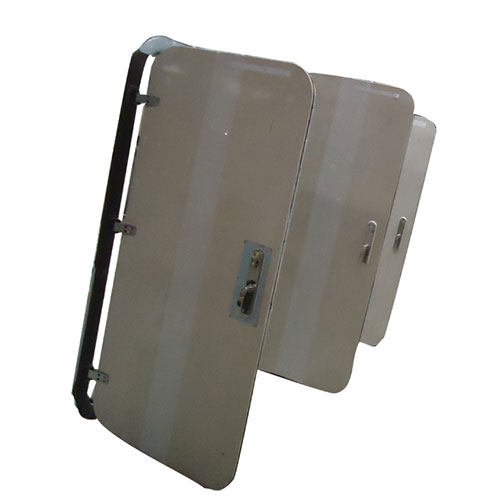
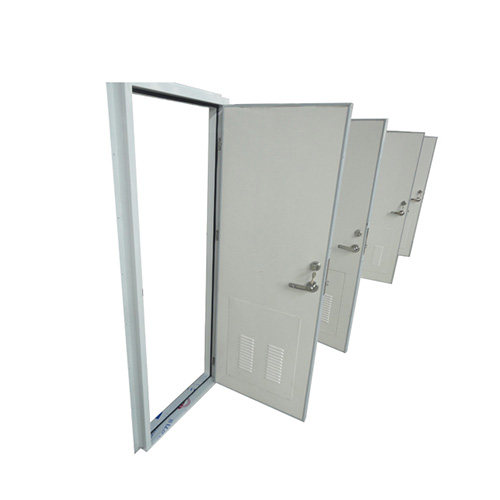
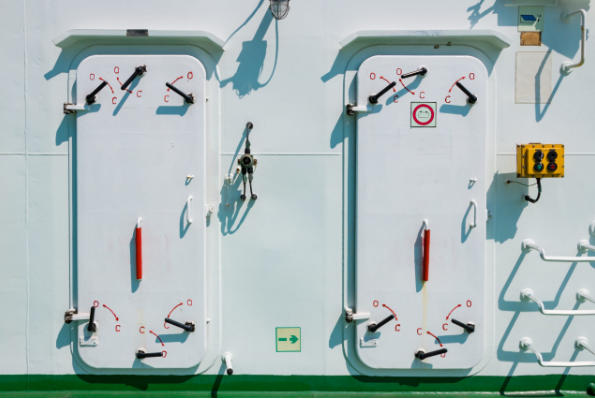
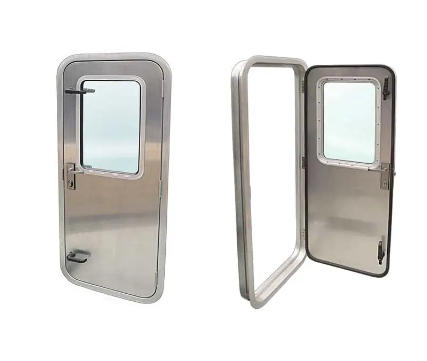
Weathertight marine doors are constructed to endure the pollution of water from environmental elements like rain, sea spray, and waves in standard working environments. On the flip side, these doors are incapable of bearing continuous water pressure or a submersion, yet they serve a critical role to maintain safety, comfort, and efficient operation.
Advantages
- Essential Weatherproofing: These doors are exceptionally useful for maintaining dryness and safety in the interior spaces as they ensure effective sealing against rain, wind-driven spray, and impact exerted by waves – occasionally.
- Lightweight and Easy Operation: Their built aluminum or lighter steel makes a weathertight door relatively easier to open and shut, which would be operationally beneficial for the crew and passengers.
- Cost Efficiency: Throughout manufacture, installation, and maintenance, these doors offer cost effective solution found appreciably cheaper than watertight doors to ensure that they may be widely utilized across the ship framework.
- Corrosion Resistance: It is specially designed using multiple parts of marine grade materials and coatings, offering anti-corrosion protection that ensures protracted tolerance to deteriorating marine environments.
- Improved Ventilation and Accessibility: They are designed for frequent use so that more fresh air is made available and there is less obstruction when shifting between compartments, and the same protection of the environment will be provided.
Limitations
- Limited Sealing Capability: They are not designed to withstand water ingress due to sustained pressure or submersion, so they would be unsatisfactory in any below-waterline positions.
- Not Suitable for Flood Control: They do not compartmentalize compartments or contribute to damage stability under conditions of flooding.
- Potential Leakage in Extreme Conditions: Under such extreme sea and storm conditions, some leakages happening are expected, with the conditions exceeding their design limits.
- Lower Structural Damage: Compared to watertight doors, weathertight doors are less impact and pressure-resistant as a result of their lighter construction.
- Dependence on Proper Maintenance: The integrity of gaskets, corrosion, or mal-alignments which reduces its efficacy as a seal to keep off water.
Applications
- Superstructures and Deckhouses: Mostly above the main deck, used in areas lying within accommodation blocks and bridge houses.
- External Access Points: Used for entrances leading to open decks, walkways, and working areas exposed to weather.
- Passenger and Crew Areas: Watertight doors are mostly for cabins, corridors including the service areas where watertight integrity is needed without impeding free movement.
- Bridge and Control Rooms: The crew of the vessel can easily reach them and at the same time, they have watertight integrity.
- Offshore Platforms and Support Vessels: Used in topside structures where exposure to harsh weather is frequent but full watertight integrity is not required.
Key Differences Between Watertight and Weathertight Marine Doors
| Aspect | Watertight Marine Doors | Weathertight Marine Doors |
| Primary Purpose | Prevent water ingress under pressure (flooding scenarios) | Prevent water ingress from weather (rain, spray, waves) |
| Location on Vessel | Installed below the waterline or in critical bulkheads | Installed above the waterline (deckhouses, superstructures) |
| Sealing Capability | Completely watertight (airtight under pressure) | Weather-resistant but not pressure-tight |
| Pressure Resistance | High (designed for hydrostatic pressure) | Low (not designed for sustained pressure) |
| Construction Material | Heavy-duty steel with reinforced structure | Lightweight steel or aluminum |
| Door Weight | Heavy | Light to moderate |
| Operation Method | Manual, hydraulic, or remote-controlled | Mostly manual (quick-acting handles/dogs) |
| Regulatory Requirements | Strict compliance with International Maritime Organization (SOLAS) | Moderate compliance with IMO and classification society rules |
| Role in Vessel Safety | Critical for damage stability and flood control | Supports environmental protection and habitability |
| Maintenance Needs | High (frequent inspection, sealing integrity checks) | Moderate (gasket and corrosion maintenance) |
| Failure Consequence | Severe (risk of flooding and loss of vessel stability) | Moderate (water ingress affecting comfort or operations) |
Key Factors to Consider for Selecting Between Watertight and Weathertight Marine Doors
1. Vessel Type and Operational Usage
The vessel type is one of the most important factor favoring the selection of particular moor. The high risk of flooding hazards faced by cargo ships, tanker vessels, military ships, and maritime platforms necessitate watertight doors in vital spaces to ensure survivability.
While the surviving side of the passenger ship or ferry maintains some structural integrity, the heavier dependence is on weathertight doors, assurance, and comfort–though safety measures for the accommodations and public areas are maintained with greater intensity. The nature of operation, such as offshore exposure, voyage, duration, and cargo type, dictates the required level of protection.
2. Installation Location on the Vessel
Place of their location is of primal importance. Doors below the waterline or where watertight bulkheads deck is permitted must keep water out so that no flooding can occur, ensuring that the vessel’s compartmentalization is still effective. Doors found above the main deck or in superstructures shall generally be considered weathertight, tasked with preventing the entrance of the elements rather than hydrostatic pressure.
3. Safety and Risk Assessment
A rigorous assessment must be carried out to cover what is better for one’s marine application: watertight or weathertight door. Any area that might be threatened with compromised hull integrity, collision with other objects, or possible flooding should definitely be equipped with watertight doors so as to prevent any ensuing flooding.
Watertight doors are a vital safeguard for the structural safety of ships. As a key regulation stipulated in SOLAS by the International Maritime Organization, weathertight doors provide for damage stability enhancements to ships, but they actually do little to manage emergency conditions and should never be applied in high-risk areas.
4. Regulatory and Classification Requirements
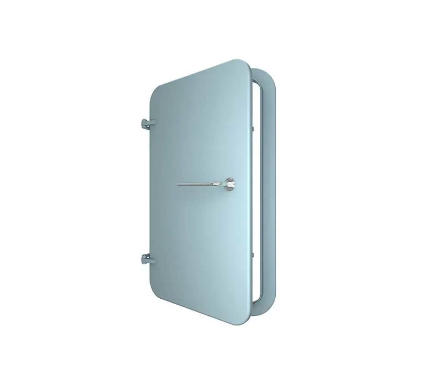
International regulation and classification society rules must be followed. The design of watertight doors must conform to stringent standards of pressure skills and design considerations, including remote control and alarm systems in some cases.
Weathertight doors also must adhere to appropriate regulatory constraints but are not held to as high a standard as watertight doors. Also, the architect and ship-builder consider aligning the particular door type with all relevant rules in order to eliminate potential hazards and certification problems.
5. Structural Strength and Material Considerations
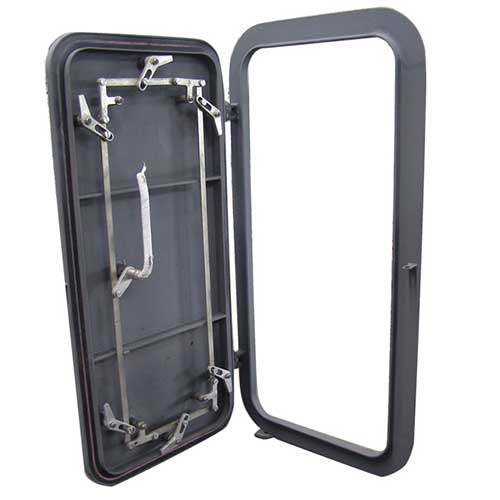
Watertight doors are built along with heavy-duty materials, typically steel-reinforced metallic, to provide resistance to pressure loads and mechanical stress. This makes them well suited to serve in critical structural applications and raises weight and many other issues.
Most of the time, weathertight doors are made of light materials like aluminum or light steel. One of the things this does is reduce the structural load, making them easier to install. This is useful for non-critical areas where ease of use is required.
6. Operational Efficiency and Accessibility
Ease of working is an important practical consideration. Water-tight doors, especially if they have hydraulic or remote systems, may require more effort and time to operate and may be kept shut during navigation for security reasons.
European doors are designed for regular use and have simple manual mechanisms to allow for quick access. Weathertight doors are often favored in high-traffic areas to prevent disruptions to work and crew movement.
7. Maintenance and Lifecycle Costs
Searches indicated higher initial costs for watertight doors and maintenance issues that required regular inspection.
Economical to put in and maintain weathertight doors still require regular attention for gasket wear, corrosion, and alignment to ensure their effectiveness.
8. Environmental and Operating Conditions
The operating environment of these doors is crucial to the doors chosen. Heavy-seas-going and severe ocean-weather conditions may qualify as needing stronger door systems.
While watertight doors serve to protect the inner from flooding, weathertight doors need to stand against wind, rain, and waves. Choosing appropriately sealing and corrosion-resistant doors is a must for long-term performance.
9. Integration with Vessel Systems
To the centralized monitoring and control systems of modern vessels, doors are generally interfaced. Watertight doors are interconnected with alarms, bridge controls, and emergency protocols, ensuring a quick reaction if necessary.
Weathertight doors usually have simpler integration requirements; however, depending on the design of the vessel, they may be tied into safety monitoring systems.
Summary
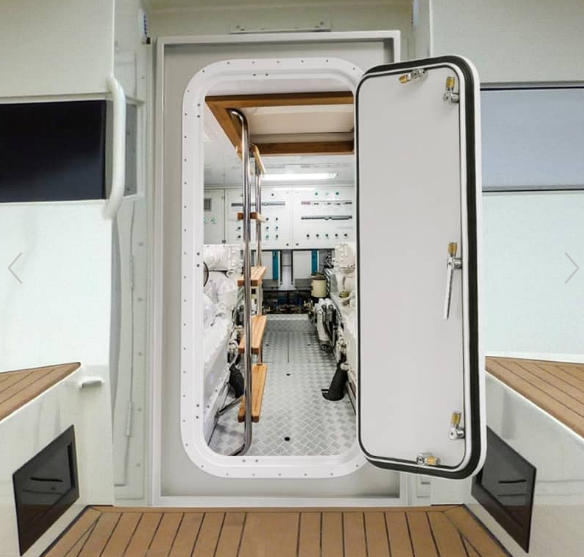
- Watertight doors are indispensable for protecting against flooding and ensuring vessel survivability.
- Weathertight doors provide practical and efficient protection against environmental elements.
Final Thoughts
Watertight and weathertight marine doors represent distinct but equally vital aspects of maritime safety and vessel performance. Choosing the suitable type requires a comprehensive evaluation of vessel type, the site of installation, safety requirements, their regulations, and operational demands, all forming the very backbone for optimally blending safety, performance, and cost efficiency over a given vessel’s lifecycle.