
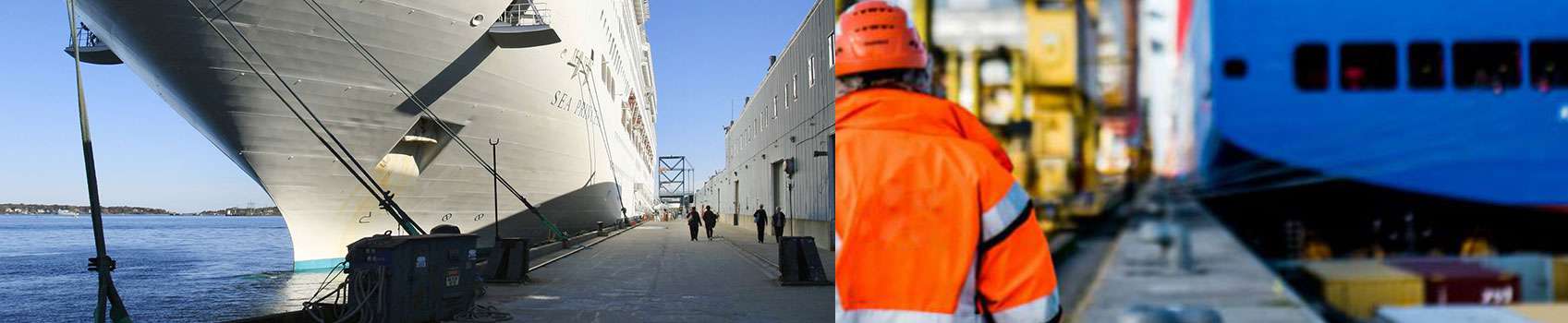
How to Integrate Anchor Chains with Mooring Systems
To ensure a ship achieves operational efficiency, stability, and safety, the seamless integration of anchor chains and mooring systems is of prime importance. Coordination between anchor chains and mooring systems is central to how effectively a ship can hold her position under changing environmental conditions. These conditions become highly critical when marine environments become more demanding, hence more focus on optimized integration.
Table of Contents
The Role of Anchor Chains in the Mooring Systems
Anchor chains are the primary load-bearing elements which connect the anchor to a vessel or offshore structure. In mooring systems, they serve many purposes besides merely anchoring. The natural sag, or catenary effect produced by the weight of the chains absorbs dynamic loads like those produced by waves, wind, and current; this in turn reduces the peak tension experienced and guards both the anchor and mooring lines from an unduly high level of stress. When properly integrated into the system, anchor chains contribute to the overall elasticity and damping of the mooring system, promoting stability and mitigating rapid load changes.
Key Components of an Integrated Mooring System
| Component | Primary Function | Typical Materials | Key Considerations |
| Anchor | Provides holding force by embedding into the seabed | High-strength steel | Seabed conditions, holding capacity, anchor type selection |
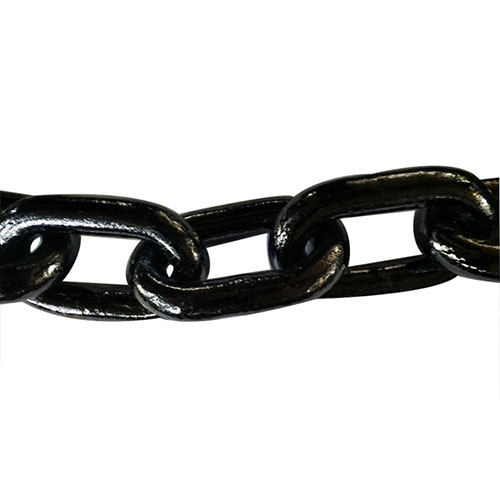
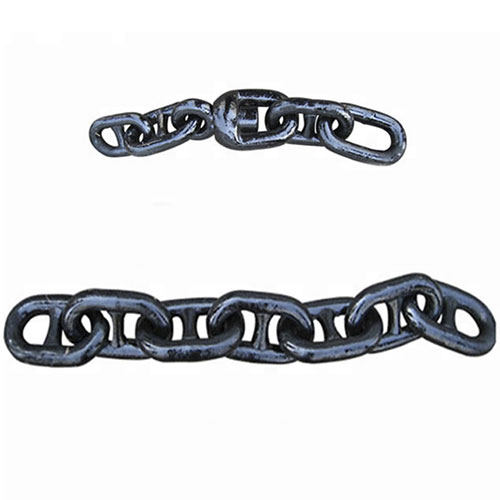
| Anchor Chain | Connects anchor to mooring line; provides weight for catenary and load damping | Stud-link steel chains | Chain grade, diameter, corrosion resistance, fatigue performance |
| Mooring Line | Transfers loads between vessel and anchor system | Wire rope, polyester, nylon, HMPE fibers | Strength, elasticity, weight, resistance to environmental degradation |
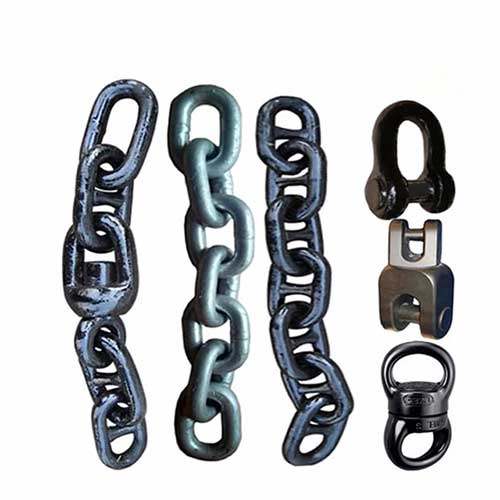
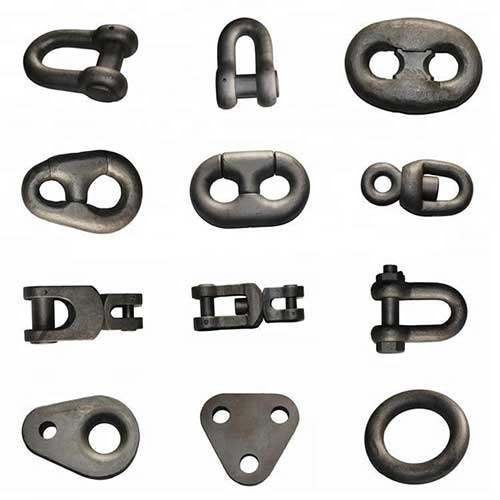
| Shackles and Connectors | Links different components together securely | Forged steel alloys | Load capacity, fatigue resistance, ease of installation and inspection |
| Fairleads | Guides mooring lines and reduces friction on vessel structures | Steel with wear-resistant linings | Alignment, wear resistance, minimization of line abrasion |
| Winches | Controls tension and deployment/retrieval of mooring lines | Mechanical/electro-hydraulic systems | Load control precision, braking systems, automation capability |
| Buoys | Provides flotation and helps maintain line configuration | Steel or composite materials | Buoyancy capacity, durability, visibility, maintenance requirements |
| Chain Stoppers | Secures the chain and transfers load from winch to vessel structure | High-strength steel | Load rating, safety locking mechanisms, integration with deck equipment |
| Swivels | Prevents twisting and torsion in mooring lines | Alloy steel | Rotation capacity, fatigue resistance, corrosion protection |
Design Considerations for the Integration of Anchor Chains with Mooring Systems
Integrating anchor chains with mooring systems is a tough pseudo-science of making trade-offs among mechanical design, material benefits, and behavioral impacts caused by environmental interferences.
1. Understanding Load Dynamics and Force Distribution
The distribution of loads through systems is a cornerstone issue in any system integration. Since anchor chains are heavy, bending, and quite long, they set the load movement and tweaking profile and give it the natural form of a catenary. The catenary helps to minimize peak tension transmitted into the anchor and eventually to the Vessel by absolving various dynamic types of these forces engendered by the waves, wind, and; current.
The designers need to provide for static loads like the weight of the structure and dynamic loads involving the environmental factors. Having the correct blend of such forces ensures that the anchor chain and associated mooring lines function within defined safe stress levels and still keep the vessel in an upright position.
2. Selection of Chain Size, Grade and Length
Selecting anchor chains is not only about choosing the right diameter, grade, or the total length. The types of chains made of high-grade steel are primarily used to be able to withstand very high tensile loads. Hereby motifs can be created to enable the necessary catenary effect for dampening of a load to its best advantage.
With an under-sized-chain of lesser length, there would be more tension than necessary and a possibility of its causing damage, while having an oversized chain could increase the weight of the entire system, making it impossible to handle and install. Hence, it is argued that it is within an optimization concept that the performance level should be sustained while still bringing about maximum efficiency-the one instinctively points to the other.
3. Material Compatibility and Transition Interfaces
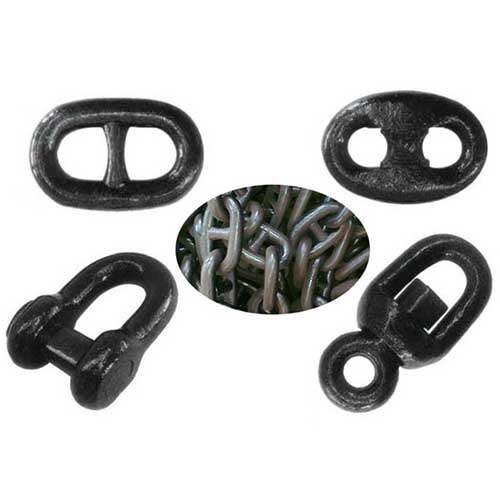
Integration of anchor chains with mooring lines is often the fusion of totally different materials or materials, rather than of two kinds and types of the steel chains and synthetic fiber ropes. Because of their material origin (steel chains, synthetic ropes) each shows variations in elasticity and modulus.
While perseverance is indispensable, a sense of humor and upbeat attitude are vital for managing an environment enhanced with fun and amusement that can help her move forward. Open, honest dialogue would facilitate problems being solved before they become insurmountable.
4. Environmental and Seabed Conditions
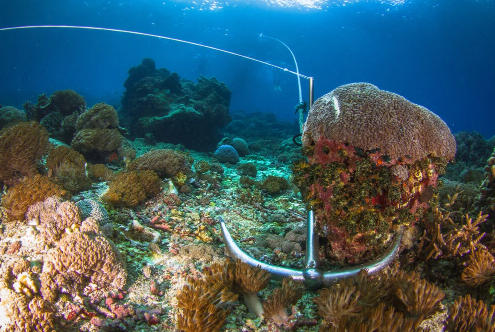
Environmental factors significantly influence the design of integrated mooring systems. Water depth, wave height, current velocity, and wind forces all affect how loads are applied and distributed. In shallow waters, heavier chains that rest on the seabed can provide additional damping, while deepwater applications often require lighter, hybrid configurations.
Seabed composition is equally important, as it determines the holding capacity of the anchor and the abrasion resistance required for the chain. Rocky or uneven seabeds may increase wear, necessitating more robust materials or protective coatings.
5. Corrosion Protection and Durability
Marine environments are highly corrosive, making durability a major design concern. Anchor chains are continuously exposed to saltwater, oxygen, and biological activity, all of which can accelerate degradation. Protective coatings, cathodic protection systems, and corrosion-resistant alloys are commonly used to extend service life.
In addition to corrosion, fatigue caused by cyclic loading must be addressed. Repeated tension and movement can weaken materials over time, particularly at connection points. Designing for long-term durability requires careful consideration of both corrosion resistance and fatigue performance.
6. Mooring Configuration and System Type
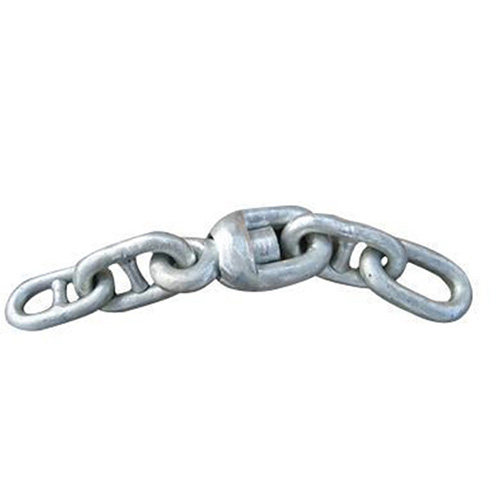
The type of mooring system used directly impacts the chain-anchored mode of integration. In the catenary system, longer and heavier chains are employed to provide load absorption by their natural conformation. In contrast, in taut mooring and semi-taut systems, the system relies on using short chain links combined with synthetic ropes for maintaining larger positional accuracy at great depths.
The design of the hybrid systems, which combine chain with rope, asks for careful consideration of the weights, strength, and elasticity needed. The system’s design should ensure that each part is synergized for the good of the whole and does not introduce people into any vulnerable spots.
7. Installation and Operation Considerations
The stage of integration moves on to installation and operation. It is important to handle and lay anchor chains properly to prevent any form of damage or ensure accurate alignments. Installation protocols need to factor in operational constraints, environmental conditions, and complexity while cataloguing the vessel’s resources for the operation.
Regular inspections and maintenance during service are crucial to detect wear, corrosion, and deformation. Monitoring technologies such as those involving embedded sensors and remote inspection tools have become mandatory for enhancing system integrity and cutting down maintenance costs.
8. Safety and Redundancy
Safety considerations are paramount in the design of the mooring system. An integrated system must survive extreme conditions without fail. This very often includes redundancy such as having more than one anchor line so that at least some of the system can still work even in a case where one of the systems fails.
Safety is also a design consideration in terms of ensuring all components are load compatible and performance-driven. Proper safety factor assignments are to be made in consideration of environmental conditions and variable operating situations.
Techniques and Configurations Used for Integrating Anchor Chains with Mooring Systems
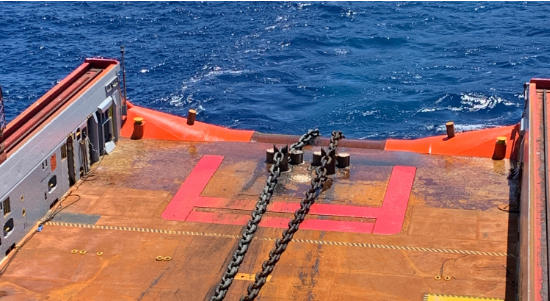
The integration of anchor chains with mooring systems is not a one-size-fits-all process. Different marine environments, vessel types, and operational requirements call for different techniques and setups. The way anchor chains are integrated with mooring lines is a significant influence on the system’s performance, including load equalization, positional stability, and durability. Therefore, it is important to understand these techniques to be able to design an efficient and reliable mooring system.
1. Catenary Mooring Configuration
One of the techniques most often used is the catenary mooring configuration, in which the heavy anchor chain forms a natural curve profile lying on the seabed. This allows the chain, as a result of its own weight’s tension, to absorb environmental forces like waves and currents.
In this configuration, usually a significant portion of the chain rests upon the seabed with remaining suspended. Under increasing environmental loads, more and more of the chain is taken off the seabed and the tension is built up in a gradually controlled way. This design is very good for shock absorption and thereby reduces peak load on the anchor as well as the vessel at any prevailing conditions. With minimal characterization and reliability (in a few conditions), transatlantic and elsewhere require shallow to moderate water goals, particularly for either ship or FPU operations.
2. Taunt Mooring Configuration
Taut mooring systems represent an integrated approach for anchoring the catenary anchor chain to shorter sections melded with varied kinds of synthetic lines. Compared with the catenary-based installations, these are more about the mooring line’s elasticity than the chain’s weight.
Here, heavily weighted chains are located near the seabed to provide frictional weld, while the upper part is made of lightweight synthetic lines. The lines are kept under highest tension so that the horizontal movement of the vessel is diminished. These tight configurations are, therefore, particularly applicable to deep offshore installations, where precise positioning is crucial, such as for floating production platforms and offshore windmill turbines.
7. Semi-Taut Mooring Configuration
Semi-taut mooring systems are a blending of the principle of catenary and taut-line setups, or rather, a more virtuous marriage of principle. In these systems, substantially short lengths of anchor chain are used causing a partial catenary effect that relies more predominantly on the elasticity of synthetic ropes.
In contrast to its definitely taut counterpart, the hybrid approach provides superior load distribution compared to fully taut systems. As discussed, the variables affecting the system’s performance have clearly been described with a view to informing the sector’s commercial decision-making on hybrid systems comprising ropes, particularly though not limited to productive applications in liminal water areas, where the dynamics of catenary mooring systems are not helpful.
4. Hybrid Chain-Rope Integration
Hybrid chain-rope integration involves the incorporation of chain and synthetic fiber ropes in the same mooring line. This is an arrangement that is used for reasons involving the pure abrasion and mechanical durability chain offers versus the superior elasticity and low weight the rope offers for use in float-off systems when being degraded.
This configuration is especially beneficial in deepwater environments, where chains alone would be impractical due to their weight. The transition from chain to rope is necessitated by the huge difference in stiffness and load behavior. Thus, hybrid systems are able to furnish an excellent balance between strength, flexibility, and economy.
5. Spread Mooring Systems
Spread Mooring is a system that maintains a ship or structure in a fixed position by multiple anchor chains and mooring lines being configured around it. Each line is integrated with an anchor chain in the seabed to distribute loads over many points.
Directional force equilibrium and energy dissipation, as well as balanced stability under different forces, are the underlying factors propelling this mooring technique predominantly on floating platforms and floating production systems. Proper integration of anchor chains inside spread mooring systems should ensure that even load distribution is achieved; distortion in the distribution of the load would result in one line’s failure.
6. Single Point Mooring (SPM) Systems
Single Point Mooring systems originate from a single anchorage fastened to a central point, often connected to the seabed using multiple anchor chains. The ship is thence connected to the single harpoon, permitting the vessel to rotate about the mooring in accordance with the variations of the wind and current.
In this configuration, anchor chains have been employed to stabilize the mooring buoy or turret system. An increased level of integration is required to account for axial and lateral forces, along with internal pivoting forces. SPM systems are commonly employed for oil tankers and offshore cargo handling with the primary aim to advance flexibility and operational efficacy.
7. Dynamic Position-Assisted Mooring
By finding an advanced integration method in which older mooring systems are married to dynamic positioning technology, anchor chains now provide basic stability at the mooring site; this is then fine-tuned by thrusters, which adjust the vessel’s position in real-time via the onboard systems.
This combination enhances the anchoring system capacity uniquely in that the creep diminishes the anchoring chain under extraordinarily rough environmental conditions and thereby adds considerable merit to the dynamic positioning (DP) system. Chains used as part of the system must include appropriate consideration and interaction between mechanical and automated control forces to ensure withstanding loads and movements.
8. Connection and Transition Techniques
Whatever the method of construction needs to secure off chain-to-sea lines in any pattern, the load of the entire system in stressing conditions is retained in the mode in which the two are kept joined. Pieces like shackles, links, and chains should be selected quite cautiously to ensure strength as well as compatibility.
Mechanical stress concentration must be prevented to allow a smooth flow of force from different parts. Modern designs load with high-performance connectors and advanced materials that are useful for sleek resistance to fatigue of the loaded member and resist fatigue of the structures. Proper alignment, fit-up of components, and end support play a decisive role in the reliable integration of the system.
Technological Innovations Enhancing the Integration of Anchor Chains with Mooring Systems
Advancements in technology are transforming how anchor chains are integrated with mooring systems
| Technological Innovation | Description | Key Benefits | Application Impact |
| Digital Twin and Simulation Technologies | Virtual modeling of mooring systems to simulate environmental and load conditions | Optimized design, reduced risk, improved performance prediction | Enables precise configuration of chain length, tension, and system layout before deployment |
| Smart Sensors and Monitoring Systems | Embedded sensors measuring tension, motion, and wear in real time | Predictive maintenance, reduced downtime, enhanced safety | Provides continuous operational data for proactive decision-making |
| Advanced Corrosion Protection Technologies | High-performance coatings and cathodic protection systems | Extended service life, reduced maintenance costs | Improves durability of anchor chains in harsh marine environments |
| High-Performance Synthetic Mooring Ropes | Use of materials like polyester and HMPE in hybrid systems | Reduced weight, improved elasticity, high strength-to-weight ratio | Enhances deepwater mooring efficiency and reduces structural load |
| Improved Connector and Shackle Designs | Advanced engineering of connection نقاط to handle higher loads and fatigue | Increased reliability, reduced failure risk | Ensures secure integration between chains, ropes, and anchors |
| Autonomous Inspection Technologies | Use of ROVs and underwater drones for inspection and maintenance | Safer inspections, reduced operational costs | Enables frequent and accurate assessment of underwater components |
| AI and Data Analytics | Analysis of operational data to predict failures and optimize performance | Better decision-making, improved system efficiency | Supports long-term optimization of mooring system performance |
| Lightweight Hybrid System Design | Integration of chains with synthetic ropes to reduce overall system weight | Easier installation, lower structural stress | Expands feasibility of deepwater and ultra-deepwater applications |
| Dynamic Positioning Integration | Combining mooring systems with automated thruster control | Enhanced positioning accuracy, reduced load on mooring components | Improves performance in challenging offshore operations |
| High-Strength Alloy Development | New steel grades with enhanced strength and fatigue resistance | Increased load capacity, longer lifespan | Supports more demanding offshore environments and heavier loads |
Challenges and Future Solutions in the Integration of Anchor Chains with Mooring Systems
| Challenges | Description | Future Solutions |
| Fatigue and Material Degradation | Continuous cyclic loading leads to fatigue, especially at connection points | Development of high-fatigue-resistant alloys and advanced material treatments |
| Corrosion in Harsh Marine Environments | Saltwater, oxygen, and biofouling accelerate corrosion of chains and connectors | Use of advanced anti-corrosion coatings, cathodic protection, and corrosion-resistant materials |
| Complex Load Distribution | Uneven load sharing can cause overstressing of certain parts | Advanced simulation tools and digital twin technologies for optimized load balancing |
| Chain–Rope Interface Failures | Stress concentration at transition points between steel chains and synthetic ropes | Improved connector designs and flexible transition elements to ensure smooth load transfer |
| Inspection and Maintenance Difficulties | Underwater components are hard to access and inspect | Adoption of ROVs, autonomous inspection systems, and real-time monitoring sensors |
| Installation Complexity | Precise deployment and alignment are challenging, especially in deepwater environments | Automated installation technologies and improved deployment methodologies |
| High System Weight in Deepwater Applications | Heavy chains increase handling difficulty and structural load | Increased use of lightweight hybrid systems with synthetic ropes |
| Environmental and Seabed Variability | Changing seabed conditions affect anchor holding and chain performance | Site-specific design using advanced geotechnical analysis and adaptive mooring configurations |
| High Initial and Lifecycle Costs | Advanced materials and technologies increase upfront investment | Lifecycle cost optimization through predictive maintenance and long-life materials |
| Limited Real-Time Operational Visibility | Lack of continuous data on system performance | Integration of smart sensors and IoT-based monitoring systems for real-time performance tracking |
Summary
Integrating anchor chains with mooring systems is challenging, yet the step is significantly vital in marine engineering. By considering the dynamics of loads, aspect of material compatibility, environment and weather conditions, the development of technological orient-blocking systems designed for stabilizing, safety and longevity of performance is possible.